
Mikhail Zygar
Author of All the Kremlin's Men: Inside the Court of Vladimir Putin
About the Author
Image credit: Bengt Oberger
Works by Mikhail Zygar
War and Punishment: Putin, Zelensky, and the Path to Russia's Invasion of Ukraine (2023) 100 copies, 2 reviews
Все свободны: История о том, как в 1996 году в России закончились выборы (Russian Edition) (2023) 2 copies
Интервью (ТВ-3) ➣ Маяковский 1 copy
Tagged
Common Knowledge
- Birthdate
- 1981-01-31
- Gender
- male
- Nationality
- Russia
- Associated Place (for map)
- Russia
Members
Reviews
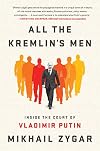
The Rise of the Accidental Autocrat
A history of Russian politics from 1999, when a little-known Duma member and former intelligence officer named Vladimir Putin was selected to be prime minister and presumptive heir to the presidency, to 2015, when now-President Putin had solidified his power and become the West's most feared European bogeyman.
Russian investigative journalist and founder of independent Russian news service Rain TV Mikhail Zygar drew on years of reporting, exclusive show more interviews and firsthand observations to write this Shakespearean tale of political intrigue and backroom scheming. He begins with Putin as a pro-democracy liberal who seemed reluctant to accept the reins of power, let alone hold onto them. In those days, Putin admired Western leaders such as Tony Blair and George W. Bush and seemed desperate for their acceptance and approval. This inferiority complex is certainly nothing new in Russian history. It dates back at least as far as Peter the Great in the late 17th and early 18th centuries. Also sadly familiar is the outcome: Driven to paranoia by rejections and betrayals, real and perceived, either from the West or within his innermost circle, he gradually became a despotic autocrat who considered democracy antithetical to the inherent Russian character and believed his country and himself to be one and the same, and who saw it as his divine calling to establish Russia as a supreme empire.
Almost any deep examination suggests what most separates History's Greatest Monsters from its Great Men and Women is not necessarily ambition. Anyone who considers himself or herself both worthy and capable of heading a nation or a movement must have quite a bit of ambition, even to the point of arrogance. Rather, the primary distinguishing factor seems to be the thin skins of tyrants. Not only do they often consider any form of dissension to be a sign of disloyalty, but they tend to nurse grudges. As described in this book, Putin certainly meets that criterion perfectly. Even the oligarchs who have plucked him from obscurity and elevated him to the international stage now fear his wrath and are in endless competition with each other to kowtow to him and curry his highly mutable favor the most. It is this very competition which constitutes the bulk of this book's plot. The key players are so numerous, a very helpful 12-page "Cast of Characters" at the front of the book is necessary.
For many critics, this is the book's main flaw. Zygar describes the oligarchs, current and former government officials and leading dissidents in vivid detail, while the man at their center remains inscrutable, but this is arguably as it should be. Of course, there is the logistical impossibility of interviewing a man who has been known to disappear without explanation or warning for weeks at a time, leaving his most trusted advisers to guess (often incorrectly) what his wishes would be. However, the answer may be there is nothing about him to understand. He is at times a blank slate open to the advisers's power of suggestion, and at other times a mirror reflecting the shifting tides of public attitudes and political expediency. Perhaps he remains unknowable because there is nothing to know. There is no there there beyond a small, petty, childish fraud at the helm of a nuclear power.
Near the conclusion of the book, Zygar predicts a future sequel. This came true in July 2023 when Zygar, now in exile, first had published War and Punishment: Putin, Zelensky, and the Path to Russia's Invasion of Ukraine in English, but Zygar's predictions as to what would likely be in this sequel are wrong, as might well be expected. At the time of this book's first publication in Russian in October 2015, Donald Trump's candidacy was still considered laughable, his race a vanity campaign intended to sell books and nothing more. Volodymyr Zelenskyy's presidency was quite literally a joke - the premise for his latest comedy series Servant of the People - and Putin had turned his attention away from Ukraine and back toward Chechnya. In this book, Zygar declares it improbable Putin would ever publicize someone as insignificant as opposition leader Alexei Navalny by imprisoning him. By the time of the sequel's publication, Navalny had, in fact, been jailed indefinitely, where he would die months later in what is widely assumed to be an assassination.
Zygar fails to predict the future, but this is understandable when it is determined by a man so unpredictable to those who know him best. Ultimately, that may be the real secret to Putin's power and the threat he poses to liberal democracy throughout the world. show less
A history of Russian politics from 1999, when a little-known Duma member and former intelligence officer named Vladimir Putin was selected to be prime minister and presumptive heir to the presidency, to 2015, when now-President Putin had solidified his power and become the West's most feared European bogeyman.
Russian investigative journalist and founder of independent Russian news service Rain TV Mikhail Zygar drew on years of reporting, exclusive show more interviews and firsthand observations to write this Shakespearean tale of political intrigue and backroom scheming. He begins with Putin as a pro-democracy liberal who seemed reluctant to accept the reins of power, let alone hold onto them. In those days, Putin admired Western leaders such as Tony Blair and George W. Bush and seemed desperate for their acceptance and approval. This inferiority complex is certainly nothing new in Russian history. It dates back at least as far as Peter the Great in the late 17th and early 18th centuries. Also sadly familiar is the outcome: Driven to paranoia by rejections and betrayals, real and perceived, either from the West or within his innermost circle, he gradually became a despotic autocrat who considered democracy antithetical to the inherent Russian character and believed his country and himself to be one and the same, and who saw it as his divine calling to establish Russia as a supreme empire.
Almost any deep examination suggests what most separates History's Greatest Monsters from its Great Men and Women is not necessarily ambition. Anyone who considers himself or herself both worthy and capable of heading a nation or a movement must have quite a bit of ambition, even to the point of arrogance. Rather, the primary distinguishing factor seems to be the thin skins of tyrants. Not only do they often consider any form of dissension to be a sign of disloyalty, but they tend to nurse grudges. As described in this book, Putin certainly meets that criterion perfectly. Even the oligarchs who have plucked him from obscurity and elevated him to the international stage now fear his wrath and are in endless competition with each other to kowtow to him and curry his highly mutable favor the most. It is this very competition which constitutes the bulk of this book's plot. The key players are so numerous, a very helpful 12-page "Cast of Characters" at the front of the book is necessary.
For many critics, this is the book's main flaw. Zygar describes the oligarchs, current and former government officials and leading dissidents in vivid detail, while the man at their center remains inscrutable, but this is arguably as it should be. Of course, there is the logistical impossibility of interviewing a man who has been known to disappear without explanation or warning for weeks at a time, leaving his most trusted advisers to guess (often incorrectly) what his wishes would be. However, the answer may be there is nothing about him to understand. He is at times a blank slate open to the advisers's power of suggestion, and at other times a mirror reflecting the shifting tides of public attitudes and political expediency. Perhaps he remains unknowable because there is nothing to know. There is no there there beyond a small, petty, childish fraud at the helm of a nuclear power.
Near the conclusion of the book, Zygar predicts a future sequel. This came true in July 2023 when Zygar, now in exile, first had published War and Punishment: Putin, Zelensky, and the Path to Russia's Invasion of Ukraine in English, but Zygar's predictions as to what would likely be in this sequel are wrong, as might well be expected. At the time of this book's first publication in Russian in October 2015, Donald Trump's candidacy was still considered laughable, his race a vanity campaign intended to sell books and nothing more. Volodymyr Zelenskyy's presidency was quite literally a joke - the premise for his latest comedy series Servant of the People - and Putin had turned his attention away from Ukraine and back toward Chechnya. In this book, Zygar declares it improbable Putin would ever publicize someone as insignificant as opposition leader Alexei Navalny by imprisoning him. By the time of the sequel's publication, Navalny had, in fact, been jailed indefinitely, where he would die months later in what is widely assumed to be an assassination.
Zygar fails to predict the future, but this is understandable when it is determined by a man so unpredictable to those who know him best. Ultimately, that may be the real secret to Putin's power and the threat he poses to liberal democracy throughout the world. show less
One of my favorite smart observations (probably courtesy of Ashleigh Brilliant) is "that more books have been published from people's need to write than people's need to read." Such is the case here, as this book feels like an effort to strike while the iron is hot by a writer who needs to quickly make a mark; having become a dissident exile.
Having said that, if you know only the bare minimum of Russian and Ukrainian history since the break-up of the Soviet Union, I suspect that you will show more find this book useful. Apart from that the author's apologetic for having, at one point, bought into Russian triumphalism without much thinking is a notable distinction. show less
Having said that, if you know only the bare minimum of Russian and Ukrainian history since the break-up of the Soviet Union, I suspect that you will show more find this book useful. Apart from that the author's apologetic for having, at one point, bought into Russian triumphalism without much thinking is a notable distinction. show less

A look at the upper classes, the royal family, the intelligentsia and the future revolutionaries from 1900 until the bolshevik takeover in 1917 told through the lens of a gallery of around 10-20 persons. The subject is the decisions and feelings of those people while the bigger socio-economical situation, with the war, starvation, illiteracy being mentioned, firmly put into the background.
Zygar is a good writer and I enjoyed the read. With the number of people covered exceeding a Dostoevsky show more novel you would think it would be hard keeping track of everyone when reading, but I never felt lost or the need to go back to reread about who a certain person was. Granted, the era isn't completely new to me so a lot of the names and events was familiar.
It being a journalistic piece gives Zygar more leeway in both constructing interesting narratives and more freedom to characterize the people involved which makes for a fun read, but something an academic historian would probably have to tone down (although it should be said the characterization of Nicholas II as an incompetent Tsar seem to be pretty universal).
So why "only" three stars? First off any account of events leading up to the Russian revolution not discussing the socioeconomic situation in the country is lacking in my eyes. This becomes even more pertinent when Zygar in the concluding pages wants to draw conclusions about whether the revolution was a necessary consequence or avoidable coincidence.
Furthermore the last chapter on 1917 should probably have been made into two. While the chapters before feels nicely paced and easy to follow along with, the last chapter is just throwing the reader from big event to big event without much tying them together. In a way it is a reflection of how fast events unfolded from February to October, but I think most will just find it confusing. A few more pages to flesh it out would probably have helped.
The selection of individuals to cover is usually pretty obvious, but in some cases I scratch my head a bit. Why Sergej Djagilev is included is a mystery. While he was loosely connected to revolutionaries he was hardly central and if he is included to to give a "neutral" perspective to events you wonder why Zygar chose Djagilev who was living and traveling outside of Russia much of the period covered.
An odd thing in the book is that Nicholas II's abdication isn't covered. Nicholas and his wife Alexandra are two of the major characters in the book, but the abdication is just left out. The Tsar sends a telegram to the prime minister giving him authority to crack down on any civil disturbances and rejecting any changes to the government and a few pages latter it is mentioned he has abdicated. Maybe Zygar felt his abdication on the train and his flip-flopping between who he should abdicate in favor of has already been widely covered, but given how prominent Nicholas II has been in the book it would have been a fitting inclusion from a narrative point of view.
A book I can recommend to get some insight into discussions and feeling among the privileged classes and the intelligentsia in the years leading up to the revolution, but if you are going to read just one book on the Russian revolution this isn't the one. show less
Zygar is a good writer and I enjoyed the read. With the number of people covered exceeding a Dostoevsky show more novel you would think it would be hard keeping track of everyone when reading, but I never felt lost or the need to go back to reread about who a certain person was. Granted, the era isn't completely new to me so a lot of the names and events was familiar.
It being a journalistic piece gives Zygar more leeway in both constructing interesting narratives and more freedom to characterize the people involved which makes for a fun read, but something an academic historian would probably have to tone down (although it should be said the characterization of Nicholas II as an incompetent Tsar seem to be pretty universal).
So why "only" three stars? First off any account of events leading up to the Russian revolution not discussing the socioeconomic situation in the country is lacking in my eyes. This becomes even more pertinent when Zygar in the concluding pages wants to draw conclusions about whether the revolution was a necessary consequence or avoidable coincidence.
Furthermore the last chapter on 1917 should probably have been made into two. While the chapters before feels nicely paced and easy to follow along with, the last chapter is just throwing the reader from big event to big event without much tying them together. In a way it is a reflection of how fast events unfolded from February to October, but I think most will just find it confusing. A few more pages to flesh it out would probably have helped.
The selection of individuals to cover is usually pretty obvious, but in some cases I scratch my head a bit. Why Sergej Djagilev is included is a mystery. While he was loosely connected to revolutionaries he was hardly central and if he is included to to give a "neutral" perspective to events you wonder why Zygar chose Djagilev who was living and traveling outside of Russia much of the period covered.
An odd thing in the book is that Nicholas II's abdication isn't covered. Nicholas and his wife Alexandra are two of the major characters in the book, but the abdication is just left out. The Tsar sends a telegram to the prime minister giving him authority to crack down on any civil disturbances and rejecting any changes to the government and a few pages latter it is mentioned he has abdicated. Maybe Zygar felt his abdication on the train and his flip-flopping between who he should abdicate in favor of has already been widely covered, but given how prominent Nicholas II has been in the book it would have been a fitting inclusion from a narrative point of view.
A book I can recommend to get some insight into discussions and feeling among the privileged classes and the intelligentsia in the years leading up to the revolution, but if you are going to read just one book on the Russian revolution this isn't the one. show less
I would have to read this multiple times to fully grasp it. The 'list of characters' at the beginning of the book should have served as a warning to me. I particularly enjoyed the sketches of the protagonists that opened each chapter.
Awards


All the Kremlin's Men: Inside the Court of Vladimir Putin (Team Favorites – Eamon Driscoll – Russia and Commonwealth of Independent States writer – 2018)
All the Kremlin's Men: Inside the Court of Vladimir Putin (Regional Reading – Europe & Russia – 2021)


You May Also Like


Statistics
- Works
- 10
- Members
- 524
- Popularity
- #47,449
- Rating
- 4.0
- Reviews
- 7
- ISBNs
- 58
- Languages
- 7