
Thomas Wharton (1) (1963–)
Author of Salamander
For other authors named Thomas Wharton, see the disambiguation page.
About the Author
Thomas Wharton lives and teaches English in Edmonton.
Image credit: Thomas Wharton
Series
Works by Thomas Wharton
The Paper-thin Garden 1 copy
Associated Works
Tagged
Common Knowledge
- Birthdate
- 1963-02-25
- Gender
- male
- Nationality
- Canada
- Birthplace
- Grande Prairie, Alberta, Canada
- Map Location
- Canada
Members
Reviews

A grand adventure, a love story, and a captivating tale about the wonders of books. Book printer Nicholas Flood, descendent of Huguenots who’ve escaped to London, receives an invitation from an eccentric Eastern European count to come to his castle to undertake a commission. The commission turns out to be an infinite book. The Count has an amazing ever-changing castle whose clockwork machinery constantly moves the walls, floors, and rooms. The Count also has a daughter, the Countess Irena, show more with whom Flood falls in love. This is just the start of many grand adventures and heart-breaking tragedies.
Nicholas Flood and his daughter, Pica, have strange adventures and encounter marvels and wonders as they travel the world in search of the materials to print the infinite book. There are pirates, acrobats, automatons, and a six-fingered man. Pica is on a quest of her own, to find her mother, the Countess, and to learn her own story. Everyone they encounter has a tale and is on their own quest, all of which underscore the importance and infinite variety of stories that make up the world. A sad but magical novel. show less
Nicholas Flood and his daughter, Pica, have strange adventures and encounter marvels and wonders as they travel the world in search of the materials to print the infinite book. There are pirates, acrobats, automatons, and a six-fingered man. Pica is on a quest of her own, to find her mother, the Countess, and to learn her own story. Everyone they encounter has a tale and is on their own quest, all of which underscore the importance and infinite variety of stories that make up the world. A sad but magical novel. show less

That's what he called himself once, the summer her left for the war, and I'd laughed. Glaciologist. I'd never heard the word before. I'd never considered there might be others like him, scientists who studied only glaciers. I thought he was the one man on earth who bothered that much with them, that this science was his alone, that he had invented it. Arcturology. The science of being distant, and receding a little every year.
The book takes place during the first two decades of the last show more century in what was to become Jasper National Park in Alberta, Canada. Byrne, a doctor, was exploring the region when he falls into into a crevasse on the Arcturus glacier. In the time it takes his group to notice his absence and haul him out, he sees something in the ice; a pale figure with huge wings. The image haunts him, even as he is rescued, revived and returned to London. Years later he is drawn back to the glacier and the book chronicles his life studying the ice and the other people who live for awhile at the hot springs hotel built at its foot. Evocative, poetic and strange, this is one of the most interesting books I've read this year.
I will admit to a bias; I spent almost every childhood holiday in the area and have been up on the Athabasca glacier. Every place name was resonant with memory. It's a spectacularly beautiful, fragile area and Wharton's descriptions of the first residents of the region and the conditions under which they lived, a peculiar mixture of Victorian gentility and wilderness was fascinating. Alongside Byrne, Icefields tells the story of a poet come west to be a guide, a servant girl who takes charge of the running of a hotel and develops a relationship of sorts with Byrne, an intrepid female explorer and a tracker turned entrepreneur who sees opportunity in the coming railway. show less
The book takes place during the first two decades of the last show more century in what was to become Jasper National Park in Alberta, Canada. Byrne, a doctor, was exploring the region when he falls into into a crevasse on the Arcturus glacier. In the time it takes his group to notice his absence and haul him out, he sees something in the ice; a pale figure with huge wings. The image haunts him, even as he is rescued, revived and returned to London. Years later he is drawn back to the glacier and the book chronicles his life studying the ice and the other people who live for awhile at the hot springs hotel built at its foot. Evocative, poetic and strange, this is one of the most interesting books I've read this year.
I will admit to a bias; I spent almost every childhood holiday in the area and have been up on the Athabasca glacier. Every place name was resonant with memory. It's a spectacularly beautiful, fragile area and Wharton's descriptions of the first residents of the region and the conditions under which they lived, a peculiar mixture of Victorian gentility and wilderness was fascinating. Alongside Byrne, Icefields tells the story of a poet come west to be a guide, a servant girl who takes charge of the running of a hotel and develops a relationship of sorts with Byrne, an intrepid female explorer and a tracker turned entrepreneur who sees opportunity in the coming railway. show less
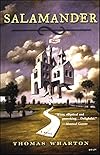
When his 18-year-old son dies mysteriously in battle, a Slovakian Count retires from the field and returns home to indulge his love of puzzles. He designs his castle so that walls continually appear and disappear, furniture is on tracks and moves to different places, and bookshelves descend from the ceiling or rise, phoenix-like, from the floor. While cataloging a new set of books, the Count’s daughter finds one that has been created to be a riddle. Her father is intrigued and invites the show more printer, a young Londoner named Nicholas Flood, to the castle to discuss a commission: an infinite book. Nicholas accepts the commission and the rest of the book is devoted to his quest to fulfill his commission. The road to Flood’s eventual fate does not run smoothly, and before the journey is over we’ve traveled the world and met a family of tumblers, a Sultan who wishes to die, a printing press that sets its own type, a lady pirate, and scores of other memorable characters.
Salamander is a quest book: everybody is looking for something, both physically and emotionally. It’s amazing that Wharton manages to weave all of their diverse searches into the one Grand Search: the never-ending book. It’s that one goal that brings all of the characters together, and that occasionally tears them apart. I’ll admit, I’m biased; I love books, and the descriptions of the various papers and inks and the workings of the printing press were fascinating. But the wonderful thing is that all of that detail isn’t just sitting there, waiting for the book geek to stroll by. The search for all of the physical trappings of the infinite book gives us a touchstone for all of the characters: WHY someone is searching for the perfect paper is just as important as how the search is conducted, or where the search leads.
Wharton has given us a gift: a magical, mysterious, marvel of book. The characters are strange, yet believable. The story takes many odd twists and turns and never ends up quite where you expect it to. The narrative flows like spilled ink, covering everything and forcing the reader into some unexpected corners. Mr. Wharton cleverly sets the reader on just as much of a quest as the characters are on; the reader who perseveres will be greatly rewarded. show less
Salamander is a quest book: everybody is looking for something, both physically and emotionally. It’s amazing that Wharton manages to weave all of their diverse searches into the one Grand Search: the never-ending book. It’s that one goal that brings all of the characters together, and that occasionally tears them apart. I’ll admit, I’m biased; I love books, and the descriptions of the various papers and inks and the workings of the printing press were fascinating. But the wonderful thing is that all of that detail isn’t just sitting there, waiting for the book geek to stroll by. The search for all of the physical trappings of the infinite book gives us a touchstone for all of the characters: WHY someone is searching for the perfect paper is just as important as how the search is conducted, or where the search leads.
Wharton has given us a gift: a magical, mysterious, marvel of book. The characters are strange, yet believable. The story takes many odd twists and turns and never ends up quite where you expect it to. The narrative flows like spilled ink, covering everything and forcing the reader into some unexpected corners. Mr. Wharton cleverly sets the reader on just as much of a quest as the characters are on; the reader who perseveres will be greatly rewarded. show less
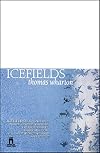
[Icefields] is a beautiful book—a beautifully written book—a literary expedition into the wondrous and the mysterious: the glassy Arcturus Glacier and the human soul.
The book begins in 1898,. The English medical doctor Edward Byrne, part of an expedition exploring the icefields, falls into a chasm and is pinned upside down. As he edges near unconsciousness he sees something in the blue ice that will forever connect him to this mountain and glacier in the Canadian Rockies of Alberta (near show more Jasper). Edward is rescued by the other expedition members and is brought to the cabin of the dark-skinned Sara, a “woman with stories,” to recover.
Edward is quiet and thoughtful, a man of science. His medical training provides him with the means to support himself on the frontier, while he pursues his other interests. The story follows Edward’s life while it also paints a rich portrait of the wider landscape: the settlements of the area and the interesting characters who populate it—all of which Edward is a part of.
This is an immensely satisfying story. There is an intense sense of place and Edward is the everyman connecting us to it. There is also something dreamlike, ethereal, or spiritual about it, both in tale and tone. The descriptions of the icefields have a kind of reverence or wonderment in them, and there is a great sense of history, both tangible and intangible, perhaps best expressed in the book’s epigraph: “As if everything in the world is the history of ice.” (Michael Ondaatje in Coming Through the Slaughter) But, I don’t mean to suggest the story floats off the pages, it’s wonderfully balanced, the ethereal tethered to the leathery stories of fur-trading, frontier subsistence, immerging settlements, “iron horses,” and World War I.
Above the dark slope of the valley rose the mountains. Byrne raised a hand to shade his eyes, grown accustomed to the cabin’s cave-like gloom, against their painful brilliance. For a moment he could not believe in these hard, unfathomable masses of rock. They seemed to hang suspended in the sky. A quick, cold breath might shatter them like an illusion of ice crystals and light.
Squinting, he picked out the crevasses and icefalls of Arcturus glacier. From this distance they seemed only delicate, spidery wrinkles in pale blue silk. Above them gleamed the white rim of the névé, where the glacier spilled from a gap between the flanking peaks. A slender curve of burning snow.
I chased down this book after I read Wharton’s The Logograph in 2006. I started it back then but set it aside after a few chapters, perhaps it was not the right book for the moment, or perhaps I was distracted by something else. Icefields is a very different kind of book than The Logogryph, but equally enjoyable. I’m sorry it took so long for me to get back to it. show less
The book begins in 1898,. The English medical doctor Edward Byrne, part of an expedition exploring the icefields, falls into a chasm and is pinned upside down. As he edges near unconsciousness he sees something in the blue ice that will forever connect him to this mountain and glacier in the Canadian Rockies of Alberta (near show more Jasper). Edward is rescued by the other expedition members and is brought to the cabin of the dark-skinned Sara, a “woman with stories,” to recover.
Edward is quiet and thoughtful, a man of science. His medical training provides him with the means to support himself on the frontier, while he pursues his other interests. The story follows Edward’s life while it also paints a rich portrait of the wider landscape: the settlements of the area and the interesting characters who populate it—all of which Edward is a part of.
This is an immensely satisfying story. There is an intense sense of place and Edward is the everyman connecting us to it. There is also something dreamlike, ethereal, or spiritual about it, both in tale and tone. The descriptions of the icefields have a kind of reverence or wonderment in them, and there is a great sense of history, both tangible and intangible, perhaps best expressed in the book’s epigraph: “As if everything in the world is the history of ice.” (Michael Ondaatje in Coming Through the Slaughter) But, I don’t mean to suggest the story floats off the pages, it’s wonderfully balanced, the ethereal tethered to the leathery stories of fur-trading, frontier subsistence, immerging settlements, “iron horses,” and World War I.
Above the dark slope of the valley rose the mountains. Byrne raised a hand to shade his eyes, grown accustomed to the cabin’s cave-like gloom, against their painful brilliance. For a moment he could not believe in these hard, unfathomable masses of rock. They seemed to hang suspended in the sky. A quick, cold breath might shatter them like an illusion of ice crystals and light.
Squinting, he picked out the crevasses and icefalls of Arcturus glacier. From this distance they seemed only delicate, spidery wrinkles in pale blue silk. Above them gleamed the white rim of the névé, where the glacier spilled from a gap between the flanking peaks. A slender curve of burning snow.
I chased down this book after I read Wharton’s The Logograph in 2006. I started it back then but set it aside after a few chapters, perhaps it was not the right book for the moment, or perhaps I was distracted by something else. Icefields is a very different kind of book than The Logogryph, but equally enjoyable. I’m sorry it took so long for me to get back to it. show less
Lists
Metafiction (1)
Awards


You May Also Like


Associated Authors
Statistics
- Works
- 10
- Also by
- 1
- Members
- 1,276
- Popularity
- #20,105
- Rating
- 3.8
- Reviews
- 41
- ISBNs
- 71
- Languages
- 5
- Favorited
- 2