
Jules Witcover (1927–2025)
Author of Marathon: The Pursuit of the Presidency 1972-1976
About the Author
Jules Witcover has been writing from Washington on politics and history since 1954, first for the Newhouse Newspapers, then for the Los Angeles Times, Washington Post and Star and Baltimore Sun, and his column is syndicated by the [Chicago] Tribune Company. His twenty books include 85 Days: The show more Last Campaign of Robert Kennedy, The American Vice Presidency: From Irrelevance to Power, The Resurrection of Richard Nixon, The Year the Dream Died: Revisiting 1968 in America, accounts of the presidential elections from 1976 through 1992, and biographies of Vice Presidents Spiro Agnew and Joe Biden. show less
Works by Jules Witcover
Whose Broad Stripes and Bright Stars: The Trivial Pursuit of the Presidency, 1988 (1989) 67 copies, 1 review
Very Strange Bedfellows: The Short and Unhappy Marriage of Richard Nixon & Spiro Agnew (2007) 61 copies, 1 review
Blue Smoke & Mirrors: How Reagan Won and Why Carter Lost the Election of 1980 (1981) 51 copies, 1 review
Crapshoot: Rolling the Dice on the Vice Presidency: From Adams and Jefferson to Truman and Quayle (1991) 42 copies
A Heartbeat Away: The Investigation and Resignation of Vice President Spiro T. Agnew (1974) 41 copies
Sabotage at Black Tom: Imperial Germany's Secret War in America, 1914-1917 (1989) 36 copies, 1 review
No Way to Pick A President: How Money and Hired Guns Have Debased American Elections (1999) 20 copies
Tagged
Common Knowledge
- Birthdate
- 1927-07-16
- Date of death
- 2025-08-16
- Gender
- male
- Relationships
- Rodgers, Marion Elizabeth (wife)
Members
Reviews
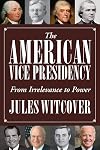
What has always amazed me is the extent to which potential presidents give little thought outside of political considerations to the nature of the person filling the role of vice-president. Yet that person would of course become president if the president himself died; became disabled; resigned; or was removed from office. [And yes, I am using male pronouns because thus far, no females have occupied either office.] Even Lincoln, who had numerous assassination threats as well as regular show more dreams that he would die in office, selected someone who would help him get reelected rather than considering what kind of political leader his choice for vice president might be.
(One of the saddest anecdotes about the vice presidency, which Witcover includes in this book, was the response to Lincoln’s emissary when Benjamin Butler entertained an overture from Lincoln about running for Vice President for Lincoln’s second term. Butler replied in part:
"Please say to Mr. Lincoln, that while I appreciate with the fullest sensibility this act of friendship and the compliment he pays me, yet I must decline. Tell him with the prospects of the campaign, I would not quit the field to be Vice-President, even with himself as President, unless he will give me bond with sureties, that he will die or resign within three months of his inauguration.”
Of course, Lincoln went on to do just exactly that.)
In a similar vein, less than twenty years later, Mark Hanna, chief political advisor to William McKinley, and concerned that McKinley's vice presidential candidate Theodore Roosevelt was a "madman," wrote to McKinley: "Your duty to the country is to live for four years from next March." Unfortunately for Hanna at least, McKinley served only 200 days before being struck down by an assassin, and Theodore Roosevelt went on to become the 21st president.
One of the more interesting portraits is that of Henry Wilson, President Grant’s second term vice-president. Wilson was an advocate of protecting blacks in the South, and for an end to school segregation. He also railed against the “money power” of corporate America. He campaigned heavily for Grant, but it took a toll on his health, and he suffered a stroke barely two months after being inaugurated. For the remaining three years of his life, he was mostly incapacitated, and disregarded by Grant in any event.
William Wheeler, who served as Vice-President to Rutherford B. Hayes, is another intriguing man. (When Wheeler was nominated, Hayes reportedly turned to his wife and said, “Who is Wheeler?”) While in Congress, Wheeler stood apart for his apparent lack of greed, turning down offers of bribes and even returning his Congressional salary raise to the US. treasury. But like other presidents, Hayes rarely consulting Wheeler on anything.
Of Thomas Marshall, Vice President under Woodrow Wilson, Witcover writes: “Perhaps no previous vice president was more poorly treated up to this time than Thomas Riley Marshall of Indiana.” Marshall was not even told when Wilson suffered a stroke and became incapacitated! Wilson’s true second-in-command (besides his first and second wives) was Colonel Edward House, who, according to some, was the real power behind the throne. But even Colonel House couldn’t stand up to the second Mrs. Wilson. When Wilson was incapacitated, it was Edith Wilson who decided if official papers should be seen or signed by Wilson, and some of the signatures looked like her writing rather than his. Meanwhile, Marshall wasn’t even admitted to Wilson’s sickroom. Wilson did, however, survive his term of office however (in some form or other). When rival Republicans nominated Warren G. Harding for president and Calvin Coolidge for vice president, Marshall sent Coolidge a telegram: “Please accept my sincere sympathy.”
Spiro “Ted” Agnew was totally shut out by Richard Nixon’s tight-knit staff, but was sent instead around the country to make inflammatory speeches railing against unrest on campus. Aided by Nixon speechwriters Pat Buchanan and William Safire, he called Vietnam War protesters “a small group of misfits,” “a minority of pushy youngsters and middle-aged malcontents…,” “an effete corps of impudent snobs….” and “nattering nabobs of negativism,” inter alia. He was also told to target the press and Democratic liberals, saying all the things Nixon wanted to but could not. Agnew was all too happy to comply. In spare moments, he lobbied Nixon’s team to be appointed to the U.S. Supreme Court. But nine months into their second terms, Agnew had to resign after he was exposed on multiple charges of taking bribes not only while he was Governor of Maryland, but even as the Vice President. Agnew admitted to taking the money but claimed it had not influenced his official actions. He was sentenced to three years of unsupervised probation and a fine. When a bust of him as Vice President was dedicated in the Senate chambers, he observed: “I am not blind or deaf to the fact that some people feel that this is a ceremony that should not take place.”
The author contends that it was only with the presidency of Jimmy Carter that the vice president (in that case, Walter Mondale), was given tasks to perform beyond the usual ceremonial and political chores. (When nominated, given Mondale’s previous statements about reluctance to campaign, Mondale felt obliged to clarify to reporters: “What I said at the time was that I did not want to spend most of my life in Holiday Inns. But I’ve checked and found they’ve all been redecorated.”)
Ever since Mondale’s time, the author reports that vice presidents “have become genuine partners in governance with their presidents.”
This book seeks to redress some of the injustice that doomed most vice presidents to obscurity, in spite of the impressive careers that led them to garner their party’s nominations in the first place. There are so many interesting anecdotes in this book; these men played important parts in our history, and are worth getting to know.
Evaluation: Even many history buffs will be astounded by the extent to which they do not know the names of some of the men in this examination of the 47 vice-presidents who have served thus far in American history. The author includes a chapter on every single one of them, and the stories and personalities depicted are absolutely fascinating. If you love history and politics, as I do, you will really appreciate this book! show less
(One of the saddest anecdotes about the vice presidency, which Witcover includes in this book, was the response to Lincoln’s emissary when Benjamin Butler entertained an overture from Lincoln about running for Vice President for Lincoln’s second term. Butler replied in part:
"Please say to Mr. Lincoln, that while I appreciate with the fullest sensibility this act of friendship and the compliment he pays me, yet I must decline. Tell him with the prospects of the campaign, I would not quit the field to be Vice-President, even with himself as President, unless he will give me bond with sureties, that he will die or resign within three months of his inauguration.”
Of course, Lincoln went on to do just exactly that.)
In a similar vein, less than twenty years later, Mark Hanna, chief political advisor to William McKinley, and concerned that McKinley's vice presidential candidate Theodore Roosevelt was a "madman," wrote to McKinley: "Your duty to the country is to live for four years from next March." Unfortunately for Hanna at least, McKinley served only 200 days before being struck down by an assassin, and Theodore Roosevelt went on to become the 21st president.
One of the more interesting portraits is that of Henry Wilson, President Grant’s second term vice-president. Wilson was an advocate of protecting blacks in the South, and for an end to school segregation. He also railed against the “money power” of corporate America. He campaigned heavily for Grant, but it took a toll on his health, and he suffered a stroke barely two months after being inaugurated. For the remaining three years of his life, he was mostly incapacitated, and disregarded by Grant in any event.
William Wheeler, who served as Vice-President to Rutherford B. Hayes, is another intriguing man. (When Wheeler was nominated, Hayes reportedly turned to his wife and said, “Who is Wheeler?”) While in Congress, Wheeler stood apart for his apparent lack of greed, turning down offers of bribes and even returning his Congressional salary raise to the US. treasury. But like other presidents, Hayes rarely consulting Wheeler on anything.
Of Thomas Marshall, Vice President under Woodrow Wilson, Witcover writes: “Perhaps no previous vice president was more poorly treated up to this time than Thomas Riley Marshall of Indiana.” Marshall was not even told when Wilson suffered a stroke and became incapacitated! Wilson’s true second-in-command (besides his first and second wives) was Colonel Edward House, who, according to some, was the real power behind the throne. But even Colonel House couldn’t stand up to the second Mrs. Wilson. When Wilson was incapacitated, it was Edith Wilson who decided if official papers should be seen or signed by Wilson, and some of the signatures looked like her writing rather than his. Meanwhile, Marshall wasn’t even admitted to Wilson’s sickroom. Wilson did, however, survive his term of office however (in some form or other). When rival Republicans nominated Warren G. Harding for president and Calvin Coolidge for vice president, Marshall sent Coolidge a telegram: “Please accept my sincere sympathy.”
Spiro “Ted” Agnew was totally shut out by Richard Nixon’s tight-knit staff, but was sent instead around the country to make inflammatory speeches railing against unrest on campus. Aided by Nixon speechwriters Pat Buchanan and William Safire, he called Vietnam War protesters “a small group of misfits,” “a minority of pushy youngsters and middle-aged malcontents…,” “an effete corps of impudent snobs….” and “nattering nabobs of negativism,” inter alia. He was also told to target the press and Democratic liberals, saying all the things Nixon wanted to but could not. Agnew was all too happy to comply. In spare moments, he lobbied Nixon’s team to be appointed to the U.S. Supreme Court. But nine months into their second terms, Agnew had to resign after he was exposed on multiple charges of taking bribes not only while he was Governor of Maryland, but even as the Vice President. Agnew admitted to taking the money but claimed it had not influenced his official actions. He was sentenced to three years of unsupervised probation and a fine. When a bust of him as Vice President was dedicated in the Senate chambers, he observed: “I am not blind or deaf to the fact that some people feel that this is a ceremony that should not take place.”
The author contends that it was only with the presidency of Jimmy Carter that the vice president (in that case, Walter Mondale), was given tasks to perform beyond the usual ceremonial and political chores. (When nominated, given Mondale’s previous statements about reluctance to campaign, Mondale felt obliged to clarify to reporters: “What I said at the time was that I did not want to spend most of my life in Holiday Inns. But I’ve checked and found they’ve all been redecorated.”)
Ever since Mondale’s time, the author reports that vice presidents “have become genuine partners in governance with their presidents.”
This book seeks to redress some of the injustice that doomed most vice presidents to obscurity, in spite of the impressive careers that led them to garner their party’s nominations in the first place. There are so many interesting anecdotes in this book; these men played important parts in our history, and are worth getting to know.
Evaluation: Even many history buffs will be astounded by the extent to which they do not know the names of some of the men in this examination of the 47 vice-presidents who have served thus far in American history. The author includes a chapter on every single one of them, and the stories and personalities depicted are absolutely fascinating. If you love history and politics, as I do, you will really appreciate this book! show less
Sabotage at Black Tom: Imperial Germany's Secret War in America, 1914-1917 by Jules Witcover (1989-05-03) by Jules Witcover

Jules Witcover's Sabotage at Black Tom delivers far more than its title suggests. The book paints a riveting account of German-inspired and German-directed sabotage in the supposedly neutral United States in the three years leading up to the nation's formal joining with the Allies and official entrance into World War I as one of the belligerents. Witcover also draws a well-defined portrait of U.S. President Woodrow Wilson as a man whose devotion to his principles, whose tightly held belief show more in the honor of nations, and whose all-consuming desire to be the world's peacemaker maintained the neutrality of his country despite bombings, arson, the fomenting of labor unrest, and other hostile acts designed to hamstring the manufacture and shipping of munitions.
One learns quite a bit here that tends to be omitted from public school history books. For instance, consider the fact that, as a neutral country, the U.S. would as readily have sold munitions to the Central Powers as to the Allies, but Britain's superiority as a sea power made shipping to non-Allied countries highly problematic. As for that, Britain's blockade designed to starve Germany into submission prevented U.S. merchants from selling even food to buyers in the latter country, creating even more animus toward Britain than existed toward Germany. After the eventual cessation of hostilities came the time of reparations, and the U.S. paid Germany about $85 million to repay her for ships that had been seized and used for war purposes (page 308). Conversely, German reparations for damages to the U.S. were eventually paid off only by the 1970s, World War II and the Nazi regime having long come and gone. I submit these observations to indicate how much surprising history is in this book beyond the acts of sabotage suggested by its title—though they are, of course, there as well.
It is difficult for 21st century readers to see the U.S. as anything but hopelessly naive in the years preceding its declaration of war against Germany in 1917. As Witcover shows, however, until the devastating explosion of the munitions stored on docked barges and in warehouses on Black Tom Island in July 1916, the nation had never experienced a fully successful sabotage attack of such magnitude. The island was on the New Jersey side of the harbor, yet windows in New York City skyscrapers were blown out by the concussion, and shrapnel left gaping wounds in the Statue of Liberty. Then six months later, a raging inferno destroyed the Canadian Car and Foundry Company's munitions factory at Kingsland in Bergen County, New Jersey. Such acts of sabotage finally convinced the U.S. that the ocean separating her from Europe was no longer the protective barrier that it was once thought to be. Before this, there had been no reason for the country to create and fund extensive intelligence services. Perhaps before 1916 the U.S. was naive, but until then it had had no reason not to be.
Sabotage at Black Tom is both an interesting read for its description of sabotage within the U.S. before the country's entry into World War I and an even more fascinating (and important) read for its depiction of the country and its leaders during the years that it was swimming against the current drawing it from a stubborn neutrality to an active belligerency. The book leaves its readers with clearer and more accurate understandings of the nation during a critical period in world history.
Witcover's writing is clear, concise, and generally non-judgmental although he does seem to show Woodrow Wilson as perhaps too devoted to his desired role as a world peacemaker for the nation's own good. Whether or not this interpretation is too critical is best left to individual readers' conclusions, and it is good to remember that history is written with the benefit of hindsight. The concluding chapters become rather challenging as they deal with the complexities of who said what, when, and where in testimony before the Claims Commission attempting to determine who wronged whom by violating principles of neutrality and who should pay reparations to whom. Nevertheless, the details revealed in these chapters are intriguing to readers willing to concentrate on them.
Every now and then, one stumbles across books whose contents are as instructive today as when they were published. That such books eventually go out of print and become challenging to find is, to me, a shameful comment on a publishing industry to which profit is more important than is the perpetuation of knowledge and learning. Sabotage at Black Tom is such a book. It is well worth seeking out in the numerous used book sources available on line, and it is well worth both its purchase price and, more importantly, the time devoted to its reading. show less
One learns quite a bit here that tends to be omitted from public school history books. For instance, consider the fact that, as a neutral country, the U.S. would as readily have sold munitions to the Central Powers as to the Allies, but Britain's superiority as a sea power made shipping to non-Allied countries highly problematic. As for that, Britain's blockade designed to starve Germany into submission prevented U.S. merchants from selling even food to buyers in the latter country, creating even more animus toward Britain than existed toward Germany. After the eventual cessation of hostilities came the time of reparations, and the U.S. paid Germany about $85 million to repay her for ships that had been seized and used for war purposes (page 308). Conversely, German reparations for damages to the U.S. were eventually paid off only by the 1970s, World War II and the Nazi regime having long come and gone. I submit these observations to indicate how much surprising history is in this book beyond the acts of sabotage suggested by its title—though they are, of course, there as well.
It is difficult for 21st century readers to see the U.S. as anything but hopelessly naive in the years preceding its declaration of war against Germany in 1917. As Witcover shows, however, until the devastating explosion of the munitions stored on docked barges and in warehouses on Black Tom Island in July 1916, the nation had never experienced a fully successful sabotage attack of such magnitude. The island was on the New Jersey side of the harbor, yet windows in New York City skyscrapers were blown out by the concussion, and shrapnel left gaping wounds in the Statue of Liberty. Then six months later, a raging inferno destroyed the Canadian Car and Foundry Company's munitions factory at Kingsland in Bergen County, New Jersey. Such acts of sabotage finally convinced the U.S. that the ocean separating her from Europe was no longer the protective barrier that it was once thought to be. Before this, there had been no reason for the country to create and fund extensive intelligence services. Perhaps before 1916 the U.S. was naive, but until then it had had no reason not to be.
Sabotage at Black Tom is both an interesting read for its description of sabotage within the U.S. before the country's entry into World War I and an even more fascinating (and important) read for its depiction of the country and its leaders during the years that it was swimming against the current drawing it from a stubborn neutrality to an active belligerency. The book leaves its readers with clearer and more accurate understandings of the nation during a critical period in world history.
Witcover's writing is clear, concise, and generally non-judgmental although he does seem to show Woodrow Wilson as perhaps too devoted to his desired role as a world peacemaker for the nation's own good. Whether or not this interpretation is too critical is best left to individual readers' conclusions, and it is good to remember that history is written with the benefit of hindsight. The concluding chapters become rather challenging as they deal with the complexities of who said what, when, and where in testimony before the Claims Commission attempting to determine who wronged whom by violating principles of neutrality and who should pay reparations to whom. Nevertheless, the details revealed in these chapters are intriguing to readers willing to concentrate on them.
Every now and then, one stumbles across books whose contents are as instructive today as when they were published. That such books eventually go out of print and become challenging to find is, to me, a shameful comment on a publishing industry to which profit is more important than is the perpetuation of knowledge and learning. Sabotage at Black Tom is such a book. It is well worth seeking out in the numerous used book sources available on line, and it is well worth both its purchase price and, more importantly, the time devoted to its reading. show less

The actual title of this book is Sabotage at Black Tom: Imperial Germany's Secret War in America - 1914--1917, ISBN 0-912697-98-9, 1st printing 1989.
Jules Witcover's Sabotage at Black Tom delivers far more than its title suggests. The book paints a riveting account of German-inspired and German-directed sabotage in the supposedly neutral United States in the three years leading up to the nation's formal joining with the Allies and official entrance into World War I as one of the show more belligerents. Witcover also draws a well-defined portrait of U.S. President Woodrow Wilson as a man whose devotion to his principles, whose tightly held belief in the honor of nations, and whose all-consuming desire to be the world's peacemaker maintained the neutrality of his country despite bombings, arson, the fomenting of labor unrest, and other hostile acts designed to hamstring the manufacture and shipping of munitions.
One learns quite a bit here that tends to be omitted from public school history books. For instance, consider the fact that, as a neutral country, the U.S. would as readily have sold munitions to the Central Powers as to the Allies, but Britain's superiority as a sea power made shipping to non-Allied countries highly problematic. As for that, Britain's blockade designed to starve Germany into submission prevented U.S. merchants from selling even food to buyers in the latter country, creating even more animus toward Britain than existed toward Germany. After the eventual cessation of hostilities came the time of reparations, and the U.S. paid Germany about $85 million to repay her for ships that had been seized and used for war purposes (page 308). Conversely, German reparations for damages to the U.S. were eventually paid off only by the 1970s, World War II and the Nazi regime having long come and gone. I submit these observations to indicate how much surprising history is in this book beyond the acts of sabotage suggested by its title—though they are, of course, there as well.
It is difficult for 21st century readers to see the U.S. as anything but hopelessly naive in the years preceding its declaration of war against Germany in 1917. As Witcover shows, however, until the devastating explosion of the munitions stored on docked barges and in warehouses on Black Tom Island in July 1916, the nation had never experienced a fully successful sabotage attack of such magnitude. The island was on the New Jersey side of the harbor, yet windows in New York City skyscrapers were blown out by the concussion, and shrapnel left gaping wounds in the Statue of Liberty. Then six months later, a raging inferno destroyed the Canadian Car and Foundry Company's munitions factory at Kingsland in Bergen County, New Jersey. Such acts of sabotage finally convinced the U.S. that the ocean separating her from Europe was no longer the protective barrier that it was once thought to be. Before this, there had been no reason for the country to create and fund extensive intelligence services. Perhaps before 1916 the U.S. was naive, but until then it had had no reason not to be.
Sabotage at Black Tom is both an interesting read for its description of sabotage within the U.S. before the country's entry into World War I and an even more fascinating (and important) read for its depiction of the country and its leaders during the years that it was swimming against the current drawing it from a stubborn neutrality to an active belligerency. The book leaves its readers with clearer and more accurate understandings of the nation during a critical period in world history.
Witcover's writing is clear, concise, and generally non-judgmental although he does seem to show Woodrow Wilson as perhaps too devoted to his desired role as a world peacemaker for the nation's own good. Whether or not this interpretation is too critical is best left to individual readers' conclusions, and it is good to remember that history is written with the benefit of hindsight. The concluding chapters become rather challenging as they deal with the complexities of who said what, when, and where in testimony before the Claims Commission attempting to determine who wronged whom by violating principles of neutrality and who should pay reparations to whom. Nevertheless, the details revealed in these chapters are intriguing to readers willing to concentrate on them.
Every now and then, one stumbles across books whose contents are as instructive today as when they were published. That such books eventually go out of print and become challenging to find is, to me, a shameful comment on a publishing industry to which profit is more important than is the perpetuation of knowledge and learning. Sabotage at Black Tom is such a book. It is well worth seeking out in the numerous used book sources available on line, and it is well worth both its purchase price and, more importantly, the time devoted to its reading. show less
Jules Witcover's Sabotage at Black Tom delivers far more than its title suggests. The book paints a riveting account of German-inspired and German-directed sabotage in the supposedly neutral United States in the three years leading up to the nation's formal joining with the Allies and official entrance into World War I as one of the show more belligerents. Witcover also draws a well-defined portrait of U.S. President Woodrow Wilson as a man whose devotion to his principles, whose tightly held belief in the honor of nations, and whose all-consuming desire to be the world's peacemaker maintained the neutrality of his country despite bombings, arson, the fomenting of labor unrest, and other hostile acts designed to hamstring the manufacture and shipping of munitions.
One learns quite a bit here that tends to be omitted from public school history books. For instance, consider the fact that, as a neutral country, the U.S. would as readily have sold munitions to the Central Powers as to the Allies, but Britain's superiority as a sea power made shipping to non-Allied countries highly problematic. As for that, Britain's blockade designed to starve Germany into submission prevented U.S. merchants from selling even food to buyers in the latter country, creating even more animus toward Britain than existed toward Germany. After the eventual cessation of hostilities came the time of reparations, and the U.S. paid Germany about $85 million to repay her for ships that had been seized and used for war purposes (page 308). Conversely, German reparations for damages to the U.S. were eventually paid off only by the 1970s, World War II and the Nazi regime having long come and gone. I submit these observations to indicate how much surprising history is in this book beyond the acts of sabotage suggested by its title—though they are, of course, there as well.
It is difficult for 21st century readers to see the U.S. as anything but hopelessly naive in the years preceding its declaration of war against Germany in 1917. As Witcover shows, however, until the devastating explosion of the munitions stored on docked barges and in warehouses on Black Tom Island in July 1916, the nation had never experienced a fully successful sabotage attack of such magnitude. The island was on the New Jersey side of the harbor, yet windows in New York City skyscrapers were blown out by the concussion, and shrapnel left gaping wounds in the Statue of Liberty. Then six months later, a raging inferno destroyed the Canadian Car and Foundry Company's munitions factory at Kingsland in Bergen County, New Jersey. Such acts of sabotage finally convinced the U.S. that the ocean separating her from Europe was no longer the protective barrier that it was once thought to be. Before this, there had been no reason for the country to create and fund extensive intelligence services. Perhaps before 1916 the U.S. was naive, but until then it had had no reason not to be.
Sabotage at Black Tom is both an interesting read for its description of sabotage within the U.S. before the country's entry into World War I and an even more fascinating (and important) read for its depiction of the country and its leaders during the years that it was swimming against the current drawing it from a stubborn neutrality to an active belligerency. The book leaves its readers with clearer and more accurate understandings of the nation during a critical period in world history.
Witcover's writing is clear, concise, and generally non-judgmental although he does seem to show Woodrow Wilson as perhaps too devoted to his desired role as a world peacemaker for the nation's own good. Whether or not this interpretation is too critical is best left to individual readers' conclusions, and it is good to remember that history is written with the benefit of hindsight. The concluding chapters become rather challenging as they deal with the complexities of who said what, when, and where in testimony before the Claims Commission attempting to determine who wronged whom by violating principles of neutrality and who should pay reparations to whom. Nevertheless, the details revealed in these chapters are intriguing to readers willing to concentrate on them.
Every now and then, one stumbles across books whose contents are as instructive today as when they were published. That such books eventually go out of print and become challenging to find is, to me, a shameful comment on a publishing industry to which profit is more important than is the perpetuation of knowledge and learning. Sabotage at Black Tom is such a book. It is well worth seeking out in the numerous used book sources available on line, and it is well worth both its purchase price and, more importantly, the time devoted to its reading. show less

Written the year after RFK's murder, this is a reserved, considered, but still sometimes raw account of Kennedy's short run for the presidency. The author accompanied Kennedy's campaign in the days when the press could get much closer to the candidate than it can now, and the book benefits a great deal from that close access. Those like me who are too young to have formed an impression of Robert Kennedy during his life can get a real sense of the man here.
The first three-quarters of the book show more is a day-by-day detailed look at the campaign from the days before its start, when Kennedy hesitated (too long, it seems now) to enter the race for fear of having his candidacy mistaken as a personal vendetta against President Johnson. It's the final quarter, dealing with the assassination and its immediate aftermath, that will be most gripping to most readers. Because the Kennedys loomed larger than life in so many ways, it's too easy to forget that they are men and women just like the rest of us, and Witcover makes their personal uncertainties--and agonies--very vivid. show less
The first three-quarters of the book show more is a day-by-day detailed look at the campaign from the days before its start, when Kennedy hesitated (too long, it seems now) to enter the race for fear of having his candidacy mistaken as a personal vendetta against President Johnson. It's the final quarter, dealing with the assassination and its immediate aftermath, that will be most gripping to most readers. Because the Kennedys loomed larger than life in so many ways, it's too easy to forget that they are men and women just like the rest of us, and Witcover makes their personal uncertainties--and agonies--very vivid. show less
You May Also Like


Statistics
- Works
- 20
- Members
- 1,020
- Popularity
- #25,252
- Rating
- 3.9
- Reviews
- 22
- ISBNs
- 48
