
Lozzi Roma
Author of Pompeii Reconstructed (Book with DVD)
About the Author
Works by Lozzi Roma
Imperial Rome to the Present Day: Transparent Overlays of Archaeological Sites (2000) 102 copies, 1 review
Rome and the Vatican: From Its Origins to the Present Time: Charm, Art, History in Nine Itineraries (2001) 98 copies
Sapori e profumi di Roma. Ricette della cucina romana e ristoranti tipici. Ediz. tedesca (2010) 11 copies
Roma con video. Ediz. inglese 10 copies
Firenze. Pianta guida 4 copies
I colori di Roma. Ediz. francese 2 copies
Holy Year 2000: The Great Jubilee 2 copies
Roma: pianta monumentale 2 copies
Rome through the Centuries 1 copy
Laminated Map of Venice / Venezia by Lozzi Editori in English (English, Spanish, French, Italian, German and Russian Edition) (2012) 1 copy
Laminated Map of Rome (Roma Plasticized Map) (English, Spanish, French, Italian, German and Russian Edition) (2009) 1 copy
Napoli 1 copy
Four Patriarchal Basilicas 1 copy
Roma Photo Album 1 copy
Tivoli- Hadrian's Villa 1 copy
Hadrian's Villa 1 copy
Tagged
Common Knowledge
- Gender
- n/a
Members
Reviews
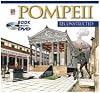
Who doesn’t love a book with cut-outs? And what a perfect reason to have them with a book about uncovering the art and architecture underneath the ruins of Pompeii and Herculaneum.
This glossy book begins with historical background about the area prior to the volcanic eruption of Mount Vesuvius on August 24, 79 CE. Volcanic debris poured down on Pompeii, quickly covering the city to a depth of more than 9 feet. The entire coast of the Bay of Naples between Herculaneum in the north and show more Stabiae to the south was devastated. An estimated two thousand people died in Pompeii, which was abandoned for almost as many years.
But the ash acted as a preservative. When a group of explorers rediscovered the site in 1748, they were surprised to find that under the thick layer of dust and debris Pompeii was mostly intact. Beautiful buildings, artifacts, artworks, and skeletons were discovered in the buried city.
This book notes the four styles of Pompeian painting, shows us the typical arrangement of a Pompeian house, and takes us on a tour of some of the houses that survived and tells us about the residents. It also gives other highlights of what was found during excavations, including temples, a forum, baths, theaters, and shopping area. There is less information about Herculaneum, as research on that area began much more recently.
A fold-out map of Pompeii concludes the book.
Evaluation: Pompeii is fascinating. I resisted going - I thought, oh, just ruins, so what. But the excavated area is so much more than “just ruins.” The outlines of an entire city with much of the art intact is just amazing, especially for how “modern” it all seemed. To paraphrase the tabloids: Ancient Pompeians - just like you and me!
I loved opening the cut-outs to see the difference between the remains of an uncovered building and what the original probably looked like in all its glory.
The book does omit much of the seeming Pompeian obsession with sex in general and penises in particular, but the book is therefore appropriate for all ages. show less
This glossy book begins with historical background about the area prior to the volcanic eruption of Mount Vesuvius on August 24, 79 CE. Volcanic debris poured down on Pompeii, quickly covering the city to a depth of more than 9 feet. The entire coast of the Bay of Naples between Herculaneum in the north and show more Stabiae to the south was devastated. An estimated two thousand people died in Pompeii, which was abandoned for almost as many years.
But the ash acted as a preservative. When a group of explorers rediscovered the site in 1748, they were surprised to find that under the thick layer of dust and debris Pompeii was mostly intact. Beautiful buildings, artifacts, artworks, and skeletons were discovered in the buried city.
This book notes the four styles of Pompeian painting, shows us the typical arrangement of a Pompeian house, and takes us on a tour of some of the houses that survived and tells us about the residents. It also gives other highlights of what was found during excavations, including temples, a forum, baths, theaters, and shopping area. There is less information about Herculaneum, as research on that area began much more recently.
A fold-out map of Pompeii concludes the book.
Evaluation: Pompeii is fascinating. I resisted going - I thought, oh, just ruins, so what. But the excavated area is so much more than “just ruins.” The outlines of an entire city with much of the art intact is just amazing, especially for how “modern” it all seemed. To paraphrase the tabloids: Ancient Pompeians - just like you and me!
I loved opening the cut-outs to see the difference between the remains of an uncovered building and what the original probably looked like in all its glory.
The book does omit much of the seeming Pompeian obsession with sex in general and penises in particular, but the book is therefore appropriate for all ages. show less
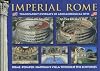
Someone randomly let me borrow this, so I thought I'd go ahead and give it a chance. It's a cute little information book, meant as a travel companion while exploring Rome. It has a decent amount of beginner info about ancient Roman culture, with a large focus on the architecture erected at the time.
It's really amazing how beautiful ancient Roman architecture was, and it's also amazing, in the opposite way, how little of it has stood the test of time. It makes me sad actually, how much of show more these buildings have been lost and most likely destroyed. Of course, the Vatican still stands in all it's glory though.
It is impressive how the Coliseum has stayed standing while so many other structures of the time are merely pillars now, but I suppose that has to do with it's sheer size, as well as it being used for different things as power switched hands over the decades (centuries?).
Mostly, I just feel sad for what was lost and a bit disgusted with Christian colonization, as usual. I really did like the transparent overlays the most, showing how Rome once looked compared to what's left today. I could see this being really fun and educational for a middle grade kid! show less
It's really amazing how beautiful ancient Roman architecture was, and it's also amazing, in the opposite way, how little of it has stood the test of time. It makes me sad actually, how much of show more these buildings have been lost and most likely destroyed. Of course, the Vatican still stands in all it's glory though.
It is impressive how the Coliseum has stayed standing while so many other structures of the time are merely pillars now, but I suppose that has to do with it's sheer size, as well as it being used for different things as power switched hands over the decades (centuries?).
Mostly, I just feel sad for what was lost and a bit disgusted with Christian colonization, as usual. I really did like the transparent overlays the most, showing how Rome once looked compared to what's left today. I could see this being really fun and educational for a middle grade kid! show less

A few unforgettable days in a mountaintop villa in Capri, steps from Anacapri town. The stunning cliffiside, the mountaintop ruins of Tiberius' crumbling palace, completely deserted except for me, the unbelievable azure blue of the grotto's waters.
Lists
You May Also Like


Associated Authors
Statistics
- Works
- 52
- Members
- 696
- Popularity
- #36,356
- Rating
- 3.7
- Reviews
- 3
- ISBNs
- 54
- Languages
- 6