
Diane Purkiss
Author of The English Civil War: A People's History
About the Author
Diane Purkiss is Fellow and Tutor at Keble College, Oxford
Works by Diane Purkiss
At the Bottom of the Garden: A Dark History of Fairies, Hobgoblins, Nymphs, and Other Troublesome Things (2000) 278 copies, 5 reviews
Witches, Wizards, Seers & Healers Myths & Tales: Epic Tales (Gothic Fantasy) (2020) 153 copies, 1 review
The Witch in History: Early Modern and Twentieth-Century Representations (1996) 138 copies, 2 reviews
English Food: A Social History of England Told Through the Food on Its Tables (2022) 51 copies, 1 review
Magical Tales: Myth, Legend, and Enchantment in Children's Books (2013) — Editor — 34 copies, 2 reviews
Literary Cultures and Medieval and Early Modern Childhoods (Literary Cultures and Childhoods) (2019) — Editor — 2 copies
Associated Works
Tagged
Common Knowledge
- Birthdate
- 1961-06-30
- Gender
- female
- Education
- University of Oxford (DPhil - Merton College)
University of Queensland (BA)
Roseville College - Occupations
- professor (English Literature)
- Organizations
- University of Oxford (Keble College)
- Awards and honors
- University of Oxford (Fellow - Keble College)
- Short biography
- Diane Purkiss (born 30 June 1961) is Fellow and Tutor of English at Keble College, Oxford. She specialises in Renaissance and women's literature, witchcraft and the English Civil War.
Purkiss was born in Sydney, Australia, and was educated at Roseville College, Our Lady of the Rosary Convent, and Stuartholme School. She received a BA with first class Honours from the University of Queensland and D.Phil from Merton College, Oxford. She became Lecturer in English at the University of East Anglia in 1991, and Lecturer in English at the University of Reading in 1993. In 1998 she became Professor of English at Exeter University, before taking up her current post at Keble College in 2000.
https://en.wikipedia.org/wiki/Diane_Pu... - Nationality
- Australia
- Birthplace
- Sydney, New South Wales, Australia
- Associated Place (for map)
- New South Wales, Australia
Members
Reviews
At the Bottom of the Garden: A Dark History of Fairies, Hobgoblins, Nymphs, and Other Troublesome Things by Diane Purkiss
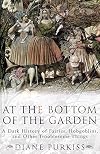
This is what I call a serious study. Purkiss examines fairy lore all the way back into the ancient cultures of Mesopotamia, moving through history up to today's obsession with aliens and Elvis. She cites numerous examples of fairy folklore, literature, comparative studies... there are more references here in the endnotes than I've seen in some academic textbooks. She really did her research, and wrote a fascinating and compelling book to go along with it. Forget dry history or lifeless show more folklore. While I may not agree with all her conclusions - and in some cases I wonder if her conclusions are pushing the boundaries of the evidence - this book is definitely worth reading for those who are interested in folklore, mythology, or faerie lore. show less
The English Civil War: Papists, Gentlewoman, Soldiers, and Witchfinders in the Birth of Modern Britain by Diane Purkiss

This history is long and detailed and provides a good sense of what it would have been like to live through the English Civil War in the 1640s. Not just military history, but the religious dynamics creating turmoil, the witch hunts, the dramas of families and lovers, and politics of Charles I and Parliament are all discussed, providing an impression of a tumultuous age. I particularly enjoyed the author's explanation of how, in this time, even cookbooks were political. An excellence book for show more understanding this period of English history. show less
At the Bottom of the Garden: A Dark History of Fairies, Hobgoblins, Nymphs, and Other Troublesome Things by Diane Purkiss
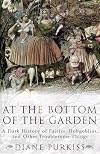
This book attempts to dethrone our contemporary understanding of pretty little cute fairies (think the modern Disney revamp of "Tink" and all her sisters/cousins) and reconstruct a darker and more sinister lineage for fairies in Western culture. In chronological order, Purkiss moves from prehistoric periods to the present, studying how changing historical contexts have altered our interpretation of and relationship to fairies. I enjoyed the book but I do have some concerns with it.
It is show more published by a university press, but it is trying to be a popular history. I think this is a problem. It is neither fish (truly rigorous academic study) nor fowl (truly popular, accessible text). The author uses psychoanalytic and poststructuralist theories in places, and elsewhere the tone switches to an overly simplistic, conversational banter. It felt as if the editor was trying to satisfy two markets with the book and what resulted was a bit disjointed. Also, while the book appears to be well-researched, I take issue with the first couple chapters in which basically any ancient demon or liminal figure is redefined as a fairy. I learned something new reading this book, but I ended up feeling pretty neutral about it. show less
It is show more published by a university press, but it is trying to be a popular history. I think this is a problem. It is neither fish (truly rigorous academic study) nor fowl (truly popular, accessible text). The author uses psychoanalytic and poststructuralist theories in places, and elsewhere the tone switches to an overly simplistic, conversational banter. It felt as if the editor was trying to satisfy two markets with the book and what resulted was a bit disjointed. Also, while the book appears to be well-researched, I take issue with the first couple chapters in which basically any ancient demon or liminal figure is redefined as a fairy. I learned something new reading this book, but I ended up feeling pretty neutral about it. show less
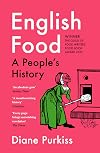
Very good and detailed account of the history of English food from a rather different perspective. Attacks Elizabeth David with gusto, for example. Looks at both general issues (eg breakfast) and specific (eg fish).
Lists
Awards


You May Also Like


Associated Authors
Statistics
- Works
- 14
- Also by
- 8
- Members
- 1,201
- Popularity
- #21,368
- Rating
- 3.7
- Reviews
- 14
- ISBNs
- 36
