
E. F. Benson (1867–1940)
Author of Queen Lucia
About the Author
Image credit: From "Harpers Weekly"
Courtesy of the NYPL Digital Gallery
(image use requires permission from the New York Public Library)
Courtesy of the NYPL Digital Gallery
(image use requires permission from the New York Public Library)
Series
Works by E. F. Benson
The Worshipful Lucia & Trouble for Lucia: The Mapp & Lucia Novels (Mapp & Lucia Series) (2015) 15 copies
The Babe, B.A. Being the uneventful history of a young gentleman at Cambridge university (1897) 14 copies
The Classic Ghost Stories Collection: Chilling Tales from Guy de Maupassant, M. R. James, Edith Wharton, E. F. Benson, Sheridan Le Fanu, Henry James (Arcturus Retro Classics, 6) (2020) — Author — 12 copies
Delphi Works of E. F. Benson with the Complete Mapp and Lucia Novels (Illustrated) (Series Five Book 2) (2014) 11 copies
Old London (4 Volumes): Janet, Friend of the Rich, Portrait of an English Nobleman, The Unwanted (1937) 6 copies
Complete Short Stories of E. F. Benson: 70 Classic, Ghost, Spook, Supernatural, Mystery, Haunting and Other Tales (2015) 4 copies
In the Tube 4 copies
Hauntings and Horrors: The Collected Ghost Stories of E. F. Benson (54 classic Edwardian tales of horror and the occult) (2014) 4 copies
Premium Short Stories Collection - Blackmailing, Crank, Spook & Classic Tales (Unabridged) (2015) 3 copies
"The House of Defence v. 1" 3 copies
Collected Works of E. F. Benson 3 copies
Margery 3 copies
LibriVox Horror Story Collection 005 3 copies
The Outcast 2 copies
English Figure Skating - A Guide to the Theory and Practice of Skating in the English Style (2013) 2 copies
Monkeys 2 copies
The House with the Brick-Kiln 2 copies
Outside the Door 2 copies
The Wishing-Well 2 copies
Paul 1 copy
Catepillars 1 copy
Boxing Day 1 copy
Tortoise 1 copy
The Step 1 copy
Visible e invisible 1 copy
Der Todesbote 1 copy
Portrait of an Englishman 1 copy
Two Masterly Ghost Stories 1 copy
At the Farmhouse 1 copy
The Light in the Garden 1 copy
Spinach and reconciliation 1 copy
The mad annual 1 copy
Mr. Tilly's Seance 1 copy
The Hanging of Alfred Wadham 1 copy
The Shootings Of Achnaleish 1 copy
The China Bowl 1 copy
The Cat 1 copy
At Abdul Ali's Grave 1 copy
Bagnell Terrace 1 copy
Expiation 1 copy
The Gardener 1 copy
Roderick's Story 1 copy
Christopher Comes Back 1 copy
The Chippendale Mirror 1 copy
[Dodo Omnibus1] Dodo 1 copy
Corstophine 1 copy
Collected Ghost Stories 1 copy
The Face [short story] 1 copy
Tales of Terror Collection: A Night in Whitechapel, Was It a Dream?, Caterpillars, John Mortonson's Funeral (2014) 1 copy
Naboth's Vineyard 1 copy
Associated Works
The Vampire Archives: The Most Complete Volume of Vampire Tales Ever Published (2007) — Contributor — 218 copies, 5 reviews
Masterpieces of Terror and the Unknown: A Treasury of Bizarre Tales Old and New (1993) — Contributor — 212 copies, 2 reviews
Pages Passed from Hand to Hand: The Hidden Tradition of Homosexual Literature in English from 1748 to 1914 (1997) — Contributor — 185 copies, 1 review
Circles of Stone: Weird Tales of Pagan Sites and Ancient Rites (2023) — Contributor — 74 copies, 2 reviews
Chamber of Horrors: Great Tales of Terror and the Supernatural (1984) — Contributor — 71 copies, 1 review
Famous Fantastic Mysteries: 30 Great Tales of Fantasy and Horror from the Classic Pulp Magazines Famous Fantastic Mysteries & Fantastic Novels (1991) — Contributor — 67 copies, 1 review
Our Haunted Shores: Tales from the Coasts of the British Isles (2022) — Contributor — 67 copies, 2 reviews
There Is a Graveyard That Dwells in Man: More Strange Fiction and Hallucinatory Tales (2020) — Contributor — 64 copies
To Sleep, Perchance to Dream...Nightmare: 30 Terrifying Tales (1993) — Contributor — 54 copies, 1 review
Vampires, Zombies, Werewolves and Ghosts: 25 Classic Stories of the Supernatural (Signet Classics) (2011) — Contributor — 53 copies, 1 review
Alternative Alices: Visions and Revisions of Lewis Carroll's Alice Books : An Anthology (1997) — Contributor — 43 copies, 1 review
Spores of Doom: Dank Tales of the Fungal Weird: 59 (British Library Tales of the Weird) (2025) — Contributor — 36 copies, 2 reviews
Strange Relics: Stories of Archaeology and the Supernatural, 1895-1954 (Handheld Weirds, 7) (2022) — Contributor — 31 copies
The Ghost of Fear and Others: H. P. Lovecraft's Favorite Stories Vol.1 (2014) — Contributor — 27 copies
The Rivals of Dracula: Stories from the Golden Age of Gothic Horror (2016) — Contributor — 25 copies, 2 reviews
The Vampire Megapack: 27 Modern and Classic Vampire Stories (2012) — Contributor — 17 copies, 2 reviews
The Second Ghost Story Megapack: 25 Classic Ghost Stories (2013) — Contributor — 15 copies, 2 reviews
Phantoms of Kernow: Classic Tales of Haunted Cornwall: 62 (British Library Tales of the Weird) (2025) — Contributor — 15 copies
Bewitched Beings: Phantoms, Familiars, and the Possessed in Stories from Two Centuries (1974) — Contributor — 15 copies, 1 review
Weird Tales: The Best of the 1920s — Contributor — 14 copies
Tales of the Undead: Vampires and Visitants (1947) — Contributor, some editions — 10 copies, 1 review
More ghosts and marvels,: A selection of uncanny tales from Sir Walter Scott to Michael Arlen, (The World's classics) (1934) — Contributor — 10 copies
Out of the Sand: Mummies, Pyramids, and Egyptology in Classic Science Fiction and Fantasy (2008) — Contributor — 5 copies
LibriVox Short Ghost and Horror Collection 028 — Contributor — 2 copies
Weird Tales Volume 14 Number 2, August 1929 — Contributor — 2 copies
Invertebrata Enigmatica: Giant Spiders, Dangerous Insects, and Other Strange Invertebrates in Classic Science Fiction and Fantasy (2008) — Contributor — 2 copies
Anthropologica Incognita: Wild Men, Strange Apes, and Fantastic Races in Classic Science Fiction and Fantasy (2009) — Contributor — 2 copies
LibriVox Short Ghost and Horror Collection 035 — Contributor — 1 copy
Famous Fantastic Mysteries Combined with Fantastic Novels Magazine, Vol. 04, No. 4, August 1942 (1942) — Contributor — 1 copy
Argosy (UK) [Vol. IV No. 5, June 1943] — Contributor — 1 copy
Number 5. The Apple Disdained by R.H. Mottram [SIGNED] Number 6. The Man Who Missed the Bus by Stella Benson [SIGNED] Number 8. The Old Dovecote by David Garnett [SIGNED] Number… (1929) — Contributor — 1 copy
Short Ghost and Horror Collection 074 — Contributor — 1 copy
Tagged
Common Knowledge
- Canonical name
- Benson, E. F.
- Legal name
- Benson, Edward Frederic
- Other names
- Benson, Fred
- Birthdate
- 1867-07-24
- Date of death
- 1940-02-29
- Gender
- male
- Education
- King's College, Cambridge (BA|1892)
- Occupations
- His Worship the Mayor of Rye (Mayor)
figure skater (athlete)
novelist
biographer
short story writer - Awards and honors
- Order of the British Empire (Member, 1938)
- Agent
- Linda Shaughnessy (A.P.Watt)
- Relationships
- Benson, Edward White (father)
Benson, Arthur Christopher (brother)
Benson, Robert Hugh (brother)
Benson, Margaret (sister)
Sidgwick, Henry (uncle)
Sidgwick, Eleanor Mildred (aunt) (show all 7)
Sidgwick, Mary (mother) - Cause of death
- throat cancer
- Nationality
- England
UK - Birthplace
- Wellington College, Crowthorne, Berkshire, England, UK
- Places of residence
- Wellington College, Crowthorne, Berkshire, England, UK (birthplace)
Rye, East Sussex, England, UK
London, Middlesex, England, UK
Cambridge, Cambridgeshire, England, UK
Lamb House, Rye, East Sussex, England, UK - Place of death
- University Hospital, London, Middlesex, England, UK
- Burial location
- Rye Cemetery, Rye, East Sussex, England, UK
- Map Location
- England, UK
Members
Discussions
THE DEEP ONES: "Caterpillars" by E. F. Benson in The Weird Tradition (May 2023)
British Author Challenge June 2022: Jackie Kay & E. F. Benson in 75 Books Challenge for 2022 (August 2022)
THE DEEP ONES: "The Man Who Went Too Far" by E. F. Benson in The Weird Tradition (March 2022)
THE DEEP ONES: "The Horror-Horn" by E.F. Benson in The Weird Tradition (February 2020)
THE DEEP ONES: "Negotium Perambulans" by E.F. Benson in The Weird Tradition (January 2016)
Reviews
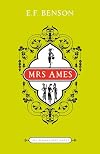
This novel is a precisely drawn satire of life in an English village in the early 20th century. Mrs. Ames has been the leader of society in Riseborough for many years, due partly to her commanding presence and partly to her distant familial connection with a nobleman. The other residents of Riseborough both admire and resent her for her position, and many of the local gossips would be glad to see her fail in some way. So when a (relatively speaking) new arrival, Mrs. Evans, begins to set show more herself up as Mrs. Ames' social rival, the entire town waits with bated breath to see whether their queen will be dethroned. Meanwhile, both Mrs. Ames and Mrs. Evans dimly begin to realize that their lives are unfulfilling, but their search for deeper meaning takes them down drastically different paths, one of which may lead to scandal and heartbreak.
I expected this book to be nothing more than a light, witty comedy of manners -- which it is, but it also took a more serious turn than I anticipated. The various social machinations of the ladies of Riseborough are very funny; there's a particularly wonderful scene in which Mrs. Evans hosts a masquerade ball and several ladies (tragically, yet hilariously) show up wearing the same costume. But for me, the more compelling story was Mrs. Ames' slow realization that her dreary, respectable life isn't making her happy. It's only when she begins to identify with a cause greater than herself that she actually finds contentment -- even at the moment when all her respectability and social standing is taken away. So oddly enough, this comedy of manners turns into a coming-of-age story, and I found it a surprisingly thought-provoking read. show less
I expected this book to be nothing more than a light, witty comedy of manners -- which it is, but it also took a more serious turn than I anticipated. The various social machinations of the ladies of Riseborough are very funny; there's a particularly wonderful scene in which Mrs. Evans hosts a masquerade ball and several ladies (tragically, yet hilariously) show up wearing the same costume. But for me, the more compelling story was Mrs. Ames' slow realization that her dreary, respectable life isn't making her happy. It's only when she begins to identify with a cause greater than herself that she actually finds contentment -- even at the moment when all her respectability and social standing is taken away. So oddly enough, this comedy of manners turns into a coming-of-age story, and I found it a surprisingly thought-provoking read. show less
The Complete Lucia Victrix: Queen Lucia, Miss Mapp, Lucia in London, Mapp and Lucia, Lucia's Progress, Trouble for Lucia by E. F. Benson

Queen Lucia
And now for our heavenly Mozart. You must be patient with me, Georgino, for you know how badly I read. Caro! How difficult it looks! I am frightened! Lucia never saw such a dwefful thing to read!'
And it had been those very bars which Georgie had heard through the open window just now.
'Georgie's is much more dwefful!' he said, remembering the double sharp that came in the second bar. 'Georgie fwightened, too at reading it. O-o-h!' and he gave a little scream. 'Cattivo Mozart, to show more write anything so dwefful diffy!'
A comedy of manners, set in an English village in the 1920s. Emmeline Lucas (known as Lucia to her friends) rules the upper-class inhabitants of the Elizabethan cottages in Riseholme, guiding all their social and artistic activities with the loyal support of her husband Philip and her friend Georgie Pillson. Her pretentiousness is embarrassingly awful, but very funny; speaking Italian with her husband and baby-talk with Georgie, building an extension to her house furnishing it in the Elizabethan manner, with rushes on the floor, 16th century books and no electric lighting, practicing her part of new piano duets then claiming that it is the first time she has opened the music when she first practises with Georgie (although he knows she does so, and does the same himself), and planning all artistic activities well in advance so she has time to read up on the subject and appear an expert.
When Lucia 'steals' Daisy Quantock's Indian guru, moving him into her spare bedroom and running yoga and meditation classes at her house, her subjects start to get restless, and she finally gets her comeuppance when a newcomer charms the villagers away from her without even trying, including her beloved Georgie.
Miss Mapp
'And what about Miss Mapp being told?'
'She'll find it out by degrees,' said the ruthless Diva. 'It will hurt more in bits.'
'Oh, but she mustn't be hurt,' said Miss Mackintosh. 'She's too precious, I adore her.'
'So do we,' said Diva. 'But we like her to be found out occasionally. You will, too, when you know her.'
From the garden room of her Georgian house in the town of Tilling, situated at a sharp bend in the road, Miss Elizabeth Mapp has a perfect view of her neighbours' comings and goings. Armed with opera glasses and notebook, she is well-placed to scheme, spread gossip and manipulate the townsfolk, but unfortunately for Elizabeth, her friend and main rival, Godiva 'Diva' Plaistow, usually manages to get her own back. The struggle for social pre-eminence takes place during tea parties, bridge games, rounds of golf and the daily shopping trips, accompanied by malicious gossip, long-held grudges, quarrelling and blatant hypocrisy.
Lucia in London
Types and striking characters like Lucia, who pursued undaunted and indefatigable their aim in life, were rare, and when they occurred should be studied with reverent affection . . . Sometimes on of the old and original members of the Luciaphils discovered others, and if when Lucia's name was mentioned an eager and kindly light shone in their eyes, and they said in a hushed whisper, 'Did you hear who was there on Thursday?' they thus disclosed themselves as Luciaphils . . .
In this book, Pepino inherits a house in London from an aunt, and Lucia decides that they will spend part of their time there and part in Riseholme. Lucia throws herself into London society with her usual determination, but unfortunately she rather neglects Riseholme, even her beloved Georgie, and when she brings her smart new friends down for the weekend and doesn't so much as introduce them to her old friends, it is the last straw and Riseholme sends her to Coventry. And Nemesis is waiting for her in the wings.
My favourite part was the Luciaphils, a group of Lucia's London friends who know exactly what Lucia is up to, but adore her for it, and gather in gleeful huddles to discuss her latest brazen acts of social climbing.
Mapp and Lucia
But Foljambe, Cadman!' he cried. 'Foljambe can't come back here every night from Riseholme. What am I to do ? Is it all irrevocable?'
Lucia bridled. She was quite aware that this parting (if there was to be one) between him and Foljambe would be a dagger, but it was surprising, to say the least, that the thought of the parting between herself and him should not have administered him the first shock. However, there it was. Foljambe first by all means.
When Lucia, having retreated from the social whirl of Riseholme over the last year, finds that Daisy Quantock has cast herself in the starring role of Queen Elizabeth in Riseholme's Elizabethan fete, she decides to absent herself from Riseholme for the summer, and takes Miss Mapp's house in Tilling for August and September. Lucia takes exception to Miss Mapp's proprietorial attitude towards her, and refusing to let herself be 'run', she introduces the exciting innovation of dinner parties to the townsfolk, whose main social activities up to that point had been tea followed by bridge. The inhabitants of Tilling don't take sides, but look on enthralled at the struggle for social supremacy between Elizabeth Mapp and the newcomer. Georgie follows Lucia to Riseholme, but is more worried about the possibility of losing his peerless maid Foljambe, than about anything Lucia does.
Lucia's Progress
You know how I hate all fuss, dear Padre,' she said, 'but I do think, don't you, that Tilling would wish for a little pomp and ceremony. An idea occurred to me: the Mayor and Corporation perhaps might like to escort the Bishop in procession to the church from here after lunch. If that is their wish, I should not dream of opposing it. Maces, scarlet robes; there would be a picturesqueness about it which would be suitable on such an occasion. Of course I couldn't suggest it myself, but, as Vicar, you might ascertain what they felt.'
The last-but-one of E.F. Benson's books about Lucia and Miss Mapp is just as full of social climbing, back-biting and breathtaking hypocrisy as the others, but there is quite a surprise towards the end.
Trouble for Lucia
Georgie felt the sensation, that was becoming odiously familiar, of being hunted and harried. Life for him was losing that quality of leisure, which gave one time to feel busy and ready to take so great an interest in the minute happenings of the day. Lucia was poisoning that eager fount by this infusion of Mayoral duties and responsibilities, and tedious schemes for educational lectures and lighting of the streets. True, the old pellucid spring gushed out sometimes: who, for instance, but she could have made Tilling bicycle-crazy or have convinced Susan that Blue Birdie had gone to a higher sphere? That was her real metier, to render the trivialities of life intense for others. But how her schemes for the good of Tilling bored him.
This books opens with Lucia about to become Mayor of Tilling, and the other women all vying for the role of her Mayoress. I was pleased to see that Lucia didn't get things all her own way this time, as she was conceited enough about being Mayor and just loved everyone calling her 'Your Worship'. Among other set-backs, Georgie is bored with all Lucia' talk of politics, and mutinies when she says she is too busy for them to go and stay with Olga Bracely, and an absent-minded Duchess causes her to lose face with her friends. I can't say I liked the sub-plot about Susan Wyse's budgie - gruesome and rather tasteless.
This is the last of E.F. Benson's Lucia books, although Tom Holt has written a couple more called "Lucia in Wartime" and "Lucia Triumphant", one of which I read one of a long time ago. Until the last few months it was the only Lucia book I had read. show less
And now for our heavenly Mozart. You must be patient with me, Georgino, for you know how badly I read. Caro! How difficult it looks! I am frightened! Lucia never saw such a dwefful thing to read!'
And it had been those very bars which Georgie had heard through the open window just now.
'Georgie's is much more dwefful!' he said, remembering the double sharp that came in the second bar. 'Georgie fwightened, too at reading it. O-o-h!' and he gave a little scream. 'Cattivo Mozart, to show more write anything so dwefful diffy!'
A comedy of manners, set in an English village in the 1920s. Emmeline Lucas (known as Lucia to her friends) rules the upper-class inhabitants of the Elizabethan cottages in Riseholme, guiding all their social and artistic activities with the loyal support of her husband Philip and her friend Georgie Pillson. Her pretentiousness is embarrassingly awful, but very funny; speaking Italian with her husband and baby-talk with Georgie, building an extension to her house furnishing it in the Elizabethan manner, with rushes on the floor, 16th century books and no electric lighting, practicing her part of new piano duets then claiming that it is the first time she has opened the music when she first practises with Georgie (although he knows she does so, and does the same himself), and planning all artistic activities well in advance so she has time to read up on the subject and appear an expert.
When Lucia 'steals' Daisy Quantock's Indian guru, moving him into her spare bedroom and running yoga and meditation classes at her house, her subjects start to get restless, and she finally gets her comeuppance when a newcomer charms the villagers away from her without even trying, including her beloved Georgie.
Miss Mapp
'And what about Miss Mapp being told?'
'She'll find it out by degrees,' said the ruthless Diva. 'It will hurt more in bits.'
'Oh, but she mustn't be hurt,' said Miss Mackintosh. 'She's too precious, I adore her.'
'So do we,' said Diva. 'But we like her to be found out occasionally. You will, too, when you know her.'
From the garden room of her Georgian house in the town of Tilling, situated at a sharp bend in the road, Miss Elizabeth Mapp has a perfect view of her neighbours' comings and goings. Armed with opera glasses and notebook, she is well-placed to scheme, spread gossip and manipulate the townsfolk, but unfortunately for Elizabeth, her friend and main rival, Godiva 'Diva' Plaistow, usually manages to get her own back. The struggle for social pre-eminence takes place during tea parties, bridge games, rounds of golf and the daily shopping trips, accompanied by malicious gossip, long-held grudges, quarrelling and blatant hypocrisy.
Lucia in London
Types and striking characters like Lucia, who pursued undaunted and indefatigable their aim in life, were rare, and when they occurred should be studied with reverent affection . . . Sometimes on of the old and original members of the Luciaphils discovered others, and if when Lucia's name was mentioned an eager and kindly light shone in their eyes, and they said in a hushed whisper, 'Did you hear who was there on Thursday?' they thus disclosed themselves as Luciaphils . . .
In this book, Pepino inherits a house in London from an aunt, and Lucia decides that they will spend part of their time there and part in Riseholme. Lucia throws herself into London society with her usual determination, but unfortunately she rather neglects Riseholme, even her beloved Georgie, and when she brings her smart new friends down for the weekend and doesn't so much as introduce them to her old friends, it is the last straw and Riseholme sends her to Coventry. And Nemesis is waiting for her in the wings.
My favourite part was the Luciaphils, a group of Lucia's London friends who know exactly what Lucia is up to, but adore her for it, and gather in gleeful huddles to discuss her latest brazen acts of social climbing.
Mapp and Lucia
But Foljambe, Cadman!' he cried. 'Foljambe can't come back here every night from Riseholme. What am I to do ? Is it all irrevocable?'
Lucia bridled. She was quite aware that this parting (if there was to be one) between him and Foljambe would be a dagger, but it was surprising, to say the least, that the thought of the parting between herself and him should not have administered him the first shock. However, there it was. Foljambe first by all means.
When Lucia, having retreated from the social whirl of Riseholme over the last year, finds that Daisy Quantock has cast herself in the starring role of Queen Elizabeth in Riseholme's Elizabethan fete, she decides to absent herself from Riseholme for the summer, and takes Miss Mapp's house in Tilling for August and September. Lucia takes exception to Miss Mapp's proprietorial attitude towards her, and refusing to let herself be 'run', she introduces the exciting innovation of dinner parties to the townsfolk, whose main social activities up to that point had been tea followed by bridge. The inhabitants of Tilling don't take sides, but look on enthralled at the struggle for social supremacy between Elizabeth Mapp and the newcomer. Georgie follows Lucia to Riseholme, but is more worried about the possibility of losing his peerless maid Foljambe, than about anything Lucia does.
Lucia's Progress
You know how I hate all fuss, dear Padre,' she said, 'but I do think, don't you, that Tilling would wish for a little pomp and ceremony. An idea occurred to me: the Mayor and Corporation perhaps might like to escort the Bishop in procession to the church from here after lunch. If that is their wish, I should not dream of opposing it. Maces, scarlet robes; there would be a picturesqueness about it which would be suitable on such an occasion. Of course I couldn't suggest it myself, but, as Vicar, you might ascertain what they felt.'
The last-but-one of E.F. Benson's books about Lucia and Miss Mapp is just as full of social climbing, back-biting and breathtaking hypocrisy as the others, but there is quite a surprise towards the end.
Trouble for Lucia
Georgie felt the sensation, that was becoming odiously familiar, of being hunted and harried. Life for him was losing that quality of leisure, which gave one time to feel busy and ready to take so great an interest in the minute happenings of the day. Lucia was poisoning that eager fount by this infusion of Mayoral duties and responsibilities, and tedious schemes for educational lectures and lighting of the streets. True, the old pellucid spring gushed out sometimes: who, for instance, but she could have made Tilling bicycle-crazy or have convinced Susan that Blue Birdie had gone to a higher sphere? That was her real metier, to render the trivialities of life intense for others. But how her schemes for the good of Tilling bored him.
This books opens with Lucia about to become Mayor of Tilling, and the other women all vying for the role of her Mayoress. I was pleased to see that Lucia didn't get things all her own way this time, as she was conceited enough about being Mayor and just loved everyone calling her 'Your Worship'. Among other set-backs, Georgie is bored with all Lucia' talk of politics, and mutinies when she says she is too busy for them to go and stay with Olga Bracely, and an absent-minded Duchess causes her to lose face with her friends. I can't say I liked the sub-plot about Susan Wyse's budgie - gruesome and rather tasteless.
This is the last of E.F. Benson's Lucia books, although Tom Holt has written a couple more called "Lucia in Wartime" and "Lucia Triumphant", one of which I read one of a long time ago. Until the last few months it was the only Lucia book I had read. show less
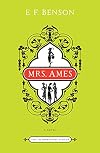
I don't think it's too early to say that this must have been one of the best novels of 1912!
These funny characters live in a town like Tilling/Riseholme--I forget what it was called in this novel--and are completely all up in each other's business. A definite precursor to the Lucia series but also contains elements of Benson's goofy melodramas like The Weaker Vessel and Arundel.
I was COMPLETELY gobsmacked whenMrs. Ames became a suffragette. I loved her adventure interrupting a speech and show more chaining herself to a table leg. Trying to tease out the author's attitude, it seemed to me that Fred supported women's suffrage but thought that radical tactics were silly--anyway, he is always looking for the comedy in everything. It was clear that the Suffragette movement made Mrs. Ames a finer person, less snobbish and superficial. The way the men talked about her efforts made me want to smack them. At the same time, everything that happened was amusing.
This novel also had a bang-up ending. I truly wasn't sure what would happen. As always, novels of this period make me feel grateful that today we have no-fault divorce and we don't have to worry that our children will be sent down from college or that we'll be shunned by society if we break up our marriages. But mainly, this novel was very funny.
PS. For years I've been reading novels where people have lumbago, and it sounds terrible. Finally I looked up what it is. Do you know what it is?? Lower back pain! I've had lumbago for years. And these characters think sitting in drafts will make it better or worse. Sheesh. show less
These funny characters live in a town like Tilling/Riseholme--I forget what it was called in this novel--and are completely all up in each other's business. A definite precursor to the Lucia series but also contains elements of Benson's goofy melodramas like The Weaker Vessel and Arundel.
I was COMPLETELY gobsmacked when
This novel also had a bang-up ending. I truly wasn't sure what would happen. As always, novels of this period make me feel grateful that today we have no-fault divorce and we don't have to worry that our children will be sent down from college or that we'll be shunned by society if we break up our marriages. But mainly, this novel was very funny.
PS. For years I've been reading novels where people have lumbago, and it sounds terrible. Finally I looked up what it is. Do you know what it is?? Lower back pain! I've had lumbago for years. And these characters think sitting in drafts will make it better or worse. Sheesh. show less
Naturally, E.F. Benson published three books in 1916. Most of his books took him three weeks to write. He described himself as “uncontrollably prolific.” His biographer suggests that the whole Benson family’s prodigious output is due to mania. I say, a preferred kind of mania if you could pick and choose.
I read David Blaize many years ago. This is today one of Benson’s most popular novels. It is a boarding school story. I enjoy those, and it has everything you want in one, including show more terrifying but secretly kind headmasters, beatings, cricket, and lots of pranks. The heart of the story is the friendship that the title character develops with an older boy named Maddox. The most memorable part is when Maddox is ogling David in the shower, David doesn’t like it and leaves, and Maddox comes to apologize to him. Then later another character is expelled for bringing disgrace onto himself for writing love letters to another boy. Maddox says that it could have been himself and that David has made him “uncorrupt” himself, and David thanks Maddox for shielding him from filth. Because they have chosen the path of purity, they then basically get to have a love scene, lying next to each other on the grass, wriggling shyly closer, feeling intense happiness, and then playing sports. Forever after they are the greatest of friends. David and Maddox get to hold hands at the end because David almost dies (of injuries from heroically stopping a runaway horse on the high street.) A brush with death is the only situation where males are permitted to hold hands, and one of them has to be delirious or unconscious. I think you could read every book on the planet and never find a more striking example of an author desperately trying to repudiate sexual feelings and at the same time elevate the purity of love between two boys. When I read David Blaize as a young person it just made me roll my eyes, but as a withered-up middle-aged person I find it very touching and a bit sad.
According to Benson’s biographer Brian Masters, David Blaize was the first positive treatment of a romantic friendship at a boy’s school and while it was a critical success it was “dangerously new.” E.F. Benson’s brother Arthur wanted him to leave all that stuff out but Fred didn’t listen. So Fred received lots of fan mail about the book, including one from the Front saying “the lads in the trenches are sharing it and passing it around.” Masters says Fred would “not have been pleased to learn that the novel is still on the list of homosexual book clubs” and that “it does not belong there.” (This biography was written in 1991.) So Masters and I have opposite ideas about how Fred would feel if he were re-animated, and that is because *no one knows.* (Who is this guy Brian Masters anyway? He also wrote biographies of a serial killer and necrophiliac, a wicked zoo owner, British dukes, and Marie Corelli.)
Years later Fred said, “I have had more correspondence about [David Blaize] than any other book I ever wrote. That I think has been because there was no ‘book-making’ about it, but it was a genuine piece of self-expression.” And now we have a pleasing moment where I actually agree with both Brian Masters and the guy who wrote the introduction to Freaks of Mayfair, Christopher Hawtree. They both say that 1916 was a turning point in Benson’s development as an artist, as he stopped writing those unconvincing sentimental romances centering on a man and a woman, and began writing the comedies he is now known for. I think it is the fact that Benson is writing about things he actually cares about (in his peculiar way) that makes both David Blaize and Freaks of Mayfair so appealing and yet painful. (I don't mean peculiar in a bad way. He is one of a kind. He sort of has no heart, but usually in a kindly way, and how can someone be kindly with no heart? So it must be there but he is very coy, plus clearly he is not motivated by the same things as most other people. You go read some E.F. Benson and you'll see.)
Two years earlier Benson’s brother Hugh (the Catholic one) died of pneumonia, and in 1916 his sister Maggie died of heart troubles. Based on Final Edition, one of E.F. Benson’s memoirs that he completed just days before his own death, it looks like during 1916 all the extant members of his family were suffering from mental illness or just about to die themselves. So it’s really remarkable that Benson could be so funny and was only about to get funnier.
I’m going to read Final Edition and the slightly annoying biography more carefully instead of just skimming for the good bits. And I should probably read at least one of his other memoirs too. Then I’ll be fully ready for his two novels of 1917. I’m glad I have many more years with E.F. Benson before he dies of throat cancer in 1940. His best books are yet to come! show less
I read David Blaize many years ago. This is today one of Benson’s most popular novels. It is a boarding school story. I enjoy those, and it has everything you want in one, including show more terrifying but secretly kind headmasters, beatings, cricket, and lots of pranks. The heart of the story is the friendship that the title character develops with an older boy named Maddox. The most memorable part is when
According to Benson’s biographer Brian Masters, David Blaize was the first positive treatment of a romantic friendship at a boy’s school and while it was a critical success it was “dangerously new.” E.F. Benson’s brother Arthur wanted him to leave all that stuff out but Fred didn’t listen. So Fred received lots of fan mail about the book, including one from the Front saying “the lads in the trenches are sharing it and passing it around.” Masters says Fred would “not have been pleased to learn that the novel is still on the list of homosexual book clubs” and that “it does not belong there.” (This biography was written in 1991.) So Masters and I have opposite ideas about how Fred would feel if he were re-animated, and that is because *no one knows.* (Who is this guy Brian Masters anyway? He also wrote biographies of a serial killer and necrophiliac, a wicked zoo owner, British dukes, and Marie Corelli.)
Years later Fred said, “I have had more correspondence about [David Blaize] than any other book I ever wrote. That I think has been because there was no ‘book-making’ about it, but it was a genuine piece of self-expression.” And now we have a pleasing moment where I actually agree with both Brian Masters and the guy who wrote the introduction to Freaks of Mayfair, Christopher Hawtree. They both say that 1916 was a turning point in Benson’s development as an artist, as he stopped writing those unconvincing sentimental romances centering on a man and a woman, and began writing the comedies he is now known for. I think it is the fact that Benson is writing about things he actually cares about (in his peculiar way) that makes both David Blaize and Freaks of Mayfair so appealing and yet painful. (I don't mean peculiar in a bad way. He is one of a kind. He sort of has no heart, but usually in a kindly way, and how can someone be kindly with no heart? So it must be there but he is very coy, plus clearly he is not motivated by the same things as most other people. You go read some E.F. Benson and you'll see.)
Two years earlier Benson’s brother Hugh (the Catholic one) died of pneumonia, and in 1916 his sister Maggie died of heart troubles. Based on Final Edition, one of E.F. Benson’s memoirs that he completed just days before his own death, it looks like during 1916 all the extant members of his family were suffering from mental illness or just about to die themselves. So it’s really remarkable that Benson could be so funny and was only about to get funnier.
I’m going to read Final Edition and the slightly annoying biography more carefully instead of just skimming for the good bits. And I should probably read at least one of his other memoirs too. Then I’ll be fully ready for his two novels of 1917. I’m glad I have many more years with E.F. Benson before he dies of throat cancer in 1940. His best books are yet to come! show less
Lists
Awards


You May Also Like


Associated Authors
Statistics
- Works
- 256
- Also by
- 182
- Members
- 9,803
- Popularity
- #2,435
- Rating
- 3.9
- Reviews
- 292
- ISBNs
- 858
- Languages
- 12
- Favorited
- 84


