
Esmé Weijun Wang
Author of The Collected Schizophrenias: Essays
About the Author
Image credit: Author Esmé Weijun Wang at the 2018 Texas Book Festival in Austin, Texas, United States. By Larry D. Moore - Own work, CC BY-SA 4.0, https://commons.wikimedia.org/w/index.php?curid=74052744
Works by Esmé Weijun Wang
Soft Animals 1 copy
Associated Works
(Don't) Call Me Crazy: 33 Voices Start the Conversation about Mental Health (2018) — Contributor — 317 copies, 1 review
Doll Hospital #1 — Contributor — 1 copy
Tagged
Common Knowledge
- Birthdate
- 1983-06-08
- Gender
- female
- Education
- University of Michigan (MFA)
Stanford University (BA) - Occupations
- novelist
short story writer
essayist
Founder, The Unexpected Shape Community for writers - Nationality
- USA
- Places of residence
- San Francisco, California, USA
- Associated Place (for map)
- California, USA
Members
Reviews
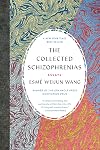
I recently could only get through part one of Susan Sheehan's Is There No Place on Earth for Me? where she followed and often accompanied the life of a woman with schizophrenia. As important and compassionate as these types of investigative journalism can be, shedding light on the inhumanity of health systems or society's perspectives on mental health, Wang hits the nail on the head for me with her comment on Nellie Bly's Ten Days in a Madhouse - that these journalists were always free to show more leave.
Wang expertly juggles many paradoxes here: of sharing an actual lived experience of schizophrenia woven with research, the ability which marks her as high-functioning, which leads others to assume exceptionalism; of wanting to be put together outwardly yet but also not present too well that it would prevent her from getting the support she needs; of respecting person-first language but also that schizophrenia is inextricably a part of her.
As expected, the topics can be difficult to read sometimes, but Wang was generously educational, giving very human examples to many otherwise clinical terms, e.g. I could understand psychosis on a surface level, but it was eye-opening to read about her watching movies and shows and being unable to distinguish between them and realty. An important addition to illness writing, especially for schizophrenia. show less
Wang expertly juggles many paradoxes here: of sharing an actual lived experience of schizophrenia woven with research, the ability which marks her as high-functioning, which leads others to assume exceptionalism; of wanting to be put together outwardly yet but also not present too well that it would prevent her from getting the support she needs; of respecting person-first language but also that schizophrenia is inextricably a part of her.
As expected, the topics can be difficult to read sometimes, but Wang was generously educational, giving very human examples to many otherwise clinical terms, e.g. I could understand psychosis on a surface level, but it was eye-opening to read about her watching movies and shows and being unable to distinguish between them and realty. An important addition to illness writing, especially for schizophrenia. show less
The Collected Schizophrenias: Essays
by Esme Weijun Wang
2019
Graywolf Press
4.5 / 5.0
A collection of personal essays about the authors experiences being diagnosed as having a schizoaffective disorder. The love and support of her husband and her family, being financially stable, and having natural innate talents for art and writing have been a saving grace for Wang.
Every essay deals with the stigma attached to mental illness and its challenges.( Struggling to pass as "normal" and to control show more the delusions and hallucinations, experiencing Cotard delusion where you believe you are already dead. ) Wang persisted, never gave up. Wang was accepted to Yale but her mental issues were too severe, too chronic, and they let her go. She explores the belief that there is a connection between immune-system dysfunction and neurological and psychiatric diseases. She tried alternative medical treatments, tarot card readings in her search for spiritual healing.
Near the end of the book is an essay on her diagnosis of Lyme disease (controversial in itself) that sums up the intention of the entire book for me. Like Lyme disease, so much is known and so much remains a mystery about mental illness. The quality of your diagnosis depends on how your illness is perceived by others. Perception is a huge problem for people with mental illness. How others treat you, and your diagnosis, can make or break a mind.
The essays, overall, show how deep and desperate her search for answers and understanding of her condition affected her life. Maybe more so than the actual diagnosis.
Great memoir and essays and an excellent resource for those who work with the mentally ill. Recommended. show less
by Esme Weijun Wang
2019
Graywolf Press
4.5 / 5.0
A collection of personal essays about the authors experiences being diagnosed as having a schizoaffective disorder. The love and support of her husband and her family, being financially stable, and having natural innate talents for art and writing have been a saving grace for Wang.
Every essay deals with the stigma attached to mental illness and its challenges.( Struggling to pass as "normal" and to control show more the delusions and hallucinations, experiencing Cotard delusion where you believe you are already dead. ) Wang persisted, never gave up. Wang was accepted to Yale but her mental issues were too severe, too chronic, and they let her go. She explores the belief that there is a connection between immune-system dysfunction and neurological and psychiatric diseases. She tried alternative medical treatments, tarot card readings in her search for spiritual healing.
Near the end of the book is an essay on her diagnosis of Lyme disease (controversial in itself) that sums up the intention of the entire book for me. Like Lyme disease, so much is known and so much remains a mystery about mental illness. The quality of your diagnosis depends on how your illness is perceived by others. Perception is a huge problem for people with mental illness. How others treat you, and your diagnosis, can make or break a mind.
The essays, overall, show how deep and desperate her search for answers and understanding of her condition affected her life. Maybe more so than the actual diagnosis.
Great memoir and essays and an excellent resource for those who work with the mentally ill. Recommended. show less
I wanted to like this more but give it 3.5 stars. I felt disconnected from the author. I could tell what she was trying to do by talking about her intelligence, education, long marriage, fashion, etc...but she instead sounded like someone who was over privileged. As a "high functioning" person with schizoaffective disorder, I also try to distinguish myself as one of the normal just so people will not immediately dismiss me as a liar, a mental, a split personality. I liked that she brought up show more the point that the only thing people will ever believe from you (when you have severe mental illness) is that you are, indeed, crazy.
I contrast this to Elyn R Saks book, which I read right after my diagnosis, and Esme gives a much more realistic, sober depiction of how one is treated. I had a lot of hope after Saks book but quickly learned to keep my head down and my diagnosis to myself. People treat you like human garbage when they find out, doctors especially. Forget about anyone ever believing you again.
I see a lot of reviewers mention there are so few books about mental illness and it may be because we already feel like we are in a spectator sport, but unwillingly. Or maybe we are the car crash that people slow down and gape at. It's dehumanizing and retraumatizing to have to talk about electroshock therapy, involuntary hospitalization, restraints, emotional abuse and medical neglect at the hands of medical professionals. I know I don't want to be the spectacle.
I think all of this is why this author tried to take a more clinical approach in her writing. Because she couldn't get too close to that black hole without getting sucked in. I do thank her for her work. This must have been incredibly difficult to write. show less
I contrast this to Elyn R Saks book, which I read right after my diagnosis, and Esme gives a much more realistic, sober depiction of how one is treated. I had a lot of hope after Saks book but quickly learned to keep my head down and my diagnosis to myself. People treat you like human garbage when they find out, doctors especially. Forget about anyone ever believing you again.
I see a lot of reviewers mention there are so few books about mental illness and it may be because we already feel like we are in a spectator sport, but unwillingly. Or maybe we are the car crash that people slow down and gape at. It's dehumanizing and retraumatizing to have to talk about electroshock therapy, involuntary hospitalization, restraints, emotional abuse and medical neglect at the hands of medical professionals. I know I don't want to be the spectacle.
I think all of this is why this author tried to take a more clinical approach in her writing. Because she couldn't get too close to that black hole without getting sucked in. I do thank her for her work. This must have been incredibly difficult to write. show less
Compared to the common stereotype of the "lunatic", author and person with "treatment resistant" schizoaffective disorder Esme Weijun Wang is very high functioning. She is fortunate to have the support of a loving husband and family, as well as financial stability and a great deal of writing and artistic talent. Nonetheless, she struggles to pass for "normal", especially when she is in the grip of strong delusions and hallucinations. She has even experienced the rare Cotard delusion, in show more which the sufferer believes that she is already dead.
A major theme of this essay collection is the stigma attached to psychotic illnesses; Wang was forced to leave Yale after it became clear that her mental health issues were severe and chronic in nature.
She sort of lost me in the final chapters when she suddenly came up with a diagnosis of late-stage Lyme disease that hadn't been mentioned previously and started dabbling in "sacred arts" (update: I see that she did mention both in chapter one). Nonetheless, this memoir in essays offers a valuable perspective on psychotic illness. Well worth reading. show less
A major theme of this essay collection is the stigma attached to psychotic illnesses; Wang was forced to leave Yale after it became clear that her mental health issues were severe and chronic in nature.
She sort of lost me in the final chapters when she suddenly came up with a diagnosis of late-stage Lyme disease that hadn't been mentioned previously and started dabbling in "sacred arts" (update: I see that she did mention both in chapter one). Nonetheless, this memoir in essays offers a valuable perspective on psychotic illness. Well worth reading. show less
Lists
Awards


You May Also Like


Associated Authors
Statistics
- Works
- 4
- Also by
- 5
- Members
- 1,218
- Popularity
- #21,081
- Rating
- 4.0
- Reviews
- 33
- ISBNs
- 13