
Jia Tolentino
Author of Trick Mirror: Reflections on Self-Delusion
About the Author
Works by Jia Tolentino
Associated Works
Together We Rise: Behind the Scenes at the Protest Heard Around the World (2018) — Contributor — 83 copies
Tagged
Common Knowledge
- Birthdate
- 1988-11-20
- Gender
- female
- Education
- University of Virginia
- Occupations
- journalist
- Agent
- Amy Williams
- Nationality
- USA
Canada - Birthplace
- Toronto, Ontario, Canada
- Places of residence
- Charlottesville, Virginia, USA
Houston, Texas, USA
Brooklyn, New York, USA - Associated Place (for map)
- USA
Members
Reviews

So good I read it twice. You'll likely have heard of -- or lived through -- at least some of the stories that the authors talks about here: she touches on FyreFest and DJ Screw and describes her experiences on drugs, at weddings, and, perhaps most surprisingly, on a reality TV show. Mostly, she spends a lot of time online. Some readers might complain that Tolentino talks about herself altogether too much, but I think that she's doing more than navel-gazing here. She's able to instrumentalize show more her experiences -- at yoga class, on Twitter, at work -- and mold them into useful and entertainingly readable critiques of modern life. These are big ideas delivered in a tone so unforced, so readable that it verges on the conversational. And it isn't that she trusts her opinions or her instincts implicitly. It's no accident that the subtitle of this one is "reflections on self-delusions." The author seems to have an intimate knowledge of her own personality and her own place in society, but that doesn't keep her from questioning herself or her motives. That sets her apart from the average essayist with an MFA and a book contract.
Tolentino's something of a historian of the recent past: she has lived through or peripherally participated in many of the mini-movements she describes here. When she chooses to go further back, she has a keen eye for describing how the roles and difficult choices faced by women of each time period she describes have -- or, more probably, haven't changed. She seems to espouse a feminist viewpoint whose implications, by their very nature, encompass male experience as well. She seems, at certain points, to be less specifically concerned with how injustice affects women than how these particular injustices make life increasingly unlivable for everyone. A pervasive lack of the ability to give or withhold consent, or even know when consent has been assumed by societal structures far larger than the individual seems to be Tolentino's through-line here. "Trick Mirror" offers few easy solutions and, honestly, this seems fitting enough. In the book first essay, the author points out that the internet has made it easier to express an opinion and more difficult, in certain ways, to effect real change or take concrete actions that might improve specific situations. But, somehow, I didn't find this in the least depressing. One of Tolentino's unvoiced assumptions is that one way of improving the world is learning to see it clearly. This small collection of essays seems a valuable contribution to that project. In a certain sense, "Trick Mirror" can't help but being a very "right now" -- or perhaps "right then"? -- book. But I suspect that it'll still seem insightful ten, twenty, or perhaps fifty years from now. One to read. show less
Tolentino's something of a historian of the recent past: she has lived through or peripherally participated in many of the mini-movements she describes here. When she chooses to go further back, she has a keen eye for describing how the roles and difficult choices faced by women of each time period she describes have -- or, more probably, haven't changed. She seems to espouse a feminist viewpoint whose implications, by their very nature, encompass male experience as well. She seems, at certain points, to be less specifically concerned with how injustice affects women than how these particular injustices make life increasingly unlivable for everyone. A pervasive lack of the ability to give or withhold consent, or even know when consent has been assumed by societal structures far larger than the individual seems to be Tolentino's through-line here. "Trick Mirror" offers few easy solutions and, honestly, this seems fitting enough. In the book first essay, the author points out that the internet has made it easier to express an opinion and more difficult, in certain ways, to effect real change or take concrete actions that might improve specific situations. But, somehow, I didn't find this in the least depressing. One of Tolentino's unvoiced assumptions is that one way of improving the world is learning to see it clearly. This small collection of essays seems a valuable contribution to that project. In a certain sense, "Trick Mirror" can't help but being a very "right now" -- or perhaps "right then"? -- book. But I suspect that it'll still seem insightful ten, twenty, or perhaps fifty years from now. One to read. show less
I don’t think this book deserves the hype it has. Tolentino was compared to Sontag by The Washington Post and I don’t think Trick Mirror is nearly groundbreaking enough to deserve that high praise. Some of the essays were interesting, but more than half of them sort of fell flat. I think this book would be great for like if Aliens came to earth and we needed to explain the last decade to them. But, for people who have lived through the 2010’s, and who, like Tolentino, use the internet show more on a regular basis, most of her observations feel pretty obvious. Here are my more detailed thoughts about which essays are worth the read.
* The I in internet – This chapter was pretty interesting, it deals with the way social media has affected our psychology, but because the internet moves so fast, I felt like parts of it were out of touch even now.
* Reality TV me – This was really just a personal narrative of her time on a reality show. In my opinion, it’s not a universal enough experience to be relatable, and it’s not a famous enough reality show/life changing enough experience, for it to be interesting to read about.
* Always be optimizing – This chapter was really good (and also super depressing). I think she wove her personal experience really well into the discussion of body image and beauty standards. I did think that some of the feminist discourse was a little derivative.
* Pure heroines – I actually liked this one, but only because I’m an English Major so I like hearing literary analysis, and also because I had read most of the books she cited so it made me feel good about myself. If you haven’t read most of the books though, I would stay away because there are major spoilers. I think she relied a lot on quoting other authors, though, and there wasn’t that much original work.
* Ecstasy – This one felt really pointless to me. Maybe you would get something out of it if you grew up super religious or have done ecstasy, but to me it felt really out of place in the collection.
* The story of a generation in seven scams – One of my least favorites. Most of the “scams” weren’t actually scams – one of her examples is the 2008 financial crisis. This chapter felt like she watched the Fyre Fest documentary and wrote a summary of it, and then did the same thing for the other 6 “scams.” Anyone who hasn’t been living under a rock for the last 10 years would be familiar with nearly every scandal, and there is so much summary. I didn’t feel like her larger points were good enough to justify the amount of summary, especially because not all of the examples really constitute a “scam.”
* We come from old Virginia – This was an interesting chapter about rape culture and journalism in the #metoo era. Nothing that she said was groundbreaking, and I had kept up a lot with the UVA stories so I felt like I was just hearing a lot of summary that I knew already. But I thought some of her points towards the end were interesting.
* The cult of the difficult woman – This was so derivative. She’s articulating the pitfalls of “girls support girls,” as a way of silencing criticism of conservative women, and the fact that celebrity culture doesn’t reflect normal person life. But I found it a little too neoliberal, even though that seemed to be what she was trying to critique.
* I thee dread – This one was fine. I felt like the type of weddings she described are only the norm in very specific demographic circles. I found the historical background on wedding traditions to be interesting, but I felt like her tone was a little too judgey and not-like-other-girls-y
One final thought: Tolentino criticizes “professional opinion-havers” and the fact that social media has made us all think that our thoughts and opinions are worth sharing. And I get that critique. But it felt a little ironic given that so much of her work was really derivative. Like the Pure Heroines chapter was basically just her musings on some of her favorite books loosely told through a feminist lens. To me that chapter is a perfect example of “professional opinion-having.” And I didn’t dislike that chapter, I merely point this out because I think Tolentino falls into a lot of the traps that she outlines. I personally didn’t connect with her personal essays: “Reality TV and Me” and “Ecstasy” because they felt incredibly self-indulgent. Obviously she can do that if she wants to, it’s her book, but I didn’t enjoy reading about it. And it felt like reading a super long social media post from someone you only marginally know. show less
* The I in internet – This chapter was pretty interesting, it deals with the way social media has affected our psychology, but because the internet moves so fast, I felt like parts of it were out of touch even now.
* Reality TV me – This was really just a personal narrative of her time on a reality show. In my opinion, it’s not a universal enough experience to be relatable, and it’s not a famous enough reality show/life changing enough experience, for it to be interesting to read about.
* Always be optimizing – This chapter was really good (and also super depressing). I think she wove her personal experience really well into the discussion of body image and beauty standards. I did think that some of the feminist discourse was a little derivative.
* Pure heroines – I actually liked this one, but only because I’m an English Major so I like hearing literary analysis, and also because I had read most of the books she cited so it made me feel good about myself. If you haven’t read most of the books though, I would stay away because there are major spoilers. I think she relied a lot on quoting other authors, though, and there wasn’t that much original work.
* Ecstasy – This one felt really pointless to me. Maybe you would get something out of it if you grew up super religious or have done ecstasy, but to me it felt really out of place in the collection.
* The story of a generation in seven scams – One of my least favorites. Most of the “scams” weren’t actually scams – one of her examples is the 2008 financial crisis. This chapter felt like she watched the Fyre Fest documentary and wrote a summary of it, and then did the same thing for the other 6 “scams.” Anyone who hasn’t been living under a rock for the last 10 years would be familiar with nearly every scandal, and there is so much summary. I didn’t feel like her larger points were good enough to justify the amount of summary, especially because not all of the examples really constitute a “scam.”
* We come from old Virginia – This was an interesting chapter about rape culture and journalism in the #metoo era. Nothing that she said was groundbreaking, and I had kept up a lot with the UVA stories so I felt like I was just hearing a lot of summary that I knew already. But I thought some of her points towards the end were interesting.
* The cult of the difficult woman – This was so derivative. She’s articulating the pitfalls of “girls support girls,” as a way of silencing criticism of conservative women, and the fact that celebrity culture doesn’t reflect normal person life. But I found it a little too neoliberal, even though that seemed to be what she was trying to critique.
* I thee dread – This one was fine. I felt like the type of weddings she described are only the norm in very specific demographic circles. I found the historical background on wedding traditions to be interesting, but I felt like her tone was a little too judgey and not-like-other-girls-y
One final thought: Tolentino criticizes “professional opinion-havers” and the fact that social media has made us all think that our thoughts and opinions are worth sharing. And I get that critique. But it felt a little ironic given that so much of her work was really derivative. Like the Pure Heroines chapter was basically just her musings on some of her favorite books loosely told through a feminist lens. To me that chapter is a perfect example of “professional opinion-having.” And I didn’t dislike that chapter, I merely point this out because I think Tolentino falls into a lot of the traps that she outlines. I personally didn’t connect with her personal essays: “Reality TV and Me” and “Ecstasy” because they felt incredibly self-indulgent. Obviously she can do that if she wants to, it’s her book, but I didn’t enjoy reading about it. And it felt like reading a super long social media post from someone you only marginally know. show less
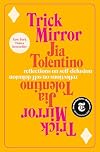
Collection of nine essays about modern society and its numerous issues written from the perspective of a member of the millennial generation. Tolentino employs many popular culture references, so the book seems like a time capsule of living in the 2010s. There are essays about Houston’s hip hop scene, reality television, the prevalence of scamming, roles of women in literature, the commoditization of beauty, changing views on marriage, and more.
Each essay begins with a memory that is used show more as a starting point to explore larger related societal issues. My personal favorite is the scathing indictment of social media and its deleterious effects on our world – this is a topic I can get behind and am glad someone else is calling attention to it. The essays express the author’s opinions expressed through a feminist lens. It is not intended to be scientific.
I wish she had expressed more about what to do about these problems. It is more of an effort to raise awareness than provide solutions. Admittedly, it would be extremely difficult to solve these issues – if they had easy solutions, they would have already been accomplished.
I enjoyed the author’s writing style, which includes a good amount of self-deprecating humor. It helped me understand a way of seeing the world from a millennial point of view. While I did not necessarily agree with some of her sweeping statements, I found it thought-provoking and worth reading. It would make an excellent selection for a book club. There is a lot to discuss here. show less
Each essay begins with a memory that is used show more as a starting point to explore larger related societal issues. My personal favorite is the scathing indictment of social media and its deleterious effects on our world – this is a topic I can get behind and am glad someone else is calling attention to it. The essays express the author’s opinions expressed through a feminist lens. It is not intended to be scientific.
I wish she had expressed more about what to do about these problems. It is more of an effort to raise awareness than provide solutions. Admittedly, it would be extremely difficult to solve these issues – if they had easy solutions, they would have already been accomplished.
I enjoyed the author’s writing style, which includes a good amount of self-deprecating humor. It helped me understand a way of seeing the world from a millennial point of view. While I did not necessarily agree with some of her sweeping statements, I found it thought-provoking and worth reading. It would make an excellent selection for a book club. There is a lot to discuss here. show less
The first essay in this book is something I've been hoping someone smarter than me would write. Sorting through all the clickbait-turned-book ideas of what the internet has done to our lives and minds, taking stock of what's valuable (the filter bubble, etc), and then looking at the bigger picture of what it is doing to us on a personal level. Tolentino provides no answers, but asked the most clarifying questions, and I can't stop recommending it to everyone I know.
The rest of the book was a show more mixed bag. Some essays were really good, while others name-checked an overwhelming number of other works, sending her commentary straight over my head. I certainly don't know as many children's book heroines as Tolentino does. I had to skip through a few essays for that reason, and that makes it harder to recommend a $27 hardcover. show less
The rest of the book was a show more mixed bag. Some essays were really good, while others name-checked an overwhelming number of other works, sending her commentary straight over my head. I certainly don't know as many children's book heroines as Tolentino does. I had to skip through a few essays for that reason, and that makes it harder to recommend a $27 hardcover. show less
Lists
Awards


You May Also Like


Associated Authors
Statistics
- Works
- 3
- Also by
- 3
- Members
- 1,758
- Popularity
- #14,638
- Rating
- 3.8
- Reviews
- 50
- ISBNs
- 26
- Languages
- 8
- Favorited
- 1