
Leslie Jamison
Author of The Empathy Exams: Essays
About the Author
Leslie Jamison was born in Washington D.C. in 1983. She has worked as a baker, an office temp, an innkeeper, a tutor, and a medical actor. She is the author of The Gin Closet and The Empathy Exams: Essays. She is currently finishing a doctoral dissertation at Yale University about addiction show more narratives. (Bowker Author Biography) show less
Image credit: Leslie Jamison
Works by Leslie Jamison
Associated Works
What My Mother and I Don't Talk About: Fifteen Writers Break the Silence (2019) — Contributor — 359 copies, 7 reviews
Light the Dark: Writers on Creativity, Inspiration, and the Artistic Process (2017) — Contributor — 165 copies, 5 reviews
Letter to a Stranger: Essays to the Ones Who Haunt Us (2021) — Foreword; Contributor — 83 copies, 3 reviews
How to End a Story: Collected Diaries — Foreword, some editions — 68 copies
Love and Ruin: Tales of Obsession, Danger, and Heartbreak from the Atavist Magazine (2016) — Contributor — 45 copies, 1 review
Tagged
Common Knowledge
- Birthdate
- 1983
- Gender
- female
- Education
- Harvard College
Yale University
Iowa Writers’ Workshop - Occupations
- innkeeper
teacher
office temp - Agent
- Jin Auh (The Wylie Agency)
- Relationships
- Bock, Charles (former spouse)
Jamison, Dean (father) - Nationality
- USA
- Birthplace
- Washington, D.C., USA
- Places of residence
- Los Angeles, California, USA
Brooklyn, New York, USA - Associated Place (for map)
- USA
Members
Reviews
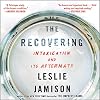
This book is full of wonderful contradictions. It is fan fiction for addicts but also a first rate primer for everyone else. It is very personal story yet almost encyclopedic in its survey of the history of the treatment of addiction. It covers addiction in literature and the literature of addiction with equal respect and deftness. It is political, personal, depressing, whimsical.
For the audio, Jamison does a great job as narrator, never hitting a false note. I couldn't imaging anyone else show more reading it. Her prose had me backing up the recording and re-listening several times. She observes that every addiction/recovery story is the same. But few are as well told as hers. That is the source of the the biggest contradiction: here is a book about pain that is also intensely pleasurable. show less
For the audio, Jamison does a great job as narrator, never hitting a false note. I couldn't imaging anyone else show more reading it. Her prose had me backing up the recording and re-listening several times. She observes that every addiction/recovery story is the same. But few are as well told as hers. That is the source of the the biggest contradiction: here is a book about pain that is also intensely pleasurable. show less
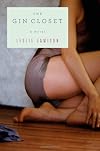
This is a dark and troubled story. Stella is a bit adrift in her life. She works as a personal assistant for an inspirational writer who is more of a barracuda in her out of the spotlight life. She's dating a married man. And she spends her evenings at alcohol and drug soaked parties in New York City. She's never quite decided what to make of her life, marking time until her indomitable grandmother starts to fail. Giving up her unsatisfying existence in the city to be the caretaker for her show more grandmother, she discovers that her mother had a sister, Tilly, about whom Stella knows nothing. After her grandmother's death, she feels honor-bound to tell Tilly face to face that her mother is dead and so she sets off to find this wayward aunt, estranged from the family for so many years. Tilly has had a hard life. She's a serious alcoholic, living in a trash-filled trailer, hoarding gin and she is reluctant to let Stella into her life. But Stella pushes her way in and Tilly and Stella create a fragile family as Stella tries to help Tilly finally get her life on track.
Stella and Tilly both narrate the story alternately, offering the reader glimpses of their broken souls. Tilly's back story, her time as a prostitute, the birth of her son Abe, her inability to break her dependence on alcohol, and the secrets and lies that drove her out of her family are all powerful and terrible stories. Stella is not quite a counterpoint to Tilly's unrelentingly bleak and doomed person. She details her own disappointments and the mind-numbing stagnation of her life. Really, the misery and dysfunction that infuse this novel is overwhelming. Jamison has captured the despair and pain of alcoholism, the death-grip with which the addiction holds its sufferers and she has accurately portrayed the futility and hopelessness that can thread its way into the lives of the people around the alcoholic. This is not a comfortable read. It is not a happily ever after. It is tragedy on a personal scale. And it can be hard to read but equally hard from which to turn away. show less
Stella and Tilly both narrate the story alternately, offering the reader glimpses of their broken souls. Tilly's back story, her time as a prostitute, the birth of her son Abe, her inability to break her dependence on alcohol, and the secrets and lies that drove her out of her family are all powerful and terrible stories. Stella is not quite a counterpoint to Tilly's unrelentingly bleak and doomed person. She details her own disappointments and the mind-numbing stagnation of her life. Really, the misery and dysfunction that infuse this novel is overwhelming. Jamison has captured the despair and pain of alcoholism, the death-grip with which the addiction holds its sufferers and she has accurately portrayed the futility and hopelessness that can thread its way into the lives of the people around the alcoholic. This is not a comfortable read. It is not a happily ever after. It is tragedy on a personal scale. And it can be hard to read but equally hard from which to turn away. show less
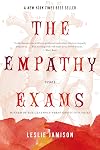
The contents of this book are remarkably difficult to describe. Well, all right, no, it's easy enough to describe: it's a series of personal essays all of which, in some manner, deal with the subjects of human suffering and human empathy. But I'm not sure saying that gives you a good idea of what to expect at all. Partly that's because the specifics of the subject matter are so varied. The author talks about her personal experiences, including having an abortion and being punched in the nose show more during a mugging. She tours places dense with misery and observes not just her surroundings, but her own reactions. She describes a job she had pretending to be a patient for doctors in training and rating them, in part, on how much empathy they displayed, and then talks about attending a conference for people who are certain they are suffering from a disease doctors don't believe actually exists. And so on.
Some of these essays struck me as better than others, but at they're best they're amazing: lyrically written and insightful in a way that sometimes made me want to gasp. And if sometimes it borders on the self-indulgent, well, that in itself just provides more to talk about, as Jamison thoughtfully considers what it means for her to write about her own pain or her perceptions of others' pain, and widens that self-reflection out to consider complex questions about not just empathy, but about what we mean when we accuse someone of wallowing in their own pain and in what contexts we make those kinds of judgments. And for all that she talks about herself a lot, there seems to me to be a laudable kind of humility in her willingness to constantly re-examine and question her own feelings and her own responses. The result isn't always easy to read, but I found it very much worth it. show less
Some of these essays struck me as better than others, but at they're best they're amazing: lyrically written and insightful in a way that sometimes made me want to gasp. And if sometimes it borders on the self-indulgent, well, that in itself just provides more to talk about, as Jamison thoughtfully considers what it means for her to write about her own pain or her perceptions of others' pain, and widens that self-reflection out to consider complex questions about not just empathy, but about what we mean when we accuse someone of wallowing in their own pain and in what contexts we make those kinds of judgments. And for all that she talks about herself a lot, there seems to me to be a laudable kind of humility in her willingness to constantly re-examine and question her own feelings and her own responses. The result isn't always easy to read, but I found it very much worth it. show less
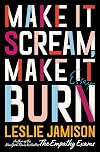
"The more important point is that the impulse to escape our lives is universal, and hardly worth vilifying. Inhabiting any life always involves reckoning with the urge to abandon it – through daydreaming; through storytelling; through the ecstasies of art and music, hard drugs, adultery, a smartphone screen. These forms of “leaving” aren’t the opposite of authentic presence. They are simply one of its symptoms – the way love contains conflict, intimacy contains distance, and faith show more contains doubt." show less
Lists
Awards


You May Also Like


Associated Authors
Statistics
- Works
- 9
- Also by
- 13
- Members
- 2,533
- Popularity
- #10,135
- Rating
- 3.7
- Reviews
- 84
- ISBNs
- 75
- Languages
- 8
- Favorited
- 3