
Elizabeth McKenzie (1) (1958–)
Author of The Portable Veblen
For other authors named Elizabeth McKenzie, see the disambiguation page.
About the Author
Image credit: via Penguin Random House
Works by Elizabeth McKenzie
Associated Works
Tagged
Common Knowledge
- Birthdate
- 1958-02-24
- Gender
- female
- Occupations
- editor
teacher - Nationality
- USA
- Places of residence
- Santa Cruz, California, USA
- Associated Place (for map)
- California, USA
Members
Reviews

From the cover and the publisher's summary, I assumed The Dog Of The North was going to be another take on the familiar theme of Redemption By Roadtrip. One of those books where a likeable woman has arrived, through a series of unfortunate events, at a point where the life she'd expected to live has imploded so she sets out on a lone quest to find a new place where she can belong and along the way, she encounters larger-than-life characters who help her discover her inner strength and some show more of whom become her found-family when she finally starts to build a life that will help her be her true self. Cue sunset and happy-ever-after music. It's a good theme and I'd have been happy to see a few new twists on old tropes.
One line on the cover should have told me that my expectations might be a little off. The one that says Shortlisted For The Women's Prize For Fiction. The Women's Prize For Fiction normally goes to quite literary books. The 2022 winner was Ruth Ozeki’s The Book of Form and Emptiness. The 2021 winner was Susanna Clarke's Piranesi. It's not the kind of prize a Redemption By Roadtrip novel is likely to win unless it goes way off-piste.
By the way, the publisher seems to have gotten ahead of itself with that statement. The Dog Of The North is on the Women's Prize For Fiction Longlist but the Shortlist won't be announced until 28th April, more than a month from now.
Anyway, it turns out that The Dog Of The North was... well... odd. Cleverly, nicely, engagingly, sometimes humorously odd but always, and ultimately disturbingly, odd.
The oddness starts with the main character and is compounded by how she tells her story. Penny Rush is a woman in her thirties who has been so deeply damaged by her childhood and her marriage that she's reached a point where she is unsure of her right to be anywhere. She struggles with the most humdrum human interactions. Her first instinct is to be as invisible as possible and, when that's not possible, to apologise for her own existence. Penny is confused and she has difficulty being honest with herself about how she feels and what she wants. As Penny is the one telling the story, it shouldn't be surprising that I was also confused as I read the story.
I was halfway through the book and still had no idea where the story was going. The narrative felt like a long fall down a rabbit hole. I could see that this 'falling forward' mirrored Penny's mental state. She has difficulty having confidence in her own worth, bordering on uncertainty about her right to be anywhere. She is unmoored from her past life and coping with the chaos of her grandparents' lives while trying to find a place and a person to be. Her grandmother is a domineering, aggressive, accomplished woman who lives partly in a fantasy world, suffers from paranoia and mood swings and has a life-long habit of using the people around her to get her own way. Her grandfather is in a failing marriage to a much younger woman and is starting to suffer from cognitive decline. Penny, who puts a lot of energy into avoiding confronting her own problems, somehow ends up taking responsibility for solving her grandparents' problems. The result, of course, is chaos.
The publishers described this book as 'darkly comic'. I think that means it will make you laugh but you'll feel guilty about it afterwards.
This book didn't make me laugh. Not once. I don't think that's what it was trying to do. This is a story about a woman who is so starved of affection and so unused to human connection that she becomes inappropriately emotionally attached to anyone who shows her kindness. The man who first shows her kindness also has issues. He's divorced, off his depression meds, living out of his van and in danger of losing his law practice. This makes for some bizarre scenes but I didn't find any of them funny.
I hadn't realised it as I was reading but I'd become emotionally detached as I listened to Penny's account of a series of increasingly bizarre mishaps. This was partly because she told her story in a way that made light of her anxiety and her problems with her self-worth so that this story felt like a comedy where the humour was falling flat. Then, in the final section of the book, I was given a flashback to Penny's childhood that took me from detachment to anger in seconds. I was listening to a pompous, ludicrously over-confident paediatrician mangling a psychiatric assessment with ten-year-old Penny and suddenly I was truly angry. I wanted to strangle him for the damage he was doing.
So, now I was engaged and ready for the big finish. It didn't happen. Perhaps I was only expecting it to happen because I still hadn't let go of my Redemption By Roadtrip expectations and was looking for Penny's route to her Happy-Ever-After. What actually happened was more subtle, probably more truthful but sadly much less satisfying. Penny didn't have an epiphany. She didn't solve all her problems in a single step by attaching herself to new people She didn't suddenly become strong and fulfilled and self-confident. BUT she did start to like herself a little more and to find ways of saying what she wanted and what she didn't want and to feel entitled to prioritise her own needs.
As I said, it's an odd book. In this case, odd isn't bad but it does make the reader work harder to understand what they're reading. show less
One line on the cover should have told me that my expectations might be a little off. The one that says Shortlisted For The Women's Prize For Fiction. The Women's Prize For Fiction normally goes to quite literary books. The 2022 winner was Ruth Ozeki’s The Book of Form and Emptiness. The 2021 winner was Susanna Clarke's Piranesi. It's not the kind of prize a Redemption By Roadtrip novel is likely to win unless it goes way off-piste.
By the way, the publisher seems to have gotten ahead of itself with that statement. The Dog Of The North is on the Women's Prize For Fiction Longlist but the Shortlist won't be announced until 28th April, more than a month from now.
Anyway, it turns out that The Dog Of The North was... well... odd. Cleverly, nicely, engagingly, sometimes humorously odd but always, and ultimately disturbingly, odd.
The oddness starts with the main character and is compounded by how she tells her story. Penny Rush is a woman in her thirties who has been so deeply damaged by her childhood and her marriage that she's reached a point where she is unsure of her right to be anywhere. She struggles with the most humdrum human interactions. Her first instinct is to be as invisible as possible and, when that's not possible, to apologise for her own existence. Penny is confused and she has difficulty being honest with herself about how she feels and what she wants. As Penny is the one telling the story, it shouldn't be surprising that I was also confused as I read the story.
I was halfway through the book and still had no idea where the story was going. The narrative felt like a long fall down a rabbit hole. I could see that this 'falling forward' mirrored Penny's mental state. She has difficulty having confidence in her own worth, bordering on uncertainty about her right to be anywhere. She is unmoored from her past life and coping with the chaos of her grandparents' lives while trying to find a place and a person to be. Her grandmother is a domineering, aggressive, accomplished woman who lives partly in a fantasy world, suffers from paranoia and mood swings and has a life-long habit of using the people around her to get her own way. Her grandfather is in a failing marriage to a much younger woman and is starting to suffer from cognitive decline. Penny, who puts a lot of energy into avoiding confronting her own problems, somehow ends up taking responsibility for solving her grandparents' problems. The result, of course, is chaos.
The publishers described this book as 'darkly comic'. I think that means it will make you laugh but you'll feel guilty about it afterwards.
This book didn't make me laugh. Not once. I don't think that's what it was trying to do. This is a story about a woman who is so starved of affection and so unused to human connection that she becomes inappropriately emotionally attached to anyone who shows her kindness. The man who first shows her kindness also has issues. He's divorced, off his depression meds, living out of his van and in danger of losing his law practice. This makes for some bizarre scenes but I didn't find any of them funny.
I hadn't realised it as I was reading but I'd become emotionally detached as I listened to Penny's account of a series of increasingly bizarre mishaps. This was partly because she told her story in a way that made light of her anxiety and her problems with her self-worth so that this story felt like a comedy where the humour was falling flat. Then, in the final section of the book, I was given a flashback to Penny's childhood that took me from detachment to anger in seconds. I was listening to a pompous, ludicrously over-confident paediatrician mangling a psychiatric assessment with ten-year-old Penny and suddenly I was truly angry. I wanted to strangle him for the damage he was doing.
So, now I was engaged and ready for the big finish. It didn't happen. Perhaps I was only expecting it to happen because I still hadn't let go of my Redemption By Roadtrip expectations and was looking for Penny's route to her Happy-Ever-After. What actually happened was more subtle, probably more truthful but sadly much less satisfying. Penny didn't have an epiphany. She didn't solve all her problems in a single step by attaching herself to new people She didn't suddenly become strong and fulfilled and self-confident. BUT she did start to like herself a little more and to find ways of saying what she wanted and what she didn't want and to feel entitled to prioritise her own needs.
As I said, it's an odd book. In this case, odd isn't bad but it does make the reader work harder to understand what they're reading. show less
It's not an exaggeration to say that our heroine, Penny, is somewhat unlucky in her personal relationships. Her mother and step-father disappeared without trace five years previously in the Australian outback while her biological father seems extremely unbalanced. Her ninety year old grandfather needs rescuing from the clutches of a selfish and unsympathetic second wife. And her grandmother (the intensely annoying first wife) needs rescuing from the clutches of Adult Protective Services:
And so Penny travels from her home in Santa Cruz to Santa Barbara to assist, abandoning her adulterous husband Sherman and her dead-end job in a dentist's surgery along the way. With only a few hundred dollars in her pocket that she has received from selling her car, she accepts the offer of a place to stay for a few nights from her grandmother's accountant Bert Lampey, who she has been dealing with other the phone. But rather than the besuited corporate type that she is expecting, she is surprised to find that Bert turns up in a battered ancient van, nicknamed 'The Dog of the North' that seems to contain virtually all his worldly goods. And she is even more surprised to find that his offer of a place to stay consists of a sleeping bag on his office couch, an office in which he is actually living in himself...
This was a fun book, that made me laugh out loud at times (and books don't often do that). show less
Ishow more
nodded grimly. The urgency of the situation stemmed from a recent incident involving Meals on Wheels. On Pincer’s behalf I’d applied for their services, but the day they showed up, she threatened to shoot if they didn’t vacate the premises immediately. Someone had seen her wielding an object that looked like a bazooka. That led to a complaint to the police, which led to Adult Protective Services, which led to the involvement of a woman by the name of Ruth Perry, who warned me there would be swift consequences if we didn’t disarm her and provide for her needs immediately.
And so Penny travels from her home in Santa Cruz to Santa Barbara to assist, abandoning her adulterous husband Sherman and her dead-end job in a dentist's surgery along the way. With only a few hundred dollars in her pocket that she has received from selling her car, she accepts the offer of a place to stay for a few nights from her grandmother's accountant Bert Lampey, who she has been dealing with other the phone. But rather than the besuited corporate type that she is expecting, she is surprised to find that Bert turns up in a battered ancient van, nicknamed 'The Dog of the North' that seems to contain virtually all his worldly goods. And she is even more surprised to find that his offer of a place to stay consists of a sleeping bag on his office couch, an office in which he is actually living in himself...
This was a fun book, that made me laugh out loud at times (and books don't often do that). show less
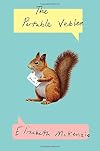
The Publisher Says: The Portable Veblen is a dazzlingly original novel that’s as big-hearted as it is laugh-out-loud funny. Set in and around Palo Alto, amid the culture clash of new money and old (antiestablishment) values, and with the specter of our current wars looming across its pages, The Portable Veblen is an unforgettable look at the way we live now. A young couple on the brink of marriage—the charming Veblen and her fiancé Paul, a brilliant neurologist—find their engagement show more in danger of collapse. Along the way they weather everything from each other’s dysfunctional families, to the attentions of a seductive pharmaceutical heiress, to an intimate tête-à-tête with a very charismatic squirrel.
Veblen (named after the iconoclastic economist Thorstein Veblen, who coined the term “conspicuous consumption”) is one of the most refreshing heroines in recent fiction. Not quite liberated from the burdens of her hypochondriac, narcissistic mother and her institutionalized father, Veblen is an amateur translator and “freelance self”; in other words, she’s adrift. Meanwhile, Paul—the product of good hippies who were bad parents—finds his ambition soaring. His medical research has led to the development of a device to help minimize battlefield brain trauma—an invention that gets him swept up in a high-stakes deal with the Department of Defense, a Bizarro World that McKenzie satirizes with granular specificity.
As Paul is swept up by the promise of fame and fortune, Veblen heroically keeps the peace between all the damaged parties involved in their upcoming wedding, until she finds herself falling for someone—or something—else. Throughout, Elizabeth McKenzie asks: Where do our families end and we begin? How do we stay true to our ideals? And what is that squirrel really thinking? Replete with deadpan photos and sly appendices, The Portable Veblen is at once an honest inquiry into what we look for in love and an electrifying reading experience.
I RECEIVED AN ARC FROM THE PUBLISHER. THANK YOU.
My Review: A debut novel that, for its subject, takes on greed, Othering, and intergenerational family toxicity. While Author McKenzie published stories before this book appeared in 2016, the appearance of the novel was warbled delightedly about by Jeff VanderMeer, Ursula K. LeGuin, and Karen Joy Fowler. Reviews from the New York, and Los Angeles, and Seattle Timeses, the Boston Globe, Library Journal and Kirkus and NPR...several programs!...was longlisted for a National Book Award...you get the idea, it was down as The Next Big Deal.
But I forgot it existed. I read it in the dark year, and I came up dry on things to say about it.
In having a clear-out, I found the ARC again. It's such a strange title that I remembered it straight away. How many people in 2022 recall who Thorstein Veblen was? Not a lot more, or fewer honestly, than did in 2016. It's an odd and slightly off-putting thing to first-name your main character. It does efficiently Other her from the get-go. I wasn't sure that I liked that. I remember thinking that it was a darn good thing that she was the sort of person who could, in all seriousness, ask “Do you think wishful thinking is a psychiatric condition?”
So why did I resurrect this long-ago gift from a publisher who clearly never thought to hear from me about it again? Because, in flipping through it, I was caught by some unusually persuasive turns of phrase:
This is a writer speaking her truth. I love finding these moments. I think I left the book by the wayside because I couldn't, in the dark year, process the anticapitalist message as anything but the confirmation bias of my brain. In the decades of being steadily more and more radicalized by capitalism's failures of me, my chosen people, and the world my descendants will live in, I've resharpened that mental blade many times. This time I felt Author McKenzie's edge slash closer to me than before.
Author McKenzie reserves her loudest klaxon, her angriest blast of Gabriel's horn, for we-the-consumers. The sneaky message under Veblen's dithering disconnectedness is there. It's not unique, nor even original, but it's heartfelt and it's eloquent...and she's correct:
Awomen. show less
Veblen (named after the iconoclastic economist Thorstein Veblen, who coined the term “conspicuous consumption”) is one of the most refreshing heroines in recent fiction. Not quite liberated from the burdens of her hypochondriac, narcissistic mother and her institutionalized father, Veblen is an amateur translator and “freelance self”; in other words, she’s adrift. Meanwhile, Paul—the product of good hippies who were bad parents—finds his ambition soaring. His medical research has led to the development of a device to help minimize battlefield brain trauma—an invention that gets him swept up in a high-stakes deal with the Department of Defense, a Bizarro World that McKenzie satirizes with granular specificity.
As Paul is swept up by the promise of fame and fortune, Veblen heroically keeps the peace between all the damaged parties involved in their upcoming wedding, until she finds herself falling for someone—or something—else. Throughout, Elizabeth McKenzie asks: Where do our families end and we begin? How do we stay true to our ideals? And what is that squirrel really thinking? Replete with deadpan photos and sly appendices, The Portable Veblen is at once an honest inquiry into what we look for in love and an electrifying reading experience.
I RECEIVED AN ARC FROM THE PUBLISHER. THANK YOU.
My Review: A debut novel that, for its subject, takes on greed, Othering, and intergenerational family toxicity. While Author McKenzie published stories before this book appeared in 2016, the appearance of the novel was warbled delightedly about by Jeff VanderMeer, Ursula K. LeGuin, and Karen Joy Fowler. Reviews from the New York, and Los Angeles, and Seattle Timeses, the Boston Globe, Library Journal and Kirkus and NPR...several programs!...was longlisted for a National Book Award...you get the idea, it was down as The Next Big Deal.
But I forgot it existed. I read it in the dark year, and I came up dry on things to say about it.
In having a clear-out, I found the ARC again. It's such a strange title that I remembered it straight away. How many people in 2022 recall who Thorstein Veblen was? Not a lot more, or fewer honestly, than did in 2016. It's an odd and slightly off-putting thing to first-name your main character. It does efficiently Other her from the get-go. I wasn't sure that I liked that. I remember thinking that it was a darn good thing that she was the sort of person who could, in all seriousness, ask “Do you think wishful thinking is a psychiatric condition?”
So why did I resurrect this long-ago gift from a publisher who clearly never thought to hear from me about it again? Because, in flipping through it, I was caught by some unusually persuasive turns of phrase:
She had once concluded everyone on earth was a servant to the previous generation—born from the body’s factory for entertainment and use. A life could be spent like an apology—to prove you had been worth it.
–and–
Veblen espoused the Veblenian opinion that wanting a big house full of cheaply produced versions of so-called luxury items was the greatest soul-sucking trap of modern civilization, and that these copycat mansions away from the heart and soul of a city had ensnared their overmortgaged owners—yes, trapped and relocated them like pests.
–and–
The sharing of simple meals and discussing the day's events, of waking up together with plans for the future, things that feel practically bacchanalian when you're used to being on your own.
This is a writer speaking her truth. I love finding these moments. I think I left the book by the wayside because I couldn't, in the dark year, process the anticapitalist message as anything but the confirmation bias of my brain. In the decades of being steadily more and more radicalized by capitalism's failures of me, my chosen people, and the world my descendants will live in, I've resharpened that mental blade many times. This time I felt Author McKenzie's edge slash closer to me than before.
Author McKenzie reserves her loudest klaxon, her angriest blast of Gabriel's horn, for we-the-consumers. The sneaky message under Veblen's dithering disconnectedness is there. It's not unique, nor even original, but it's heartfelt and it's eloquent...and she's correct:
“I pledge allegiance, to the marketplace,
of the United States of America. TM.
And to the conglomerates, for which we shill,
one nation under Exxon-Mobile/Halliburton/Boeing/Walmart,
nonrefundable,
with litter and junk mail for all!”
Awomen. show less

Though I'd have preferred to have company, there was no question that I felt comfortable being alone at that moment and was glad to see there were other people in nearby cars who felt the same. I thought about all the times I'd sat at the edges of groups in conversation, listening, enjoying myself, but surely considered the person with the least to contribute, the way the least interesting creature in an aquarium is generally agreed to be the slug over in the corner. Overall, it seemed like show more I had to work extra hard just to make any kind of relationship work. And in that sense, I had a lot to offer.
It's hard to review a book I enjoyed so thoroughly. It's an oddball book, to be sure. Any description of the plot is either gives too much away or is inscrutably cryptic. There's a hostile Grandmother who is both a scientist and a hoarder, with an uncertain number of literal skeletons hidden away. There's an accountant undergoing a health emergency who may or may not share a toupee with his younger brother. There are parents long lost in the Australian outback and a dog named Kweecoats, for absolutely the most convoluted reason. There's an old van that is conveniently furnished with a futon and less conveniently furnished with a tire and a bike. And through all the chaos, Penny, our protagonist does her best. She's a mess, but she's also resilient and determined to find her way and help her family.
I hesitate to call this book charming, because I will absolutely not pick up a book anyone calls charming, thank you very much. Penny has such a wonderfully weird take on life, a life in which she has been beat up pretty thoroughly, that gives her a determined kind of optimism and to make friends out of people very different from herself. I loved this book, was entirely immersed in every strange thing life threw at Penny, and will be automatically reading whatever McKenzie writes next. show less
It's hard to review a book I enjoyed so thoroughly. It's an oddball book, to be sure. Any description of the plot is either gives too much away or is inscrutably cryptic. There's a hostile Grandmother who is both a scientist and a hoarder, with an uncertain number of literal skeletons hidden away. There's an accountant undergoing a health emergency who may or may not share a toupee with his younger brother. There are parents long lost in the Australian outback and a dog named Kweecoats, for absolutely the most convoluted reason. There's an old van that is conveniently furnished with a futon and less conveniently furnished with a tire and a bike. And through all the chaos, Penny, our protagonist does her best. She's a mess, but she's also resilient and determined to find her way and help her family.
I hesitate to call this book charming, because I will absolutely not pick up a book anyone calls charming, thank you very much. Penny has such a wonderfully weird take on life, a life in which she has been beat up pretty thoroughly, that gives her a determined kind of optimism and to make friends out of people very different from herself. I loved this book, was entirely immersed in every strange thing life threw at Penny, and will be automatically reading whatever McKenzie writes next. show less
Lists
Awards


You May Also Like


Associated Authors
Statistics
- Works
- 5
- Also by
- 3
- Members
- 953
- Popularity
- #27,013
- Rating
- 3.6
- Reviews
- 64
- ISBNs
- 38
- Languages
- 2
- Favorited
- 1