

Eleanor Dark (1901–1985)
Author of The Timeless Land
About the Author
Image credit: Olive Cotton, 1911-2003. Portrait of Eleanor Dark 1945 [picture].
National Library of Australia, nla.pic-an9070735
National Library of Australia, nla.pic-an9070735
Series
Works by Eleanor Dark
Associated Works
Goodbye to Romance: Stories by New Zealand and Australian Women Writers, 1930-1988 (1989) — Contributor — 10 copies
Tagged
Common Knowledge
- Canonical name
- Dark, Eleanor
- Birthdate
- 1901-08-26
- Date of death
- 1985-09-11
- Gender
- female
- Education
- Redlands College for Girls
- Occupations
- secretary
novelist - Organizations
- Fellowship of Australian Writers
- Awards and honors
- Australian Literature Society Gold Medal for Literature (twice)
- Agent
- Curtis Brown
- Relationships
- O'Reilly, Dowell (father)
Dark, Eric (husband) - Nationality
- Australia
- Birthplace
- Sydney, New South Wales, Australia
- Places of residence
- Katoomba, New South Wales, Australia
Burwood, New South Wales, Australia
Montville, Queensland, Australia
Sydney, New South Wales, Australia - Place of death
- Katoomba, New South Wales, Australia
- Burial location
- Blackheath Cemetery, Blackheath, New South Wales, Australia
- Associated Place (for map)
- New South Wales, Australia
Members
Reviews

This charming Australian book presents a slice of life portrait of the families living along rural Lantana Lane. No one of the families or characters takes precedence, and there is no plot as such. Neverthless, I loved this book.
The book opens with a somewhat philosophical essay which may put some readers off. It is tongue-in-cheek, however, and well-worth reading:
"Now when men pry into mysteries they are called scientists, but when women do the same thing they are called inquisitive, and show more if we are to reprobate the inquisitiveness which began the search for knowledge, we cannot but view with some reserve the scientific genious which has so stubbornly pursued it, even into the dreadful fastness of the Atom. Eve's husband was clearly a bloke with a sluggish intellect and no ambition; we have her and her alone to thank for the fact that we now know enough to blow ourselves into small pieces. But in common justice we must bear in mind the disadvantage under which she laboured. She was not really at all inquisitive about atoms; her curiosity was directed towards quite different matters. And being entirely innocent of knowledge, she could not possibly be expected to know that all knowledge interlocks, and that fiddling with one bit disturbs the whole cohesive structure. Of course the Creator of the garden knew this very well, having just spent a solid week designing and manufacturing parts for assembly into a working model; and to see one's uniqued achievement endangered by a pair of ignorant meddlers (particularly when they have been created, merely as an afterthought, to preserve the status quo) is enough to make anyone curse."
One of the chapters describes "Meat Day." This is the day the residents take turns to go into town, pick up the mail, and do errands and shopping for all the residents of Lantana Lane. Most of the residents have difficulty managing everything they have to do when it's their turn. Gwinny, however, is an expert. That's because her mind works like this (she is watching a tennis match:
"Yes, I said I'd go to the cake stall with Aunt Isabelle (purl 5, knit2) but really need a third (I must get home in time to press Gally's trousers for tonight), and Alice can't help this year of course (knit 2, slip 1, pass slipped stitch over), so I asked Edith, Tony you better call the dogs away from the tea things (repeat this row 3 times), and she said she could come in the morning, it's thirty-love, Marge, that ball just got the line, but she has a dentist's appointment in the afternoon, look, love, Keithie's playing with a cow pat (that's two rows), Myra, the jeep just went down the Lane, so Aub should be here soon, pick up that cardigan, Lynette, it's getting trodden on, so I'll try to find someone else (three rows). Hi Sue, it's to the other side, your ad. Ken, how about lighting the fire for tea, no the games are five-four, Biddie, you served first (decrease once at the end of the next and every alternate row fifteen times) but it's a bit hard because everyone is doing something else (that cow in the Lane looks like Griffiths' Blessing), you'll find the tea in the in the biscuit tin Henry (purl 5, knit 2 together, make 1, wool forward, knit 1, purl 5, knit 2 together, turn) that was a let, Marge, I heard it touch, children come away from the tank, but I expect we will manage if we have to, yes, I brought some milk, Dick, it's on the bench in the shed, Myra, you're serving from the wrong side, yes you are, it's thirty all (knit 2, slip 1, wool round the needle, knit 1, purl 3, knit 1, repeat 3 times), it just means I can't leave the stall, see, because Aunt Isabelle gets the change mixed, Ken, don't let the children go near the fire. (I hope Tristy remembers to pump some water for the washing...)
"Gwinny can keep this sort of thing up indefinitely, and think nothing of it. She is never confused, she never forgets anything, and nothing escapes her notice. She is the only person in the Lane who is really equal to meat-day."
Gwinny is only one of the many characters who intrigued and enchanted me. Eleanor Dark is a respected Australian author who has also written a trilogy about Australia's early history, which I would like to get my hands on and read. show less
The book opens with a somewhat philosophical essay which may put some readers off. It is tongue-in-cheek, however, and well-worth reading:
"Now when men pry into mysteries they are called scientists, but when women do the same thing they are called inquisitive, and show more if we are to reprobate the inquisitiveness which began the search for knowledge, we cannot but view with some reserve the scientific genious which has so stubbornly pursued it, even into the dreadful fastness of the Atom. Eve's husband was clearly a bloke with a sluggish intellect and no ambition; we have her and her alone to thank for the fact that we now know enough to blow ourselves into small pieces. But in common justice we must bear in mind the disadvantage under which she laboured. She was not really at all inquisitive about atoms; her curiosity was directed towards quite different matters. And being entirely innocent of knowledge, she could not possibly be expected to know that all knowledge interlocks, and that fiddling with one bit disturbs the whole cohesive structure. Of course the Creator of the garden knew this very well, having just spent a solid week designing and manufacturing parts for assembly into a working model; and to see one's uniqued achievement endangered by a pair of ignorant meddlers (particularly when they have been created, merely as an afterthought, to preserve the status quo) is enough to make anyone curse."
One of the chapters describes "Meat Day." This is the day the residents take turns to go into town, pick up the mail, and do errands and shopping for all the residents of Lantana Lane. Most of the residents have difficulty managing everything they have to do when it's their turn. Gwinny, however, is an expert. That's because her mind works like this (she is watching a tennis match:
"Yes, I said I'd go to the cake stall with Aunt Isabelle (purl 5, knit2) but really need a third (I must get home in time to press Gally's trousers for tonight), and Alice can't help this year of course (knit 2, slip 1, pass slipped stitch over), so I asked Edith, Tony you better call the dogs away from the tea things (repeat this row 3 times), and she said she could come in the morning, it's thirty-love, Marge, that ball just got the line, but she has a dentist's appointment in the afternoon, look, love, Keithie's playing with a cow pat (that's two rows), Myra, the jeep just went down the Lane, so Aub should be here soon, pick up that cardigan, Lynette, it's getting trodden on, so I'll try to find someone else (three rows). Hi Sue, it's to the other side, your ad. Ken, how about lighting the fire for tea, no the games are five-four, Biddie, you served first (decrease once at the end of the next and every alternate row fifteen times) but it's a bit hard because everyone is doing something else (that cow in the Lane looks like Griffiths' Blessing), you'll find the tea in the in the biscuit tin Henry (purl 5, knit 2 together, make 1, wool forward, knit 1, purl 5, knit 2 together, turn) that was a let, Marge, I heard it touch, children come away from the tank, but I expect we will manage if we have to, yes, I brought some milk, Dick, it's on the bench in the shed, Myra, you're serving from the wrong side, yes you are, it's thirty all (knit 2, slip 1, wool round the needle, knit 1, purl 3, knit 1, repeat 3 times), it just means I can't leave the stall, see, because Aunt Isabelle gets the change mixed, Ken, don't let the children go near the fire. (I hope Tristy remembers to pump some water for the washing...)
"Gwinny can keep this sort of thing up indefinitely, and think nothing of it. She is never confused, she never forgets anything, and nothing escapes her notice. She is the only person in the Lane who is really equal to meat-day."
Gwinny is only one of the many characters who intrigued and enchanted me. Eleanor Dark is a respected Australian author who has also written a trilogy about Australia's early history, which I would like to get my hands on and read. show less

The Timeless Land is the best kind of historical fiction. It meets the inhabitants of that time on their own terms, portraying the attitudes and personalities appropriately to the era. Dark also manages to present the natives (and the settlers) as real people with three-dimensional characters. I’m really looking forward to the next book in the trilogy.
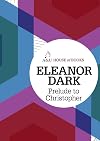
Winner of the ALS Gold Medal in 1934, Prelude to Christopher was the second novel of Eleanor Dark (1901-1985). A radical departure from her debut novel Sun Across the Sky, it is regarded as Australia's first modernist novel.
Set over four days in the aftermath of a car crash that critically injures Doctor Nigel Hendon, the story is revealed in fragments; flash backs; feverish dialogue contrasted with mannered calm; disjointed interior monologues; and characters starting and failing to express show more their fractured thoughts in words. There are four main characters: Nigel; his wife Linda; his mother Mrs Hendon, and the young nurse Kay. (Who fancies Nigel even though he hasn't given her any encouragement at all). The plot is minimal: this is a novel of ideas.
A sense of transgression arises as the reading progresses because Dark is exploring territory that is viewed differently today. Yesterday I posted about Thomas More's 16th century political satire Utopia, because I found myself comparing More's discredited economic ideas of shared ownership of property, with the failed Utopia in Prelude to Christopher exploring an equally discredited form of social organisation. It makes for uneasy reading when it is eventually revealed that Nigel, a brilliant young man whose mother has great ambitions for him, abandons a conventional future to set up an island colony based on the principles of eugenics. He bases the criteria for membership on medical suitability: presciently provoking today's reader to remember the Lebensborn (1935-1945), Nigel wants healthy bodies and minds to breed a better society. But because he loves his wife Linda dearly and cannot leave her behind, he compromises his own rules because her family has a history of mental illness.
But Nigel's colony does not fail because of Linda or because of the moral contradictions in its 'scientific' approach. It fails because of the collective madness of World War 1 mass hysteria.
As the stigma around mental illness fades in our own time, this novel — written nearly a century ago — was groundbreaking in the way it challenged prevailing beliefs about mental illness. It shows how Nigel's 'chosen people' — selected for their superior physical and mental qualities — descend into an irrational rabble not unlike the boys in William Golding's Lord of the Flies though that wasn't written until twenty years later in 1954. Nigel's 'superior' people riot with escalating violence because they want to leave: they want to join the excited hordes clamouring to send their young men to be slaughtered in the war.
And Linda? The novel depicts Linda being subjected to gaslighting by her uncle and by local gossip as an example of how nurture can be just as harmful as nature.
To read the rest of my review please visit https://anzlitlovers.com/2024/01/05/prelude-to-christopher-1934-by-eleanor-dark/ show less
Set over four days in the aftermath of a car crash that critically injures Doctor Nigel Hendon, the story is revealed in fragments; flash backs; feverish dialogue contrasted with mannered calm; disjointed interior monologues; and characters starting and failing to express show more their fractured thoughts in words. There are four main characters: Nigel; his wife Linda; his mother Mrs Hendon, and the young nurse Kay. (Who fancies Nigel even though he hasn't given her any encouragement at all). The plot is minimal: this is a novel of ideas.
A sense of transgression arises as the reading progresses because Dark is exploring territory that is viewed differently today. Yesterday I posted about Thomas More's 16th century political satire Utopia, because I found myself comparing More's discredited economic ideas of shared ownership of property, with the failed Utopia in Prelude to Christopher exploring an equally discredited form of social organisation. It makes for uneasy reading when it is eventually revealed that Nigel, a brilliant young man whose mother has great ambitions for him, abandons a conventional future to set up an island colony based on the principles of eugenics. He bases the criteria for membership on medical suitability: presciently provoking today's reader to remember the Lebensborn (1935-1945), Nigel wants healthy bodies and minds to breed a better society. But because he loves his wife Linda dearly and cannot leave her behind, he compromises his own rules because her family has a history of mental illness.
But Nigel's colony does not fail because of Linda or because of the moral contradictions in its 'scientific' approach. It fails because of the collective madness of World War 1 mass hysteria.
As the stigma around mental illness fades in our own time, this novel — written nearly a century ago — was groundbreaking in the way it challenged prevailing beliefs about mental illness. It shows how Nigel's 'chosen people' — selected for their superior physical and mental qualities — descend into an irrational rabble not unlike the boys in William Golding's Lord of the Flies though that wasn't written until twenty years later in 1954. Nigel's 'superior' people riot with escalating violence because they want to leave: they want to join the excited hordes clamouring to send their young men to be slaughtered in the war.
And Linda? The novel depicts Linda being subjected to gaslighting by her uncle and by local gossip as an example of how nurture can be just as harmful as nature.
To read the rest of my review please visit https://anzlitlovers.com/2024/01/05/prelude-to-christopher-1934-by-eleanor-dark/ show less

It's not really a novel in the traditional sense, but instead a collection of interdependent, connected short stories and vignettes about the inhabitants of the ten small farms on a dead-end road in rural Queensland. While pineapples ("pines") are the main crop, the farmers make ends meet with other crops as well, such as oranges, beans, and macadamia nuts ("Bopplenuts"). Some chapters are laugh-out-loud funny, others poignant.
Lantana Lane is light-years away in tone, structure, etc. from show more Dark's most famous novel, The Timeless Land, and its two successors. But like those it too has something to say--the differences just highlight Dark's skills and talent. show less
Lantana Lane is light-years away in tone, structure, etc. from show more Dark's most famous novel, The Timeless Land, and its two successors. But like those it too has something to say--the differences just highlight Dark's skills and talent. show less
Lists
Awards


You May Also Like


Associated Authors
Statistics
- Works
- 12
- Also by
- 1
- Members
- 751
- Popularity
- #33,865
- Rating
- 3.9
- Reviews
- 18
- ISBNs
- 59
- Languages
- 1
- Favorited
- 4