
Christina Stead (1902–1983)
Author of The Man Who Loved Children
About the Author
Author Christina Stead was born in Rockdale, New South Wales, Australia on July 17, 1902. She left Australia in 1928 and spent time in Europe, England, and the United States before permanently returning in 1974. She wrote fifteen novels and numerous volumes of short stories. She is best known for show more her novel, The Man Who Loved Children, which was based on her childhood. Her novels were unpublished in Australia until 1965 and she was denied the Britannica-Australia award in 1967 on the grounds that she was no longer considered an Australian. In 1974, she won the Patrick White award. While living in the United States during the 1940s, she worked as a Hollywood scriptwriter and contributed to Madame Curie and They Were Expendable. She died on March 31, 1983. (Bowker Author Biography) show less
Image credit: Portrait of author Christina Stead, 1940s? [picture]
National Library of Australia, nla.pic-an24717059
National Library of Australia, nla.pic-an24717059
Works by Christina Stead
Guest of the Redshields 1 copy
Sappho 1 copy
Associated Works
The Lifted Veil: The Book of Fantastic Literature by Women 1800-World War II (1806) — Contributor — 45 copies
Australian Literature: An Anthology of Writing from the Land Down Under (1993) — Contributor — 29 copies, 1 review
Goodbye to Romance: Stories by New Zealand and Australian Women Writers, 1930-1988 (1989) — Contributor — 10 copies
Tagged
Common Knowledge
- Canonical name
- Stead, Christina
- Legal name
- Stead, Christina Ellen
- Birthdate
- 1902-07-17
- Date of death
- 1983-03-31
- Gender
- female
- Education
- Sydney High School
Teachers' Training College, Sydney University - Occupations
- secretary
instructor (New York University)
novelist
writer (senior writer, MGM)
author - Organizations
- American Academy of Arts and Letters (Foreign Honorary, Literature, 1982)
- Awards and honors
- Patrick White Award (Australian Literature, 1974)
- Relationships
- Stead, David G. (father)
Blake, William J. (husband | widowed)
Harris, Thistle Yolette (stepmother) - Nationality
- Australia
- Birthplace
- Sydney, New South Wales, Australia
- Places of residence
- London, Middlesex, England, UK
New York, USA
Sydney, New South Wales, Australia
Paris, Île-de-France, France
Spain - Place of death
- Sydney, New South Wales, Australia
- Burial location
- Sydney, New South Wales, Australia
- Associated Place (for map)
- London, Middlesex, England, UK
Members
Discussions
Group Read, December 2018: The Man Who Loved Children in 1001 Books to read before you die (January 2019)
75 Books Challenge for 2015 : ANZAC Author Reading Challenge 2015-Christina Stead (AUS) & Katherine Mansfield (NZ) (May) in 75 Books Challenge for 2015 (August 2015)
Reviews
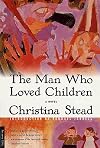
Two days after having read The Man Who Loved Children and I'm finally settling down. I don't think I've ever changed a 1 star review to a 5 star review before, but there it is. I've moved from feeling "this is a brilliant book, but I hate it" to feeling: "I may hate this book, but it's brilliant."
This novel made me feel dreadfully insecure about my role as a parent. I've decided that is interesting and amazing rather than something to blame it for. The parents in this novel are dreadful in show more all the ways I dread being, I suppose.
I was so unsettled by Stead's portrayal of a father who tries to be a friend to his children but ends up doing so in all the most damaging ways, smothering them, obliterating their individuality, so that they become supports for his ego and nothing more. Sam Pollitt is a dreadful father, and yet he thrives on the attention of his children, and his children adore him, even when he is his most self-centered and cruel. Only Louisa, the eldest child, begins to see through her father. Her journey and her growing insight become the redemptive arc in this otherwise bleak story.
Henrietta Pollitt is the kind of mother who not only resents her children but also freely shares with them every resentment she feels toward them; who tells them openly how they have ruined her life; who plays with the notion of suicide in their presence; who barely acknowledges her obligations toward them. I have to confess that I am -not- one of those parents who have never wondered, however much I love my children, what it might have been like to have lived a life without them--what I might have achieved or enjoyed if I didn't have the obligation to love them and to care for them. Just having ever had that skinny daydream in my head of what my life may have been without children made me vulnerable to the horror novel that this novel is at its heart.
I applaud Stead for taking my parental insecurities to the farthest darkest place in this novel. The story is extreme, but it is accurate and educative, and true in the way only a great, classic tragedy can be.
My original 1-star review, below the line.
=============================
What it does, it does extremely well.
Imagine "To Kill a Mockingbird" where every character is like Bob Ewell. "Harry Potter" where every character is like Draco Malfoy. "Picture of Dorian Grey" where every character is like Dorian Grey. That's what it felt like to read The Man Who Loved Children.
There is no doubt that this is an exquisitely written novel. Every sentence is masterful. Open any page and you'll find a sentence that amazes.
And there is also something amazing and uncanny about Christina Stead--that she could have such a pure approach, such laser-like genius of dialog and scene and setting; that she could bring to brilliant three-dimensional life these greasy, selfish, repulsive, narcissistic people.
The relentlessness of Stead's take on humanity overwhelmed me, though. If it had been a shorter book I'd probably be praising it. But eventually its meanness overcame its art for me, and my final feeling after having read the novel was one of nausea and despair. show less
This novel made me feel dreadfully insecure about my role as a parent. I've decided that is interesting and amazing rather than something to blame it for. The parents in this novel are dreadful in show more all the ways I dread being, I suppose.
I was so unsettled by Stead's portrayal of a father who tries to be a friend to his children but ends up doing so in all the most damaging ways, smothering them, obliterating their individuality, so that they become supports for his ego and nothing more. Sam Pollitt is a dreadful father, and yet he thrives on the attention of his children, and his children adore him, even when he is his most self-centered and cruel. Only Louisa, the eldest child, begins to see through her father. Her journey and her growing insight become the redemptive arc in this otherwise bleak story.
Henrietta Pollitt is the kind of mother who not only resents her children but also freely shares with them every resentment she feels toward them; who tells them openly how they have ruined her life; who plays with the notion of suicide in their presence; who barely acknowledges her obligations toward them. I have to confess that I am -not- one of those parents who have never wondered, however much I love my children, what it might have been like to have lived a life without them--what I might have achieved or enjoyed if I didn't have the obligation to love them and to care for them. Just having ever had that skinny daydream in my head of what my life may have been without children made me vulnerable to the horror novel that this novel is at its heart.
I applaud Stead for taking my parental insecurities to the farthest darkest place in this novel. The story is extreme, but it is accurate and educative, and true in the way only a great, classic tragedy can be.
My original 1-star review, below the line.
=============================
What it does, it does extremely well.
Imagine "To Kill a Mockingbird" where every character is like Bob Ewell. "Harry Potter" where every character is like Draco Malfoy. "Picture of Dorian Grey" where every character is like Dorian Grey. That's what it felt like to read The Man Who Loved Children.
There is no doubt that this is an exquisitely written novel. Every sentence is masterful. Open any page and you'll find a sentence that amazes.
And there is also something amazing and uncanny about Christina Stead--that she could have such a pure approach, such laser-like genius of dialog and scene and setting; that she could bring to brilliant three-dimensional life these greasy, selfish, repulsive, narcissistic people.
The relentlessness of Stead's take on humanity overwhelmed me, though. If it had been a shorter book I'd probably be praising it. But eventually its meanness overcame its art for me, and my final feeling after having read the novel was one of nausea and despair. show less
Oh, this book. I went through many stages of hating this book. I read it because it was a group read for the 1001 books to read before you die group. First confusion was that I thought this was on the list as an Australian class and assumed it would be set in Australia. Nope - Washington, D.C./Baltimore/Annapolis. My neck of the woods. This is in essence a family epic - a very large family scraping by in D.C. until the father loses his job and they become basically destitute. But the real show more problem here is the vitriolic hatred between the father, Sam, and mother, Henny. It's very disturbing to witness, especially consider the book is supposed to be semi-autobiographical.
In the end, the book kept my attention, but only because it was like watching a train wreck. I really wouldn't recommend it. show less
In the end, the book kept my attention, but only because it was like watching a train wreck. I really wouldn't recommend it. show less

Well, that's what I get for reading that Christina Stead, the author of The Man Who Loved Children, is from Australia and assuming the novel's setting followed suit, therefore qualifying as A Book Set Somewhere You’ve Always Wanted To Visit. I have never been to the land down under. I have been to DC—where the novel is set—multiple times, and could have done without this visit.
Until the last chapter, this was a thoroughly deplorable book that left me wondering why it made the 1,001 show more BYMRBYD list. Some of my early review notes include the observation that Ms. Stead must have been disappointed that The Idiot was already used as the title of another, much better novel, because her main character displays all the traits of one. Another note, in response to the title of section 5 of chapter 8, "What Will Make You Shut Up," was: apparently, nothing. The preface to my copy credits Sam's annoying patois to various works I'm either entirely unfamiliar with or have only the barest knowledge of: Artemus Ward, Hiawatha, Uncle Remus. I struggled to believe pre-adolescent children would be as enthralled with their father's blathering as portrayed, given the mundane, juvenile nature of the letters they write to him while he is away.
Sam Pollit, the government bureaucrat at that heart of this tale of family disfunction, is an insufferable buffoon of a father who babbles in baby-talk-like gibberish to his children. His wife, Henny, debutant turned wretch, spends the bulk of her days hiding in her room from her verbally abusive husband. The first four hundred pages of the story paint a grim picture of their marriage. Sam takes a ten-month government trip to Singapore. Upon his return, he loses his position (for reasons which go largely unexplained). The family moves to a run-down house in Baltimore, where the unemployed Pollit spends his days in idiotic schemes and activities rather than seeking a way to support his family. Unsurprisingly, the family becomes destitute.
Then, in an inverse deus ex machina, all sorts of awful things happen in the final chapter, leading to an unexpected but long overdue ending which I won't spoil. This last chapter might have been stretched into an interesting novella if prefaced by a brief history of the family's unhappiness which spared readers from slogging through endless pages of Sam's "conversations."
Ultimately, The Man Who Loved Children is a portrait of an unkind father inflicting emotional distress on his hapless wife and children, and the price they all pay for his so-called devotion. While the ending somewhat redeems the novel, I don't agree with the jacket blurb describing it as "one of the great literary achievements of the twentieth century." show less
Until the last chapter, this was a thoroughly deplorable book that left me wondering why it made the 1,001 show more BYMRBYD list. Some of my early review notes include the observation that Ms. Stead must have been disappointed that The Idiot was already used as the title of another, much better novel, because her main character displays all the traits of one. Another note, in response to the title of section 5 of chapter 8, "What Will Make You Shut Up," was: apparently, nothing. The preface to my copy credits Sam's annoying patois to various works I'm either entirely unfamiliar with or have only the barest knowledge of: Artemus Ward, Hiawatha, Uncle Remus. I struggled to believe pre-adolescent children would be as enthralled with their father's blathering as portrayed, given the mundane, juvenile nature of the letters they write to him while he is away.
Sam Pollit, the government bureaucrat at that heart of this tale of family disfunction, is an insufferable buffoon of a father who babbles in baby-talk-like gibberish to his children. His wife, Henny, debutant turned wretch, spends the bulk of her days hiding in her room from her verbally abusive husband. The first four hundred pages of the story paint a grim picture of their marriage. Sam takes a ten-month government trip to Singapore. Upon his return, he loses his position (for reasons which go largely unexplained). The family moves to a run-down house in Baltimore, where the unemployed Pollit spends his days in idiotic schemes and activities rather than seeking a way to support his family. Unsurprisingly, the family becomes destitute.
Then, in an inverse deus ex machina, all sorts of awful things happen in the final chapter, leading to an unexpected but long overdue ending which I won't spoil. This last chapter might have been stretched into an interesting novella if prefaced by a brief history of the family's unhappiness which spared readers from slogging through endless pages of Sam's "conversations."
Ultimately, The Man Who Loved Children is a portrait of an unkind father inflicting emotional distress on his hapless wife and children, and the price they all pay for his so-called devotion. While the ending somewhat redeems the novel, I don't agree with the jacket blurb describing it as "one of the great literary achievements of the twentieth century." show less
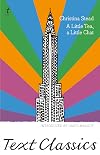
This review is published to coincide with the anniversary of Christina Stead’s death (17 July 1902 – 31 March 1983).
Oh, Christina, you were a wicked woman in the best possible way!
Way back in 1948, Christina Stead wrote the ultimate satire of marriage and capitalism when she savaged the predatory male in this witty black comedy that shows in excoriating detail what a hashtag can never could. Her portrait of Robert Grant, whose hobbies are making money and seducing women, is both show more revolting and hilarious, and readers will be cheering from the sidelines when he meets his match, Barbara, who is every bit as calculating as he is. I wonder what Jane Austen, doyenne of The Marriage Novel, would have thought of it? She would have been thunderstruck, I think, but her sense of humour would have held sway…
Girls, think of the sleaziest man you know. Was it your first boss, who these days would be fired for his daily sexual innuendos? Was it your Ex’s ‘mate’ who put the hard word on you when you briefly worked for him? Was it the well-known academic who put his hand on your knee under the table while his wife sat oblivious on the other side of you? Was it the clown at a party who cupped his hands under your boobs from behind and hauled you to your feet because he thought he was irresistible (and who copped a six-inch stiletto in the calf for his trouble)? None of these are in the same league as Robert Grant…
‘A little tea, a little chat’ is Grant’s euphemism for seduction. In 1940s New York, he’s always looking for opportunities to make money and to ‘beguile and betray’ the women he encounters. He has plenty of money to splash around because of all the deals he has made, and now after Pearl Harbour and the declaration of war, he’s busy finding ways to profiteer from it. Stead’s descriptions of this perfidy seem so authentic, she must have heard conversations like it in New York where she lived with her banker husband. There may have been some red faces when the book was published in 1948. But maybe not. Types like this – as we see so often in today’s media – are completely shameless…
To read the rest of my review please visit https://anzlitlovers.com/2018/03/31/a-little-tea-a-little-chat-by-christina-stea... show less
Oh, Christina, you were a wicked woman in the best possible way!
Way back in 1948, Christina Stead wrote the ultimate satire of marriage and capitalism when she savaged the predatory male in this witty black comedy that shows in excoriating detail what a hashtag can never could. Her portrait of Robert Grant, whose hobbies are making money and seducing women, is both show more revolting and hilarious, and readers will be cheering from the sidelines when he meets his match, Barbara, who is every bit as calculating as he is. I wonder what Jane Austen, doyenne of The Marriage Novel, would have thought of it? She would have been thunderstruck, I think, but her sense of humour would have held sway…
Girls, think of the sleaziest man you know. Was it your first boss, who these days would be fired for his daily sexual innuendos? Was it your Ex’s ‘mate’ who put the hard word on you when you briefly worked for him? Was it the well-known academic who put his hand on your knee under the table while his wife sat oblivious on the other side of you? Was it the clown at a party who cupped his hands under your boobs from behind and hauled you to your feet because he thought he was irresistible (and who copped a six-inch stiletto in the calf for his trouble)? None of these are in the same league as Robert Grant…
‘A little tea, a little chat’ is Grant’s euphemism for seduction. In 1940s New York, he’s always looking for opportunities to make money and to ‘beguile and betray’ the women he encounters. He has plenty of money to splash around because of all the deals he has made, and now after Pearl Harbour and the declaration of war, he’s busy finding ways to profiteer from it. Stead’s descriptions of this perfidy seem so authentic, she must have heard conversations like it in New York where she lived with her banker husband. There may have been some red faces when the book was published in 1948. But maybe not. Types like this – as we see so often in today’s media – are completely shameless…
To read the rest of my review please visit https://anzlitlovers.com/2018/03/31/a-little-tea-a-little-chat-by-christina-stea... show less
Lists
Awards


You May Also Like


Associated Authors
Statistics
- Works
- 24
- Also by
- 7
- Members
- 3,521
- Popularity
- #7,212
- Rating
- 3.6
- Reviews
- 82
- ISBNs
- 184
- Languages
- 9
- Favorited
- 7