
Mariah Fredericks
Author of A Death of No Importance
About the Author
Image credit: mariahfredericksbooks.com
Series
Works by Mariah Fredericks
Tagged
Common Knowledge
- Gender
- female
- Nationality
- USA
- Birthplace
- New York, New York, USA
Members
Reviews
Rating: 4.5* of five
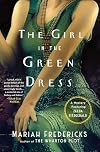
The Publisher Says: From the author of The Lindbergh Nanny comes an evocative mystery about the 1920 murder of the gambler Joseph Elwell, featuring New Yorker writer Morris Markey and Zelda Fitzgerald.
At the dawn of the Jazz Age, Morris Markey arrives in New York to become a writer. Having served in France, he needs to be in a place so distracting he cannot hear himself think. New in town, Markey hovers at the edge of the city’s revels, unable to hear the secrets that show more might give him his first Big Story. Finally one night he spots Joseph Elwell, a man about town known for courting wealthy married women, with a glorious girl in a dress of silver and dollar green.
The next morning, Elwell’s housekeeper runs out into the street screaming that Elwell has been shot. Every door and window in the house is locked. Did the ravishing woman kill her paramour? At last, Morris Markey has his story.
To penetrate the glittering world of Joseph Elwell, Markey turns to the newly famous Scott and Zelda Fitzgerald, who met Elwell the same fateful night he night. Bored while Scott is working on his next novel, Zelda offers to help Markey with his investigation.
Together, Markey and Zelda learn that there were many people in Elwell's life who had reason to want him dead. And when a second man is found shot in his home in a very similar way, Markey begins to suspect that the truth may be more complicated—a story so dangerous that after he finishes it three decades later, he himself is found dead in his home, a single bullet through his head.
Mariah Fredericks's third standalone novel based on a true story from New York City's glamorous past, The Girl in the Green Dress is a truly standout historical mystery.
I RECEIVED A DRC FROM THE PUBLISHER VIA NETGALLEY. THANK YOU.
My Review: The past is an inexhaustible goldmine for novelists. Author Fredericks works it with skill, and a very discerning eye...there's enough fact to get a really good story here, but not enough to make a microhistory true-crime book of. That's a storyteller at work, discerning the bones of an involving story!
The story told is pretty emblematic of prosperity's victims. Young, ambitious, seeing around them all the world through the envious lens of desire, of greed for more; and yet, innocent youth does not see the cost of it despite their focus on a failure of existing social rules. We're all blinkered by something we do not examine in youth, and Zelda Sayre Fitzgerald was the poster girl for it. She lived a life of glamour and sophistication in the 1920s that utterly beguiled many...especially Morris Markey, young reporter seeking the case that could make his name in Jazz Age New York.
I was very aware of the 2000s "manic pixie dream girl" vibes coming from Zelda in a way I had not seen before. There's a sadness and frailty in Zelda's real life story, but this use of her troubled mind bothered me...Markey used Zelda for her connections, fell for the of her image that he created (like so many others in her life), and she was so bored she hopped on his ambition to bag the story to amuse herself. It felt uneasily like a transactional acquaintance. Hence the missing half-star.
As that was not unusual for the times, those or ours, I merely note the fact in case it bothers others as well. It feels like the sort of thing Zelda would've been deeply familiar with, being an intelligent woman in a society that does not much value those beings.
So Markey, with Zelda's help getting into the Right Sort's parties and homes, sets about learning all he can about the murdered man. We're along with him, in third person close PoV, so it does feel like a real-time unfolding of the absurd and artificial world of the moneyed elite in crisis. Asking questions and listening in, discussing the murder victim's many shenanigans, all of it happens as we see the people in that world enacting some very peculiar social rituals around drinking, drugging, and sexing each other up. The Great War recently past damaged those off the battlefield, differently to be sure, as those on it. These times were in flux as institutions rattled and broke; the idols were changing; and Zelda was shoving statues off pedestals to the admiring eyes of Markey in the crowd around her.
As expected after her fictionalization of the Lindbergh kidnapping, Author Fredericks is scrupulous in pointing out her inventions, embroiderings, and naming her sources for the story. It is a big part of the reason I trust her to tell me a tale...she tells me when she's departing from the facts. The biggest departure was the central sleuthing duo...they never met in real life! I suppose that's a spoiler. oh well, so be it, you're reading a review so it can't be too surprising. I was completely convinced by their world as drawn here, so just accepted it was all real for the duration. Great work!
As this story centers on an unsolved murder, bookended by a very suspicious death, the very nature of it is to be uncertain...however, it does not feel unfinished as a story. No one who has lived a long enough life really believes in neatly tied-up ends, that's often why people read series-character mystery novels. I don't think that reader will necessarily be thrilled by the looseness of the ending as it is not a tidy resolution on that level.
It very much is a good story, for all that, and a terrific way to wile away a day. show less
The Publisher Says: From the author of The Lindbergh Nanny comes an evocative mystery about the 1920 murder of the gambler Joseph Elwell, featuring New Yorker writer Morris Markey and Zelda Fitzgerald.
At the dawn of the Jazz Age, Morris Markey arrives in New York to become a writer. Having served in France, he needs to be in a place so distracting he cannot hear himself think. New in town, Markey hovers at the edge of the city’s revels, unable to hear the secrets that show more might give him his first Big Story. Finally one night he spots Joseph Elwell, a man about town known for courting wealthy married women, with a glorious girl in a dress of silver and dollar green.
The next morning, Elwell’s housekeeper runs out into the street screaming that Elwell has been shot. Every door and window in the house is locked. Did the ravishing woman kill her paramour? At last, Morris Markey has his story.
To penetrate the glittering world of Joseph Elwell, Markey turns to the newly famous Scott and Zelda Fitzgerald, who met Elwell the same fateful night he night. Bored while Scott is working on his next novel, Zelda offers to help Markey with his investigation.
Together, Markey and Zelda learn that there were many people in Elwell's life who had reason to want him dead. And when a second man is found shot in his home in a very similar way, Markey begins to suspect that the truth may be more complicated—a story so dangerous that after he finishes it three decades later, he himself is found dead in his home, a single bullet through his head.
Mariah Fredericks's third standalone novel based on a true story from New York City's glamorous past, The Girl in the Green Dress is a truly standout historical mystery.
I RECEIVED A DRC FROM THE PUBLISHER VIA NETGALLEY. THANK YOU.
My Review: The past is an inexhaustible goldmine for novelists. Author Fredericks works it with skill, and a very discerning eye...there's enough fact to get a really good story here, but not enough to make a microhistory true-crime book of. That's a storyteller at work, discerning the bones of an involving story!
The story told is pretty emblematic of prosperity's victims. Young, ambitious, seeing around them all the world through the envious lens of desire, of greed for more; and yet, innocent youth does not see the cost of it despite their focus on a failure of existing social rules. We're all blinkered by something we do not examine in youth, and Zelda Sayre Fitzgerald was the poster girl for it. She lived a life of glamour and sophistication in the 1920s that utterly beguiled many...especially Morris Markey, young reporter seeking the case that could make his name in Jazz Age New York.
I was very aware of the 2000s "manic pixie dream girl" vibes coming from Zelda in a way I had not seen before. There's a sadness and frailty in Zelda's real life story, but this use of her troubled mind bothered me...Markey used Zelda for her connections, fell for the of her image that he created (like so many others in her life), and she was so bored she hopped on his ambition to bag the story to amuse herself. It felt uneasily like a transactional acquaintance. Hence the missing half-star.
As that was not unusual for the times, those or ours, I merely note the fact in case it bothers others as well. It feels like the sort of thing Zelda would've been deeply familiar with, being an intelligent woman in a society that does not much value those beings.
So Markey, with Zelda's help getting into the Right Sort's parties and homes, sets about learning all he can about the murdered man. We're along with him, in third person close PoV, so it does feel like a real-time unfolding of the absurd and artificial world of the moneyed elite in crisis. Asking questions and listening in, discussing the murder victim's many shenanigans, all of it happens as we see the people in that world enacting some very peculiar social rituals around drinking, drugging, and sexing each other up. The Great War recently past damaged those off the battlefield, differently to be sure, as those on it. These times were in flux as institutions rattled and broke; the idols were changing; and Zelda was shoving statues off pedestals to the admiring eyes of Markey in the crowd around her.
As expected after her fictionalization of the Lindbergh kidnapping, Author Fredericks is scrupulous in pointing out her inventions, embroiderings, and naming her sources for the story. It is a big part of the reason I trust her to tell me a tale...she tells me when she's departing from the facts. The biggest departure was the central sleuthing duo...they never met in real life! I suppose that's a spoiler. oh well, so be it, you're reading a review so it can't be too surprising. I was completely convinced by their world as drawn here, so just accepted it was all real for the duration. Great work!
As this story centers on an unsolved murder, bookended by a very suspicious death, the very nature of it is to be uncertain...however, it does not feel unfinished as a story. No one who has lived a long enough life really believes in neatly tied-up ends, that's often why people read series-character mystery novels. I don't think that reader will necessarily be thrilled by the looseness of the ending as it is not a tidy resolution on that level.
It very much is a good story, for all that, and a terrific way to wile away a day. show less
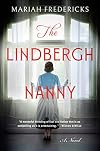
The Publisher Says: Mariah Fredericks's The Lindbergh Nanny is powerful, propulsive novel about America’s most notorious kidnapping through the eyes of the woman who found herself at the heart of this deadly crime.
When the most famous toddler in America, Charles Lindbergh, Jr., is kidnapped from his family home in New Jersey in 1932, the case makes international headlines. Already celebrated for his flight across the Atlantic, his father, Charles, Sr., is the country’s golden boy, with show more his wealthy, lovely wife, Anne Morrow Lindbergh, by his side. But there’s someone else in their household—Betty Gow, a formerly obscure young woman, now known around the world by another name: the Lindbergh Nanny.
A Scottish immigrant deciphering the rules of her new homeland and its East Coast elite, Betty finds Colonel Lindbergh eccentric and often odd, Mrs. Lindbergh kind yet nervous, and Charlie simply a darling. Far from home and bruised from a love affair gone horribly wrong, Betty finds comfort in caring for the child, and warms to the attentions of handsome sailor Henrik, sometimes known as Red. Then, Charlie disappears.
Suddenly a suspect in the eyes of both the media and the public, Betty must find the truth about what really happened that night, in order to clear her own name—and to find justice for the child she loves.
I RECEIVED A DRC FROM THE PUBLISHER VIA NETGALLEY. THANK YOU.
My Review: A lot of ink is still spilled about this dreadful criminal act, ninety years on; it has everything we love in a public spectacle: a pretty woman, a handsome hero, a quiet young girl with big dreams. That these won't survive contact with the ever-increasing celebrity culture that mass media, only recently including newsreels and radio broadcasts, with its invasive tentacles shoving into each and every cranny of the principals' lives, thoughts, actions before, during, and after the events described, is the darkest tinge of tragedy.
As part of this non-fiction novel coming this November, Author Fredericks presents her research in epitome..."this is true, this bit's been changed but is mostly true"...which to my mind is the proper way to handle a researched work of fiction that is based on fact. I do not care for the research-paper lists of sources, citations, and so forth, that some authors provide so as to spike the many, many guns aimed at creators in internet culture. "Appropriation! Inaccuracies and falsehoods!" ::eyeroll:: It's called FICTION, people, CTFD.
My personal axe now ground to my own satisfaction, let me tell you what I enjoyed most about the read:
That's Betty's voice from the beginning of chapter three. She's direct. She's concise. She does not shilly-shally, not ever and not once. I like that in a person, I appreciate that in a character, and I am glad to say that Betty was (despite the media circus that she endured without much in the way of role models to guide her) a delightful companion in her own life as well. (The author speaks of her meeting with A. Scott Berg when he was writing his Lindbergh biography, what transpired during that meeting, and this informed her awareness of how she wants Betty's voice to sound. She nailed it.)
This being a factual story, and the author giving no hint that she intended to pull a fast one at the end, I was deeply pleased to feel invested in the unfolding tale. It's really easy, with a story not exactly underreported, and about which there is quite an extensive trove of writing already. (Ye gawds some of what's been said...!) No, the ending hasn't changed; yes, the guilty party's guilt is evident; but there are so many cockroaches scuttling for cover in any person's existence if an arc-lamp like the one aimed at the Lindberghs is trained on it that there's room for a lot of juicy speculation.
How can you not be impressed when someone takes ninety-year-old facts and makes a solid, well-made story out of them?
But...I hear the Gotcha! Gang clearing their throats...this is a four-star review and you're describing a five-star experience. Well, no thing made by human hands is perfect, is it. I rankle mightily at the author's choice to ascribe a certain suspect's furtive, secretive, and frankly unpleasant suspiciousness as down to that suspect's gayness. Yes indeed, the suspect's actual sexuality was not ever even hinted to be "deviant" in the parlance of the day. In the endnotes, the author says she made this deliberate choice to give the character a "need for privacy that would be instantly understandable to the modern reader."
Uh-huh.
That star-losing choice aside...Yes, I'm impressed. Yes, I'd say go pre-order one. I'm so glad I was able to read it as a DRC because the wait for the library's inevitable copy will be long. Get on it soon. show less
When the most famous toddler in America, Charles Lindbergh, Jr., is kidnapped from his family home in New Jersey in 1932, the case makes international headlines. Already celebrated for his flight across the Atlantic, his father, Charles, Sr., is the country’s golden boy, with show more his wealthy, lovely wife, Anne Morrow Lindbergh, by his side. But there’s someone else in their household—Betty Gow, a formerly obscure young woman, now known around the world by another name: the Lindbergh Nanny.
A Scottish immigrant deciphering the rules of her new homeland and its East Coast elite, Betty finds Colonel Lindbergh eccentric and often odd, Mrs. Lindbergh kind yet nervous, and Charlie simply a darling. Far from home and bruised from a love affair gone horribly wrong, Betty finds comfort in caring for the child, and warms to the attentions of handsome sailor Henrik, sometimes known as Red. Then, Charlie disappears.
Suddenly a suspect in the eyes of both the media and the public, Betty must find the truth about what really happened that night, in order to clear her own name—and to find justice for the child she loves.
I RECEIVED A DRC FROM THE PUBLISHER VIA NETGALLEY. THANK YOU.
My Review: A lot of ink is still spilled about this dreadful criminal act, ninety years on; it has everything we love in a public spectacle: a pretty woman, a handsome hero, a quiet young girl with big dreams. That these won't survive contact with the ever-increasing celebrity culture that mass media, only recently including newsreels and radio broadcasts, with its invasive tentacles shoving into each and every cranny of the principals' lives, thoughts, actions before, during, and after the events described, is the darkest tinge of tragedy.
As part of this non-fiction novel coming this November, Author Fredericks presents her research in epitome..."this is true, this bit's been changed but is mostly true"...which to my mind is the proper way to handle a researched work of fiction that is based on fact. I do not care for the research-paper lists of sources, citations, and so forth, that some authors provide so as to spike the many, many guns aimed at creators in internet culture. "Appropriation! Inaccuracies and falsehoods!" ::eyeroll:: It's called FICTION, people, CTFD.
My personal axe now ground to my own satisfaction, let me tell you what I enjoyed most about the read:
It's not clear where I'll be living. I'm part of the Lindbergh household, but they have no house of their own yet, which is why they're living with her parents. They've not even been married two years and seem to have spent most of that time in the air.
That's Betty's voice from the beginning of chapter three. She's direct. She's concise. She does not shilly-shally, not ever and not once. I like that in a person, I appreciate that in a character, and I am glad to say that Betty was (despite the media circus that she endured without much in the way of role models to guide her) a delightful companion in her own life as well. (The author speaks of her meeting with A. Scott Berg when he was writing his Lindbergh biography, what transpired during that meeting, and this informed her awareness of how she wants Betty's voice to sound. She nailed it.)
This being a factual story, and the author giving no hint that she intended to pull a fast one at the end, I was deeply pleased to feel invested in the unfolding tale. It's really easy, with a story not exactly underreported, and about which there is quite an extensive trove of writing already. (Ye gawds some of what's been said...!) No, the ending hasn't changed; yes, the guilty party's guilt is evident; but there are so many cockroaches scuttling for cover in any person's existence if an arc-lamp like the one aimed at the Lindberghs is trained on it that there's room for a lot of juicy speculation.
How can you not be impressed when someone takes ninety-year-old facts and makes a solid, well-made story out of them?
But...I hear the Gotcha! Gang clearing their throats...this is a four-star review and you're describing a five-star experience. Well, no thing made by human hands is perfect, is it. I rankle mightily at the author's choice to ascribe a certain suspect's furtive, secretive, and frankly unpleasant suspiciousness as down to that suspect's gayness. Yes indeed, the suspect's actual sexuality was not ever even hinted to be "deviant" in the parlance of the day. In the endnotes, the author says she made this deliberate choice to give the character a "need for privacy that would be instantly understandable to the modern reader."
Uh-huh.
That star-losing choice aside...Yes, I'm impressed. Yes, I'd say go pre-order one. I'm so glad I was able to read it as a DRC because the wait for the library's inevitable copy will be long. Get on it soon. show less
Rating: 3.5* of five
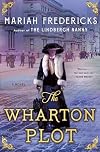
The Publisher Says: Mariah Fredericks' mesmerizing novel, The Wharton Plot, follows renowned novelist Edith Wharton in the twilight years of the Gilded Age in New York as she tracks a killer.
New York City, 1911. Edith Wharton, almost equally famed for her novels and her sharp tongue, is bone-tired of Manhattan. Finding herself at a crossroads with both her marriage and her writing, she makes the decision to leave America, her publisher, and her loveless marriage.
And then, show more dashing novelist David Graham Phillips—a writer with often notorious ideas about society and women’s place in it—is shot to death outside the Princeton Club. Edith herself met the man only once, when the two formed a mutual distaste over tea in the Palm Court of the Belmont hotel. When Phillips is killed, Edith's life takes another turn. His sister is convinced Graham was killed by someone determined to stop the publication of his next book, which promised to uncover secrets that powerful people would rather stayed hidden. Though unconvinced, Edith is curious. What kind of book could push someone to kill?
Inspired by a true story, The Wharton Plot follows Edith Wharton through the fading years of the Gilded Age in a city she once loved so well, telling a taut tale of fame, love, and murder, as she becomes obsessed with solving a crime.
I RECEIVED A DRC FROM THE PUBLISHER VIA NETGALLEY. THANK YOU.
My Review: I have no way to know if Edith Wharton was this prissy, self-centered, snobbish person in real life. Reading her fiction does nothing to dissuade me from believing it. From the moment she meets, and loathes, the murder victim, I was pretty much turned off.
Well-plotted and expertly written, this is an historical mystery lover's dream, with late Gilded-Age Manhattan evoked with panache and verve. I just don't like anyone in it.
Minotaur Books only wants $11.99 for an ebook. Depending on how you feel about nasty people, it could be a bargain. show less
The Publisher Says: Mariah Fredericks' mesmerizing novel, The Wharton Plot, follows renowned novelist Edith Wharton in the twilight years of the Gilded Age in New York as she tracks a killer.
New York City, 1911. Edith Wharton, almost equally famed for her novels and her sharp tongue, is bone-tired of Manhattan. Finding herself at a crossroads with both her marriage and her writing, she makes the decision to leave America, her publisher, and her loveless marriage.
And then, show more dashing novelist David Graham Phillips—a writer with often notorious ideas about society and women’s place in it—is shot to death outside the Princeton Club. Edith herself met the man only once, when the two formed a mutual distaste over tea in the Palm Court of the Belmont hotel. When Phillips is killed, Edith's life takes another turn. His sister is convinced Graham was killed by someone determined to stop the publication of his next book, which promised to uncover secrets that powerful people would rather stayed hidden. Though unconvinced, Edith is curious. What kind of book could push someone to kill?
Inspired by a true story, The Wharton Plot follows Edith Wharton through the fading years of the Gilded Age in a city she once loved so well, telling a taut tale of fame, love, and murder, as she becomes obsessed with solving a crime.
I RECEIVED A DRC FROM THE PUBLISHER VIA NETGALLEY. THANK YOU.
My Review: I have no way to know if Edith Wharton was this prissy, self-centered, snobbish person in real life. Reading her fiction does nothing to dissuade me from believing it. From the moment she meets, and loathes, the murder victim, I was pretty much turned off.
Well-plotted and expertly written, this is an historical mystery lover's dream, with late Gilded-Age Manhattan evoked with panache and verve. I just don't like anyone in it.
Minotaur Books only wants $11.99 for an ebook. Depending on how you feel about nasty people, it could be a bargain. show less
Our two-mile square town’s library has visitors who scan the shelves and hide books that they find objectionable. So, when I recently gave away fifty books through the city’s “shares” page, I was surprised that no one was offended that some of those books were LGBTQ stories.
Back in Edith Wharton’s day, Anthony Comstock’s New York Society for the Suppression of Vice exposed writers whose work he found offensive. In The Wharton Plot, Comstock tells Edith Wharton that all fiction is show more suspect, for fiction is fantasy and allows people to create their own morals. He noted that fifteen women “exposed by the Society have taken their own lives,” which seemed like justice to him.
The theme of book banning is at the heart of this murder mystery.
Readers are swept into the Gilded Age world of New York City’s elite where “most of life was spent pretending one liked someone one loathed, lavishly praising a mediocre effort, or remaining silent.” One of the people Wharton meets is another author who she instantly dislikes. The next day, he is murdered on the street. Wharton becomes obsessed with discovering who killed him, and why. The man’s publisher allows her to read the manuscript of the forthcoming book that apparently offended the murderer. She then receives letters similar to the ones the author had received before his murder.
Wharton visits her dear friend Henry James for advice. She carries her beloved dog everywhere. She supervises care for her invalided husband Teddy, while maintaining separate lives as much as possible. She bundles in her furs and investigates.
I enjoyed the characters and the world of the novel, and especially how the author connected Wharton’s world to today’s. The newly strung electric wires strung everywhere, bringing instant connection but not happiness. The pressure of market demands and opinion on the publishing world. Gun violence. Money controlling American politics.
I sped through the book in two sittings.
Thanks to the publisher for a free book. show less
Back in Edith Wharton’s day, Anthony Comstock’s New York Society for the Suppression of Vice exposed writers whose work he found offensive. In The Wharton Plot, Comstock tells Edith Wharton that all fiction is show more suspect, for fiction is fantasy and allows people to create their own morals. He noted that fifteen women “exposed by the Society have taken their own lives,” which seemed like justice to him.
The theme of book banning is at the heart of this murder mystery.
Readers are swept into the Gilded Age world of New York City’s elite where “most of life was spent pretending one liked someone one loathed, lavishly praising a mediocre effort, or remaining silent.” One of the people Wharton meets is another author who she instantly dislikes. The next day, he is murdered on the street. Wharton becomes obsessed with discovering who killed him, and why. The man’s publisher allows her to read the manuscript of the forthcoming book that apparently offended the murderer. She then receives letters similar to the ones the author had received before his murder.
Wharton visits her dear friend Henry James for advice. She carries her beloved dog everywhere. She supervises care for her invalided husband Teddy, while maintaining separate lives as much as possible. She bundles in her furs and investigates.
I enjoyed the characters and the world of the novel, and especially how the author connected Wharton’s world to today’s. The newly strung electric wires strung everywhere, bringing instant connection but not happiness. The pressure of market demands and opinion on the publishing world. Gun violence. Money controlling American politics.
I sped through the book in two sittings.
Thanks to the publisher for a free book. show less
Lists
Awards


You May Also Like


Associated Authors
Statistics
- Works
- 17
- Members
- 1,739
- Popularity
- #14,790
- Rating
- 3.5
- Reviews
- 134
- ISBNs
- 83
- Languages
- 3
- Favorited
- 1