
Mark Lawson
Author of The Battle for Room Service: Journeys to All the Safe Places
Works by Mark Lawson
21 (BARNES) 1 copy
Loitering With Intent 1 copy
Associated Works
Michael Frayn: Matchbox theatre : thirty short entertainments [theatre programme] — Contributor — 1 copy
Tagged
Common Knowledge
- Birthdate
- 1962-04-11
- Gender
- male
- Occupations
- broadcast journalist
- Nationality
- England
UK
Members
Reviews
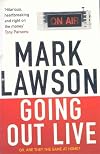
Although written nearly fifteen years ago, Mark Lawson’s novel about the perils and insecurities of life as a television and radio presenter retains a vivid currency. Richard Fleming presents a weekday radio talk show during the prestigious ‘drive time’ slot, as well as a weekly arts-based television chat show. Drawing from his own experience in both media Lawson gives a hilarious insight into the tribulations of the presenter, required to cope with guests who are either overly show more garrulous or virtually struck dumb. Ratings and audience share figures are paramount, and each presenter is ferociously jealous, not just of their rivals from other programmes, but also of co-presenters, or more peripheral colleagues such as the news reader or weather forecaster, while there is the additional risk that the travel or sports correspondent might upstage them in the readers’ affections. On top of all this, the presenter has to cope with a constant stream of commentary through his earpiece from colleagues in the production team.
Lawson clearly knows his stuff, having been a successful and longstanding presenter in both media. At the start of the novel Fleming is in the ascendant, confident that he has both his roles under control. He is, however, less confident and self-assured than his public persona might suggest. It gradually emerges that he has certain idiosyncrasies, including a dislike of confronting his own appearance (to the extent that he covers any mirrors in his dressing room or studio with brown paper, and prefers to shave ‘blind’, without the guidance of his reflection. He also appears to have certain secrets in his personal life. No-one seems to know anything about his first marriage, and he has recently been receiving some very unwholesome mail.
The novel is by turns chilling and hilarious (even both simultaneously at times). Fleming’s narrative, in the form of a private memoir, is interspersed with transcripts from a series of interviews with other characters that represent contributions to a documentary designed to recount the events leading up to a gruesome climax. Part of the attraction of the novel is the constant misdirection into which the reader is suckered. Lawson also used the novel as a platform from which to satirise the whole world of the promotional interview and the cult of celebrity itself. Caustic, yet also self-deprecating, one wonders whether Fleming can take the poison as well as dish it out. I rather imagine I would have enjoyed Richard Fleming’s radio shows – I certainly enjoyed this novel. show less
Lawson clearly knows his stuff, having been a successful and longstanding presenter in both media. At the start of the novel Fleming is in the ascendant, confident that he has both his roles under control. He is, however, less confident and self-assured than his public persona might suggest. It gradually emerges that he has certain idiosyncrasies, including a dislike of confronting his own appearance (to the extent that he covers any mirrors in his dressing room or studio with brown paper, and prefers to shave ‘blind’, without the guidance of his reflection. He also appears to have certain secrets in his personal life. No-one seems to know anything about his first marriage, and he has recently been receiving some very unwholesome mail.
The novel is by turns chilling and hilarious (even both simultaneously at times). Fleming’s narrative, in the form of a private memoir, is interspersed with transcripts from a series of interviews with other characters that represent contributions to a documentary designed to recount the events leading up to a gruesome climax. Part of the attraction of the novel is the constant misdirection into which the reader is suckered. Lawson also used the novel as a platform from which to satirise the whole world of the promotional interview and the cult of celebrity itself. Caustic, yet also self-deprecating, one wonders whether Fleming can take the poison as well as dish it out. I rather imagine I would have enjoyed Richard Fleming’s radio shows – I certainly enjoyed this novel. show less
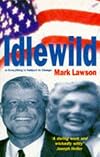
It has been said that everyone of a certain age remembers where they were when they heard about the assassination of President Kennedy. (I don’t, but then I was only seven months old.) Like the World Trade Centre attacks on 9/11, Kennedy’s murder has become one of the great landmark moments in history: the slaying of an iconic President that spawned thousands of different conspiracy theories, and possibly marked the passing of an age of American innocence. Many of those conspiracy show more theories also feature the equally iconic actress Marilyn Monroe who was believed to have had a long running affair with the President, and whose suicide in 1962, when at the peak of her fame, rocked the world.
Mark Lawson’s novel conjures an alternative history in which both of them survived. Marilyn Monroe recovers from her drug overdose and goes on to resume her career, though perhaps with some ill-chosen film ventures, while President Kennedy’s life is saved following almost miraculous medical treatment at Parkland Memorial Hospital, and he recovers to resume his Presidency and secure re-election the following year on a wave of sympathy. In November 1993, as the thirtieth year of the attempted assassination nears, the former President prepares for a thanksgiving ceremony in Boston to celebrate his escape.
The speculative nature of the novel is deftly handled, Lawson has obviously done huge amounts of research, not just into the events in Dallas in November 1963 but also into the political careers of his successors. Lyndon B Johnson suffers more than most in this alternative history, having to watch Kennedy secure a landslide re-election, and then seeing Nixon elected in 1968. On the other hand, the opprobrium generally heaped on him over America’s engagement in Vietnam is now directed at Kennedy himself, who loses the effect of canonisation bestowed by the assassination ion the real world.
Lawson crams his story with passing allusions to political events throughout the thirty years following the Dallas shooting – I spotted a lot but am convinced I missed just as many. I particularly liked Michael Dukakis’s appearance as an enthusiastic beat policeman in Boston, with no hint of his real world exploits as Presidential candidate.
The novel is not only very clever but also exceptionally funny. In Lawson’s 1993 America is governed by President Sanders, an independent multi-millionaire from Seattle whose late emergence as a candidate took the 1992 election campaign by storm. Sanders is a marvellous creation, full of homespun half-baked philosophy and bizarre personal beliefs – his aides are constantly alert to try to prevent the President from pressing the metaphorical self-destruct button.
There are so many different strands to this novel: satirical observations about the nature of elections in a media-led political world, the rapacious desire of the press to turn up salacious stories, the nature of celebrity, and the toll exacted by high office. What moist surprised me was that this was Lawson’s first novel – it is excellently plotted and marvellously written, with an almost Dickensian juxtaposition of the hilarious and the tragic. show less
Mark Lawson’s novel conjures an alternative history in which both of them survived. Marilyn Monroe recovers from her drug overdose and goes on to resume her career, though perhaps with some ill-chosen film ventures, while President Kennedy’s life is saved following almost miraculous medical treatment at Parkland Memorial Hospital, and he recovers to resume his Presidency and secure re-election the following year on a wave of sympathy. In November 1993, as the thirtieth year of the attempted assassination nears, the former President prepares for a thanksgiving ceremony in Boston to celebrate his escape.
The speculative nature of the novel is deftly handled, Lawson has obviously done huge amounts of research, not just into the events in Dallas in November 1963 but also into the political careers of his successors. Lyndon B Johnson suffers more than most in this alternative history, having to watch Kennedy secure a landslide re-election, and then seeing Nixon elected in 1968. On the other hand, the opprobrium generally heaped on him over America’s engagement in Vietnam is now directed at Kennedy himself, who loses the effect of canonisation bestowed by the assassination ion the real world.
Lawson crams his story with passing allusions to political events throughout the thirty years following the Dallas shooting – I spotted a lot but am convinced I missed just as many. I particularly liked Michael Dukakis’s appearance as an enthusiastic beat policeman in Boston, with no hint of his real world exploits as Presidential candidate.
The novel is not only very clever but also exceptionally funny. In Lawson’s 1993 America is governed by President Sanders, an independent multi-millionaire from Seattle whose late emergence as a candidate took the 1992 election campaign by storm. Sanders is a marvellous creation, full of homespun half-baked philosophy and bizarre personal beliefs – his aides are constantly alert to try to prevent the President from pressing the metaphorical self-destruct button.
There are so many different strands to this novel: satirical observations about the nature of elections in a media-led political world, the rapacious desire of the press to turn up salacious stories, the nature of celebrity, and the toll exacted by high office. What moist surprised me was that this was Lawson’s first novel – it is excellently plotted and marvellously written, with an almost Dickensian juxtaposition of the hilarious and the tragic. show less
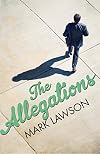
Although he is principally known as a journalist and broadcaster, Mark Lawson is also a very accomplished novelist, and this latest book will serve to boost that reputation further. Until a couple of years ago Lawson was the lead presenter on BBC Radio 4’s daily arts review programme, Front Row, in which he demonstrated his eclectic knowledge across a variety of genres, and showed that one did not have to subside into flaccid sycophancy when interviewing artists. He was, however, moved show more from that show with relatively little notice, with rumours attributing his removal to allegations of bullying. That clearly rankled, though I suppose everything in life is potentially valuable copy for a novelist, and his experiences have clearly informed this marvellous novel.
There are two closely intertwined plots. In the principal storyline, Ned Marriott, a celebrated television historian, known for his controversial takes on familiar historical events, finds himself arrested on the day following his sixtieth birthday, accused of an unusual variation of a historical instance of sexual assault stretching back nearly forty years to the sweltering summer of 1976, when Ned was still a postgraduate student. Ned’s world starts to unravel as the police pursue their investigations, confiscating all his family’s computers, tablets and mobile telephones. Never a complete stranger to hypochondria anyway, Ned’s health suffers and he finds himself on a heady cocktail of anti-depressants and blood pressure medications. Lawson’s portrayal of a bewildered and frightened man having to inform his family (grown up twin daughters from a first marriage, a nine-year-old son from his current relationship and his ageing mother and stepfather) of the charges laid against him is adroit. Ned’s life seems fixed permanently on hold while the police continue to delve into his past. It takes a while before Ned’s name comes into the public domain, but once it does, it creates a huge stir across social media. He also finds himself in the hitherto unfamiliar position of no longer being wanted as a television pundit.
Meanwhile Tom Pimm, Ned’s closest friend, and fellow academic in the history faculty of the University of Middle England (with twin campus sites in Coventry and Buckinghamshire), finds himself the subject of an investigation into allegations of bullying. Tom is certainly a pedant, given to feelings of intellectual superiority over some of the less gifted among his academic colleagues, but he is aghast at the thought that he might be a bully. He is soon finding himself a victim, however, as anonymous accusations are stacked against him. Both find themselves on suspension while their respective investigations drag on. Lawson uses the investigation into Tom Pimm to lampoon hollow management jargon and over-eager political correctness, but the Kafkaesque procedure (Lawson offers an instructive course in the literature of false or groundless accusation throughout the work as both Ned and Tom find themselves increasingly obsessed with literary paradigms of their own circumstances) is chilling. Internal disciplinary procedures are necessary but can bring their own terrors if not handled sensitively. Meanwhile the shadow of Operation Yew Tree looms oppressively over the whole story.
The linked plots are delicately balanced, and complement each other. While the description of the scenario may sound sombre, the novel is extremely funny: gallows humour from both Ned and Tom, and crushing satire about the over commercialisation of universities, where students are now referred to as customers, and where a lecturer is criticised for pitching his lectures at too clever a level.
All in all a great success – if anything, I found it even better than Lawson’s last novel, The Deaths, which was one of my favourite books from the year it was published. show less
There are two closely intertwined plots. In the principal storyline, Ned Marriott, a celebrated television historian, known for his controversial takes on familiar historical events, finds himself arrested on the day following his sixtieth birthday, accused of an unusual variation of a historical instance of sexual assault stretching back nearly forty years to the sweltering summer of 1976, when Ned was still a postgraduate student. Ned’s world starts to unravel as the police pursue their investigations, confiscating all his family’s computers, tablets and mobile telephones. Never a complete stranger to hypochondria anyway, Ned’s health suffers and he finds himself on a heady cocktail of anti-depressants and blood pressure medications. Lawson’s portrayal of a bewildered and frightened man having to inform his family (grown up twin daughters from a first marriage, a nine-year-old son from his current relationship and his ageing mother and stepfather) of the charges laid against him is adroit. Ned’s life seems fixed permanently on hold while the police continue to delve into his past. It takes a while before Ned’s name comes into the public domain, but once it does, it creates a huge stir across social media. He also finds himself in the hitherto unfamiliar position of no longer being wanted as a television pundit.
Meanwhile Tom Pimm, Ned’s closest friend, and fellow academic in the history faculty of the University of Middle England (with twin campus sites in Coventry and Buckinghamshire), finds himself the subject of an investigation into allegations of bullying. Tom is certainly a pedant, given to feelings of intellectual superiority over some of the less gifted among his academic colleagues, but he is aghast at the thought that he might be a bully. He is soon finding himself a victim, however, as anonymous accusations are stacked against him. Both find themselves on suspension while their respective investigations drag on. Lawson uses the investigation into Tom Pimm to lampoon hollow management jargon and over-eager political correctness, but the Kafkaesque procedure (Lawson offers an instructive course in the literature of false or groundless accusation throughout the work as both Ned and Tom find themselves increasingly obsessed with literary paradigms of their own circumstances) is chilling. Internal disciplinary procedures are necessary but can bring their own terrors if not handled sensitively. Meanwhile the shadow of Operation Yew Tree looms oppressively over the whole story.
The linked plots are delicately balanced, and complement each other. While the description of the scenario may sound sombre, the novel is extremely funny: gallows humour from both Ned and Tom, and crushing satire about the over commercialisation of universities, where students are now referred to as customers, and where a lecturer is criticised for pitching his lectures at too clever a level.
All in all a great success – if anything, I found it even better than Lawson’s last novel, The Deaths, which was one of my favourite books from the year it was published. show less
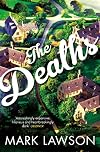
I used to enjoy listening to Mark Lawson's "Front Row" programme on BBC Radio 4, and was looking forward very eagerly to reading this novel, though, as always in such circumstances, there was a slight fear that I might prove disappointed. Such fears were groundless, however, as Lawson definitely delivers in spades with this finely crafted novel about life in Middle England during the recent economic downturn and the Government's austerity measures.
The novel is based around four families show more living in a village in the commuter belt of Buckinghamshire. Self-styled as 'The Eight', the four couples occupy the four largest houses in their village and have gradually created their own exclusive social circle. Despite their closeness, however, a degree of stratification is already evident as the novel opens. At the pinnacle of the inner society stand the Dunsters, Max and 'Jenno', whose position is supported by Dunster Manor Ltd, the family firm that Max inherited and which makes high class diaries and calendars and similar products popular around the world. Next in line come the Crossans, Jonny and Libby. Jonny, son of a now ennobled former Tory Minister from the Thatcher and Major administrations, is a very successful barrister while Libby sits as a local magistrate and also features in countless local committees. Former soldier Tom Rutherford is chief executive of his own security firm while his wife Emily is a local doctor. The fourth couple is made up of Natasha ("Tasha") and Simon Lonsdale. Tasha owns a catering company while Simon is a senior executive in a PR firm which is currently struggling to rehabilitate the image of a failed bank that had required a massive bail-out from government funds. All four couples have children who go attend the same local private school, and almost all of their socialising seems to be conducted within the clique.
Alternating chapters of the story recount the discovery of a brutal mass murder in which one of the families is presumed to have been killed by the husband/father who has then shot himself. The other chapters show the lead up to this awful crisis, taking the families through a chaotic series of set pieces, each more splendidly extravagant than the last. Lawson handles this crescendo of conspicuous expenditure with great deftness, sowing clues to the startling denouement that might feasibly apply to any of the four families.
It was very reminiscent of John Lanchester's "Capital" (one of my favourite novels ever), with the scene transplanted from South London to rural Buckinghamshire. Lawson is just as capable as Lanchester at making telling observations about the state of the nation, and the ever-widening chasm between the 'haves' and the 'have-nots' in divided Britain.
Supremely enjoyable. show less
The novel is based around four families show more living in a village in the commuter belt of Buckinghamshire. Self-styled as 'The Eight', the four couples occupy the four largest houses in their village and have gradually created their own exclusive social circle. Despite their closeness, however, a degree of stratification is already evident as the novel opens. At the pinnacle of the inner society stand the Dunsters, Max and 'Jenno', whose position is supported by Dunster Manor Ltd, the family firm that Max inherited and which makes high class diaries and calendars and similar products popular around the world. Next in line come the Crossans, Jonny and Libby. Jonny, son of a now ennobled former Tory Minister from the Thatcher and Major administrations, is a very successful barrister while Libby sits as a local magistrate and also features in countless local committees. Former soldier Tom Rutherford is chief executive of his own security firm while his wife Emily is a local doctor. The fourth couple is made up of Natasha ("Tasha") and Simon Lonsdale. Tasha owns a catering company while Simon is a senior executive in a PR firm which is currently struggling to rehabilitate the image of a failed bank that had required a massive bail-out from government funds. All four couples have children who go attend the same local private school, and almost all of their socialising seems to be conducted within the clique.
Alternating chapters of the story recount the discovery of a brutal mass murder in which one of the families is presumed to have been killed by the husband/father who has then shot himself. The other chapters show the lead up to this awful crisis, taking the families through a chaotic series of set pieces, each more splendidly extravagant than the last. Lawson handles this crescendo of conspicuous expenditure with great deftness, sowing clues to the startling denouement that might feasibly apply to any of the four families.
It was very reminiscent of John Lanchester's "Capital" (one of my favourite novels ever), with the scene transplanted from South London to rural Buckinghamshire. Lawson is just as capable as Lanchester at making telling observations about the state of the nation, and the ever-widening chasm between the 'haves' and the 'have-nots' in divided Britain.
Supremely enjoyable. show less
Awards


You May Also Like


Associated Authors
Statistics
- Works
- 17
- Also by
- 5
- Members
- 437
- Popularity
- #55,994
- Rating
- 3.8
- Reviews
- 19
- ISBNs
- 36