
Graham T. Allison
Author of Essence of Decision: Explaining the Cuban Missile Crisis
About the Author
Graham Allison is the Douglas Dillon Professor of Government, former director of the Belfer Center for Science and International Affairs, and founding dean at Harvard Kennedy School. Author of the classic case study Essence of Decision: Explaining the Cuban Missile Crisis, he has advised the show more secretaries of defense under Reagan. Clinton, and Ohama. show less
Disambiguation Notice:
Please do not confuse or combine with the author Allison Graham.
Works by Graham T. Allison
Lee Kuan Yew: The Grand Master's Insights on China, the United States, and the World (2013) 165 copies, 3 reviews
Avoiding Nuclear Anarchy: Containing the Threat of Loose Russian Nuclear Weapons and Fissile Material (BCSIA Studies in International Security) (1996) 19 copies
The Greek Paradox: Promise Vs. Performance (BCSIA Studies in International Security) (1997) 5 copies
Associated Works
Tagged
Common Knowledge
- Other names
- Allison, Graham Tillett, Jr.
Allison, Graham Tillett - Birthdate
- 1940-03-23
- Gender
- male
- Education
- Harvard University (PhD | 1968)
University of Oxford (MA)
Davidson College
Harvard University (BA | 1962) - Occupations
- scholar of international relations
university professor - Organizations
- Council on Foreign Relations
- Nationality
- USA
- Birthplace
- Charlotte, North Carolina, USA
- Places of residence
- Belmont, Massachusetts, USA
- Disambiguation notice
- Please do not confuse or combine with the author Allison Graham.
- Associated Place (for map)
- USA
Members
Discussions
Graham T. Allison's "Thucydides trap": vital concept, poorly named in Pro and Con (May 2022)
Reviews
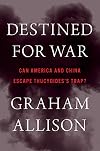
Graham Allison’s book, Destined for War: Can America and China Escape Thucydides Trap?, discusses China's rise into the US political mainstream. After explaining the Thucydides Trap – the friction created when a rising power challenges an established power, the author presents twelve historical examples that resulted in war, and four in which war was avoided. Allison proceeds to focus on the examples he considers to be the most instructive, namely the Peloponnesian War, World War I, and show more the Cold War.
Allison also relays insights from the late Lee Kuan Yew in making his case that Beijing's goal is the restoration of China as a regional hegemon. He argues against the idea that China will become a 'responsible stakeholder' in the international system in which the US remains the arbiter. China seeks the expulsion of the US from Asia, and is rapidly accumulating capabilities to achieve this goal.
He translates an unfiltered Chinese view for his local audience, analogising it to America's expansion in the Western Hemisphere under President Teddy Roosevelt. Going by Allison's ledger, the factors favouring war between the US and China are ominous: two powers with narratives of their own 'exceptionalism', China's sense of past humiliation and present restoration, incompatible cultures and political systems, and a series of entangling flashpoints and alliances. On the positive side, Allison argues, is an interdependent trade relationship and stable nuclear deterrence. Allison also labels North Korea as a 'Cuban missile crisis in slow motion'.
Ironically, the weakness of Allison's book is not his warning that the US and China are at risk of falling into the Thucydides Trap – a case he makes conclusively – but rather his explanations for why war remains avoidable. First, Allison makes the common error that nuclear dynamics between the US and China work the same way as it did with the Soviet Union during the Cold War. Nuclear deterrence rests not just on capability (ensuring a retaliatory strike), but also credibility. During the Cold War, the fall of Western Europe to the Soviet Union posed such an existential threat to the US that a nuclear war could credibly be initiated to prevent it. In Asia, however, the US will not commence a full nuclear exchange with China and there is no way to convince Beijing otherwise. As such, current nuclear dynamics in Asia makes major war more likely, as mapped out in my review of the RAND study of a US-China war, a study also cited by Allison.
Finally, while carefully articulating China’s perception of the rivalry, it is surprising just how US-centric Allison’s ideas are for how conflict might be avoided. Allison suggests curtailing America’s commitment to Taiwan in exchange for concessions in the South and East China seas, or abandoning Prompt Global Strike in exchange for Beijing limiting its conventional expansion. However it seems unlikely China will agree to any of this. Why should it? Time is on Beijing's side. These kinds of deals only worked during the Cold War because each side recognised the other’s core interests while the balance of power between the US and the Soviet Union remained relatively stable. In the case of China and the US, the power shift is rapid and profound, and while Allison clearly understands this he fails to see the implications of his own conclusions. Rather than horse-trading over Taiwan and the South China Sea, Beijing might suggest the US leave Asia entirely in exchange for permanent recognition of Washington’s annexation of Hawaii!
Despite these shortcomings, this reader found Allison’s book good reading both for the overview that it provides. In Destined for War, Allison calls Obama’s Asia pivot 'using an extra strength aspirin to treat cancer'. This author suggests stronger methods. show less
Allison also relays insights from the late Lee Kuan Yew in making his case that Beijing's goal is the restoration of China as a regional hegemon. He argues against the idea that China will become a 'responsible stakeholder' in the international system in which the US remains the arbiter. China seeks the expulsion of the US from Asia, and is rapidly accumulating capabilities to achieve this goal.
He translates an unfiltered Chinese view for his local audience, analogising it to America's expansion in the Western Hemisphere under President Teddy Roosevelt. Going by Allison's ledger, the factors favouring war between the US and China are ominous: two powers with narratives of their own 'exceptionalism', China's sense of past humiliation and present restoration, incompatible cultures and political systems, and a series of entangling flashpoints and alliances. On the positive side, Allison argues, is an interdependent trade relationship and stable nuclear deterrence. Allison also labels North Korea as a 'Cuban missile crisis in slow motion'.
Ironically, the weakness of Allison's book is not his warning that the US and China are at risk of falling into the Thucydides Trap – a case he makes conclusively – but rather his explanations for why war remains avoidable. First, Allison makes the common error that nuclear dynamics between the US and China work the same way as it did with the Soviet Union during the Cold War. Nuclear deterrence rests not just on capability (ensuring a retaliatory strike), but also credibility. During the Cold War, the fall of Western Europe to the Soviet Union posed such an existential threat to the US that a nuclear war could credibly be initiated to prevent it. In Asia, however, the US will not commence a full nuclear exchange with China and there is no way to convince Beijing otherwise. As such, current nuclear dynamics in Asia makes major war more likely, as mapped out in my review of the RAND study of a US-China war, a study also cited by Allison.
Finally, while carefully articulating China’s perception of the rivalry, it is surprising just how US-centric Allison’s ideas are for how conflict might be avoided. Allison suggests curtailing America’s commitment to Taiwan in exchange for concessions in the South and East China seas, or abandoning Prompt Global Strike in exchange for Beijing limiting its conventional expansion. However it seems unlikely China will agree to any of this. Why should it? Time is on Beijing's side. These kinds of deals only worked during the Cold War because each side recognised the other’s core interests while the balance of power between the US and the Soviet Union remained relatively stable. In the case of China and the US, the power shift is rapid and profound, and while Allison clearly understands this he fails to see the implications of his own conclusions. Rather than horse-trading over Taiwan and the South China Sea, Beijing might suggest the US leave Asia entirely in exchange for permanent recognition of Washington’s annexation of Hawaii!
Despite these shortcomings, this reader found Allison’s book good reading both for the overview that it provides. In Destined for War, Allison calls Obama’s Asia pivot 'using an extra strength aspirin to treat cancer'. This author suggests stronger methods. show less
An excellent overview of what happens when one state declines and another rises. It's books like these that made me wish I would have stuck with Political Science in college.
You know all those big mouths with big guns who are ready to invade and kill anyone and everyone who threatens the U.S.? You know them. We all know them. I suggest they read this book. Nothing is ever as easy or as simple as is vomited forth on FoxNews or in a Rambo-esque steroid- and testosterone-laden action movie. And while I'm openly criticizing, being able to have a beer with an individual should not be the qualifying factor that elects her or him president. There is a large amount of show more rich food for thought in this book. The problem begins with big guns. The problem finishes with cool-headed critical thinking. show less
Lee Kuan Yew: The Grand Master's Insights on China, the United States, and the World (Belfer Center Studies in International Security) by Graham Allison
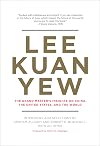
It's useful to check on countries that are successful in economic development and look at what they are doing right.
In this regard Singapore has had rocket ship performance going from a poor third world nation in 1965 to advanced industrial nation by the new millennium, so it is doubly interesting to hear Singapore's long time leader Lee Kuan Yew talk not only about Singapore, but also world development in general.
The inevitable focus is on China and the USA with this short book covering a show more lot of ground.
Basically he's a pragmatist who sees Western democracy as failing. As he says, "Westerners have abandoned an ethical basis for society believing that all problems (post WW2)are solvable by good government". He calls it, "The erosion of the moral underpinnings of a society and the diminution of personal responsibility" and he even goes further saying that, "Multiculturalism will destroy America." as society loses its identity and fractures.
It's not that he doesn't see benefits in multiculturalism. The US attracts top talent from around the world through an entrepreneurial culture, top universities and operating in the English language, but he suggests that multicultural projects must be carried out with great care such that new nationals become (in his case) Singaporeans first. To this end he limited Indian schools in Singapore since their Indian sentiment and cultural teaching inevitably undermined a primary loyalty to multi-ethnic but mono-cultural Singapore. It's a delicate balance and in the case of the US he sees the failure of the old core Anglo cultural values of respect for family, country, thrift, hard work, scholarship and learning in the face of a new confused liberal multi-ethnic, counter-cultural identity.
He says that government has to be clean, rational, efficient and predictable with the USA failing on all counts so he is seriously worried about 1) the dollar, and 2) America's presence in Asia.
The dollar could well lose its reserve status sooner rather than later unleashing inflationary instability and dislocating world trade and he sees constant US deficits weakening the country to such an extent that it can no longer provide a credible alliance with Japan and the Asean nations. He doesn't spell it out but this is really the Nº1 China-Japan question with the Chinese giving every sign that Japan has to kowtow to it and Japan showing no intention of doing so.
Japan also has fully developed nuclear and rocket technology with the potential to quickly produce hundreds of nuclear weapons, which it may well do without a credible US ally. show less
In this regard Singapore has had rocket ship performance going from a poor third world nation in 1965 to advanced industrial nation by the new millennium, so it is doubly interesting to hear Singapore's long time leader Lee Kuan Yew talk not only about Singapore, but also world development in general.
The inevitable focus is on China and the USA with this short book covering a show more lot of ground.
Basically he's a pragmatist who sees Western democracy as failing. As he says, "Westerners have abandoned an ethical basis for society believing that all problems (post WW2)are solvable by good government". He calls it, "The erosion of the moral underpinnings of a society and the diminution of personal responsibility" and he even goes further saying that, "Multiculturalism will destroy America." as society loses its identity and fractures.
It's not that he doesn't see benefits in multiculturalism. The US attracts top talent from around the world through an entrepreneurial culture, top universities and operating in the English language, but he suggests that multicultural projects must be carried out with great care such that new nationals become (in his case) Singaporeans first. To this end he limited Indian schools in Singapore since their Indian sentiment and cultural teaching inevitably undermined a primary loyalty to multi-ethnic but mono-cultural Singapore. It's a delicate balance and in the case of the US he sees the failure of the old core Anglo cultural values of respect for family, country, thrift, hard work, scholarship and learning in the face of a new confused liberal multi-ethnic, counter-cultural identity.
He says that government has to be clean, rational, efficient and predictable with the USA failing on all counts so he is seriously worried about 1) the dollar, and 2) America's presence in Asia.
The dollar could well lose its reserve status sooner rather than later unleashing inflationary instability and dislocating world trade and he sees constant US deficits weakening the country to such an extent that it can no longer provide a credible alliance with Japan and the Asean nations. He doesn't spell it out but this is really the Nº1 China-Japan question with the Chinese giving every sign that Japan has to kowtow to it and Japan showing no intention of doing so.
Japan also has fully developed nuclear and rocket technology with the potential to quickly produce hundreds of nuclear weapons, which it may well do without a credible US ally. show less
Lists
Awards


Destined for War: Can America and China Escape Thucydides’s Trap? (Thematic Reading Lists – Asia – 2023)
Destined for War: Can America and China Escape Thucydides’s Trap? (Thematic Reading Lists – Asia – 2022)


You May Also Like


Associated Authors
Statistics
- Works
- 21
- Also by
- 2
- Members
- 1,566
- Popularity
- #16,473
- Rating
- 4.0
- Reviews
- 17
- ISBNs
- 59
- Languages
- 8
