
The Economist
Author of Style Guide
About the Author
Series
Works by The Economist
Desk Companion: How to Measure, Convert, Calculate and Define Practically Anything (1992) 48 copies, 1 review
The Economist Guide to Investment Strategy (3rd Ed): How to Understand Markets, Risk, Rewards, and Behaviour (Economist Books) (2014) 19 copies
Pocket world in figures 15 copies
The World of Business: From Valuable Brands and Games Directors Play to Bail-Outs and Bad Boys (The Economist) (2009) 13 copies
The Chief Financial Officer: What CFOs Do, the Influence they Have, and Why it Matters (Economist Books) (2014) 13 copies
The Economist Guide to Financial Management: Principles and practice (Economist Books) (2014) 11 copies
Marketing for Growth: The Role of Marketers in Driving Revenues and Profits (Economist Books) (2014) 8 copies
Guide to Intellectual Property: What it is, how to protect it, how to exploit it (Economist Books) (2015) 5 copies
Guide to Country Risk: How to identify, manage and mitigate the risks of doing business across borders (Economist Books) (2014) 4 copies
2018世界はこうなる The World in 2018 3 copies
The World in 2017 2 copies
The World Ahead 2022 2 copies
The Economist Magazine (March 18th - 24th, 2017), "On the up: the world economy's surprising rise"; "Why Modi's win matters" (2017) 2 copies
Estratégia - Dicionário Bilingue Português - Inglês O essencial da Estratégia de A a Z (1997) 2 copies
Marketing - Dicionário Bilíngue Português - Inglês O essencial do Marketing de A a Z (1994) 2 copies
The indispensable European 1 copy
The future of computing 1 copy
Erdogan's revenge 1 copy
America's best hope 1 copy
The Trump era 1 copy
How to fight back 1 copy
Who's afraid of cheap oil? 1 copy
The chronicles of debt 1 copy
Trump's triumph 1 copy
Cheating death 1 copy
The prosperity puzzle 1 copy
Living in a low-rate world 1 copy
The weakened west 1 copy
Why they're wrong? 1 copy
Europe's new normal 1 copy
Battle lines 1 copy
Solving murder 1 copy
Free speech under attack 1 copy
The ruining of Egypt 1 copy
Playing with fear 1 copy
Brave new worlds 1 copy
Africa's fragile democracy 1 copy
Beware the cult of Xi 1 copy
Epic fail 1 copy
Capitalism and Democracy 1 copy
The road to Brexit 1 copy
Laos Country Profile 1 copy
CHINA COUNTRY FORECAST 1 copy
WORLD ENERGY OUTLOOK 1 copy
Assessing health system preparedness for multiple chronic conditions : Methods and findings report 1 copy, 1 review
Cambodia Country Profile 1 copy
Viet Nam Country Profile 1 copy
Britain's Choice 1 copy
The Economist 1843 Magazine (August/September 2017) Turn On, Tune, In And Drop By The Office Cover (2017) 1 copy
The Economist Magazine (September 1-7, 2018) Peak Valley Why startups are leaving Silicon Valley (2018) 1 copy
Lo Esencial Dirección de empresas II: las claves de la gestión empresarial de la A a la Z (1994) 1 copy
Lo Esencial Dirección de empresas I: Las claves de la gestión empresarial de la A a la Z (1994) 1 copy
THE END ISN'T NIGH 1 copy
The Economist May 9th 2020 1 copy
The Economist Magazine (February 1, 2020) How Bad Will It Get? Will the Wuhan virus become a pandemic? (2020) 1 copy
The Economist Feb 27th 2020 1 copy
Country Profile 1 copy
Putin's Botched job. Wor or not, he has miscalculated. The Economist. February 19th-25th 2022 — Publisher — 1 copy
Czechosolvakia 1968 1 copy
Priceless: A Survey of Water 1 copy
The world ahead 2024 1 copy
The World ahead 2023 1 copy
Domesday book: 900 years on 1 copy
The sphinx: riddle of rubble 1 copy
The Parthenon frieze 1 copy
Monarchs and mountebanks 1 copy
Dr. Arnold's boy 1 copy
Obituary: Nathan Pusey 1 copy
Negociador Essencial 1 copy
Future Of Technology 1 copy
BOTA NE VITIN 2013 1 copy
Ocean warning 1 copy
The Economist: Women and Work (Penguin Specials): Closing the Gap (Penguin Shorts/Specials) (2012) 1 copy
Handle with extra care 1 copy
Ravaged woodland 1 copy
A Tsar is Born 1 copy
BUSINESS ETHICS 1 copy
The Case for Taxing Death 1 copy
Does chine play fair? 1 copy
Europe's new order 1 copy
The meddler 1 copy
Heading back to hell 1 copy
Alvin Toffler 1 copy
THE ECONOMIST ~ THE WORLD IN 2016 ~ THE ECONOMIST MAGAZINE FORECAST FOR 2016 ~ INCLUDES 30th EDITION SPECIAL SECTION (2015) 1 copy
The World in 2014 1 copy
El Futuro de la Tecnologia 1 copy
Como Analizar el Mercado 1 copy
Fear of Fiance 1 copy
The Economist nº 9124 1 copy
Associated Works
Tagged
Common Knowledge
- Canonical name
- The Economist
- Legal name
- The Economist
- Birthdate
- 1843
- Gender
- n/a
- Map Location
- United Kingdom
Members
Reviews

I actually love books like this with comparative statistics. But they all suffer from the same problem: they are really history books not the current situation. SO, although this book is the 2018 edition, the data in it is for 2016 or in some cases for 2012. It is good enough to show trends but doesn't really show the latest figures. And I can get the latest figures by "googling". But 4.5 stars from me for the quality of the book when I first obtained it.
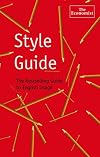
http://nhw.livejournal.com/681975.html
Mandatory reading for those of us doing editing for a living, of course. Full of useful snippets and helpful hints, though I dare to disagree on a few points:
Dominicans Take care. Do they come from Dominica? Or the Dominican Republic? Or are they friars?
*Snerk!*
federalist in Britain, someone who believes in centralising the powers of associated states; in the United States and Europe, someone who believes in decentralising them.
Perhaps that one was a bit show more more tongue-in-cheek.
Abbreviations that can be pronounced and are composed of bits of words rather than just initials should be spelt out in upper and lower case
Agreed, but their examples include "Kfor" and "Sfor" which I would always spell KFOR and SFOR, since that is and was the capitalisation preferred by the peacekeepers themselves.
Put the accents and cedillas on French names and words, umlauts on German ones, accents and tildes on Spanish ones, and accents, cedillas and tildes on Portuguese ones: Françoise de Panafieu, Wolfgang Schäuble, Federico Peña. Leave the accents off other foreign names.
C'mon, in this day and age I think we should be able to go a long way in spelling names correctly even if the version of the Latin alphabet used in unfamiliar. Though I accept that Đà Nẵng, for instance, has an English spelling of Da Nang.
Capitalisation rules - much tougher than I would be inclined to be, with odd lapses from that toughness - why, for instance, "the queen" but "the Queen's Speech"?
community is a useful word in the context of religious or ethnic groups. But in many other others [sic] it jars. Not only is it often unnecessary, it also purports to convey a sense of togetherness that may not exist.
The intelligence community means spies.
The online community means geeks and nerds.
*Hmph!*
It is sometimes useful to talk of human-rights abuses but often the sentence can be rephrased more pithily and accurately. The army is accused of committing numerous human-rights abuses probably means The army is accused of torture and murder.
Fair point. Though perhaps the latter phrase is in fact more precise, while being equally accurate.
haver means to talk nonsense, not dither, swither or waver.
Really?
There is an insanely complex set of rules for the correct spelling in English of Russian names, almost all of which I agree with, apart from the idea that you should always transliterate "дж" as "j"; giving as an example Stalin's real surname, Jugashvili. I would always write Dzhugashvili. (Though of course in his native Georgian it was ჯუღაშვილი which I would transliterate as Jugashvili, as "ჯ" is normally transcribed "j"; but we know him through translation from the Russian.) They then go on to add, absurdly, that his first name should be spelt "Josef" not "Iosif". I would have said that the man know to us as "Joseph Stalin" was born "Iosif Dzhugashvili". (Accepting Иосиф Джугашвили ratehr than იოსებ ჯუღაშვილი as the more official version of his original name.)
Placenames: I'm glad that they are with me on Transdniestria, rather than "Transnistria" which is gaining ground. But there's no way I'm using "Leghorn" for Livorno.
More places: The list of administrative divisions of Belgium, bafflingly, lists only nine provinces, omitting Brussels (and Flanders and Wallonia), though there is a hint that Brabant can be Flemish or Walloon. And the list of Swiss cantons, while including without explanation the splits of Appenzell and Unterwalden, does not mention that Basel is similarly split.
Will keep it by my desk though. show less
Mandatory reading for those of us doing editing for a living, of course. Full of useful snippets and helpful hints, though I dare to disagree on a few points:
Dominicans Take care. Do they come from Dominica? Or the Dominican Republic? Or are they friars?
*Snerk!*
federalist in Britain, someone who believes in centralising the powers of associated states; in the United States and Europe, someone who believes in decentralising them.
Perhaps that one was a bit show more more tongue-in-cheek.
Abbreviations that can be pronounced and are composed of bits of words rather than just initials should be spelt out in upper and lower case
Agreed, but their examples include "Kfor" and "Sfor" which I would always spell KFOR and SFOR, since that is and was the capitalisation preferred by the peacekeepers themselves.
Put the accents and cedillas on French names and words, umlauts on German ones, accents and tildes on Spanish ones, and accents, cedillas and tildes on Portuguese ones: Françoise de Panafieu, Wolfgang Schäuble, Federico Peña. Leave the accents off other foreign names.
C'mon, in this day and age I think we should be able to go a long way in spelling names correctly even if the version of the Latin alphabet used in unfamiliar. Though I accept that Đà Nẵng, for instance, has an English spelling of Da Nang.
Capitalisation rules - much tougher than I would be inclined to be, with odd lapses from that toughness - why, for instance, "the queen" but "the Queen's Speech"?
community is a useful word in the context of religious or ethnic groups. But in many other others [sic] it jars. Not only is it often unnecessary, it also purports to convey a sense of togetherness that may not exist.
The intelligence community means spies.
The online community means geeks and nerds.
*Hmph!*
It is sometimes useful to talk of human-rights abuses but often the sentence can be rephrased more pithily and accurately. The army is accused of committing numerous human-rights abuses probably means The army is accused of torture and murder.
Fair point. Though perhaps the latter phrase is in fact more precise, while being equally accurate.
haver means to talk nonsense, not dither, swither or waver.
Really?
There is an insanely complex set of rules for the correct spelling in English of Russian names, almost all of which I agree with, apart from the idea that you should always transliterate "дж" as "j"; giving as an example Stalin's real surname, Jugashvili. I would always write Dzhugashvili. (Though of course in his native Georgian it was ჯუღაშვილი which I would transliterate as Jugashvili, as "ჯ" is normally transcribed "j"; but we know him through translation from the Russian.) They then go on to add, absurdly, that his first name should be spelt "Josef" not "Iosif". I would have said that the man know to us as "Joseph Stalin" was born "Iosif Dzhugashvili". (Accepting Иосиф Джугашвили ratehr than იოსებ ჯუღაშვილი as the more official version of his original name.)
Placenames: I'm glad that they are with me on Transdniestria, rather than "Transnistria" which is gaining ground. But there's no way I'm using "Leghorn" for Livorno.
More places: The list of administrative divisions of Belgium, bafflingly, lists only nine provinces, omitting Brussels (and Flanders and Wallonia), though there is a hint that Brabant can be Flemish or Walloon. And the list of Swiss cantons, while including without explanation the splits of Appenzell and Unterwalden, does not mention that Basel is similarly split.
Will keep it by my desk though. show less
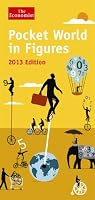
It's a little hard to get too excited about a book that is basically a compendium of statistics about the nations of the world. I don't often get the urge to find out the world's biggest copper producer, or what nation drinks the most beer per capita. If I want to know such things, I would generally just Google them. Nor is it a particularly good book for browsing, as some almanacs are. I don't think, for instance, that there is a table showing the world's worst mine disasters or theater show more fires. On the other hand, it is the Economist, so it is probably pretty reliable. Not nearly as interesting or witty as the magazine, however. show less
My favorite source of world news. Although it considers itself conservative, it appears fairly balanced and very intelligent from this liberal American's perspective.
You May Also Like


Associated Authors
Statistics
- Works
- 336
- Also by
- 2
- Members
- 2,847
- Popularity
- #9,011
- Rating
- 3.7
- Reviews
- 12
- ISBNs
- 232
- Languages
- 6
