
Mary Frances Berry
Author of My Face Is Black Is True: Callie House and the Struggle for Ex-Slave Reparations
About the Author
Dr. Mary Frances Berry is the Geraldine R. Segal Professor of American Social Thought and professor of history and Africana studies at the University of Pennsylvania. She is the former chairwoman of the US Commission on Civil Rights, the author of twelve previous books, and the recipient of show more thirty-five honorary degrees. show less
Works by Mary Frances Berry
My Face Is Black Is True: Callie House and the Struggle for Ex-Slave Reparations (2005) 107 copies, 1 review
History Teaches Us to Resist: How Progressive Movements Have Succeeded in Challenging Times (2018) 66 copies, 1 review
The Pig Farmer's Daughter and Other Tales of American Justice: Episodes of Racism and Sexism in the Courts from 1865 to the Present (1999) 62 copies, 1 review
The Politics of Parenthood: Child Care, Women's Rights, and the Myth of the Good Mother (1993) 52 copies
Five Dollars and a Pork Chop Sandwich: Vote Buying and the Corruption of Democracy (2016) 50 copies, 29 reviews
Why ERA Failed: Politics, Women's Rights, and the Amending Process of the Constitution (1986) 28 copies, 1 review
Power in Words: The Stories behind Barack Obama's Speeches, from the State House to the White House (2010) 26 copies
And Justice for All: The United States Commission on Civil Rights and the Continuing Struggle for Freedom in America (2009) 19 copies
Slavery After Slavery: Revealing the Legacy of Forced Child Apprenticeships on Black Families, from Emancipation to the Present (2025) 15 copies
Associated Works
Tagged
Common Knowledge
- Gender
- female
Members
Reviews
Five Dollars and a Pork Chop Sandwich: Vote Buying and the Corruption of Democracy by Mary Frances Berry
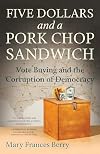
In Five Dollars and a Pork Chop Sandwich Mary Frances Berry examines the more prevalent but less addressed issue of vote buying and manipulation rather than the rare but more rhetorically used idea of individual voter fraud. Make no mistake, this is a big part of the problem we in America find ourselves in with this current puppet government.
As opposed to the periodic case of voter fraud where an individual attempts to vote twice or votes under the name of a deceased person still on the show more rolls, Berry addresses the systemic problem of organized and organizational influencing of election outcomes through systemic voter suppression or voter manipulation. These are not, as one reviewer tried to imply, mostly in small towns and counties. These are statewide and thus nationwide and are driven by party politics in our current climate, not simply powerful families in backroad towns.
The history of the practice makes particularly compelling reading as much for the realization that this was both considered "business as usual" and perfectly okay as for the fact that, while it is more broadly frowned upon openly, it is still a large part of party politics today. Instead of giving some people a short-term benefit (a few dollars or a meal) in exchange for a "freely" given vote many of these voters are given no benefit, short term or long, because of gerrymandering and/or disenfranchisement through laws and rules that are next to impossible for many of them to meet. In other words, it is still a systemic problem, still affects those at the margins of the socioeconomic scale disproportionately and is still, in a more hushed tone, considered "business as usual."
The extended example in the book that best illustrates this is the story of Greg Malveaux and his attempt to clean up at least the voter fraud aspect of Louisiana's corrupt political environment. But as long as those in office attained their positions through questionable, at best, methods it will remain difficult to make things better. And those suffering are also the ones being blamed for society's ills and demonized for attempting to make the system fair.
I would recommend this to anyone interested in the larger picture of voter fraud and the systemic aspects of it rather than the scapegoating aspects we see and hear from the politicians. This is a well-researched and thorough examination and, while well written and quite accessible to all, is designed to present facts rather than simply stir emotions, so will be less appealing to those who just want to be told who to blame, since blame and responsibility spreads far and wide.
Reviewed from a copy made available by the publisher via LibraryThing Early Reviewers. show less
As opposed to the periodic case of voter fraud where an individual attempts to vote twice or votes under the name of a deceased person still on the show more rolls, Berry addresses the systemic problem of organized and organizational influencing of election outcomes through systemic voter suppression or voter manipulation. These are not, as one reviewer tried to imply, mostly in small towns and counties. These are statewide and thus nationwide and are driven by party politics in our current climate, not simply powerful families in backroad towns.
The history of the practice makes particularly compelling reading as much for the realization that this was both considered "business as usual" and perfectly okay as for the fact that, while it is more broadly frowned upon openly, it is still a large part of party politics today. Instead of giving some people a short-term benefit (a few dollars or a meal) in exchange for a "freely" given vote many of these voters are given no benefit, short term or long, because of gerrymandering and/or disenfranchisement through laws and rules that are next to impossible for many of them to meet. In other words, it is still a systemic problem, still affects those at the margins of the socioeconomic scale disproportionately and is still, in a more hushed tone, considered "business as usual."
The extended example in the book that best illustrates this is the story of Greg Malveaux and his attempt to clean up at least the voter fraud aspect of Louisiana's corrupt political environment. But as long as those in office attained their positions through questionable, at best, methods it will remain difficult to make things better. And those suffering are also the ones being blamed for society's ills and demonized for attempting to make the system fair.
I would recommend this to anyone interested in the larger picture of voter fraud and the systemic aspects of it rather than the scapegoating aspects we see and hear from the politicians. This is a well-researched and thorough examination and, while well written and quite accessible to all, is designed to present facts rather than simply stir emotions, so will be less appealing to those who just want to be told who to blame, since blame and responsibility spreads far and wide.
Reviewed from a copy made available by the publisher via LibraryThing Early Reviewers. show less
 This review was written for LibraryThing Early Reviewers.
My Face Is Black Is True: Callie House and the Struggle for Ex-Slave Reparations by Mary Frances Berry
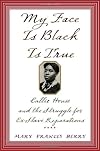
A scholarly examination of the early efforts to persuade Congress to grant reparations to ex-slaves in the form of pensions. The essentials of the struggle could be summed up this way: In the late 19th century, an organization called the National Ex-Slave Mutual Relief, Bounty and Pension Association began efforts to petition the US Congress to legislate pension funds for the benefit of former slaves and their descendants. A subscription to the Association entitled members to various forms show more of aid from its own funds, as well as paying for the expenses associated with lobbying Congress to pay the debt the country owed to its formerly enslaved citizens. An early plan to grant freedmen plots of land confiscated from Southern plantation owners had been clobbered by President Johnson; in fact land that had been granted to some former slaves was taken back and returned to its original owners. Large numbers of freed slaves, many of them elderly and infirm, had no resources whatsoever, and were scarcely able to perform any work sufficient to support themselves.
A woman named Callie House was a driving force of the Ex-Slave Pension movement, which was perceived as such a threat that the Postal Service entered a fraud order against the group, cutting off its access to the US mail, and asserting that House and other officers were deceiving people, taking their money and using it for their personal benefit. No "due process" was involved. The rationale was that Congress was never going to grant the group's petition, so continued attempts to raise money to advance the cause were fraudulent.
The movement changed tactics, and attempted to pursue monetary damages through the Federal Courts, by suing the Treasury Department for funds that had supposedly been set aside from a cotton tax collected during the Civil War. This effort, too, was doomed to failure, but served to attract more supporters and to keep the cause alive well into the 20th century, despite the fact that many middle class black leaders (including Booker T. Washington) were dismissive and distanced themselves from it.
In 1917 Mrs. House was indicted for fraud, based on the use of the words "of the U.S.A." in the name of her organization, the government alleging that she misled people into thinking she had the backing of the U. S. government. She was convicted and sentenced to 18 months in jail. Following her release, she returned to domestic service and was no longer actively involved in the fight for reparations, but others stepped in to continue efforts, which continue to the present day.
This book illuminates an important aspect of race relations in this country, and it taught me several things I did not know (and reminded me of a few I had forgotten). It was not a particularly engaging read, however, being packed with names, dates, facts and figures. The author made no effort to bring Callie House to life. Because the same things kept happening over and over, reading got a bit tedious. As history, this is essential reporting. As narrative, unfortunately, it doesn't cut it. show less
A woman named Callie House was a driving force of the Ex-Slave Pension movement, which was perceived as such a threat that the Postal Service entered a fraud order against the group, cutting off its access to the US mail, and asserting that House and other officers were deceiving people, taking their money and using it for their personal benefit. No "due process" was involved. The rationale was that Congress was never going to grant the group's petition, so continued attempts to raise money to advance the cause were fraudulent.
The movement changed tactics, and attempted to pursue monetary damages through the Federal Courts, by suing the Treasury Department for funds that had supposedly been set aside from a cotton tax collected during the Civil War. This effort, too, was doomed to failure, but served to attract more supporters and to keep the cause alive well into the 20th century, despite the fact that many middle class black leaders (including Booker T. Washington) were dismissive and distanced themselves from it.
In 1917 Mrs. House was indicted for fraud, based on the use of the words "of the U.S.A." in the name of her organization, the government alleging that she misled people into thinking she had the backing of the U. S. government. She was convicted and sentenced to 18 months in jail. Following her release, she returned to domestic service and was no longer actively involved in the fight for reparations, but others stepped in to continue efforts, which continue to the present day.
This book illuminates an important aspect of race relations in this country, and it taught me several things I did not know (and reminded me of a few I had forgotten). It was not a particularly engaging read, however, being packed with names, dates, facts and figures. The author made no effort to bring Callie House to life. Because the same things kept happening over and over, reading got a bit tedious. As history, this is essential reporting. As narrative, unfortunately, it doesn't cut it. show less
Five Dollars and a Pork Chop Sandwich: Vote Buying and the Corruption of Democracy by Mary Frances Berry
Mary Frances Berry's unfiltered assessment of the history of corruption and voter-tampering that have been rampant in the United States is astonishing. She details the combination of audacity, economic desperation, and willful inattention that allow "public servants" to intimidate, coerce, and bribe voters. Though the text is sometimes stilted or too dense, Berry has done an admirable job compiling anecdotes and legal cases that document entrenched voter mismanagement, particularly in areas show more that have never quite recovered from Jim Crow policies. show less
This review was written for LibraryThing Early Reviewers.Pig Farmer's Daughter and Other Tales of American Justice, The: Episodes of Racism and Sexism in the Courts from 1865 to by Mary Frances Berry
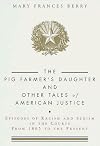
How court cases get decided has as much to do with the dominant stories about what people are like, how things ought to be, and who is likely to be lying, as they do with what the law says and the evidence shows. One can even argue that the cultural stories are more important than the laws, since laws get revised to reflect the current stories. Berry sets out to detail the changing American stories about race, sex, and class, and how they have influenced, and continue to influence, American show more justice.
Berry reviews trends in criminal and appellate court decisions -- when is the law interpreted narrowly? When is it interpreted broadly? Which decisions are overturned "on procedural grounds", and which decisions are allowed to stand despite procedural errors? Which cases are or are not brought to the court system? How do these outcomes change with the race or class of the victims and defendants? Berry is forthright and thorough, reviewing the legal history of extramarital sex, homosexual sex, prostitution, child support, abortion, infanticide, incest and rape. (The only missed subjects I would have liked to have seen her cover were birth control and forced sterilization.)
Berry's voice is dispassionate, simply recounting the trends, but there were some chapters that I could barely read -- I can not cope with the rape of a six year old being a property crime against the child's father. (With the corollary that when the father is the rapist, there is no crime.) Other stories got to me as well, such as lower-class immigrant men lynching black men in order to "whiten" themselves and "their" women, or unmarried women being by definition unfit mothers, or worse, being considered medically insane if they tried to keep their infants. Also, not so keen on rape being the "violation of virtue", and thus, again by definition, it being impossible to rape poor women or African-American women. But I shall stop: because if I were to continue to list the outrageous elements of American social history, I'd be typing for a very long time.
However, even though The Pig-Farmer's Daughter is not a particularly pleasant read, it is definitely worthwhile. Like any good work of history, not only did it teach me a number of new things, but it also did quite a bit to explain many of the current ingrained inequities of the American justice system, as well as to suggest what rectifying them might require. show less
Berry reviews trends in criminal and appellate court decisions -- when is the law interpreted narrowly? When is it interpreted broadly? Which decisions are overturned "on procedural grounds", and which decisions are allowed to stand despite procedural errors? Which cases are or are not brought to the court system? How do these outcomes change with the race or class of the victims and defendants? Berry is forthright and thorough, reviewing the legal history of extramarital sex, homosexual sex, prostitution, child support, abortion, infanticide, incest and rape. (The only missed subjects I would have liked to have seen her cover were birth control and forced sterilization.)
Berry's voice is dispassionate, simply recounting the trends, but there were some chapters that I could barely read -- I can not cope with the rape of a six year old being a property crime against the child's father. (With the corollary that when the father is the rapist, there is no crime.) Other stories got to me as well, such as lower-class immigrant men lynching black men in order to "whiten" themselves and "their" women, or unmarried women being by definition unfit mothers, or worse, being considered medically insane if they tried to keep their infants. Also, not so keen on rape being the "violation of virtue", and thus, again by definition, it being impossible to rape poor women or African-American women. But I shall stop: because if I were to continue to list the outrageous elements of American social history, I'd be typing for a very long time.
However, even though The Pig-Farmer's Daughter is not a particularly pleasant read, it is definitely worthwhile. Like any good work of history, not only did it teach me a number of new things, but it also did quite a bit to explain many of the current ingrained inequities of the American justice system, as well as to suggest what rectifying them might require. show less
Awards


You May Also Like


Associated Authors
Statistics
- Works
- 14
- Also by
- 2
- Members
- 554
- Popularity
- #45,049
- Rating
- 3.7
- Reviews
- 33
- ISBNs
- 42
- Languages
- 1
