
Hans Keilson (1909–2011)
Author of Comedy in a Minor Key: A Novel
About the Author
Hans Keilson was born in Bad Freienwalde, Germany on December 12, 1909. He studied medicine in Berlin, but was unable to practice as a doctor because of Nazi laws. His first book, Life Goes On, offered a dark picture of German political life between the wars and was banned by the Nazis in 1934. Two show more years later, he emigrated to the Netherlands with his future wife. He established a pediatric practice, but lived in a separate house from his wife, a Roman Catholic, on the same street. He began a new novel, The Death of the Adversary, about a young Jewish man's experiences in Germany as the Nazis gain a grip on power, but he put the manuscript aside after the German occupation of the Netherlands in 1940 forced him into hiding. When his daughter was born in 1941, his wife said that the father was a German soldier. Soon after the German occupation, he joined a resistance organization and spent the rest of the war, travelling the country under the name Van den Linden and counseling Jewish children and teenagers separated from their parents and living underground. This work motivated him to train as a psychoanalyst. After the war, he helped found an organization to care for and treat Jewish orphans who had survived the Holocaust. His experiences in hiding provided the material for the novella Comedy in a Minor Key, about a Dutch couple who shelter an elderly Jew who dies of natural causes. After carelessly disposing of the body, they too must go into hiding. It was published in 1947. He resumed writing The Death of the Adversary and it was published in 1959. Although the novel sold well and Time magazine named it one of the top 10 books of the year, he slipped into literary obscurity and wrote no more fiction. In 1979 he completed his dissertation, Sequential Traumatization in Children, which was a groundbreaking work on the effects of the war on orphaned and displaced Jewish children in the Netherlands. In 2007 a literary translator came across Comedy in a Minor Key and mounted a successful campaign to resurrect Keilson's works. In 2010, his translations of The Death of the Adversary and Comedy in a Minor Key were published in Great Britain and the United States. Keilson died on May 31, 2011 at the age of 101. (Bowker Author Biography) show less
Disambiguation Notice:
(nor) Benjamin Cooper is the pen name of Hans Alex Keilson and G. Klaass
Benjamin Cooper is the pen name of Hans Alex Keilson and G. Klaass
Works by Hans Keilson
Dissonanzen-Quartett 1 copy
Tagged
Common Knowledge
- Legal name
- Keilson, Hans Alex
- Other names
- Cooper, Benjamin
Van der Linden, Johannes Gerrit - Birthdate
- 1909-12-12
- Date of death
- 2011-05-31
- Gender
- male
- Education
- Berlin (pharmacology)
- Occupations
- psychiatrist
novelist
physician
poet
psychoanalyst
memoirist (show all 7)
diarist - Organizations
- Vrije Groepen Amsterdam (WWII Resistance)
L'Ezrat Ha-Yeled (Children's Aid) - Awards and honors
- Johann-Heinrich-Merck-Preis (2005)
Moses-Mendelssohn-Medaille (2007)
WELT-Literaturpreis (2008) - Relationships
- Lauritz, Marita (wife)
Keilson, Bloeme (daughter) - Short biography
- Hans Keilson, born to a Jewish family in Bad Freienwalde, near Berlin, Germany, was educated as a physician. He published his first novel, Life Goes On, at age 23. After the rise of the Nazi regime in 1933, he was prohibited from practicing medicine and his book was banned. He worked for a while as a gym instructor in Jewish private schools. In 1936, he fled to The Netherlands with his future wife, Gertrud Manz. His parents were deported to Auschwitz, where they both died. In Holland, Dr. Keilson began a new novel, The Death of the Adversary, but put aside the manuscript and buried it in his garden after the German Occupation of the country in 1940. In 1941, he went into hiding with a Dutch couple, Leo and Suus Rientsma, under a false identity. Gertrud, who was not Jewish and was pregnant, lived nearby. During this time, Dr. Keilson worked with the Dutch Resistance, taking care of Jewish children living with foster parents after being separated from their biological families. After the war, he was reunited with Gertrud and his daughter, and the couple were able to marry. He went on to practice as a psychiatrist and psychoanalyst, specializing in the care of children traumatized by the war. He wrote Sequential Traumatisation in Children (1979), a groundbreaking and widely-translated study. In 1970, following the death of his first wife, Dr. Keilson remarried to Marita Lauritz, a literary critic 25 years his junior, with whom he had another daughter. He published poetry and several more novels, receiving warm reviews but little acclaim. The Death of the Adversary, finally published in German in 1959, was a bestseller in English in 1962, but he remained in obscurity. Then, when Dr. Keilson was nearly 100 years old, Francine Prose reviewed two of his novels in The New York Times and called him "one of the world's very greatest writers." He became an international media sensation and The Death of the Adversary again became a bestseller. His diary from the year 1944, discovered among his papers after his death, was published in 2017 and has been called "an incomparable spiritual X-ray of the mind and heart behind the art."
- Nationality
- Germany (birth)
Netherlands (nationalised) - Birthplace
- Bad Freienwalde, Germany
- Places of residence
- Bad Freienwalde, Germany (birth)
Bussum, Netherlands
Delft, Netherlands - Place of death
- Hilversum, Netherlands
- Disambiguation notice
- Benjamin Cooper is the pen name of Hans Alex Keilson and G. Klaass
- Associated Place (for map)
- Netherlands
Members
Reviews
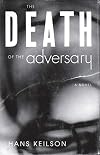
This may be the most enjoyable experience reading fiction that I have had in the last year - and also one of the most profound and unexpected. My attention was piqued in June when I heard of Keilson's death at the age of 101; I knew he was considered to be a good author, yet I never read him. Having long had a penchant for the bleak, searching quality of twentieth-century Dutch fiction, particularly Willem Frederik Hermans, Harry Mulisch, and Gerard Reve, I decided to read this.
However show more stunning Keilson's novels are - and I hope to communicate that momentarily - he is even better known for other work. For many decades, he worked in child psychology and psychiatry, with an especial focus on children severely traumatized by World War II. His keen insight into human nature, thought processes, and motivation is on par with the world's greatest novelists, and that is no hyperbole. As if his psychological and psychiatric training were not inducements enough to read his work, the horrors of the War were not pure theory for him. Both of his parents perished in Auschwitz.
The novel's setting is 1930s Germany. We follow an unnamed narrator in childhood; we get hints of his precociousness and impishness through learning of both his penchant for forging stamps, and also through a sustained theory of the history of struggle that he presents and continuously develops throughout the novel. As a boy, he acquires a lifelong fascination with an adversary who is almost always unnamed, but sometimes goes by simply "B." Some reviews have been only too eager to guess at the existence of "B," seeing as how we are in 1930s Germany. However, I personally think Keilson might have a good reason for keeping the adversary anonymous; using one name would collapse the entire structure of the novel into a kind of singularity; keeping the adversary nameless (even though we still may continue to guess, and guess accurately), Keilson keeps the narrative at a level of constant psychological, humanistic portraiture, instead of the story of a single couple locked in interminable battle.
As the novel progresses and the narrator grows into manhood, we learn that he has a friend who is utterly taken with "B" and his ideas; another time, we see him spending an afternoon with a girl that he knows and fancies from his workplace whose friends turn out to be sympathetic to fascism, too. Instead of simplistic moralism, Keilson intelligently and deftly engages with the adversary on a human level, at one point realizing the nihilism inherent in the logic of "I want to kill him just as badly as he wants to kill me."
Narratively speaking, Keilson's biggest gift is to mix tone and message in such unique and telling ways. On hearing that a novel is set during World War II, one is almost preconditioned to expect the trials and tribulations of the oppressor against the oppressed and hiding in safe houses; it is assumed that we will root for the good, the just, the persecuted, and that evil, in the end, will be vanquished. Keilson presented us with nothing so sugar-coated. His efforts at characterization drive toward showing the similarities between himself and B, not the vast differences. He is not interested in showing you how morally superior he is (we already know that), but instead wants to show how existentially, a word applied perhaps too liberally to this novel, he and "B" are similarly situated.
Keilson's search feels so liberating, instead of the moral burden that seem to come with reading so many novels of the Holocaust. As much as I have read Elie Wiesel and Primo Levi, I found Keilson to be better than both of them. Unfortunately, he is not well known in the United States, but he should be. I should also add here that Ivo Jarosy's translation from the German is luminous, especially in its ability to capture dialogue. I would recommend "The Death of the Adversary" for anyone in search of a great novel that, like all great novels, is more eager to share questions than answers. show less
However show more stunning Keilson's novels are - and I hope to communicate that momentarily - he is even better known for other work. For many decades, he worked in child psychology and psychiatry, with an especial focus on children severely traumatized by World War II. His keen insight into human nature, thought processes, and motivation is on par with the world's greatest novelists, and that is no hyperbole. As if his psychological and psychiatric training were not inducements enough to read his work, the horrors of the War were not pure theory for him. Both of his parents perished in Auschwitz.
The novel's setting is 1930s Germany. We follow an unnamed narrator in childhood; we get hints of his precociousness and impishness through learning of both his penchant for forging stamps, and also through a sustained theory of the history of struggle that he presents and continuously develops throughout the novel. As a boy, he acquires a lifelong fascination with an adversary who is almost always unnamed, but sometimes goes by simply "B." Some reviews have been only too eager to guess at the existence of "B," seeing as how we are in 1930s Germany. However, I personally think Keilson might have a good reason for keeping the adversary anonymous; using one name would collapse the entire structure of the novel into a kind of singularity; keeping the adversary nameless (even though we still may continue to guess, and guess accurately), Keilson keeps the narrative at a level of constant psychological, humanistic portraiture, instead of the story of a single couple locked in interminable battle.
As the novel progresses and the narrator grows into manhood, we learn that he has a friend who is utterly taken with "B" and his ideas; another time, we see him spending an afternoon with a girl that he knows and fancies from his workplace whose friends turn out to be sympathetic to fascism, too. Instead of simplistic moralism, Keilson intelligently and deftly engages with the adversary on a human level, at one point realizing the nihilism inherent in the logic of "I want to kill him just as badly as he wants to kill me."
Narratively speaking, Keilson's biggest gift is to mix tone and message in such unique and telling ways. On hearing that a novel is set during World War II, one is almost preconditioned to expect the trials and tribulations of the oppressor against the oppressed and hiding in safe houses; it is assumed that we will root for the good, the just, the persecuted, and that evil, in the end, will be vanquished. Keilson presented us with nothing so sugar-coated. His efforts at characterization drive toward showing the similarities between himself and B, not the vast differences. He is not interested in showing you how morally superior he is (we already know that), but instead wants to show how existentially, a word applied perhaps too liberally to this novel, he and "B" are similarly situated.
Keilson's search feels so liberating, instead of the moral burden that seem to come with reading so many novels of the Holocaust. As much as I have read Elie Wiesel and Primo Levi, I found Keilson to be better than both of them. Unfortunately, he is not well known in the United States, but he should be. I should also add here that Ivo Jarosy's translation from the German is luminous, especially in its ability to capture dialogue. I would recommend "The Death of the Adversary" for anyone in search of a great novel that, like all great novels, is more eager to share questions than answers. show less
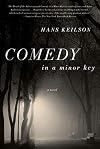
The story of Wim and Marie, a Dutch couple who first hide a Jew they know as Nico before having to dispose of his body when he passes away from pneumonia, is told in this novella. It portrays a penetrating study of common people resisting the Nazi occupation and, true to its title, a dark comedy of wartime manners. This 1947 novella, which has been translated for the first time into English, exhibits Hans Keilson at his very best: profoundly sardonic, perceptive, compassionate, and show more brilliantly modern, an heir to Joseph Roth and Franz Kafka. Keilson's writing was praised for investigating "the destructive force at work in the twentieth century, down to its deepest psychological and spiritual repercussions" in the citation that came with his award of Germany's prestigious Welt Literature Prize in 2008. show less
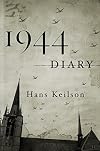
This book seemed like a weird choice, even to me (given my strict no book set in Europe between the wars rule), but something compelled me both to check it out and to pluck it from my library pile long before a dozen books that seemed more in my wheelhouse.
I almost put this book down so many times during the first half because Keilson's condescending misogyny was driving me absolutely up the wall. Thankfully, as the fighting got closer, those aspects faded away, and Keilson's diary turned show more more to literature, to his life's purpose, and to deeper emotional connections. So I started the book annoyed, became more and more empathetic with Keilson in the second half, and then... the poetry. The first few poems I felt were nice enough love sonnets, but like the diary itself, the more I read the more deeply I was moved and the higher I esteemed Keilson. These sonnets aren't just about love, but about love and horror -- both the horror of that utter vulnerability of love and also the horror of death and war all around them -- it all became enmeshed.
I wish I could say that I learned something deep about living in a time of horror -- but all I learned is that our stupid hearts go on the same -- loving, selfish, grasping for meaning, making plans, enmeshed in our own private dramas. show less
I almost put this book down so many times during the first half because Keilson's condescending misogyny was driving me absolutely up the wall. Thankfully, as the fighting got closer, those aspects faded away, and Keilson's diary turned show more more to literature, to his life's purpose, and to deeper emotional connections. So I started the book annoyed, became more and more empathetic with Keilson in the second half, and then... the poetry. The first few poems I felt were nice enough love sonnets, but like the diary itself, the more I read the more deeply I was moved and the higher I esteemed Keilson. These sonnets aren't just about love, but about love and horror -- both the horror of that utter vulnerability of love and also the horror of death and war all around them -- it all became enmeshed.
I wish I could say that I learned something deep about living in a time of horror -- but all I learned is that our stupid hearts go on the same -- loving, selfish, grasping for meaning, making plans, enmeshed in our own private dramas. show less
Amimals in Wolve’s Clothing
This book left me devastated. After reading the last page I still felt the book around me and could not leave it. So I did a cyber flick-back through the book to see my highlights, and was surprised to see that I could see not only what I had highlighted, but the highlights of other the other Kindle readers as well. And not only was I surprised at this discovery, but at the fact that what I had highlighted had been highlighted by the others.
"They turned into show more wolves and devastated cemeteries at night. But however much they tried to appear like wolves, they were not animals. It was not just a question of what they did and said, but also of what they had to keep silent about."
- Thoughts of the protagonist after spending an evening with young Nazis.
In "The Death of the Adversary" the "adversary" and his followers are not named. The adversary is merely referred to as "B", and his followers as his followers. Similarly the central character is not labeled by himself as Jewish. Merely as "other".
And so when we read of him being outcast by the other children when he was very young, and about how his mother takes him by the hand to lead him back to the children to ask them to please play with him, the effect is even sadder than it would have been, had its circumstance been explicit. 'There,' my mother said, and tried to loosen her stern, serious face into a smile. 'He's a child like you. You are all children, play with one another."
For some reason, perhaps because I had never completely comprehended the real horror of it before - the effect of the persecution of the Jewish children in Germany, Poland, Czech ...., I was struck by this scene, where the child feels only humiliation and anxiety when the children turn reluctantly to play with him. His short time with them is filled with his anxiety and their cruelty.
"My former pleasure in playing games was dampened by the constant fear that I might be excluded."
Sadder even than when "they took the old people away.
My father carried his rucksack on his shoulders.
My mother wept.
I shall never see them again."
Yes, I've read The Diary of Anne Frank, and seen "The Pawnbroker". I've read and seen countless other novels and films set in Nazi-occupied Europe. But for some reason I'd never looked upon the particular tragedy of the effects of persecution on children.
Anne Frank was a child. Only ever a child. But Anne retained her sense of joy and hope. The child Keilson describes is a sad little boy and one's heart goes out to him, but it goes to him without hope.
In Wikipedia I read that Keilson, " is a Jewish German/Dutch novelist, poet, psychoanalyst, and child psychologist who wrote about traumas relating to what happened in Europe during WWII. In particular, he worked with traumatized orphans."
What else can one say? Oh yes, there's this -
Hans Keilson is a 100-year-old Holocaust survivor. "The Death of the Adversary" is autobiographical.
Read it! The show less
This book left me devastated. After reading the last page I still felt the book around me and could not leave it. So I did a cyber flick-back through the book to see my highlights, and was surprised to see that I could see not only what I had highlighted, but the highlights of other the other Kindle readers as well. And not only was I surprised at this discovery, but at the fact that what I had highlighted had been highlighted by the others.
"They turned into show more wolves and devastated cemeteries at night. But however much they tried to appear like wolves, they were not animals. It was not just a question of what they did and said, but also of what they had to keep silent about."
- Thoughts of the protagonist after spending an evening with young Nazis.
In "The Death of the Adversary" the "adversary" and his followers are not named. The adversary is merely referred to as "B", and his followers as his followers. Similarly the central character is not labeled by himself as Jewish. Merely as "other".
And so when we read of him being outcast by the other children when he was very young, and about how his mother takes him by the hand to lead him back to the children to ask them to please play with him, the effect is even sadder than it would have been, had its circumstance been explicit. 'There,' my mother said, and tried to loosen her stern, serious face into a smile. 'He's a child like you. You are all children, play with one another."
For some reason, perhaps because I had never completely comprehended the real horror of it before - the effect of the persecution of the Jewish children in Germany, Poland, Czech ...., I was struck by this scene, where the child feels only humiliation and anxiety when the children turn reluctantly to play with him. His short time with them is filled with his anxiety and their cruelty.
"My former pleasure in playing games was dampened by the constant fear that I might be excluded."
Sadder even than when "they took the old people away.
My father carried his rucksack on his shoulders.
My mother wept.
I shall never see them again."
Yes, I've read The Diary of Anne Frank, and seen "The Pawnbroker". I've read and seen countless other novels and films set in Nazi-occupied Europe. But for some reason I'd never looked upon the particular tragedy of the effects of persecution on children.
Anne Frank was a child. Only ever a child. But Anne retained her sense of joy and hope. The child Keilson describes is a sad little boy and one's heart goes out to him, but it goes to him without hope.
In Wikipedia I read that Keilson, " is a Jewish German/Dutch novelist, poet, psychoanalyst, and child psychologist who wrote about traumas relating to what happened in Europe during WWII. In particular, he worked with traumatized orphans."
What else can one say? Oh yes, there's this -
Hans Keilson is a 100-year-old Holocaust survivor. "The Death of the Adversary" is autobiographical.
Read it! The show less
Lists
Awards


You May Also Like


Associated Authors
Statistics
- Works
- 10
- Members
- 1,260
- Popularity
- #20,361
- Rating
- 3.8
- Reviews
- 52
- ISBNs
- 76
- Languages
- 11
- Favorited
- 5
