

Andrea Marcolongo
Author of The Ingenious Language: Nine Epic Reasons to Love Greek
About the Author
Image credit: Andrea Marcolongo http://www.andreamarcolongo.me/
Works by Andrea Marcolongo
La misura eroica. Il mito degli argonauti e il coraggio che spinge gli uomini ad amare (Soggettive) (2018) 48 copies
El arte de resistir: Lo que la Eneida nos enseña sobre cómo superar una crisis (Spanish Edition) (2021) 6 copies
Das Meer, die Liebe, der Mut aufzubrechen: Was uns die Argonautensage erzählt (Transfer Bibliothek) (2020) 2 copies
Il Viaggio Delle Parole 1 copy
La langue gŽniale 1 copy
Tagged
Common Knowledge
- Birthdate
- 1987-01-17
- Gender
- female
- Nationality
- Italy
- Birthplace
- Crema, Lombardy, Italy
- Places of residence
- Paris, France
- Associated Place (for map)
- Italy
Members
Reviews
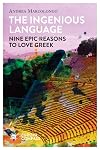
I was Greek major in college, so I was excited to hear about this book. It's a bit uneven, some of which may be because it was written in Italian and translated into English. Some of the prose in jaunty and doesn't always make perfect sense. Because she often compares Greek to Italian, which is different from English, her discussion of verb aspect with the aorist gets very muddled, I believe because Italian does not have a present progressive the way English does. The same with the optative show more mood; she could have gone into the different uses of "may", "might", "would", "should", "can" and "could" in English to explain the mood to us, but nothing. The discussion of gender is also a bit flat, as native English speakers often don't understand what it is, whereas Italians have a different experience with it. But the author has a quirky style and a lot of personality combined with very deep knowledge and passion, plus an understanding that the Greek bug does not bite the vast majority of people who are forced to take it in high school or college. While I didn't completely understand her explanations of the aorist or the optative, I learned some things that my professors never tried to explain, not to mention her useful histories of the dialects, including Koine and how it meant the death of Greek in many ways despite its traveling very far and wide. I wish I knew of a book written in English that expounded many of these things and had such a playful attitude at the same time- it would be a great thing to give to young students (and maybe there is such a book in English, but I've never heard of it). It was a quick read, however, so if you love Greek (or Latin), I recommend it. If you don't know Greek or other inflected languages, then you might find it very confusing (did I just use an optative?). show less

Solo una donna poteva scrivere un libro del genere. Un libro che non lo si legge dall'inizio alla fine, sfogliando le pagine, e poi lo si richiude. Se le etimologie scelte sono 99, siate ben certi che da ognuna di esse ne sgorgano altre novantanove in una continua fioritura di idee, pensieri e riflessioni. Questo è il gioco delle parole, come le ciliegie, l'una tira l'altra, e il processo è sempre personale. La ragione è presto detta: la nostra identità è fatta di parole, che non sono show more come quelle di nessun altro. Nel momento in cui le conosciamo, le adottiamo, le facciamo nostre, diventano personali. Costruiscono il nostro io. Non a caso Auster ha scritto ed io ho adottato il suo pensiero come una identità personale: "Nessuno è stato mai me. Può darsi che io sia il primo." Tutto questo è dovuto alle parole che mi hanno costruito, sin da quando sono venuto al mondo, sino a quando questo "mio" mondo finirà. Con esso finiranno anche le mie parole. Non ho ancora letto il libro, queste sono soltanto alcune considerazioni di principio. I tag che ho assegnato al libro saranno la guida per una lettura guidata alla versione kindle che ho appena scaricato. show less
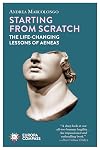
Starting from Scratch by Andrea Marcolongo presents the Aeneid, and even more importantly the figure of Aeneas, in a way that both offers new ways into the work as well as commentary about our own times.
I am admittedly not well-versed in the Aeneid, I have read an English translation twice and we translated it in one of my college Latin classes. So I have vague memories of most of it with the exception of some scenes that get covered periodically in other contexts. Marcolongo's analysis has show more made me decide to read it yet again, and maybe even see if I can dust off my old Latin. Okay, probably not that last part, I am far too lazy. But I do want to reread the work with this new impression of Aeneas.
From looking at Virgil's life to highlighting when the Aeneid is more or less popular (very broadly, good times vs bad times) the reader is primed to then engage with the textual elements of the work and what it might mean, for the Romans of the time as well as us today.
While I think the biggest readership will be those with an interest in Virgil and/or the (western) classics, I think readers who might like to think about our current society through a literary lens will find a lot to enjoy. A familiarity with the Aeneid is needed but I think, for someone so inclined, reading a detailed synopsis might be enough to get the bigger picture of the book. There is a (very) brief summary in the back of the book but while it might serve to remind someone familiar with the work of the chronology I think a longer one would be necessary for those unfamiliar.
Reviewed from a copy made available by the publisher via NetGalley. show less
I am admittedly not well-versed in the Aeneid, I have read an English translation twice and we translated it in one of my college Latin classes. So I have vague memories of most of it with the exception of some scenes that get covered periodically in other contexts. Marcolongo's analysis has show more made me decide to read it yet again, and maybe even see if I can dust off my old Latin. Okay, probably not that last part, I am far too lazy. But I do want to reread the work with this new impression of Aeneas.
From looking at Virgil's life to highlighting when the Aeneid is more or less popular (very broadly, good times vs bad times) the reader is primed to then engage with the textual elements of the work and what it might mean, for the Romans of the time as well as us today.
While I think the biggest readership will be those with an interest in Virgil and/or the (western) classics, I think readers who might like to think about our current society through a literary lens will find a lot to enjoy. A familiarity with the Aeneid is needed but I think, for someone so inclined, reading a detailed synopsis might be enough to get the bigger picture of the book. There is a (very) brief summary in the back of the book but while it might serve to remind someone familiar with the work of the chronology I think a longer one would be necessary for those unfamiliar.
Reviewed from a copy made available by the publisher via NetGalley. show less
Classics professor Marcolongo waxes enthusiastic about ancient Greek as a language, how it works, what's cool about it, how it differs from other languages. Reading this was by turns fascinating and a slog. Some of it went completely over my head (aspect) while some of it made me go "Neat!" (the dual). Some of it was hard to follow for someone not familiar with the Greek alphabet (any discussion of how stems change, for instance--I could follow that about a language that uses our alphabet, show more because at least I'd some sense of what I'm looking at), and some of it I think was lost in translation (the book was translated from Italian). Oh well. At least I learned a couple of things I didn't know before. show less
Lists
Awards

You May Also Like


Associated Authors
Statistics
- Works
- 30
- Members
- 456
- Popularity
- #53,830
- Rating
- 3.7
- Reviews
- 12
- ISBNs
- 71
- Languages
- 8