
Jonathan C. Slaght
Author of Owls of the Eastern Ice: A Quest to Find and Save the World's Largest Owl
Works by Jonathan C. Slaght
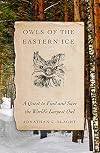
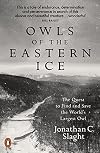
Owls of the Eastern Ice: A Quest to Find and Save the World's Largest Owl (2020) 593 copies, 22 reviews
Tigers Between Empires: The Improbable Return of Great Cats to the Forests of Russia and China (2025) 43 copies, 2 reviews
Associated Works
Across the Ussuri Kray: Travels in the Sikhote-Alin Mountains (2014) — Translator, some editions — 19 copies
Tagged
Common Knowledge
- Gender
- male
- Occupations
- blogger
- Organizations
- Wildlife Conservation Society
- Nationality
- USA
- Places of residence
- Minneapolis, Minnesota, USA
- Map Location
- USA
Members
Reviews
UPDATE: 05/15/2021: A local birding club (DuPage County, outside Chicago) was able to get Slaght to do a Zoom presentation for us. It was marvelous! He is ebullient, enthusiastic, funny, warm and thoroughly delightful. He answered questions, told stories, filled in additional anecdotes, and spoke more about his hard-working Russian colleagues. It was great. Thank you, Jonathan!
Have you ever wondered what it's like - really like - to be a field biologist? Searching for the Ivory-Billed show more Woodpecker, maybe, or tracking rare leopards or tigers, or peering at birds of paradise performing their dazzling displays? Jonathan Slaght, a Russophile from Minnesota gets to follow his passion: roaming the remote forests of easternmost Russia. By sheer happenstance, he spots an owl that had not been photographed in that region in a hundred years - a Blakiston's fish owl, a "defiant, floppy goblin" that looks like someone "glued fistfuls of feathers to a yearling bear and propped [it] in a tree." And the hunt is on. Wow, you say. How cool, you say.
Slaght is here to tell you it is cold. Bitterly, relentlessly, bitingly cold. And wet. He wades in streams through slush up to his waist. He and his team live in the back of a truck for weeks at a time. Or tents. One of them talks incessantly, and snores volcanically. They hole up in an isolated cabin inhabited by a hermit, ostensibly on the run from the KGB, who explains about the goblins who tickle his feet at night. They are nearly stranded as a logging crew starts to bulldoze over the road. Gasoline, cigarettes, and tempers run short. The ethanol does not seem to. The residents of the region build houses out of scrap, poach and fish and hunt without limits, and the men seem to function mostly on alcohol. Slaght spent two years with the Peace Corps in this area - it would be interesting to know more about what he did there.
But those owls... huge, shaggy, wary, glorious creatures. Slaght slogs through swamps, frozen rivers, blizzards, and tangled thorns, and is rewarded by a distant hoot here and a distinctive clawprint in the snow there. He measures and counts trees, he identifies every plant he can find, he snorkels kilometers of streams and counts the fish: do the owls need these? Why? The equipment freezes. The owls pry off their transmitters or break the traps. As he and two colleagues struggle to examine one ferocious female in the back of the truck one night, she bites, kicks, breaks away, and immediately smashes the lone light bulb, leaving the three men and one really enormous, pissed off owl loose in the pitch darkness of a truck camper.
Through it all, Slaght is methodical, dedicated beyond belief, serious, and he just keeps going. And the man can write when his editor(s) let him: he describes the Tengmalm's (aka Boreal) Owl "with its chocolate-brown plumage, and a large, flat-topped head strewn with tears of silver, [it] recalls a severe-looking cupcake." On a rare summer visit, he mentions the "Pallas's leaf warblers, sounding like crazed machine gunners... [spraying] volleys of sharp trills across the valley." He seems almost unnaturally calm - perhaps it's his lock on serious-scientist mode. Surely, the first time he cradled a trapped fish owl in his arms, was there not some sense of awe, of wonder, of splendor in his heart? He doesn't share it. He likes and respects all his colleagues, but their months of shared endeavor don't seem to foster much closeness. Or perhaps he is just being careful of their privacy, to his credit. They take what comes with ingenuity, humor, and unsurpassable fortitude.
This is a marvelously-written chronicle of the hard, hard, boring work of understanding wild creatures, wild places, strange landscapes, communities, and people (almost entirely men). Slaght is clearly a driven, devoted individual. And it's a challenge to write a book about a lot of endless, frustrating, detailed work that is this much fun to read. The owls are lucky to have him on their side, and we are lucky to have him tell us about them. There is more information on his project at http://www.fishowls.com/, and an opportunity to support the work. I did. show less
Have you ever wondered what it's like - really like - to be a field biologist? Searching for the Ivory-Billed show more Woodpecker, maybe, or tracking rare leopards or tigers, or peering at birds of paradise performing their dazzling displays? Jonathan Slaght, a Russophile from Minnesota gets to follow his passion: roaming the remote forests of easternmost Russia. By sheer happenstance, he spots an owl that had not been photographed in that region in a hundred years - a Blakiston's fish owl, a "defiant, floppy goblin" that looks like someone "glued fistfuls of feathers to a yearling bear and propped [it] in a tree." And the hunt is on. Wow, you say. How cool, you say.
Slaght is here to tell you it is cold. Bitterly, relentlessly, bitingly cold. And wet. He wades in streams through slush up to his waist. He and his team live in the back of a truck for weeks at a time. Or tents. One of them talks incessantly, and snores volcanically. They hole up in an isolated cabin inhabited by a hermit, ostensibly on the run from the KGB, who explains about the goblins who tickle his feet at night. They are nearly stranded as a logging crew starts to bulldoze over the road. Gasoline, cigarettes, and tempers run short. The ethanol does not seem to. The residents of the region build houses out of scrap, poach and fish and hunt without limits, and the men seem to function mostly on alcohol. Slaght spent two years with the Peace Corps in this area - it would be interesting to know more about what he did there.
But those owls... huge, shaggy, wary, glorious creatures. Slaght slogs through swamps, frozen rivers, blizzards, and tangled thorns, and is rewarded by a distant hoot here and a distinctive clawprint in the snow there. He measures and counts trees, he identifies every plant he can find, he snorkels kilometers of streams and counts the fish: do the owls need these? Why? The equipment freezes. The owls pry off their transmitters or break the traps. As he and two colleagues struggle to examine one ferocious female in the back of the truck one night, she bites, kicks, breaks away, and immediately smashes the lone light bulb, leaving the three men and one really enormous, pissed off owl loose in the pitch darkness of a truck camper.
Through it all, Slaght is methodical, dedicated beyond belief, serious, and he just keeps going. And the man can write when his editor(s) let him: he describes the Tengmalm's (aka Boreal) Owl "with its chocolate-brown plumage, and a large, flat-topped head strewn with tears of silver, [it] recalls a severe-looking cupcake." On a rare summer visit, he mentions the "Pallas's leaf warblers, sounding like crazed machine gunners... [spraying] volleys of sharp trills across the valley." He seems almost unnaturally calm - perhaps it's his lock on serious-scientist mode. Surely, the first time he cradled a trapped fish owl in his arms, was there not some sense of awe, of wonder, of splendor in his heart? He doesn't share it. He likes and respects all his colleagues, but their months of shared endeavor don't seem to foster much closeness. Or perhaps he is just being careful of their privacy, to his credit. They take what comes with ingenuity, humor, and unsurpassable fortitude.
This is a marvelously-written chronicle of the hard, hard, boring work of understanding wild creatures, wild places, strange landscapes, communities, and people (almost entirely men). Slaght is clearly a driven, devoted individual. And it's a challenge to write a book about a lot of endless, frustrating, detailed work that is this much fun to read. The owls are lucky to have him on their side, and we are lucky to have him tell us about them. There is more information on his project at http://www.fishowls.com/, and an opportunity to support the work. I did. show less
This was a gift and I wasn't sure if my interest in birds would pull me through 300 pages of owling. It did. Slagt does a great job of telling the discipline of academic research, the rigours of field work, the countless hours of work and the passion needed to see it all through. By the last chapters, I was completely invested in the destiny of Blakiston's Fish Owls, and relieved to read about their resilience, conservation plans and ultimate success of Slaght's and his colleagues' efforts. show more It was also excellent insight into how entire ecosystems work: from water flows and geography, fish populations and vegetation, to the owls themselves. Certainly, I now better appreciate the precision required for preservation of our fragile biosphere. Slaght's conversational writing and honest account (including Katkov's snoring and incessant chatter) make this an easy and relatable read. show less
It’s been noted by other reviewers how Slaght’s adventures in Eastern Russia are beautifully told, but I want to add how funny the book is. Interactions with a crazy hermit who believes men in white robes live 12 meters under a mountain, deadpan humor in descriptions of testicular transgressions, and the hilarious linguistic misunderstandings that come when cultures from two worlds collide over a bottle of vodka. I’ll savor the gorgeous descriptions of contemplation in the Primoriye show more forest forever; completely worth the deviation from my typical fare. show less
Tigers Between Empires: The Improbable Return of Great Cats to the Forests of Russia and China by Jonathan C. Slaght

Slaght's latest is a follow up to his Owls of the Eastern Ice (2020) and it's similar in style and content. The book documents a regional conservation project on the China-Russia border focused on Amur tigers. The project began with a handful of scrappy biologists who team up to study tigers and work with the local community to establish and maintain functional habitat. There are plenty of action scenes featuring furious tigers and Slaght vivdly conveys the hazards of the work and the show more dedication needed to get it done. He also addresses some of the moral dilemmas and the political forces that can enable or impede conservation. Thoughout, we encounter a rogue's gallery of scientists, administrators, poachers, and local residents. If you are curious about the charismatic tiger, conservation biology, or life in the remote Primorye region, you'll appreciate this book. show less
Lists
Awards


You May Also Like


Statistics
- Works
- 2
- Also by
- 1
- Members
- 636
- Popularity
- #39,628
- Rating
- 4.1
- Reviews
- 24
- ISBNs
- 22
- Languages
- 4