
Ryan Britt
Author of Luke Skywalker Can't Read and Other Geeky Truths
About the Author
Works by Ryan Britt
Phasers on Stun!: How the Making (and Remaking) of Star Trek Changed the World (2022) 116 copies, 7 reviews
The Spice Must Flow: The Story of Dune, from Cult Novels to Visionary Sci-Fi Movies (2023) 63 copies, 3 reviews
Associated Works
The City on the Edge of Forever: The Original Teleplay that Became the Classic Star Trek Episode (1977) — Narrator, some editions — 589 copies, 17 reviews
Tagged
Common Knowledge
- Legal name
- Britt, Ryan C
- Gender
- male
- Nationality
- USA
- Birthplace
- Portland, Maine, USA
- Places of residence
- New York, New York, USA
- Associated Place (for map)
- USA
Members
Reviews
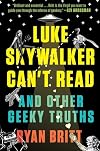
A delightful collection of smart, geeky, and funny essays on various sci fi and fantasy movies, shows, and books. Filled with humour and some particularly intriguing insights (the title essay is a really lovely exploration of the importance of literacy), these essays are a pure joy to read. It does help that almost all of the shows/films/books that Britt discusses are also favourites of mine. While I didn't always agree with all of Britt's arguments, they're fascinating to read. A quick read show more and worth picking up if you've ever called yourself a nerd or geek. Also note that the glossary is a very funny coda to the book and worth taking a couple extra minutes to read at the end. show less
Rating: 4* of five
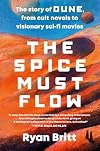
The Publisher Says: Geek-culture expert Ryan Britt takes us behind the pages and scenes of the science-fiction phenomenon Dune, charting the series' life from cult sci-fi novels to some of the most visionary movies of all time.
Using original, deep-access reporting, extensive research, and insightful commentary, The Spice Must Flow brings the true popularity of Dune out into the light for the very first time. With original interviews with the beloved actors and directors show more behind the films—including Timothée Chalamet, Kyle Maclachlan, Denis Villeneuve, Patrick Stewart, Rebecca Ferguson, Alec Newman, and many more—The Spice Must Flow also examines the far-reaching influence of Dune on art, music, politics, and, most notably, its status as the first ecological science-fiction story specifically concerned with climate change.
Britt skillfully and entertainingly guides readers through the history of how the Dune universe has unfolded, including the novel’s unlikely evolution from a failed piece of journalism about Oregon sand dunes into an epic science-fiction story, the way Herbert’s work inspired George Lucas, untold stories from the 1984 David Lynch film, the knife-edge balance between blockbuster hit and indie film Timothée Chalamet brings to the 2021 movie, and the exciting future of the franchise. Through a blend of narrative, oral history elements, and fascinating trivia, The Spice Must Flow is the new essential guide to the behind-the-scenes story of Dune. The fiction of Dune is deadly serious, but the real-life story of how it came into existence is full of wonder, surprises, and spice.
I RECEIVED A DRC FROM THE PUBLISHER VIA NETGALLEY. THANK YOU.
My Review: What I said the book above wasn't this book is. It's by archgeek [[Ryan Britt]] of [Luke Skywalker Can't Read: And Other Geeky Truths] fame, so he's got the chops and knows both the beat and the drill. Plume's published three of his books now, so clearly he commands the geek-culture street cred to make it profitable. Plus he's got a witty way with words that makes his deep familiarity with the subject less...creepy, more fun and funny.
This fictional universe has a lot of hot-button topics in it: Religion, climate change, religion, anti-technological bias, religion, and sheer unsurpassed-in-SF canon-guarding/gatekeeping/incel-friendly detail. Britt doesn't exactly dwell on the toxic parts of the fandom but neither does he ignore them. There are lots of worldbuilding details that he discusses and there are lots of ideas pinned under them, set in stories that are brimful of unapologetically partisan points of view. This is guaranteed to make some people go into full-on rages when their preferred interpretation of some detail is argued against.
This makes me sad, and reminds me of Kit Connor (of Heartstopper fame) feeling forced to reveal his private sexuality to stop muttered accusations of queerbaiting. As he said at the time this was occurring:
"I'm bi. Congrats for forcing an 18-year-old to out himself. I think some of you missed the point of the show. Bye."
(emphasis added to point up the disconnect between messages in the original and fannish gatekeeping)
That's the downside of passionate fandom. Anyone who has been in the Geek Culture world for more than A Minute has seen/been caught up in a pile-on when someone dares to be/say/assert an opinion or a take or even present a closely-reasoned analysis of that fandom's shared object that somehow rubs (some of) the fans the wrong way.
Quite a lot of people, myself included, stay away from fandoms for this reason. This book is a gentle, explanatory rebuke of our skittishness in the form of a reasonable geek-culture maven's informed, excited (almost besotted) explainer of just why this fandom came to be. Also a gentle chiding of the obsessive gatekeeping by some groups of fans. The book makes the point that Frank Herbert, and his son Brian after him, have created and are curating an immense, expansive Duneiverse of fiction, films, comics, and cosplay that contains literal multitudes. There is such astonishingly varied information in this fiction! Letting new players into the sandbox is Author Britt's aim in much of what he's doing...yet he never loses sight of the established fan's desire to see the whole Duneiverse from a wide-angled view...at least as far as the 2021 film...the 2024 one was filming as he wrote, so details and gossip were all embargoed.
I need to be reminded from time to time that fandom can be fun, and fascinating, and an all-around good experience. I hope this book will do the same for you, as a gift to yourself, and your other giftees show less
The Publisher Says: Geek-culture expert Ryan Britt takes us behind the pages and scenes of the science-fiction phenomenon Dune, charting the series' life from cult sci-fi novels to some of the most visionary movies of all time.
Using original, deep-access reporting, extensive research, and insightful commentary, The Spice Must Flow brings the true popularity of Dune out into the light for the very first time. With original interviews with the beloved actors and directors show more behind the films—including Timothée Chalamet, Kyle Maclachlan, Denis Villeneuve, Patrick Stewart, Rebecca Ferguson, Alec Newman, and many more—The Spice Must Flow also examines the far-reaching influence of Dune on art, music, politics, and, most notably, its status as the first ecological science-fiction story specifically concerned with climate change.
Britt skillfully and entertainingly guides readers through the history of how the Dune universe has unfolded, including the novel’s unlikely evolution from a failed piece of journalism about Oregon sand dunes into an epic science-fiction story, the way Herbert’s work inspired George Lucas, untold stories from the 1984 David Lynch film, the knife-edge balance between blockbuster hit and indie film Timothée Chalamet brings to the 2021 movie, and the exciting future of the franchise. Through a blend of narrative, oral history elements, and fascinating trivia, The Spice Must Flow is the new essential guide to the behind-the-scenes story of Dune. The fiction of Dune is deadly serious, but the real-life story of how it came into existence is full of wonder, surprises, and spice.
I RECEIVED A DRC FROM THE PUBLISHER VIA NETGALLEY. THANK YOU.
My Review: What I said the book above wasn't this book is. It's by archgeek [[Ryan Britt]] of [Luke Skywalker Can't Read: And Other Geeky Truths] fame, so he's got the chops and knows both the beat and the drill. Plume's published three of his books now, so clearly he commands the geek-culture street cred to make it profitable. Plus he's got a witty way with words that makes his deep familiarity with the subject less...creepy, more fun and funny.
This fictional universe has a lot of hot-button topics in it: Religion, climate change, religion, anti-technological bias, religion, and sheer unsurpassed-in-SF canon-guarding/gatekeeping/incel-friendly detail. Britt doesn't exactly dwell on the toxic parts of the fandom but neither does he ignore them. There are lots of worldbuilding details that he discusses and there are lots of ideas pinned under them, set in stories that are brimful of unapologetically partisan points of view. This is guaranteed to make some people go into full-on rages when their preferred interpretation of some detail is argued against.
This makes me sad, and reminds me of Kit Connor (of Heartstopper fame) feeling forced to reveal his private sexuality to stop muttered accusations of queerbaiting. As he said at the time this was occurring:
"I'm bi. Congrats for forcing an 18-year-old to out himself. I think some of you missed the point of the show. Bye."
(emphasis added to point up the disconnect between messages in the original and fannish gatekeeping)
That's the downside of passionate fandom. Anyone who has been in the Geek Culture world for more than A Minute has seen/been caught up in a pile-on when someone dares to be/say/assert an opinion or a take or even present a closely-reasoned analysis of that fandom's shared object that somehow rubs (some of) the fans the wrong way.
Quite a lot of people, myself included, stay away from fandoms for this reason. This book is a gentle, explanatory rebuke of our skittishness in the form of a reasonable geek-culture maven's informed, excited (almost besotted) explainer of just why this fandom came to be. Also a gentle chiding of the obsessive gatekeeping by some groups of fans. The book makes the point that Frank Herbert, and his son Brian after him, have created and are curating an immense, expansive Duneiverse of fiction, films, comics, and cosplay that contains literal multitudes. There is such astonishingly varied information in this fiction! Letting new players into the sandbox is Author Britt's aim in much of what he's doing...yet he never loses sight of the established fan's desire to see the whole Duneiverse from a wide-angled view...at least as far as the 2021 film...the 2024 one was filming as he wrote, so details and gossip were all embargoed.
I need to be reminded from time to time that fandom can be fun, and fascinating, and an all-around good experience. I hope this book will do the same for you, as a gift to yourself, and your other giftees show less
Rating: 3.5* of five
The Publisher Says: “Ryan Britt is . . . the Virgil you want to guide you through the inferno of geekery.” —Lev Grossman, author of the bestselling Magician's trilogy
Pop Culture and sci-fi guru Ryan Britt has never met a monster, alien, wizard, or superhero that didn’t need further analysis.
Essayist Ryan Britt got a sex education from dirty pictures of dinosaurs, made out with Jar-Jar Binks at midnight, and figured out how to kick depression with a Doctor Who show more Netflix-binge. Alternating between personal anecdote, hilarious insight, and smart analysis, Luke Skywalker Can’t Read contends that Barbarella is good for you, that monster movies are just romantic comedies with commitment issues, that Dracula and Sherlock Holmes are total hipsters, and, most shockingly, shows how virtually everyone in the Star Wars universe is functionally illiterate.
Romp through time and space, from the circus sideshows of 100 years ago to the Comic Cons of today, from darkest corners of the Galaxy to the comfort of your couch. For anyone who pretended their flashlight was a lightsaber, stood in line for a movie at midnight, or dreamed they were abducted by aliens, Luke Skywalker Can't Read is full of answers to questions you haven't thought to ask, and perfect for readers of Chuck Klosterman, Rob Sheffield, and Ernest Cline.
My Review: Well, that was fun. I live in a place where I am both the youngest and toothiest resident, so you can imagine what a pleasure it was to have someone to geek out with, even if his side of the conversation is on dead tree remains and my side (often shouted) scared the Wink Martindale out of the older and less dentally endowed residents.
Points where I agreed with Mr. Britt outnumbered the annoying points where he was so clearly *wrong* that my blood pressure spiked to most unsafe levels. On the sternly delivered advice of a medical professional, I will limit myself to mentioning the merest and mildest of these latter: STOP WITH THE FOOTNOTES ALREADY! WHEN YOU HAVE TO USE THE DOUBLE DAGGER AND THE BOOK IS NOT A LAW BOOK, YOU'VE GONE TOO FAR!!! *ahem* For the typographically challenged, look on p128 in the Doctor Who essay at the third footnote. Seriously now, Mr. Britt, The Mezzanine was published by Nicholson Baker in 1988. That was the last time heavily footnoted light reading was fun.
Oh well, I'm already purple, might as well: Back to the Future?! What the hell?! There are people with such, such, polite words fail me, bland tastes that they're fans of these extremely boring cinematic nap-fests? Assuming you're now nodding, Mr. Britt, brings me to the question, "SO WHAT?? Why waste 15pp on such, such, polite words fail me again, white-bread mouth-breathers' silly addiction?"
*ahem* So, with my ranting, I've proven the market for this book exists and is most broad indeed, if it includes my superannuated self. And as mentioned above, I mostly liked and agreed with his essays, especially "I Know It's Only Science Fiction, but I Like It." The mixed pleasure and pain of an adult idol making time for a personal private conversation...and then whipping out a life-lesson...is unforgettable. That's a lesson that will stick.
Essays on Dracula-as-hipster, a metric fuck-ton of Star Wars chatter, not one single word about Firefly because he straight up admits (in one of those pernicious footnotes) that he doesn't like Firefly, encomia of a weird sort piled on the already overpowering piles of plaudits about Sherlock Holmes, Star Trek and Tolkien and comic-book superheroes...it's dizzying how many oars this one, uncloned man has in the waters of geekdom. (I'm certain he's not cloned because if he was the street cred it would give him would necessitate discussing it.) That he makes a living while wending his way through the thickets of prickly fandoms is amazing to me. I'm thrilled and delighted that it's possible to be an essayist whose topic is the entertainments of the hoi polloi. Way too much derivative, repetitive thinking, writing, and publishing has taken place on ever-smaller slices of Highbrow Kultur, and I cheer and clap for all the intelligent analysis finally being applied and celebrated these past two or so decades.
With any kind of justice, Professor Britt's class on the Skywalker clan and its deeper meanings will outpace the registration numbers of Philosophy 201: The Stoics five-to-one. Now all we need to do is get him that university job so he can publish while the moldy oldies perish. show less
The Publisher Says: “Ryan Britt is . . . the Virgil you want to guide you through the inferno of geekery.” —Lev Grossman, author of the bestselling Magician's trilogy
Pop Culture and sci-fi guru Ryan Britt has never met a monster, alien, wizard, or superhero that didn’t need further analysis.
Essayist Ryan Britt got a sex education from dirty pictures of dinosaurs, made out with Jar-Jar Binks at midnight, and figured out how to kick depression with a Doctor Who show more Netflix-binge. Alternating between personal anecdote, hilarious insight, and smart analysis, Luke Skywalker Can’t Read contends that Barbarella is good for you, that monster movies are just romantic comedies with commitment issues, that Dracula and Sherlock Holmes are total hipsters, and, most shockingly, shows how virtually everyone in the Star Wars universe is functionally illiterate.
Romp through time and space, from the circus sideshows of 100 years ago to the Comic Cons of today, from darkest corners of the Galaxy to the comfort of your couch. For anyone who pretended their flashlight was a lightsaber, stood in line for a movie at midnight, or dreamed they were abducted by aliens, Luke Skywalker Can't Read is full of answers to questions you haven't thought to ask, and perfect for readers of Chuck Klosterman, Rob Sheffield, and Ernest Cline.
My Review: Well, that was fun. I live in a place where I am both the youngest and toothiest resident, so you can imagine what a pleasure it was to have someone to geek out with, even if his side of the conversation is on dead tree remains and my side (often shouted) scared the Wink Martindale out of the older and less dentally endowed residents.
Points where I agreed with Mr. Britt outnumbered the annoying points where he was so clearly *wrong* that my blood pressure spiked to most unsafe levels. On the sternly delivered advice of a medical professional, I will limit myself to mentioning the merest and mildest of these latter: STOP WITH THE FOOTNOTES ALREADY! WHEN YOU HAVE TO USE THE DOUBLE DAGGER AND THE BOOK IS NOT A LAW BOOK, YOU'VE GONE TOO FAR!!! *ahem* For the typographically challenged, look on p128 in the Doctor Who essay at the third footnote. Seriously now, Mr. Britt, The Mezzanine was published by Nicholson Baker in 1988. That was the last time heavily footnoted light reading was fun.
Oh well, I'm already purple, might as well: Back to the Future?! What the hell?! There are people with such, such, polite words fail me, bland tastes that they're fans of these extremely boring cinematic nap-fests? Assuming you're now nodding, Mr. Britt, brings me to the question, "SO WHAT?? Why waste 15pp on such, such, polite words fail me again, white-bread mouth-breathers' silly addiction?"
*ahem* So, with my ranting, I've proven the market for this book exists and is most broad indeed, if it includes my superannuated self. And as mentioned above, I mostly liked and agreed with his essays, especially "I Know It's Only Science Fiction, but I Like It." The mixed pleasure and pain of an adult idol making time for a personal private conversation...and then whipping out a life-lesson...is unforgettable. That's a lesson that will stick.
Essays on Dracula-as-hipster, a metric fuck-ton of Star Wars chatter, not one single word about Firefly because he straight up admits (in one of those pernicious footnotes) that he doesn't like Firefly, encomia of a weird sort piled on the already overpowering piles of plaudits about Sherlock Holmes, Star Trek and Tolkien and comic-book superheroes...it's dizzying how many oars this one, uncloned man has in the waters of geekdom. (I'm certain he's not cloned because if he was the street cred it would give him would necessitate discussing it.) That he makes a living while wending his way through the thickets of prickly fandoms is amazing to me. I'm thrilled and delighted that it's possible to be an essayist whose topic is the entertainments of the hoi polloi. Way too much derivative, repetitive thinking, writing, and publishing has taken place on ever-smaller slices of Highbrow Kultur, and I cheer and clap for all the intelligent analysis finally being applied and celebrated these past two or so decades.
With any kind of justice, Professor Britt's class on the Skywalker clan and its deeper meanings will outpace the registration numbers of Philosophy 201: The Stoics five-to-one. Now all we need to do is get him that university job so he can publish while the moldy oldies perish. show less
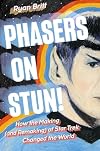
It seems unlikely that anyone can write something about Star Trek that hasn't been said before, but Ryan Britt pulls it off. He has the advantage of being the first book written since the release of the new Star Trek series of the 2010s/2020s, and how thus explain how those shows recontextualize earlier shows. But overall, the strength of his book is how he writes about familiar topics from new perspectives as well as some popping of oft-told myths.
For example:
The book is also full of fascinating details of what the show means to its fans and the people involved in making it. A chapter on the importance of Star Trek to LGBTQ+ community (and the more cautious approach to LGBTQ+ representation within Star Trek itself) is a key part of this book. Britt also likes to point out how involvement in Star Trek encouraged it's cast to make differences in the real world. Examples include Nichelle Nichols recruiting women and people of color for NASA and Chase Masters starting a behavioral health anti-bullying program adopted by the YMCA.
Britt interviewed over 100 people for this book as well as in-depth research into past works to create a terrific chronological compendium of five decades of TV shows and movies. show less
For example:
- early Star Trek super-fandom
- was predominately women (and has remained so)
- the common fan criticism that something isn't the way that Gene Rodenberry would've liked it, ignores that Rodenberry was not the primary influence behind Star Trek after The Motion Picture, and the later films and shows completely redefined what Star Trek was about. Not to mention that even in the 60s there were considerable contributions to Star Trek world-building from other creators.
- Star Trek wasn't initially intended to demonstrate progressive values, but Rodenberry and others were willing to retroactively claim that mantle.
The book is also full of fascinating details of what the show means to its fans and the people involved in making it. A chapter on the importance of Star Trek to LGBTQ+ community (and the more cautious approach to LGBTQ+ representation within Star Trek itself) is a key part of this book. Britt also likes to point out how involvement in Star Trek encouraged it's cast to make differences in the real world. Examples include Nichelle Nichols recruiting women and people of color for NASA and Chase Masters starting a behavioral health anti-bullying program adopted by the YMCA.
Britt interviewed over 100 people for this book as well as in-depth research into past works to create a terrific chronological compendium of five decades of TV shows and movies. show less
Lists
You May Also Like


Associated Authors
Statistics
- Works
- 3
- Also by
- 5
- Members
- 319
- Popularity
- #74,134
- Rating
- 3.6
- Reviews
- 17
- ISBNs
- 13
- Languages
- 1