

Patricia Cline Cohen
Author of The Murder of Helen Jewett: The Life and Death of a Prostitute in Nineteenth-century New York
About the Author
Image credit: from University of California, Santa Barbara faculty page
Works by Patricia Cline Cohen
The Murder of Helen Jewett: The Life and Death of a Prostitute in Nineteenth-century New York (1998) 533 copies, 6 reviews
Associated Works
The Confidence-Man: His Masquerade [Norton Critical Edition, 2nd ed.] (2006) — Contributor — 195 copies, 2 reviews
New York 400: A Visual History of America's Greatest City with Images from The Museum of the City of New York (2009) — Contributor — 74 copies
Tagged
Common Knowledge
- Birthdate
- 1946
- Gender
- female
- Education
- University of California, Berkeley (PhD)
University of Chicago (BA) - Occupations
- History professor, University of California, Santa Barbara
- Organizations
- Organization of American Historians
American Studies Association
American Antiquarian Society
University of California, Santa Barbara - Nationality
- USA
- Birthplace
- Ann Arbor, Michigan, USA
- Map Location
- USA
Members
Reviews
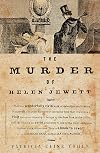
In The Murder of Helen Jewett, author Patricia Cline Cohen uses the titular murder to examine the social, political, and cultural workings of Jacksonian-era New York City and the greater Northeast of the United States. Her brilliantly-researched narrative traces the social connections between the victim, the murderer, and all interested parties, using their experiences to shine a light on clashing cultural mores in the 1830s. Cline's greatest weakness is also her greatest asset: speculation. show more For most of the monograph, this works to her advantage and allows her to connect the dots and effortlessly move from one idea to another. When, however, she discusses the symbolic meaning of John Vanderlyn's 1804 paining, The Death of Jane McCrea, which may not have been at the brothel, Cohen drifts into interesting, but unnecessary, commentary that derails the narrative. With this exception, The Murder of Helen Jewett is an excellent look at the changes during the Jacksonian era and the moral reform movement. show less
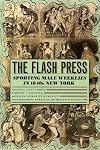
Thinking I would get from this book an interesting snapshot of a time and place in history through New York newspapers, I was pleased to discover I received that and much more. The flash press, a 150 year old style of newspaper that exhibited salaciousness, gossip, political undertones, backstabbing, and sexuality, was almost forgotten by history. It was not until 1985 that the papers became known to antiquarians when the American Antiquarian Society convinced George B. Underwood’s son to show more sell his collection to them. Likely this collection was passed through a chain of sports reporters throughout history to land in Underwood’s possession.
While reading about the licentious content of the papers is fascinating, the real story is much deeper and richer. The editors of the flash press were some of the first in the country to be tried for obscenity and the forerunners of using the First Amendment to defend themselves and their writing. Indeed, their cases helped shape obscenity laws and trials though this fact was almost forgotten. Thirty years before the groundbreaking Comstock laws, the flash press was censored using English common law, causing a big fuss and a short-lived style of newspaper.
Replete with images from the papers and articles reprinted in their entirety, the reader gets a true sense of the social scene of the times. Although the papers of focus in the book were produced in New York City, many more were created in other big cities in the country. What struck me while reading about the content of the papers was how similar we still are to our ancestors when it comes to titillating entertainment. We may have changed formats and codified editorial responsibilities, but we continue to toe the line of acceptable behavior. The difference between the flash press and today’s tabloids is slight. Furthermore, we have not ceased to be tantalized by celebrity or their behaviors, be they good or bad. The more things change, the more they stay the same. show less
While reading about the licentious content of the papers is fascinating, the real story is much deeper and richer. The editors of the flash press were some of the first in the country to be tried for obscenity and the forerunners of using the First Amendment to defend themselves and their writing. Indeed, their cases helped shape obscenity laws and trials though this fact was almost forgotten. Thirty years before the groundbreaking Comstock laws, the flash press was censored using English common law, causing a big fuss and a short-lived style of newspaper.
Replete with images from the papers and articles reprinted in their entirety, the reader gets a true sense of the social scene of the times. Although the papers of focus in the book were produced in New York City, many more were created in other big cities in the country. What struck me while reading about the content of the papers was how similar we still are to our ancestors when it comes to titillating entertainment. We may have changed formats and codified editorial responsibilities, but we continue to toe the line of acceptable behavior. The difference between the flash press and today’s tabloids is slight. Furthermore, we have not ceased to be tantalized by celebrity or their behaviors, be they good or bad. The more things change, the more they stay the same. show less
The Flash Press: Sporting Male Weeklies in 1840s New York (Historical Studies of Urban America) by Patricia Cline Cohen
The Flash Press, a study of the short-lived but highly consumed “licentious” newspapers of New York City, captures an image of urban society in the early 1840s. The New York of Flash Press is a city of literates but also of rakes, consuming all manner of newspapers, and consequentially such publications of libertine nature. Authors Patricia Cohen, Timothy Gilfolye, and Helen Horowitz not only provide suited discourse of the content and the society of these publications, but through show more cooperation with the American Antiquarian Society, provide excerpts of literature published by the Flash Press. In doing so, the authors provide a credible and detailed discourse on literature, politics, and gender in 1840s New York.
Flash Press toes the fine line between methods of microhistory and more orthodox historical analysis. While this breach in historiography does result in occasional tonal incongruences (more on that later), it is partially the result of the content at hand; the most unspoken argument at hand is that the deluge of licentious publications in the analysis is ultimately personal, that is to say, uniquely drawn to the narrative of certain important individuals. While Flash Press brings attention to the fact that the content of these newspapers “elevated a handful of these [prostitutes] to celebrity status,” and slandered numerous individuals, the authors make an argument that these papers were a result of a handful of talented, charismatic, and contentious men. Very early in the first half of Flash Press, the authors enumerate these individuals, yet even so, they spend even more time on characters such as William J. Snelling, and George Washington Dixon in particular; large sub-sections of the chapter “Beginnings” is spent on detailed biographies of these people, especially Snelling. To this avail, the authors present a compelling argument—the individuals of Flash Press are fun, dramatic and interesting.
However, the argument of this biographical statement (and the subsequent discussion of the legal challenges authored by New York Flash Press) pales in comparison to the discussion of political and gender theory in the second chapter, entitled “Sexual Politics.” The 1840s Flash Press was uniquely sexual: it was largely comprised of gossip or discussion about the town’s brothels and prostitutes, and Flash publications often had miniature manifestos on homosexuality, abortion, or masturbation. The argument presented in the second chapter, that Flash publications were a manifestation of “libertine republicanism,” is much more interesting and wide-reaching nature. In this chapter, Flash Press investigates an ideology, concluding that despite the “purposely paradoxical” nature of Flash papers, they were at times extraordinarily political, making a profoundly moral statement, the form of which is fascinating. Because of this stark nature of these publications, as well as the large readership Flash papers experienced, the statements of the New York press had impacts on other locations and industries; in fact, two of the primary source documents provided in the book provide commentary on the influence of The Whip, and Flash outside New York.
This is where the aforementioned tonal incongruity fills the limelight. Comparing the theses of these chapters, the reader might find a stark difference between “these people are important,” and “these publications had a nuanced impact on larger discourses on gender and the role of the state.” While agreeing with the later mostly justifies the former (being that the characters in Flash Press did play important historical roles), knowing that William Snelling spoke fluent French seems completely overshadowed by the impact of his publications. Again, this is a remark on the form and substance of Flash Press. An easy critique of the book can be found in measuring the amount of effort given to trivial arguments or facts, compared to the sections that hold much more gravity. Once again, this is why the second chapter stands out: the first is primarily biographical; the third does provide important legal discourse about libel and the first amendment, but given that discussion of gender politics is center to Flash publications (and the second part of the book accordingly), the second chapter stands out as more relevant and important.
The second part containing Flash press excerpts is a wonderful addition to the book. While the excerpts are complementary to the immediate content of the first part, they also stand alone quite well. Of these primary documents, perhaps two of the most intriguing are the “Revival of the Whip,” and “Masturbation.”
“Revival of the Whip,” the first excerpt presented, provides an acute look at the self-aware tone of the Flash press. In “Revival,” the author discusses how the previous editor “has been indicted, tried convicted, and imprisoned for conducting it [the paper] in a truly moral and sedate course,” and then playfully resolves to continue publishing in the same manner. Furthermore, the reasoning for this course of action is grounded in a strong moral compass, as the publishers believe that they ought to publish as they see fit, even though the content of the Whip is considered licentious and dastardly. Given the publishing date (October 1842), the large readership at the time, and the tone of the piece, the author was very aware of the discourse created in the article. While his comrade, George Wooldridge, was imprisoned for publishing, the new editor sought to frame his imprisonment as a tragedy, betting that in such rhetoric, he could sway the court of public opinion to his side.
The discourse on masturbation in Flash is unique for other reasons. Masturbation offers perhaps a break in the libertine republican ideology of the Flash Press, as masturbation could usually be categorized as morally distraught in the same realm of sodomy, adultery, and prostitution. Meanwhile, as Flash would praise and encourage prostitution, it is an interesting to see their justification against masturbation from an ideological perspective: rather than reprimand masturbators for moral reasons, Flash cautions people against the dangers of masturbation: “Such indulge in an unhallowed passion, which, if persisted in, will end in insanity, a broken-down nervous system, or death…” This is important juxtaposed against another primary source Flash publication against homosexuality, which does condemn homosexuality on moral reasons, thus, we can assume that Flash categorized homosexuality and masturbation in different terms. Since prostitution, another “unhallowed passion,” could be judged as passable, masturbation had to be severed from other forms of sodomy to make sure that homosexuality could still be worthy of condemnation.
In addressing the form of The Flash Press, as well as the prior mentioned tonal and argumentative issues, it might be worthy to have the book reorchestrated into something similar to a textbook reader. Being that some of the biographical elements are weaker than the rest, and the primary sources alone justify and warrant arguments already presented in the book, it can be suggested that the primary sources, or at least more references or quotations form said sources, could be integrated into the greater authorship of Flash Press. Otherwise, this book is worthy of reading, as it provides discourse on a unique subject which, in a world of tabloids and changing gender norms, remains highly relevant. show less
Flash Press toes the fine line between methods of microhistory and more orthodox historical analysis. While this breach in historiography does result in occasional tonal incongruences (more on that later), it is partially the result of the content at hand; the most unspoken argument at hand is that the deluge of licentious publications in the analysis is ultimately personal, that is to say, uniquely drawn to the narrative of certain important individuals. While Flash Press brings attention to the fact that the content of these newspapers “elevated a handful of these [prostitutes] to celebrity status,” and slandered numerous individuals, the authors make an argument that these papers were a result of a handful of talented, charismatic, and contentious men. Very early in the first half of Flash Press, the authors enumerate these individuals, yet even so, they spend even more time on characters such as William J. Snelling, and George Washington Dixon in particular; large sub-sections of the chapter “Beginnings” is spent on detailed biographies of these people, especially Snelling. To this avail, the authors present a compelling argument—the individuals of Flash Press are fun, dramatic and interesting.
However, the argument of this biographical statement (and the subsequent discussion of the legal challenges authored by New York Flash Press) pales in comparison to the discussion of political and gender theory in the second chapter, entitled “Sexual Politics.” The 1840s Flash Press was uniquely sexual: it was largely comprised of gossip or discussion about the town’s brothels and prostitutes, and Flash publications often had miniature manifestos on homosexuality, abortion, or masturbation. The argument presented in the second chapter, that Flash publications were a manifestation of “libertine republicanism,” is much more interesting and wide-reaching nature. In this chapter, Flash Press investigates an ideology, concluding that despite the “purposely paradoxical” nature of Flash papers, they were at times extraordinarily political, making a profoundly moral statement, the form of which is fascinating. Because of this stark nature of these publications, as well as the large readership Flash papers experienced, the statements of the New York press had impacts on other locations and industries; in fact, two of the primary source documents provided in the book provide commentary on the influence of The Whip, and Flash outside New York.
This is where the aforementioned tonal incongruity fills the limelight. Comparing the theses of these chapters, the reader might find a stark difference between “these people are important,” and “these publications had a nuanced impact on larger discourses on gender and the role of the state.” While agreeing with the later mostly justifies the former (being that the characters in Flash Press did play important historical roles), knowing that William Snelling spoke fluent French seems completely overshadowed by the impact of his publications. Again, this is a remark on the form and substance of Flash Press. An easy critique of the book can be found in measuring the amount of effort given to trivial arguments or facts, compared to the sections that hold much more gravity. Once again, this is why the second chapter stands out: the first is primarily biographical; the third does provide important legal discourse about libel and the first amendment, but given that discussion of gender politics is center to Flash publications (and the second part of the book accordingly), the second chapter stands out as more relevant and important.
The second part containing Flash press excerpts is a wonderful addition to the book. While the excerpts are complementary to the immediate content of the first part, they also stand alone quite well. Of these primary documents, perhaps two of the most intriguing are the “Revival of the Whip,” and “Masturbation.”
“Revival of the Whip,” the first excerpt presented, provides an acute look at the self-aware tone of the Flash press. In “Revival,” the author discusses how the previous editor “has been indicted, tried convicted, and imprisoned for conducting it [the paper] in a truly moral and sedate course,” and then playfully resolves to continue publishing in the same manner. Furthermore, the reasoning for this course of action is grounded in a strong moral compass, as the publishers believe that they ought to publish as they see fit, even though the content of the Whip is considered licentious and dastardly. Given the publishing date (October 1842), the large readership at the time, and the tone of the piece, the author was very aware of the discourse created in the article. While his comrade, George Wooldridge, was imprisoned for publishing, the new editor sought to frame his imprisonment as a tragedy, betting that in such rhetoric, he could sway the court of public opinion to his side.
The discourse on masturbation in Flash is unique for other reasons. Masturbation offers perhaps a break in the libertine republican ideology of the Flash Press, as masturbation could usually be categorized as morally distraught in the same realm of sodomy, adultery, and prostitution. Meanwhile, as Flash would praise and encourage prostitution, it is an interesting to see their justification against masturbation from an ideological perspective: rather than reprimand masturbators for moral reasons, Flash cautions people against the dangers of masturbation: “Such indulge in an unhallowed passion, which, if persisted in, will end in insanity, a broken-down nervous system, or death…” This is important juxtaposed against another primary source Flash publication against homosexuality, which does condemn homosexuality on moral reasons, thus, we can assume that Flash categorized homosexuality and masturbation in different terms. Since prostitution, another “unhallowed passion,” could be judged as passable, masturbation had to be severed from other forms of sodomy to make sure that homosexuality could still be worthy of condemnation.
In addressing the form of The Flash Press, as well as the prior mentioned tonal and argumentative issues, it might be worthy to have the book reorchestrated into something similar to a textbook reader. Being that some of the biographical elements are weaker than the rest, and the primary sources alone justify and warrant arguments already presented in the book, it can be suggested that the primary sources, or at least more references or quotations form said sources, could be integrated into the greater authorship of Flash Press. Otherwise, this book is worthy of reading, as it provides discourse on a unique subject which, in a world of tabloids and changing gender norms, remains highly relevant. show less
you can't skim The Murder of Helen Jewett. not in any kind of satisfying way. why not? for one thing, it's not fiction. it's historical nonfiction. continuing on that line of thought, it's a murder investigation (so the little details are important and shouldn't be inserted on whimsy by your subconscious), and furthermore, it's set in 1836 New York (a world so far removed from modern every-day experience that anything you take for granted about it is probably just plain wrong).
it reads like show more a documentary (a very well-done documentary, no grass-growing or paint-drying here), an expose, and of course a murder mystery all in one. kudos to the author for researching this information as immaculately as she has done, and presenting it as artfully and engagingly as she has done. she had quite the task and she has done it most commendably.
when I tell you that Helen Jewett was a prostitute who was killed by ax blows to the head... many things might come to mind. Prostitute probably makes one think of Pretty Woman or fishnet stockings and too much makeup etc etc. it is far less likely to make you think of Ninon de Lenclos, courtesans and salons, extravagantly decadent parlors, full formal dress theatre dates, independence from social constraints, and power play between women and men.
that changes things a bit. and as desensitized as we are these days, we might not pick up on the fact that premeditated murder was incredibly uncommon in those days (although death in general was not), with such cases numbering in the single digits for the entire year. add in the fact that the accused and the murdered had exchanged formal love letters and gifts and other affections, with his full knowledge of her station in life, and now you've got me wondering what brought about this brutal ending.
Patricia Cline Cohen fleshes out the backgrounds of these people. what makes a girl a prostitute? how exactly did she fall from grace, so to say? what drives a man to murder? what about their families, their neighbors, their associates?
also very interesting to me, this is also the story of the beginnings of investigative reporting (as opposed to sitting at a desk and waiting for something printworthy to come your way), as well as, unavoidably, the tabloid press. how this movement changed not only how the public viewed such happenings (as the murder), but also how the public opinon began to affect criminal investigations and proceedings.
This book is filled with stories and people that I'd never wondered about before, but I'm enjoying hearing about them quite a bit. I never really cared all that much for the New York area either (apologies, but it's a bit far from home), and yet now I am aware of what exaclty makes it so interesting to some.
it's not a light read, as I mentioned. it's not a dark read (even with murder and all), but it's nothing you can skim through surrounded by distractions.
so, meet the murder victim, alias Helen Jewett:
her own words, as she wrote them with ink-dipped quill on guilded stationary paper, from a letter to the accused:
"I love you Frank---ah! you know how I love you! but do you want to know how much I can hate you? Take care, I will show you."
meet the murder suspect, Richard P. Robinson, alias Frank Rivers:
his own words, again from a letter between them, though not in a direct reply to the above Jewett quote. no, in fact, this was rather common between them: an impassioned and bizarre relationship indeed:
"Nelly, Nelly, pause ere you go further; think of how we were once situated, and if you can convince yourself that you are acting a noble part in cutting my throat, go on, is all I have to say. My course will be short and sweet---no---bitter, bitter as well you know."
really I think maybe they both spent too much time attending the theatre; they certainly were accomplished in the dramatic! and ready to sting most anybody with sarcasm: "He has but two ideas in his head, and those two are not breeders." (Robinson, of a fellow apparently preferred over him by a certain girl.) "You are right; it is wrong in me to be hard upon so soft a subject---we never use diamonds to carve geese." (Jewett, to a man who said she was too hard on him, referring to how she refused his affection.)
They began courting in the summer of 1835, and she was murdered in April of 1836, so they had known each other intimately for almost a year.
could we compare the life of a geisha to the life of Helen Jewett? could we discuss the amazingly lax and borderline-ridiculous legal proceedings? (I esp enjoyed the delicious quote on page 369, leading me to...) could we elaborate on power and priviledge as it pertains to class and gender? yes, and more, I'm sure. some other time perhaps ;)
a great read. I'll give it a 4. keep in mind however, it is not a book you can breeze through. you need time and proper attention for it. give it that, and if you have my interest in such things, then the book deserves a 4, I say. (if you read through the epilogue, Cohen presents an overview -summary -closing statement which is the short version of the book, I suppose, and a 4 as well.) show less
it reads like show more a documentary (a very well-done documentary, no grass-growing or paint-drying here), an expose, and of course a murder mystery all in one. kudos to the author for researching this information as immaculately as she has done, and presenting it as artfully and engagingly as she has done. she had quite the task and she has done it most commendably.
when I tell you that Helen Jewett was a prostitute who was killed by ax blows to the head... many things might come to mind. Prostitute probably makes one think of Pretty Woman or fishnet stockings and too much makeup etc etc. it is far less likely to make you think of Ninon de Lenclos, courtesans and salons, extravagantly decadent parlors, full formal dress theatre dates, independence from social constraints, and power play between women and men.
that changes things a bit. and as desensitized as we are these days, we might not pick up on the fact that premeditated murder was incredibly uncommon in those days (although death in general was not), with such cases numbering in the single digits for the entire year. add in the fact that the accused and the murdered had exchanged formal love letters and gifts and other affections, with his full knowledge of her station in life, and now you've got me wondering what brought about this brutal ending.
Patricia Cline Cohen fleshes out the backgrounds of these people. what makes a girl a prostitute? how exactly did she fall from grace, so to say? what drives a man to murder? what about their families, their neighbors, their associates?
also very interesting to me, this is also the story of the beginnings of investigative reporting (as opposed to sitting at a desk and waiting for something printworthy to come your way), as well as, unavoidably, the tabloid press. how this movement changed not only how the public viewed such happenings (as the murder), but also how the public opinon began to affect criminal investigations and proceedings.
This book is filled with stories and people that I'd never wondered about before, but I'm enjoying hearing about them quite a bit. I never really cared all that much for the New York area either (apologies, but it's a bit far from home), and yet now I am aware of what exaclty makes it so interesting to some.
it's not a light read, as I mentioned. it's not a dark read (even with murder and all), but it's nothing you can skim through surrounded by distractions.
so, meet the murder victim, alias Helen Jewett:
her own words, as she wrote them with ink-dipped quill on guilded stationary paper, from a letter to the accused:
"I love you Frank---ah! you know how I love you! but do you want to know how much I can hate you? Take care, I will show you."
meet the murder suspect, Richard P. Robinson, alias Frank Rivers:
his own words, again from a letter between them, though not in a direct reply to the above Jewett quote. no, in fact, this was rather common between them: an impassioned and bizarre relationship indeed:
"Nelly, Nelly, pause ere you go further; think of how we were once situated, and if you can convince yourself that you are acting a noble part in cutting my throat, go on, is all I have to say. My course will be short and sweet---no---bitter, bitter as well you know."
really I think maybe they both spent too much time attending the theatre; they certainly were accomplished in the dramatic! and ready to sting most anybody with sarcasm: "He has but two ideas in his head, and those two are not breeders." (Robinson, of a fellow apparently preferred over him by a certain girl.) "You are right; it is wrong in me to be hard upon so soft a subject---we never use diamonds to carve geese." (Jewett, to a man who said she was too hard on him, referring to how she refused his affection.)
They began courting in the summer of 1835, and she was murdered in April of 1836, so they had known each other intimately for almost a year.
could we compare the life of a geisha to the life of Helen Jewett? could we discuss the amazingly lax and borderline-ridiculous legal proceedings? (I esp enjoyed the delicious quote on page 369, leading me to...) could we elaborate on power and priviledge as it pertains to class and gender? yes, and more, I'm sure. some other time perhaps ;)
a great read. I'll give it a 4. keep in mind however, it is not a book you can breeze through. you need time and proper attention for it. give it that, and if you have my interest in such things, then the book deserves a 4, I say. (if you read through the epilogue, Cohen presents an overview -summary -closing statement which is the short version of the book, I suppose, and a 4 as well.) show less
Lists
True Crime (1)
Awards

You May Also Like


Associated Authors
Statistics
- Works
- 6
- Also by
- 3
- Members
- 841
- Popularity
- #30,399
- Rating
- 3.7
- Reviews
- 8
- ISBNs
- 40