

Leo Marx (1919–2022)
Author of The Machine in the Garden: Technology and the Pastoral Ideal in America
About the Author
Scholar, writer and educator Leo Marx was educated at Harvard University, where he received a B. A. and a Ph. D. Marx taught at the University of Minnesota, Amherst College, and MIT. The school has also created the Leo Marx Career Development Professorship in the History and Culture of Science and show more Technology to honor his service. Marx's works, such as "The Machine in the Garden," explore the relationship between technology and culture in the past two centuries. (Bowker Author Biography) show less
Works by Leo Marx
Does Technology Drive History? The Dilemma of Technological Determinism (1994) — Editor — 157 copies, 2 reviews
The Pilot and the Passenger: Essays on Literature, Technology, and Culture in the United States (1988) 19 copies
The garden 1 copy
Associated Works
Adventures of Huckleberry Finn [Norton Critical Edition, 2nd ed.] (1977) — Contributor — 329 copies, 4 reviews
Tagged
Common Knowledge
- Birthdate
- 1919-11-15
- Date of death
- 2022-03-08
- Gender
- male
- Education
- Harvard University
Harvard University (Ph.D., History of American Civilization, 1950) - Occupations
- professor
- Organizations
- Massachusetts Institute of Technology
Amemican Academy of Arts and Sciences - Nationality
- USA
- Birthplace
- New York, New York, USA
- Place of death
- Boston, Massachusetts, USA
- Associated Place (for map)
- USA
Members
Reviews
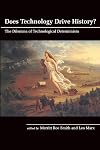
A classic analysis of the inadequacy of technological determinism as an explanation of the historical evolution of technologies and the societies in which they evolve.
I read this book is fits and bursts during lunch during the work week usually. Each chapter is by a different author so it worked out rather well.
All in all the idea of technological determinism is that technology drives history. The invention of the heavy plow changed society in Europe or the invention of the printing press required society to change. While technology adaptation within society does/can change society the overall opinion is that technology itself does not drive change. It show more is merely one piece at work in the march of change. One reason this is apparent is that every society does not have the same changes when new technologies appear. Some changes that are tied to new technologies do not happen in a society until a significant amount of time has passed. So, technology may be an agent of change but it should only be viewed as a part of the greater picture when one measures the factors that drive societal change.
Overall the book contained some good analysis on the subject but it was somewhat technical in nature. This was not written to appeal to the broad masses. show less
All in all the idea of technological determinism is that technology drives history. The invention of the heavy plow changed society in Europe or the invention of the printing press required society to change. While technology adaptation within society does/can change society the overall opinion is that technology itself does not drive change. It show more is merely one piece at work in the march of change. One reason this is apparent is that every society does not have the same changes when new technologies appear. Some changes that are tied to new technologies do not happen in a society until a significant amount of time has passed. So, technology may be an agent of change but it should only be viewed as a part of the greater picture when one measures the factors that drive societal change.
Overall the book contained some good analysis on the subject but it was somewhat technical in nature. This was not written to appeal to the broad masses. show less
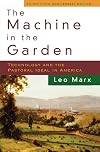
Loving this one so far—and it's got me thinking: https://zwieblein.bearblog.dev/looking-back-on-boosters-of-the-machine/
Awards

You May Also Like


Associated Authors
Statistics
- Works
- 9
- Also by
- 3
- Members
- 824
- Popularity
- #30,962
- Rating
- 3.4
- Reviews
- 3
- ISBNs
- 18
- Languages
- 2