
Leslie A. Fiedler (1917–2003)
Author of Love and Death in the American Novel
About the Author
Leslie A. Fiedler, a literary critic, was a professor of English at the State University of New York, at Buffalo. His well-known preoccupation with social and psychological issues emerged with Love and Death in the American Novel (1960), which became a major critical text of the 1960s. In this book show more he argued that American writing has been shaped by an inability to portray mature sexual relationships and by an underlying fear of death. Fiedler admonished critics, teachers, and readers of literature to connect text and context-to consider a poem, for example, as the sum of many contexts, including its genre, the other works of the author, the other works of his time, and so forth. Fiedler's notions of moral ambiguity echo Matthew Arnold's focus on art as criticism of life, but with an energy and style peculiar to himself. Fiedler depended greatly on generalizations (usually unexpected), making his critical remarks reflect broader considerations. (Bowker Author Biography) show less
Image credit: lifeinlegacy.com
Works by Leslie A. Fiedler
The inadvertent epic: From Uncle Tom's Cabin to Roots (Massey lecture series ; 17th) (1979) 13 copies
O Brave New World: American Literature from 1600 to 1840 (A Critical Anthology of American Literature, Volume One) (1968) 7 copies
The Second Stone: A Love Story 6 copies
Collected Essays of Leslie Fiedler 4 copies
Back to China 3 copies
Lo straniero in Shakespeare 1 copy
The Monks of Monk Hall 1 copy
The Art of the Essay 1 copy
Associated Works
The Innocents Abroad; or, The New Pilgrim's Progress (1869) — Afterword, some editions — 4,368 copies, 60 reviews
Literature: An Introduction to Fiction, Poetry, and Drama (1995) — Contributor, some editions — 1,012 copies, 7 reviews
Adventures of Huckleberry Finn [Norton Critical Edition, 2nd ed.] (1977) — Contributor — 328 copies, 4 reviews
Beyond the Looking Glass: Extraordinary Works of Fairy Tale & Fantasy (1985) — Introduction — 182 copies, 7 reviews
Alger Hiss, Whittaker Chambers, and the Schism in the American Soul (2002) — Contributor — 25 copies, 1 review
Tagged
Common Knowledge
- Canonical name
- Fiedler, Leslie A.
- Legal name
- Fiedler, Leslie Aaron
- Birthdate
- 1917-03-08
- Date of death
- 2003-01-29
- Gender
- male
- Education
- New York University (BA | 1938)
University of Wisconsin-Madison (MA | 1939 | PhD | 1941) - Occupations
- professor
literary critic
novelist - Organizations
- State University of New York at Buffalo
Young Communist League
United States Navy (WWII) - Awards and honors
- American Academy of Arts and Letters Academy Award (Literature, 1957)
American Academy of Arts and Letters (Literature ∙ 1988)
Hubbell Medal (1994)
Ivan Sandrof Lifetime Achievement Award (1998) - Nationality
- USA
- Birthplace
- Newark, New Jersey, USA
- Places of residence
- Buffalo, New York, USA
Missoula, Montana, USA
East Orange, New Jersey, USA - Place of death
- Buffalo, New York, USA
- Burial location
- Forest Lawn Cemetery, Buffalo, New York, USA
- Associated Place (for map)
- USA
Members
Reviews
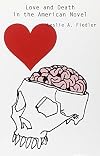
An important and influential work. Fiedler's interpretations are so universally Freudian that he might see things in these novels that aren't strictly subject to some Freudian analysis. Nonetheless, in our most acclaimed novels of primarily the 19th century, there are trends by male authors that cannot be ignored or explained away. The negative effects of religion, especially Puritanism, were pervasive and gender roles remained unhealthy for many decades. But his is a major contribution to show more feminist literary criticism and holds up pretty well. Hyper-masculinity continues to be a problem in society and even in our literature today. David Foster Wallace was highly critical of authors such as Updike, Mailer, and Roth for continuing what he called the "phallocrat" tradition in the 20th century. But anyone who has looked into Wallace's own experiences with women should understand how male authors continue to behave badly in private and write disingenuously about women in public. show less

Fiedler argues that American literature is immature because, instead of dealing with the mature themes of European literature -- love and death, it concentrates on friendship and terror, and, perhaps most immature of all, the friendships are between men. Women are almost entirely excluded. Despite the fact that this book has the reek of pre-Stonewall Freudianism, I still find much of what it has to say very compelling. There does seem to be a tendency of American novels to eschew women and show more to embrace the homosocial, and this does seem to have something to do with the wilderness and our attitudes towards race. However, even if you reject his overall argument, his homosocial readings of Huck Finn and the Leatherstocking tales is so bang on and explains so much about American television, that you really need to at least skim it if you want to delve into American literature or popular culture in any serious way. show less

Fiedler is contentious, egotistical, and lively. He sees the literary establishment as so jealous of the popular novelists’ wealth and fame that they systematically undermine the reputations of novelists whose work has the good fortune to sell.
Fiedler references rarely expressed desires, such as wanting to kill the disabled, un-sex the elderly, or torture children, noting how frequently this has been ritualized, made "normal".
Lists
Awards

You May Also Like


Associated Authors
Statistics
- Works
- 46
- Also by
- 26
- Members
- 1,393
- Popularity
- #18,450
- Rating
- 4.0
- Reviews
- 9
- ISBNs
- 63
- Languages
- 2
- Favorited
- 1