
Joanna Bourke
Author of An Intimate History of Killing: Face-to-Face Killing in Twentieth-Century Warfare
About the Author
Joanna Bourke is a professor of history at Birkbeck College
Works by Joanna Bourke
An Intimate History of Killing: Face-to-Face Killing in Twentieth-Century Warfare (1999) 283 copies, 2 reviews
Associated Works
The Cambridge History of the First World War: Volume 3, Civil Society (2014) — Contributor — 40 copies
Tagged
Common Knowledge
- Canonical name
- Bourke, Joanna
- Birthdate
- 1963
- Gender
- female
- Education
- Auckland University (New Zealand) BA and MA
Australian National University (Canberra) PHD - Occupations
- Professor of History, Classics, and Archeology at Birbeck College, London
- Awards and honors
- Fraenkel Prize in Contemporary History for An Intimate History of Killing (1998)
Wolfson Prize for History, W. H. Smith Literary Prize shortlist, both for An Intimate History of Killing (2000)
An Intimate History of Killing; Eyewitness: A History of Twentieth Century Britain was awarded gold for best audio production, 2004 and 2005 and named the most original audio, 2005
Final shortlist for the Mind Book of the Year for Fear: A Cultural History (2006)
Ronald Tress Prize for Husbandry to Housewifery: Women, Economic Change and Housework in Ireland, 1890-1914 (1993) - Relationships
- Douzinas, Costas (partner)
- Nationality
- New Zealand
- Places of residence
- London, England, UK
Blenheim, New Zealand, UK (Birth) - Associated Place (for map)
- UK
Members
Reviews
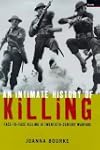
"The characteristic act of men at war is not dying, it is killing". With that unsettling--yet incontrovertible--assertion, Joanna Bourke opens her investigation of how servicemen deal with the most wilfully ignored of wartime activities. Drawing on private letters and diaries of men (and a few women) from the First and Second World Wars and Vietnam, she shows not only how military men talk of their fears and anxieties--familiar enough territory--but also how they talk of joy and pleasure: show more the physical, sexual excitement of killing another man.
In its own right, the material--lucidly and wittily handled--is fascinating enough. But across Britain, the US and Australia, across three distinct wars, the same stories come through loud and clear--the joy of a man-to-man combat which, ironically, became less and less common through the century. As Bourke shows, these powerful stories were influenced by combat tales in magazines, novels and films that enthralled boys across generations--despite the best efforts of the military, the experience of war in the end cannot be prepared for.
Some may have reservations about Bourke's conclusions, but the huge mass of detail she brings to light in An Intimate History of Killing forces us at the very least to reconsider those easy clichés about the brutalising, traumatising effects of war.
In this study, the author uses the letters, diaries, memoirs, and reports of veterans from three conflicts - the First and Second World Wars and the Vietnam War - to establish a picture of the man-at-arms. She suggests that the structure of war encourages pleasure in killing, and that ordinary, gentle human beings in civilian life can become enthusiastic killers without becoming "brutalized" by the horrors of combat. She also contends that people find ways of creating meaning out of war, and that one way to do this is to find satisfaction in it, especially in the "primal" act of slaughtering an enemy that you can see and touch. She believes that violent and sadistic men are not the best killers, and that it is the men motivated by emotions like love and empathy that become the most lethal individuals on the battlefield. Bourke goes on to suggest that it is the feeling of guilt itself that may enable what soldiers believe to be legitimate killing, and presents evidence of the way in which combat could become atrocity in 20th century warfare. show less
In its own right, the material--lucidly and wittily handled--is fascinating enough. But across Britain, the US and Australia, across three distinct wars, the same stories come through loud and clear--the joy of a man-to-man combat which, ironically, became less and less common through the century. As Bourke shows, these powerful stories were influenced by combat tales in magazines, novels and films that enthralled boys across generations--despite the best efforts of the military, the experience of war in the end cannot be prepared for.
Some may have reservations about Bourke's conclusions, but the huge mass of detail she brings to light in An Intimate History of Killing forces us at the very least to reconsider those easy clichés about the brutalising, traumatising effects of war.
In this study, the author uses the letters, diaries, memoirs, and reports of veterans from three conflicts - the First and Second World Wars and the Vietnam War - to establish a picture of the man-at-arms. She suggests that the structure of war encourages pleasure in killing, and that ordinary, gentle human beings in civilian life can become enthusiastic killers without becoming "brutalized" by the horrors of combat. She also contends that people find ways of creating meaning out of war, and that one way to do this is to find satisfaction in it, especially in the "primal" act of slaughtering an enemy that you can see and touch. She believes that violent and sadistic men are not the best killers, and that it is the men motivated by emotions like love and empathy that become the most lethal individuals on the battlefield. Bourke goes on to suggest that it is the feeling of guilt itself that may enable what soldiers believe to be legitimate killing, and presents evidence of the way in which combat could become atrocity in 20th century warfare. show less
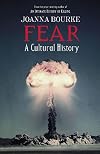
From death and disaster to dangerous technologies, the number of things out there to fear is countless, argues British historian Bourke (An Intimate History of Killing), who surveys a pitted landscape of dread and panic over the past two centuries in this imaginative social, psychological and cultural history. She traces how what we fear changes over time as a function of broader social anxieties and stresses. In the hierarchical Britain of the early 20th century, for instance, a lower-class show more accent was regarded with unparalleled horror; today, no one cares. The Victorians were terrified of sudden, natural death; today, at a time when people worry about "the excessive prolongation of life after all pleasure has been removed," being killed instantly and without warning is for many the preferred way to go. For us, the most feared thing of all is the terrorist, the "equivalent to the plague of earlier times or the Satan of religion." Though Bourke performs sterling service, painstakingly picking over usually bypassed sources and materials for hidden clues as to what scares us, she indulges the fashionable fallacy that because some fears--of terrorism, for example, since the 11th of September--have been exaggerated and even occasionally exploited, there is therefore nothing at all to fear but, presumably, fear itself. show less
I thought I would be able to better rationalise pain, but it is painfully confusing and messy to do so. A book that fully unravels how difficult it is to translate language to something practical, general and specific. Now I feel totally confused...
Great read, bit hard to frame as it takes on the subject of pain from so many directions.
Great read, bit hard to frame as it takes on the subject of pain from so many directions.
From the ethics of war, I now turn to violence in war. I read this, hoping for a little supplement to David Grossman's 'On Killing', and came away disappointed.
A blurb on the back claims that this is 'revisionist history', and yet I found nothing particularly revealing or new about this, especially after Grossman's book. War is primarily about killing the enemy, and this is a shock to some people! On several instances, I found that several of the sources are novels, which were interpreted show more and analyzed as non-fiction. A cursory look at Google shows that some of the real memoirs used were manufactured.
On top of that, the book seems poorly edited, and I found myself bored instead of horrified with war. It takes special effort to be that disengaging.
Read On Killing instead. show less
A blurb on the back claims that this is 'revisionist history', and yet I found nothing particularly revealing or new about this, especially after Grossman's book. War is primarily about killing the enemy, and this is a shock to some people! On several instances, I found that several of the sources are novels, which were interpreted show more and analyzed as non-fiction. A cursory look at Google shows that some of the real memoirs used were manufactured.
On top of that, the book seems poorly edited, and I found myself bored instead of horrified with war. It takes special effort to be that disengaging.
Read On Killing instead. show less
Lists
Awards


You May Also Like


Associated Authors
Statistics
- Works
- 35
- Also by
- 3
- Members
- 964
- Popularity
- #26,707
- Rating
- 3.4
- Reviews
- 8
- ISBNs
- 82
- Languages
- 5
- Favorited
- 1