
Marc D. Hauser
Author of Moral Minds: How Nature Designed Our Universal Sense of Right and Wrong
About the Author
Marc D. Hauser is a professor at Harvard University, where as a Fellow of the Mind, Brain, & Behavior Program he performs laboratory research, supplemented by fieldwork around the world. He lives in Cambridge, Massachusetts, with his wife & their menagerie of animals. (Bowker Author Biography)
Image credit: Photo by Dan Lurie / Flickr
Works by Marc D. Hauser
Moral Minds: How Nature Designed Our Universal Sense of Right and Wrong (2006) 550 copies, 5 reviews
The Neighborhoods 1 copy
Associated Works
What Is Your Dangerous Idea? Today's Leading Thinkers on the Unthinkable (2007) — Contributor — 671 copies, 8 reviews
The Next Fifty Years: Science in the First Half of the Twenty-first Century (2002) — Contributor — 410 copies, 10 reviews
Tagged
Common Knowledge
- Canonical name
- Hauser, Marc D.
- Birthdate
- 1959-10-25
- Gender
- male
- Education
- Bucknell University (BS)
University of California, Los Angeles (PhD) - Occupations
- professor
evolutionary biologist - Awards and honors
- National Science Foundation Young Investigator Award
Collège de France science medal
Guggenheim Fellowship - Nationality
- USA
- Associated Place (for map)
- USA
Members
Reviews
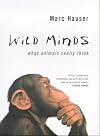
Marc Hauser looks at a variey of animals using the concept of 'mental toolkits' In the first part of the book he posits that all animals have similar environmental problems to solve: recognising objects and predicting their behaviour, working with numbers and navigation. In the second half of the book he examines the higher mental functions: self awareness, learning, deception, communication and morality. Hauser is an advocate of the scientific method trying to discover the proven facts show more behind the anecdotal evidence.
Thid book relates a number of scientific experiments but is both accessible and interesting. show less
Thid book relates a number of scientific experiments but is both accessible and interesting. show less
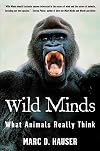
Marc Hauser examines cognitive abilities of animals and their moral sense. He claims that some of the tools for thinking are universal, shared by all animals and humans. The universal toolkit provides animals with a basic capacity to recognize objects, count and navigate. According to Hauser, animals are not equipped with language, self awareness, higher emotions or moral instincts. Whereas by and large I find his conclusions sound, I am somewhat disappointed by the narrowness of the show more interpretation of the results of his experiments.
The book does not answer the question it poses: What Do Animals Really Think?, or rather answers it with certainty that we will never know… show less
The book does not answer the question it poses: What Do Animals Really Think?, or rather answers it with certainty that we will never know… show less
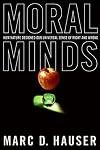
This books' stated goal--to describe human's universal morality as Noam Chomsky described human's universal grammar--is ambitious. However, the author spends more time marveling at the potential consequences success than actually moving towards a robust/useful model of humans' moral faculty.
Section three reads like a sequel to Hauser's "Wild Minds", describing and dissecting dozens of recent behavioral psychology expermients involving non-humans.
Worthwhile for the lay person curious about show more evolutionary psychology. show less
Section three reads like a sequel to Hauser's "Wild Minds", describing and dissecting dozens of recent behavioral psychology expermients involving non-humans.
Worthwhile for the lay person curious about show more evolutionary psychology. show less
Fantastic book. Provides an encyclopedic review of communication in the animal kingdom. Well worth the considerable effort.
You May Also Like


Associated Authors
Statistics
- Works
- 12
- Also by
- 4
- Members
- 917
- Popularity
- #27,978
- Rating
- 3.6
- Reviews
- 9
- ISBNs
- 33
- Languages
- 5