
Janisse Ray
Author of Ecology of a Cracker Childhood
About the Author
Janisse Ray left her hometown of Baxley, Georgia, to go to college and did not return for several years. She now lives on a farm in rural Georgia with her son. A naturalist and environmental activist, she has published her work in Wild Earth, Orion, Florida Naturalist, and Georgia Wildlife and is a show more nature commentator for Georgia Public Radio. show less
Works by Janisse Ray
Drifting into Darien: a personal and natural history of the Altamaha river (2011) 28 copies, 2 reviews
Between Two Rivers: Stories from the Red Hills to the Gulf (2004) — Editor & Contributor — 19 copies, 1 review
Naming the Unseen 4 copies
Associated Works
All We Can Save: Truth, Courage, and Solutions for the Climate Crisis (2020) — Contributor — 470 copies, 12 reviews
Tagged
Common Knowledge
- Canonical name
- Ray, Janisse
- Other names
- Ray, Janiece
- Birthdate
- 1962-02-02
- Gender
- female
- Education
- North Georgia College
Florida State University (BA)
University of Montana (MFA) - Occupations
- Professor of Creative Writing (Chatham University)
- Nationality
- USA
- Places of residence
- Baxley, Georgia, USA
- Associated Place (for map)
- Georgia, USA
Members
Reviews
''Why do they want to put us off up here? Bobby said.
God works in mysterious ways, Hiram said
What does that mean?
Git along the best you can, I guess.’’
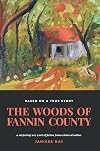
Based on a true story, The Woods of Fannin County is a gripping tale that’s difficult to fathom. In 1945, eight children (the eldest being 10 at the time) were taken on a wagon to a remote shack in the Blue Ridge foothills of Fannin County, and left to fend for themselves. Their mother just left them there. Occasionally she would return show more to check on them and bring them food and clothes, but there was no pattern to this. Often she bullied the children when she returned to the shack. What’s worse is that her parents encouraged her to do it, and the community chose to turn a blind eye. It’s heart-breaking.
What unfurls is an extraordinary tale of survival and kinship amongst the siblings. They forage for food, learn how to light fires, they learn to steal. They were left in the shack for 4 years until they were rescued.
The truly remarkable thing is that they all survived and went on live fairly 'normal' lives afterwards. Janisse Ray heard about their story from her father, then spend 10 years researching and speaking to the surviving children, before writing (and self publishing) the book.
Beautifully written with sparse dialogue, it takes on some tough themes. It's a difficult story to tell, but it's an important one that will stay with you for a very, very long time. show less
God works in mysterious ways, Hiram said
What does that mean?
Git along the best you can, I guess.’’
Based on a true story, The Woods of Fannin County is a gripping tale that’s difficult to fathom. In 1945, eight children (the eldest being 10 at the time) were taken on a wagon to a remote shack in the Blue Ridge foothills of Fannin County, and left to fend for themselves. Their mother just left them there. Occasionally she would return show more to check on them and bring them food and clothes, but there was no pattern to this. Often she bullied the children when she returned to the shack. What’s worse is that her parents encouraged her to do it, and the community chose to turn a blind eye. It’s heart-breaking.
What unfurls is an extraordinary tale of survival and kinship amongst the siblings. They forage for food, learn how to light fires, they learn to steal. They were left in the shack for 4 years until they were rescued.
The truly remarkable thing is that they all survived and went on live fairly 'normal' lives afterwards. Janisse Ray heard about their story from her father, then spend 10 years researching and speaking to the surviving children, before writing (and self publishing) the book.
Beautifully written with sparse dialogue, it takes on some tough themes. It's a difficult story to tell, but it's an important one that will stay with you for a very, very long time. show less
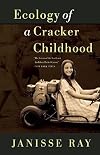
Janisse Ray grew up in rural Georgia, surrounded by an overflowing junkyard. Surrounding the junkyard was a Long Leaf Pine forest, where she found solace in plant life, trees, insects, birds and wild animals. When she got older, the logging companies arrived, threatening her family’s land.
It’s hard to describe what this book meant to me. It’s about family, ecological activism, the history of one's place, and coming of age. It is both heartbreaking and joyous. Part memoir, part nature show more writing, it succeeds on both counts. It is personal, political. I loved it, deep deep down.
“I drink old-growth forest like water. This is the homeland that built us. Here I walk shoulder to shoulder with history - my history. I am in the presence of something ancient and venerable, perhaps of time itself, its unhurried passing marked by immensity and stolidity, each year purged by fire, cinched by a ring. Here mortality’s roving hands grapple with air. I can see my place as human in a natural order more grand, whole, and functioning than I’ve ever witnessed, and I am humbled, not frightened by it. Comforted. It is as if a round table springs up in the cathedral of pines and God graciously pulls out a chair for me, and I no longer have to worry about what happens to souls.” show less
It’s hard to describe what this book meant to me. It’s about family, ecological activism, the history of one's place, and coming of age. It is both heartbreaking and joyous. Part memoir, part nature show more writing, it succeeds on both counts. It is personal, political. I loved it, deep deep down.
“I drink old-growth forest like water. This is the homeland that built us. Here I walk shoulder to shoulder with history - my history. I am in the presence of something ancient and venerable, perhaps of time itself, its unhurried passing marked by immensity and stolidity, each year purged by fire, cinched by a ring. Here mortality’s roving hands grapple with air. I can see my place as human in a natural order more grand, whole, and functioning than I’ve ever witnessed, and I am humbled, not frightened by it. Comforted. It is as if a round table springs up in the cathedral of pines and God graciously pulls out a chair for me, and I no longer have to worry about what happens to souls.” show less
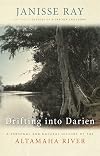
For Janisse Ray, the Altamaha River is the background music of her life. She grew up on its banks. Her grandfather swam it for miles when he escaped from a mental hospital. Her father accidentally dunked her in it as a baby when his boat sank. As a child she scouted along its edges, creeks, forests and marshes in search of the small wonderful secrets that can be found in such places. As an adult, she is still doing this, although now she uses a kayak, instead of a johnboat or a canoe. The show more Altamaha is a wonder to her, but the kind that is a comfort—always familiar, endlessly mysterious, forever nurturing.
To the Nature Conservancy, the Altamaha is one of the “75 Last Great Places” of the world. In Drifting Into Darien, A Personal and Natural History of the Altamaha River, Ray tells us why.
An idiosyncratic and passionate book, Drifting Into Darien is Ray’s own call to the river—something between a poem and a prayer, a sermon and a scientific study, a memoir and a field journal. Opening with a week-long kayak trip made with a group of people in memory of the old rafting crews that floated logs down river several generations earlier (when there was still longleaf pine forest to cut), Ray mixes memories with modern-day observations and insight, and becomes a shaman and guide to the reader. Here, she says at one point, there is a story that this trestle bridge was defended by Confederate soldiers, and the Union army couldn’t take it. And here, she says a bit further on, I was on a date when I was a teenager. The boy wasn’t worth remembering but there was a ruby throated hummingbird drinking a drop of water.
With that trip acting as the spine of the story (or its riverbed) Ray—whose earlier memoir Ecology of a Cracker Childhood established her as a passionate defender of wild places, and especially long leaf pine forests—reaches outwards like flooding waters to talk about the natural history of the Altamaha River, the wildlife its ecosystem supports, the industrial threats that endanger it and the people and organizations who defend it. full review show less
To the Nature Conservancy, the Altamaha is one of the “75 Last Great Places” of the world. In Drifting Into Darien, A Personal and Natural History of the Altamaha River, Ray tells us why.
An idiosyncratic and passionate book, Drifting Into Darien is Ray’s own call to the river—something between a poem and a prayer, a sermon and a scientific study, a memoir and a field journal. Opening with a week-long kayak trip made with a group of people in memory of the old rafting crews that floated logs down river several generations earlier (when there was still longleaf pine forest to cut), Ray mixes memories with modern-day observations and insight, and becomes a shaman and guide to the reader. Here, she says at one point, there is a story that this trestle bridge was defended by Confederate soldiers, and the Union army couldn’t take it. And here, she says a bit further on, I was on a date when I was a teenager. The boy wasn’t worth remembering but there was a ruby throated hummingbird drinking a drop of water.
With that trip acting as the spine of the story (or its riverbed) Ray—whose earlier memoir Ecology of a Cracker Childhood established her as a passionate defender of wild places, and especially long leaf pine forests—reaches outwards like flooding waters to talk about the natural history of the Altamaha River, the wildlife its ecosystem supports, the industrial threats that endanger it and the people and organizations who defend it. full review show less
You are here: Home / Book Reviews / December Read of the Month: “Wild Spectacle,” by Janisse Ray
DECEMBER READ OF THE MONTH: “WILD SPECTACLE,” BY JANISSE RAY
DECEMBER 14, 2021 BY CLAIRE MATTURRO 1 COMMENT
Janisse Ray
Janisse Ray
Reviewed by Claire Hamner Matturro
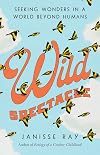
Janisse Ray’s writing has always been robust and rich with that magical, evocative touch that pulls her readers into a scene, a thought, an emotion, or an insight. Just as in her acclaimed Ecology of a Cracker Childhood, Ray’s show more insightful, eloquent writing shines in Wild Spectacle: Seeking Wonders in a World Beyond Humans (Trinity University Press, October 26, 2021).
This collection of nonfiction essays about wilderness and life ranges from Costa Rico to Alaska, the western USA, and home to her own native South Georgia. With its combination of lyrical sentences, heartfelt truths, and profound observations, this book is a gem and a worthy sequel to Cracker Childhood.
Often described as a nature writer, Ray has been compared to such luminaries as Rachel Carson and Walt Whitman and deservedly so. She addresses the concept of nature writing in the essay “The Dinner Party”:
Nature writing has been called a marginal literature. If culture is a set of stories we tell about life in a place and how to navigate that life, then nature writing is literature at its most essential. Its tenets are that humans are biological; that we are dependent on the earth; that places are vital to our psyches; and that humans have volumes to learn from nature.
The book is divided into three parts—Meridian, Migration, and Magnitude—with a total of sixteen essays, including “Exaltation of Elk,” “Montana,” “Opening the Big W.” “One Meal,” “In the Elkhorn,” “The Duende of Cabo Blanco,” “Bird-Men of Belize,” “Snapshots of a Dark Angel,” “Las Monarcas,” “The Dinner Party,” “Manatee,” “Night Life,” “Terrible and Beautiful Scar,” “Forms of Rarity,” “Spiderwomen,” and “I Have Seen the Warrior.”
Ray’s hunger to be part of the wildness is a dominant theme. As she explains in her preface, “The essays in this book are about the desire to immerse myself in the varied wild, to survey the territory of wildness, to be wild, and, perhaps, to become the kind of person who listens to animals and to whom animals listen.”
Within that desire to be the kind of person who communicates with animals, Ray tells a story of heart-breaking beauty. In “Manatee,” perhaps one of the most moving essays, she swims with some manatees at Crystal River, Florida. As those of us who follow such things know, manatees are fighting for their very survival and this year has been especially hard on them with the losses of seagrasses upon which these gentle giants feed. Utilizing a gloss of magical realism and her own talented way of creating a scene, Ray captures the pain of the potential loss, as well as the sheer delight of manatees themselves:
I feel the manatee and myself entering another plane. It is wordless and weightless, fluid, beautifully light. A million crystals are sparkling. We are in the world—the human world where an ecotour guide waits on a boat with dry towels and a cup of cocoa—but also another world. There is no word, really, for this place we have come. It is one of the otherworlds, a place beyond reason, beyond the material, beyond the visible. A manatee’s spirit is big, and it will merge with a human’s spirit, which is likewise big.
Then I hear the manatee mother speak. She is beseeching me. “You must help us,” she says. “You must help us.”
I hear her distinctly: “You must help us.”
She turns, blows at the surface, nudges her baby, and sinks away, back into the descension of the primitive river bottom.
As illustrated aptly in her “Manatee” essay and others, Ray has an almost supernatural ability to portray the impact of close encounters in nature and the feelings the wilderness brings out. In “In the Elkhorn,” Ray describes canoeing with a friend for three days on the Missouri River, then coming out of the water, resting against a fallen cottonwood and feeling “warm and safe against the belly of earth.” Then she feels something stronger:
Suddenly I felt as if my soul were leaving my body, rising above it into the sky. That’s how it felt, as if I were outside myself. The whole of the world—the breaks, the wide, muddy river with its animal-like lapping, the incessant wind, the sun in the dry blue sky— began to warp and slide away. Or maybe I was sliding backward, the landscape melding to a green and blue distortion.
Most of her attempts to immerse herself in the wildness of life result in lovely experiences, as in a camping trip in Montana with her husband, Raven. In a time before night but when the “afternoon was so dim it hardly seemed day,” she and Raven are at the edge of Dryden Creek, when a herd of elk come down. In “Exaltation of Elk,” she writes about being surrounded by the elk cows, and of one spike bull. The elk do not seem to know what Ray and Raven are exactly, though the bull does scrutinize them. Readers get a close hand look at these elusive creatures in their native habitat, thanks to Ray’s detailed descriptions.
In her quest to be the kind of person “to whom animals listen,” Ray finds that connection again in “Montana,” while camping with graduate students on Wild Horse Island. After hiking alone, she encounters some coyotes, who respond by barking and yelping to announce her presence. She observes that she understood their conversation “told of my being as much as it told of their own.” She felt connected to the coyotes through “lengths of song-rope,” and felt humbled, even blessed.
For all the wonder and beauty, Ray’s immersions into the natural world are not without some danger, as illustrated by the many times she is caught unprotected and out in the open when a sudden thunderstorm arises. Not only does weather threaten, but so does the darkness of a night without artificial lights. For example, in “Nightlife,” Ray must find her way back to safety on the Appalachian Trail in the near total blackness of night. If a misstep takes her off the trail, she would be lost, and so she takes her shoes off so she can feel the ground, seeking the tell-tell smoothness of a trail under her bare feet, and even at one point crawling on her hands and knees. Yet, that adventure doesn’t rule the essay so much as Ray’s sense of wonder that comes when she recognizes that at night, “half the world opens.”
While the natural world with all its beauty, terror, and wildness is a dominant theme in Wild Spectacle, some essays are poignantly personal, with a gloss of the adventure story about them. In perhaps her most intimate essay, Ray plans a three-day trip through the black waters of the Okefenokee Swamp in “I have seen the Warrior,” only to discover the teenager in her canoe is dangerously ill. Delving into her role as mother and caregiver and ultimately a warrior, Ray describes emotions, scenery, and physical duress in a gripping account aptly subtitled “How not to die.” She must paddle the young man back to civilization alone to get help for him and tests all her physical strength in the process. She is in one kayak, because she can move faster in it than the canoe, and is pulling the ill young man is in a second kayak. At first she is strong, but the miles wear on her: “I was paddling upstream on the River Styx, through hot lava, trying to escape a giant arm reaching toward me from the underworld. I was in a horror movie.”
Ray is also a champion of other naturalists and writers, often capturing their essence in a few sparse paragraphs in such a unique and powerful way that readers might feel they know the person. One such person is a writer and environmentalist about whom Ray writes: “The screen separating him from wildness is translucent, it is so thin. It seemed as if before my eyes Rick Bass might break free of domesticity and shape-shift to wolverine. I couldn’t keep my eyes off him, wanting to witness the transformation.”
Ray is an author, activist, naturalist and organic farmer. She is the author of seven books of nonfiction and poetry, including The Seed Underground: A Growing Revolution to Save Food, Drifting into Darien: A Personal and Natural History of the Altamaha River, and Ecology of a Cracker Childhood, which won the American Book Award. Widely published in magazines and journals, she is the recipient of a Pushcart Prize, the Nautilus Book Award, and numerous other honors. Ray lives on an organic farm in South Georgia.
All in all, within the pages of Wilderness Spectacle, Ray gives her readers a sacred gift with her vision and her words. For those of us who can’t hike our way home in total darkness, or kayak the black waters of Okefenokee, or converse with elk, manatee, and coyote, she lets us join vicariously in such adventures. And it is a spectacular journey!
Wilderness Spectacle should make us all want to step outside on a dark night and embrace the wildness. And hopefully, help save the manatees and the wilderness that is yet left to us. show less
DECEMBER READ OF THE MONTH: “WILD SPECTACLE,” BY JANISSE RAY
DECEMBER 14, 2021 BY CLAIRE MATTURRO 1 COMMENT
Janisse Ray
Janisse Ray
Reviewed by Claire Hamner Matturro
Janisse Ray’s writing has always been robust and rich with that magical, evocative touch that pulls her readers into a scene, a thought, an emotion, or an insight. Just as in her acclaimed Ecology of a Cracker Childhood, Ray’s show more insightful, eloquent writing shines in Wild Spectacle: Seeking Wonders in a World Beyond Humans (Trinity University Press, October 26, 2021).
This collection of nonfiction essays about wilderness and life ranges from Costa Rico to Alaska, the western USA, and home to her own native South Georgia. With its combination of lyrical sentences, heartfelt truths, and profound observations, this book is a gem and a worthy sequel to Cracker Childhood.
Often described as a nature writer, Ray has been compared to such luminaries as Rachel Carson and Walt Whitman and deservedly so. She addresses the concept of nature writing in the essay “The Dinner Party”:
Nature writing has been called a marginal literature. If culture is a set of stories we tell about life in a place and how to navigate that life, then nature writing is literature at its most essential. Its tenets are that humans are biological; that we are dependent on the earth; that places are vital to our psyches; and that humans have volumes to learn from nature.
The book is divided into three parts—Meridian, Migration, and Magnitude—with a total of sixteen essays, including “Exaltation of Elk,” “Montana,” “Opening the Big W.” “One Meal,” “In the Elkhorn,” “The Duende of Cabo Blanco,” “Bird-Men of Belize,” “Snapshots of a Dark Angel,” “Las Monarcas,” “The Dinner Party,” “Manatee,” “Night Life,” “Terrible and Beautiful Scar,” “Forms of Rarity,” “Spiderwomen,” and “I Have Seen the Warrior.”
Ray’s hunger to be part of the wildness is a dominant theme. As she explains in her preface, “The essays in this book are about the desire to immerse myself in the varied wild, to survey the territory of wildness, to be wild, and, perhaps, to become the kind of person who listens to animals and to whom animals listen.”
Within that desire to be the kind of person who communicates with animals, Ray tells a story of heart-breaking beauty. In “Manatee,” perhaps one of the most moving essays, she swims with some manatees at Crystal River, Florida. As those of us who follow such things know, manatees are fighting for their very survival and this year has been especially hard on them with the losses of seagrasses upon which these gentle giants feed. Utilizing a gloss of magical realism and her own talented way of creating a scene, Ray captures the pain of the potential loss, as well as the sheer delight of manatees themselves:
I feel the manatee and myself entering another plane. It is wordless and weightless, fluid, beautifully light. A million crystals are sparkling. We are in the world—the human world where an ecotour guide waits on a boat with dry towels and a cup of cocoa—but also another world. There is no word, really, for this place we have come. It is one of the otherworlds, a place beyond reason, beyond the material, beyond the visible. A manatee’s spirit is big, and it will merge with a human’s spirit, which is likewise big.
Then I hear the manatee mother speak. She is beseeching me. “You must help us,” she says. “You must help us.”
I hear her distinctly: “You must help us.”
She turns, blows at the surface, nudges her baby, and sinks away, back into the descension of the primitive river bottom.
As illustrated aptly in her “Manatee” essay and others, Ray has an almost supernatural ability to portray the impact of close encounters in nature and the feelings the wilderness brings out. In “In the Elkhorn,” Ray describes canoeing with a friend for three days on the Missouri River, then coming out of the water, resting against a fallen cottonwood and feeling “warm and safe against the belly of earth.” Then she feels something stronger:
Suddenly I felt as if my soul were leaving my body, rising above it into the sky. That’s how it felt, as if I were outside myself. The whole of the world—the breaks, the wide, muddy river with its animal-like lapping, the incessant wind, the sun in the dry blue sky— began to warp and slide away. Or maybe I was sliding backward, the landscape melding to a green and blue distortion.
Most of her attempts to immerse herself in the wildness of life result in lovely experiences, as in a camping trip in Montana with her husband, Raven. In a time before night but when the “afternoon was so dim it hardly seemed day,” she and Raven are at the edge of Dryden Creek, when a herd of elk come down. In “Exaltation of Elk,” she writes about being surrounded by the elk cows, and of one spike bull. The elk do not seem to know what Ray and Raven are exactly, though the bull does scrutinize them. Readers get a close hand look at these elusive creatures in their native habitat, thanks to Ray’s detailed descriptions.
In her quest to be the kind of person “to whom animals listen,” Ray finds that connection again in “Montana,” while camping with graduate students on Wild Horse Island. After hiking alone, she encounters some coyotes, who respond by barking and yelping to announce her presence. She observes that she understood their conversation “told of my being as much as it told of their own.” She felt connected to the coyotes through “lengths of song-rope,” and felt humbled, even blessed.
For all the wonder and beauty, Ray’s immersions into the natural world are not without some danger, as illustrated by the many times she is caught unprotected and out in the open when a sudden thunderstorm arises. Not only does weather threaten, but so does the darkness of a night without artificial lights. For example, in “Nightlife,” Ray must find her way back to safety on the Appalachian Trail in the near total blackness of night. If a misstep takes her off the trail, she would be lost, and so she takes her shoes off so she can feel the ground, seeking the tell-tell smoothness of a trail under her bare feet, and even at one point crawling on her hands and knees. Yet, that adventure doesn’t rule the essay so much as Ray’s sense of wonder that comes when she recognizes that at night, “half the world opens.”
While the natural world with all its beauty, terror, and wildness is a dominant theme in Wild Spectacle, some essays are poignantly personal, with a gloss of the adventure story about them. In perhaps her most intimate essay, Ray plans a three-day trip through the black waters of the Okefenokee Swamp in “I have seen the Warrior,” only to discover the teenager in her canoe is dangerously ill. Delving into her role as mother and caregiver and ultimately a warrior, Ray describes emotions, scenery, and physical duress in a gripping account aptly subtitled “How not to die.” She must paddle the young man back to civilization alone to get help for him and tests all her physical strength in the process. She is in one kayak, because she can move faster in it than the canoe, and is pulling the ill young man is in a second kayak. At first she is strong, but the miles wear on her: “I was paddling upstream on the River Styx, through hot lava, trying to escape a giant arm reaching toward me from the underworld. I was in a horror movie.”
Ray is also a champion of other naturalists and writers, often capturing their essence in a few sparse paragraphs in such a unique and powerful way that readers might feel they know the person. One such person is a writer and environmentalist about whom Ray writes: “The screen separating him from wildness is translucent, it is so thin. It seemed as if before my eyes Rick Bass might break free of domesticity and shape-shift to wolverine. I couldn’t keep my eyes off him, wanting to witness the transformation.”
Ray is an author, activist, naturalist and organic farmer. She is the author of seven books of nonfiction and poetry, including The Seed Underground: A Growing Revolution to Save Food, Drifting into Darien: A Personal and Natural History of the Altamaha River, and Ecology of a Cracker Childhood, which won the American Book Award. Widely published in magazines and journals, she is the recipient of a Pushcart Prize, the Nautilus Book Award, and numerous other honors. Ray lives on an organic farm in South Georgia.
All in all, within the pages of Wilderness Spectacle, Ray gives her readers a sacred gift with her vision and her words. For those of us who can’t hike our way home in total darkness, or kayak the black waters of Okefenokee, or converse with elk, manatee, and coyote, she lets us join vicariously in such adventures. And it is a spectacular journey!
Wilderness Spectacle should make us all want to step outside on a dark night and embrace the wildness. And hopefully, help save the manatees and the wilderness that is yet left to us. show less
Lists
Awards


You May Also Like


Associated Authors
Statistics
- Works
- 14
- Also by
- 7
- Members
- 929
- Popularity
- #27,632
- Rating
- 4.0
- Reviews
- 30
- ISBNs
- 28
- Favorited
- 1