
Harriet Rubin
Author of The Princessa: Machiavelli for Women
About the Author
Women seeking empowerment in the business world will get much food for thought in Harriet Rubin's best-selling The Princessa: Machiavelli For Women (1997). Machiavelli's well known philosophy, set forth in The Prince, had powerful men engaging in ruthless conflict without conscience. Rubin's thesis show more has women solving conflict with compromise, cooperation and negotiation. The Prince was brutal. The Princessa needs subtle strategies and weapons. Rubin says, "For a woman to triumph, she cannot play by the rules of the game. They are not her rules, designed to enhance her strengths. She has to change the game." Harriet Rubin's other writings include articles for Inc. magazine: The Art of Going Solo, an entertaining, insightful diary of her break from big business and Peter's Principles, a provocative interview with the distinguished Peter F. Drucker. A 20-year veteran of corporate life, Rubin is familiar with women and power struggles in the workplace. She was a successful business book publisher for Doubleday/Currency for ten years but chose to leave to begin her own consultancy business in 1997. (Bowker Author Biography) show less
Works by Harriet Rubin
Tagged
Common Knowledge
- Gender
- female
- Short biography
- Harriet Rubin was the founder of Doubleday Currency and has published dozens of bestsellers. She is the author of The Princessa: Machiavelli for Women, which has been translated into twenty-three languages. She is on USA TODAY's editorial board and is a consultant to media companies.
- Nationality
- USA
- Places of residence
- Manhattan, New York, USA
Portland, Oregon, USA - Associated Place (for map)
- USA
Members
Reviews
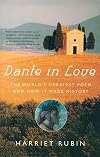
Dante Alighieri’s Divine Comedy is arguably the greatest poem written in any language, ever. Harriet Rubin has written a wonderfully passionate account of the back-story of La Divina Comedia: how it came to be written and the world Dante wrote it in. Indeed, the book is passionate to the point of devolving into emotional mayhem.
Alighieri was a minor Florentine politician who ended up on the wrong side of Roman papal power in 1302. For the purpose of staying alive, he went, in essence, into show more hiding. It is no coincidence that the Divine Comedy is the story of an exile in Hell, and that it is full of political intrigue and revenge. The poem presents historians with the task of discerning the autobiographical strands that elegantly twist the poem into a rapturous knot, and literary scholars with the task of uncovering the parallels between Dante’s poem and earlier works, not only by Dante himself, but by such luminaries as Virgil and his (entirely fictional) story of the founding of Rome, The Aeneid.
The parallels are many: The Divine Comedy was shaped by Dante’s life in exile and his eventual acclamation as the greatest poet of the Italian language, and indeed, of the first shaper of Italian. Not only is the poem shaped by his exile, but also what came before, namely his love of Beatrice Portinari, a girl Dante saw in church but who likely never knew he existed. “Beatrice,” Rubin writes, “died at twenty-three in 1290 and Dante never stopped grieving for her.” Where Virgil is the poet’s guide through Hell and Purgatory, it is Beatrice who leads him into and through Heaven. But the book is not, as Rubin makes clear early on, “the tale of sweethearts beyond the grave.” It is the story, or the attempt at telling the story, of Dante’s experiences with the very nature of love.
Dante in Love, like The Divine Comedy, is divided into four sections. (The Comedy is actually divided into three books, but the first Canto of Book One serves as an independent introduction or prelude to the rest of the poem.) Rubin is passionate and insightful in the first two sections, “Touching the Depths” and “Inferno.” Unlike The Aeneid and Homer’s Odyssey that influenced Virgil, which begin in a kind of purgatory of homelessness, Dante dives straight to the depths and into Hell. “Halfway along the journey of our life,” the Comedy begins, “Having strayed from the right path and lost it, / I awoke to find myself in a dark wood.” The entire poem, as Rubin seems to grasp, is the story of what in a few centuries John Keats will call “soul-making.” Even though we weep, to paraphrase what Keats wrote in a famous letter, for our missteps and sins, life is not a vale of tears but of soul-making. T.S. Elliot, upon reading (and then rereading) the Comedy got the lesson, as well; as Rubin quotes Elliot, “It’s interesting to cut yourself to pieces once in a while, and wait to see if the fragments will sprout.” Life’s cruel lessons all are, as writers tell each other, “grist for the mill.” “Out of his loss,” says Rubin, “Dante discovers a kind of creative force he might never have known he possessed.”
One of the wonders is that Dante, the author of otherwise minor and mediocre works of poetry, wrote The Divine Comedy. Dante rose to the challenge of his own misfortune, and “masters poetry and what was considered in his time vision.” But where The Divine Comedy rises ever higher and into ever-clearer visions of love, Rubin’s book descends into murk. The long section of “Purgatory” in fact barely mentions the middle of Dante’s poem, and instead rushes ahead into “Paradise.” Rubin may have had her reasons for skipping lightly over “Purgatory,” but whatever those reasons might be she never makes clear.
However passionate Dante in Love is, it is frightfully edited and full of historical inaccuracies. While Rubin does a fine job of elucidating the influence of the Comedy on later writers, she also makes beginner’s mistakes, calling, for instance, Joyce’s masterpiece “Finnegan’s Wake.” The apostrophe, of course, is absent from the title of that magnificent book and for precisely the reason Rubin is trying to illustrate: It is not the “wake of Finnegan” but rather that “All Finnegans awake.” Joyce, like Dante, was ever the student of the rising of the light, not its death. A few pages later she mentions that the “Wisdom of Solomon” is in the Old Testament; it is in fact part of the Apocrypha. Towards the end of the book Rubin says that Dante has “written” the Comedy “in his heart. Dante is not a postilla, or footnote. He is at least a palimpsest. The text is God.” A palimpsest is a manuscript scraped clean of writing, and written on again. The reader is forced to ponder this confusing statement and wonder, Is Dante the scraped-clean text upon which he overwrote God? Is the Comedy scraped clean of God? Or just what does Rubin mean? The accumulation of small errors and vague statements add up to a gnawing doubt and a question: Did Rubin love her book so much that she neglected to nourish it with the greatest love a writer can give—editing and revision?
Where Dante always remains clear and insightful and a master of his passion, Rubin seems to get drunk on hers. She writes of the Gothic “stones of Paris [that] were the keepers of the last language Dante would teach himself to reach perfection. It was a language that united all the arts: music, architecture, poetry, vision. Light. Beatrice will instruct Dante how to see through mortal blindness… to the meaning of love as the source of creativity.” That much, at least, is right on target, but Rubin goes on to say that this all means that Dante found a “language that was as rich and complete as silence.” The metaphor of “seeing” through “blindness” to “silence” is, at best, mixed. But, as Rubin says, taking up her role as anti-“intellectual goddess” (referring to a marketing blurb on the back cover), “Logical impossibilities make the best realities, like organizations that have no center, but are centers everywhere (as is the case in the air traffic control system).” To compare The Divine Comedy to a distributed network, like the air-traffic control system, is just weird. Even if one stretches and imagines that Rubin is comparing the journey of a modern traveler with Dante’s exile, the comparison seems unjust, at best.
We are left, then, with a flawed book about Dante’s great paean to love that is itself a paean to Rubin’s love of Dante and his Comedy. As a study of the influences Dante has had, it is somewhat useful. As a study of Dante’s poem, and a poem working to awake a culture from the drudgery of Medieval Aristotelian scholasticism, it is a disaster.
[Originally published in Curled Up with a Good Book] show less
Alighieri was a minor Florentine politician who ended up on the wrong side of Roman papal power in 1302. For the purpose of staying alive, he went, in essence, into show more hiding. It is no coincidence that the Divine Comedy is the story of an exile in Hell, and that it is full of political intrigue and revenge. The poem presents historians with the task of discerning the autobiographical strands that elegantly twist the poem into a rapturous knot, and literary scholars with the task of uncovering the parallels between Dante’s poem and earlier works, not only by Dante himself, but by such luminaries as Virgil and his (entirely fictional) story of the founding of Rome, The Aeneid.
The parallels are many: The Divine Comedy was shaped by Dante’s life in exile and his eventual acclamation as the greatest poet of the Italian language, and indeed, of the first shaper of Italian. Not only is the poem shaped by his exile, but also what came before, namely his love of Beatrice Portinari, a girl Dante saw in church but who likely never knew he existed. “Beatrice,” Rubin writes, “died at twenty-three in 1290 and Dante never stopped grieving for her.” Where Virgil is the poet’s guide through Hell and Purgatory, it is Beatrice who leads him into and through Heaven. But the book is not, as Rubin makes clear early on, “the tale of sweethearts beyond the grave.” It is the story, or the attempt at telling the story, of Dante’s experiences with the very nature of love.
Dante in Love, like The Divine Comedy, is divided into four sections. (The Comedy is actually divided into three books, but the first Canto of Book One serves as an independent introduction or prelude to the rest of the poem.) Rubin is passionate and insightful in the first two sections, “Touching the Depths” and “Inferno.” Unlike The Aeneid and Homer’s Odyssey that influenced Virgil, which begin in a kind of purgatory of homelessness, Dante dives straight to the depths and into Hell. “Halfway along the journey of our life,” the Comedy begins, “Having strayed from the right path and lost it, / I awoke to find myself in a dark wood.” The entire poem, as Rubin seems to grasp, is the story of what in a few centuries John Keats will call “soul-making.” Even though we weep, to paraphrase what Keats wrote in a famous letter, for our missteps and sins, life is not a vale of tears but of soul-making. T.S. Elliot, upon reading (and then rereading) the Comedy got the lesson, as well; as Rubin quotes Elliot, “It’s interesting to cut yourself to pieces once in a while, and wait to see if the fragments will sprout.” Life’s cruel lessons all are, as writers tell each other, “grist for the mill.” “Out of his loss,” says Rubin, “Dante discovers a kind of creative force he might never have known he possessed.”
One of the wonders is that Dante, the author of otherwise minor and mediocre works of poetry, wrote The Divine Comedy. Dante rose to the challenge of his own misfortune, and “masters poetry and what was considered in his time vision.” But where The Divine Comedy rises ever higher and into ever-clearer visions of love, Rubin’s book descends into murk. The long section of “Purgatory” in fact barely mentions the middle of Dante’s poem, and instead rushes ahead into “Paradise.” Rubin may have had her reasons for skipping lightly over “Purgatory,” but whatever those reasons might be she never makes clear.
However passionate Dante in Love is, it is frightfully edited and full of historical inaccuracies. While Rubin does a fine job of elucidating the influence of the Comedy on later writers, she also makes beginner’s mistakes, calling, for instance, Joyce’s masterpiece “Finnegan’s Wake.” The apostrophe, of course, is absent from the title of that magnificent book and for precisely the reason Rubin is trying to illustrate: It is not the “wake of Finnegan” but rather that “All Finnegans awake.” Joyce, like Dante, was ever the student of the rising of the light, not its death. A few pages later she mentions that the “Wisdom of Solomon” is in the Old Testament; it is in fact part of the Apocrypha. Towards the end of the book Rubin says that Dante has “written” the Comedy “in his heart. Dante is not a postilla, or footnote. He is at least a palimpsest. The text is God.” A palimpsest is a manuscript scraped clean of writing, and written on again. The reader is forced to ponder this confusing statement and wonder, Is Dante the scraped-clean text upon which he overwrote God? Is the Comedy scraped clean of God? Or just what does Rubin mean? The accumulation of small errors and vague statements add up to a gnawing doubt and a question: Did Rubin love her book so much that she neglected to nourish it with the greatest love a writer can give—editing and revision?
Where Dante always remains clear and insightful and a master of his passion, Rubin seems to get drunk on hers. She writes of the Gothic “stones of Paris [that] were the keepers of the last language Dante would teach himself to reach perfection. It was a language that united all the arts: music, architecture, poetry, vision. Light. Beatrice will instruct Dante how to see through mortal blindness… to the meaning of love as the source of creativity.” That much, at least, is right on target, but Rubin goes on to say that this all means that Dante found a “language that was as rich and complete as silence.” The metaphor of “seeing” through “blindness” to “silence” is, at best, mixed. But, as Rubin says, taking up her role as anti-“intellectual goddess” (referring to a marketing blurb on the back cover), “Logical impossibilities make the best realities, like organizations that have no center, but are centers everywhere (as is the case in the air traffic control system).” To compare The Divine Comedy to a distributed network, like the air-traffic control system, is just weird. Even if one stretches and imagines that Rubin is comparing the journey of a modern traveler with Dante’s exile, the comparison seems unjust, at best.
We are left, then, with a flawed book about Dante’s great paean to love that is itself a paean to Rubin’s love of Dante and his Comedy. As a study of the influences Dante has had, it is somewhat useful. As a study of Dante’s poem, and a poem working to awake a culture from the drudgery of Medieval Aristotelian scholasticism, it is a disaster.
[Originally published in Curled Up with a Good Book] show less
Dante Alighieri’s Divine Comedy is arguably the greatest poem written in any language, ever. Harriet Rubin has written a wonderfully passionate account of the back-story of La Divina Comedia: how it came to be written and the world Dante wrote it in. Indeed, the book is passionate to the point of devolving into emotional mayhem.
Alighieri was a minor Florentine politician who ended up on the wrong side of Roman papal power in 1302. For the purpose of staying alive, he went, in essence, into show more hiding. It is no coincidence that the Divine Comedy is the story of an exile in Hell, and that it is full of political intrigue and revenge. The poem presents historians with the task of discerning the autobiographical strands that elegantly twist the poem into a rapturous knot, and literary scholars with the task of uncovering the parallels between Dante’s poem and earlier works, not only by Dante himself, but by such luminaries as Virgil and his (entirely fictional) story of the founding of Rome, The Aeneid.
The parallels are many: The Divine Comedy was shaped by Dante’s life in exile and his eventual acclamation as the greatest poet of the Italian language, and indeed, of the first shaper of Italian. Not only is the poem shaped by his exile, but also what came before, namely his love of Beatrice Portinari, a girl Dante saw in church but who likely never knew he existed. “Beatrice,” Rubin writes, “died at twenty-three in 1290 and Dante never stopped grieving for her.” Where Virgil is the poet’s guide through Hell and Purgatory, it is Beatrice who leads him into and through Heaven. But the book is not, as Rubin makes clear early on, “the tale of sweethearts beyond the grave.” It is the story, or the attempt at telling the story, of Dante’s experiences with the very nature of love.
Dante in Love, like The Divine Comedy, is divided into four sections. (The Comedy is actually divided into three books, but the first Canto of Book One serves as an independent introduction or prelude to the rest of the poem.) Rubin is passionate and insightful in the first two sections, “Touching the Depths” and “Inferno.” Unlike The Aeneid and Homer’s Odyssey that influenced Virgil, which begin in a kind of purgatory of homelessness, Dante dives straight to the depths and into Hell. “Halfway along the journey of our life,” the Comedy begins, “Having strayed from the right path and lost it, / I awoke to find myself in a dark wood.” The entire poem, as Rubin seems to grasp, is the story of what in a few centuries John Keats will call “soul-making.” Even though we weep, to paraphrase what Keats wrote in a famous letter, for our missteps and sins, life is not a vale of tears but of soul-making. T.S. Elliot, upon reading (and then rereading) the Comedy got the lesson, as well; as Rubin quotes Elliot, “It’s interesting to cut yourself to pieces once in a while, and wait to see if the fragments will sprout.” Life’s cruel lessons all are, as writers tell each other, “grist for the mill.” “Out of his loss,” says Rubin, “Dante discovers a kind of creative force he might never have known he possessed.”
One of the wonders is that Dante, the author of otherwise minor and mediocre works of poetry, wrote The Divine Comedy. Dante rose to the challenge of his own misfortune, and “masters poetry and what was considered in his time vision.” But where The Divine Comedy rises ever higher and into ever-clearer visions of love, Rubin’s book descends into murk. The long section of “Purgatory” in fact barely mentions the middle of Dante’s poem, and instead rushes ahead into “Paradise.” Rubin may have had her reasons for skipping lightly over “Purgatory,” but whatever those reasons might be she never makes clear.
However passionate Dante in Love is, it is frightfully edited and full of historical inaccuracies. While Rubin does a fine job of elucidating the influence of the Comedy on later writers, she also makes beginner’s mistakes, calling, for instance, Joyce’s masterpiece “Finnegan’s Wake.” The apostrophe, of course, is absent from the title of that magnificent book and for precisely the reason Rubin is trying to illustrate: It is not the “wake of Finnegan” but rather that “All Finnegans awake.” Joyce, like Dante, was ever the student of the rising of the light, not its death. A few pages later she mentions that the “Wisdom of Solomon” is in the Old Testament; it is in fact part of the Apocrypha. Towards the end of the book Rubin says that Dante has “written” the Comedy “in his heart. Dante is not a postilla, or footnote. He is at least a palimpsest. The text is God.” A palimpsest is a manuscript scraped clean of writing, and written on again. The reader is forced to ponder this confusing statement and wonder, Is Dante the scraped-clean text upon which he overwrote God? Is the Comedy scraped clean of God? Or just what does Rubin mean? The accumulation of small errors and vague statements add up to a gnawing doubt and a question: Did Rubin love her book so much that she neglected to nourish it with the greatest love a writer can give—editing and revision?
Where Dante always remains clear and insightful and a master of his passion, Rubin seems to get drunk on hers. She writes of the Gothic “stones of Paris [that] were the keepers of the last language Dante would teach himself to reach perfection. It was a language that united all the arts: music, architecture, poetry, vision. Light. Beatrice will instruct Dante how to see through mortal blindness… to the meaning of love as the source of creativity.” That much, at least, is right on target, but Rubin goes on to say that this all means that Dante found a “language that was as rich and complete as silence.” The metaphor of “seeing” through “blindness” to “silence” is, at best, mixed. But, as Rubin says, taking up her role as anti-“intellectual goddess” (referring to a marketing blurb on the back cover), “Logical impossibilities make the best realities, like organizations that have no center, but are centers everywhere (as is the case in the air traffic control system).” To compare The Divine Comedy to a distributed network, like the air-traffic control system, is just weird. Even if one stretches and imagines that Rubin is comparing the journey of a modern traveler with Dante’s exile, the comparison seems unjust, at best.
We are left, then, with a flawed book about Dante’s great paean to love that is itself a paean to Rubin’s love of Dante and his Comedy. As a study of the influences Dante has had, it is somewhat useful. As a study of Dante’s poem, and a poem working to awake a culture from the drudgery of Medieval Aristotelian scholasticism, it is a disaster. show less
Alighieri was a minor Florentine politician who ended up on the wrong side of Roman papal power in 1302. For the purpose of staying alive, he went, in essence, into show more hiding. It is no coincidence that the Divine Comedy is the story of an exile in Hell, and that it is full of political intrigue and revenge. The poem presents historians with the task of discerning the autobiographical strands that elegantly twist the poem into a rapturous knot, and literary scholars with the task of uncovering the parallels between Dante’s poem and earlier works, not only by Dante himself, but by such luminaries as Virgil and his (entirely fictional) story of the founding of Rome, The Aeneid.
The parallels are many: The Divine Comedy was shaped by Dante’s life in exile and his eventual acclamation as the greatest poet of the Italian language, and indeed, of the first shaper of Italian. Not only is the poem shaped by his exile, but also what came before, namely his love of Beatrice Portinari, a girl Dante saw in church but who likely never knew he existed. “Beatrice,” Rubin writes, “died at twenty-three in 1290 and Dante never stopped grieving for her.” Where Virgil is the poet’s guide through Hell and Purgatory, it is Beatrice who leads him into and through Heaven. But the book is not, as Rubin makes clear early on, “the tale of sweethearts beyond the grave.” It is the story, or the attempt at telling the story, of Dante’s experiences with the very nature of love.
Dante in Love, like The Divine Comedy, is divided into four sections. (The Comedy is actually divided into three books, but the first Canto of Book One serves as an independent introduction or prelude to the rest of the poem.) Rubin is passionate and insightful in the first two sections, “Touching the Depths” and “Inferno.” Unlike The Aeneid and Homer’s Odyssey that influenced Virgil, which begin in a kind of purgatory of homelessness, Dante dives straight to the depths and into Hell. “Halfway along the journey of our life,” the Comedy begins, “Having strayed from the right path and lost it, / I awoke to find myself in a dark wood.” The entire poem, as Rubin seems to grasp, is the story of what in a few centuries John Keats will call “soul-making.” Even though we weep, to paraphrase what Keats wrote in a famous letter, for our missteps and sins, life is not a vale of tears but of soul-making. T.S. Elliot, upon reading (and then rereading) the Comedy got the lesson, as well; as Rubin quotes Elliot, “It’s interesting to cut yourself to pieces once in a while, and wait to see if the fragments will sprout.” Life’s cruel lessons all are, as writers tell each other, “grist for the mill.” “Out of his loss,” says Rubin, “Dante discovers a kind of creative force he might never have known he possessed.”
One of the wonders is that Dante, the author of otherwise minor and mediocre works of poetry, wrote The Divine Comedy. Dante rose to the challenge of his own misfortune, and “masters poetry and what was considered in his time vision.” But where The Divine Comedy rises ever higher and into ever-clearer visions of love, Rubin’s book descends into murk. The long section of “Purgatory” in fact barely mentions the middle of Dante’s poem, and instead rushes ahead into “Paradise.” Rubin may have had her reasons for skipping lightly over “Purgatory,” but whatever those reasons might be she never makes clear.
However passionate Dante in Love is, it is frightfully edited and full of historical inaccuracies. While Rubin does a fine job of elucidating the influence of the Comedy on later writers, she also makes beginner’s mistakes, calling, for instance, Joyce’s masterpiece “Finnegan’s Wake.” The apostrophe, of course, is absent from the title of that magnificent book and for precisely the reason Rubin is trying to illustrate: It is not the “wake of Finnegan” but rather that “All Finnegans awake.” Joyce, like Dante, was ever the student of the rising of the light, not its death. A few pages later she mentions that the “Wisdom of Solomon” is in the Old Testament; it is in fact part of the Apocrypha. Towards the end of the book Rubin says that Dante has “written” the Comedy “in his heart. Dante is not a postilla, or footnote. He is at least a palimpsest. The text is God.” A palimpsest is a manuscript scraped clean of writing, and written on again. The reader is forced to ponder this confusing statement and wonder, Is Dante the scraped-clean text upon which he overwrote God? Is the Comedy scraped clean of God? Or just what does Rubin mean? The accumulation of small errors and vague statements add up to a gnawing doubt and a question: Did Rubin love her book so much that she neglected to nourish it with the greatest love a writer can give—editing and revision?
Where Dante always remains clear and insightful and a master of his passion, Rubin seems to get drunk on hers. She writes of the Gothic “stones of Paris [that] were the keepers of the last language Dante would teach himself to reach perfection. It was a language that united all the arts: music, architecture, poetry, vision. Light. Beatrice will instruct Dante how to see through mortal blindness… to the meaning of love as the source of creativity.” That much, at least, is right on target, but Rubin goes on to say that this all means that Dante found a “language that was as rich and complete as silence.” The metaphor of “seeing” through “blindness” to “silence” is, at best, mixed. But, as Rubin says, taking up her role as anti-“intellectual goddess” (referring to a marketing blurb on the back cover), “Logical impossibilities make the best realities, like organizations that have no center, but are centers everywhere (as is the case in the air traffic control system).” To compare The Divine Comedy to a distributed network, like the air-traffic control system, is just weird. Even if one stretches and imagines that Rubin is comparing the journey of a modern traveler with Dante’s exile, the comparison seems unjust, at best.
We are left, then, with a flawed book about Dante’s great paean to love that is itself a paean to Rubin’s love of Dante and his Comedy. As a study of the influences Dante has had, it is somewhat useful. As a study of Dante’s poem, and a poem working to awake a culture from the drudgery of Medieval Aristotelian scholasticism, it is a disaster. show less
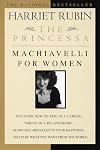
She has some good ideas, but the book is way too long.
Start on page 100 for some clues.
The best idea in the book: make your enemies your new friends, care for their ideas and needs, and add them to your lines.
Another good one: one or more people in a group oppose you, add people to the group; that way more ideas will be heard, and probably your opposition will get minimized.
Start on page 100 for some clues.
The best idea in the book: make your enemies your new friends, care for their ideas and needs, and add them to your lines.
Another good one: one or more people in a group oppose you, add people to the group; that way more ideas will be heard, and probably your opposition will get minimized.
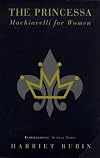
Good grief. This woman must have been paid by masculinists to write this tripe. No self-respecting reader of either gender could fail to see what a load of apologistic, drowning-in-cliches and pandering-to-the-ego codswallop this comprises. Avoid.
You May Also Like


Statistics
- Works
- 10
- Members
- 535
- Popularity
- #46,548
- Rating
- 3.4
- Reviews
- 8
- ISBNs
- 35
- Languages
- 6