

Elizabeth Mitchell (1)
Author of Journey to the Bottomless Pit
For other authors named Elizabeth Mitchell, see the disambiguation page.
Series
Works by Elizabeth Mitchell
Associated Works
Isaac Asimov's Science Fiction Magazine: Vol. 6, No. 7 [July 1982] (1982) — Associate editor — 17 copies
Tagged
Common Knowledge
Members
Reviews

After the Flames is an anthology made up of three novellas in the apocalyptic/post-apocalyptic genre. Having read the collection when it first appeared in the eighties, I was curious about how well it had withstood the last three decades. As it turns out, not too bad.
In “The Election” a provisional government has finally been established in Kentucky, fifteen years after “the Blowup”. Aiming to bring democracy and free elections to the neighbouring territories, they’re surprised to show more find that exporting democracy may be a tough job.
Post-20th century history may have made Robert Silverberg’s point a bit obvious. Still, this is one of those rare SF stories that could be counted as near prophetic, and well worth reading.
Norman Spinrad’s “World War Last” is burlesque satire. The chairman of the Soviet Union is an embalmed, computer animated corpse. The president of the USA is a raving sex maniac kept closeted in a padded cell at Camp David, trotted out only for badly lip-synced TV speeches. With the two countries' administrations working on automat, it’s business as usual and a nicely maintained balance of terror. Until the ruler of a miniature Arabic state - a drug-addled neo-hippie, self-styled hassasin and the world’s richest man - acquire nuclear-tipped cruise missiles. With the clock ticking and the fate of the world hanging on a summit meeting between the two superpowers’ heads of state, anything can happen. And does.
It’s genuinely funny, if you enjoy Spinrad’s brand of humor. At the same time I’m a bit unsure what readers that weren’t around in the eighties will make of it. The story is a near-future satire over a world order that no longer exists, and such works necessarily come with an expiry date.
In Kube-McDowell’s “When Winter Ends”, a particular piece of brinkmanship (does anybody still use that word?) by the US government has gone disastrously wrong. We're introduced to Daniel and Bernadette working on a crash program planning, producing and distributing caches that will hopefully aid any survivors of the coming ragnarok. They get to see the launch of the last two special caches, satellites that will only return to Earth several generations later, before they are obliterated in the first wave of megatonnage. The story then takes up again with a hunter-gatherer clan long after the nuclear winter has ended. It’s a society in decline, and the rest of the story revolves around whether the re-entry to Earth of the “special caches” can indeed aid the remnants of humanity.
“When Winter Ends” is the longest offering, and the only story in this collection that takes the nuclear war setting seriously. Where the other two stories use the apocalypse merely as backdrop, Kube-McDowell did some serious thinking on nuclear war and its long term effects. Nonetheless, it’s the story I feel have stood the test of time least well. Twenty-seven years later, it reads as a statement on eighties thinking on the subject. On the other hand, maybe just that may interest new readers?
Robert Silverberg: ”The Election”
70 pages, Analog Science Fiction/Science Fact (1983)
Norman Spinrad: “World War Last”
98 pages, Isaac Asimov’s Science Fiction Magazine (1985)
Michael P. Kube-McDowell: “When Winter Ends”
107 pages, The Magazine of Fantasy & Science Fiction (1985)
(Reviewed for Librarything group challenge Go review that book!) show less
In “The Election” a provisional government has finally been established in Kentucky, fifteen years after “the Blowup”. Aiming to bring democracy and free elections to the neighbouring territories, they’re surprised to show more find that exporting democracy may be a tough job.
Post-20th century history may have made Robert Silverberg’s point a bit obvious. Still, this is one of those rare SF stories that could be counted as near prophetic, and well worth reading.
Norman Spinrad’s “World War Last” is burlesque satire. The chairman of the Soviet Union is an embalmed, computer animated corpse. The president of the USA is a raving sex maniac kept closeted in a padded cell at Camp David, trotted out only for badly lip-synced TV speeches. With the two countries' administrations working on automat, it’s business as usual and a nicely maintained balance of terror. Until the ruler of a miniature Arabic state - a drug-addled neo-hippie, self-styled hassasin and the world’s richest man - acquire nuclear-tipped cruise missiles. With the clock ticking and the fate of the world hanging on a summit meeting between the two superpowers’ heads of state, anything can happen. And does.
It’s genuinely funny, if you enjoy Spinrad’s brand of humor. At the same time I’m a bit unsure what readers that weren’t around in the eighties will make of it. The story is a near-future satire over a world order that no longer exists, and such works necessarily come with an expiry date.
In Kube-McDowell’s “When Winter Ends”, a particular piece of brinkmanship (does anybody still use that word?) by the US government has gone disastrously wrong. We're introduced to Daniel and Bernadette working on a crash program planning, producing and distributing caches that will hopefully aid any survivors of the coming ragnarok. They get to see the launch of the last two special caches, satellites that will only return to Earth several generations later, before they are obliterated in the first wave of megatonnage. The story then takes up again with a hunter-gatherer clan long after the nuclear winter has ended. It’s a society in decline, and the rest of the story revolves around whether the re-entry to Earth of the “special caches” can indeed aid the remnants of humanity.
“When Winter Ends” is the longest offering, and the only story in this collection that takes the nuclear war setting seriously. Where the other two stories use the apocalypse merely as backdrop, Kube-McDowell did some serious thinking on nuclear war and its long term effects. Nonetheless, it’s the story I feel have stood the test of time least well. Twenty-seven years later, it reads as a statement on eighties thinking on the subject. On the other hand, maybe just that may interest new readers?
Robert Silverberg: ”The Election”
70 pages, Analog Science Fiction/Science Fact (1983)
Norman Spinrad: “World War Last”
98 pages, Isaac Asimov’s Science Fiction Magazine (1985)
Michael P. Kube-McDowell: “When Winter Ends”
107 pages, The Magazine of Fantasy & Science Fiction (1985)
(Reviewed for Librarything group challenge Go review that book!) show less

All the novellas are characteristic of the author's works, and present interesting worlds and moral dilemmas.
Haldeman's had more graphic sex and violence than suitable for young readers IMO.
Zahn, as usual had a sneaky twist, and Cherryh had a philosophical one.
Haldeman's had more graphic sex and violence than suitable for young readers IMO.
Zahn, as usual had a sneaky twist, and Cherryh had a philosophical one.
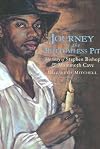
In Journey to the Bottomless Pit, a young slave named Stephen Bishop is taken to Mammoth Cave and taught to guide tours through it. Stephen is smart, brave, creative, and likes to explore on his own. He discovers many new things in the cave, but he was never recognized for his work since he was the slave. A great story to learn about Mammoth Cave and Stephen Bishop during the time of slavery.
I really liked these novellas:
3 stars
The Scapegoat, by C.J.Cherryh
The humans were at war with the elves. The elves had started it by accidentally blowing up a human ship. So then the humans retaliated, blowing up an elves' ship. then there was no stopping the war, each side killing more and more of the other side. Until finally one day, the elves came up with a way to stop the war.
5 stars
Seasons, by Joe Haldeman
An expedition had already gone to the planet and had spent a year there. The show more native inhabitants were Stone age type beings, laid-back creatures who were welcoming to the members of the expedition. The members of the expedition had got there in late summer, and had left after a year. The thing was, the planet's year was more than three of our years long. The last expedition was 10 years ago; the new expedition were to stay for the whole planets' year, and continue to study, and live with the natives, equipped with only the same tools the natives had: a stone axe, and a spear. But something happened that the first expedition could never have had time to observe: They found out the natives changed behavior as the seasons changed. Not for the better. I love Joe Haldeman's work.
4 stars
Cordón Sanitaire, by Timothy Zahn
The planet Pallas had been settled before, as proven by the ruins, but why and where had the settlers gone? The native tarsapiens, something similar to our chimpanzees were herbivores docile enough to trap and study, until...one day they attacked the scientific team. show less
3 stars
The Scapegoat, by C.J.Cherryh
The humans were at war with the elves. The elves had started it by accidentally blowing up a human ship. So then the humans retaliated, blowing up an elves' ship. then there was no stopping the war, each side killing more and more of the other side. Until finally one day, the elves came up with a way to stop the war.
5 stars
Seasons, by Joe Haldeman
An expedition had already gone to the planet and had spent a year there. The show more native inhabitants were Stone age type beings, laid-back creatures who were welcoming to the members of the expedition. The members of the expedition had got there in late summer, and had left after a year. The thing was, the planet's year was more than three of our years long. The last expedition was 10 years ago; the new expedition were to stay for the whole planets' year, and continue to study, and live with the natives, equipped with only the same tools the natives had: a stone axe, and a spear. But something happened that the first expedition could never have had time to observe: They found out the natives changed behavior as the seasons changed. Not for the better. I love Joe Haldeman's work.
4 stars
Cordón Sanitaire, by Timothy Zahn
The planet Pallas had been settled before, as proven by the ruins, but why and where had the settlers gone? The native tarsapiens, something similar to our chimpanzees were herbivores docile enough to trap and study, until...one day they attacked the scientific team. show less
Awards


You May Also Like


Associated Authors
Statistics
- Works
- 5
- Also by
- 1
- Members
- 576
- Popularity
- #43,501
- Rating
- 3.7
- Reviews
- 5
- ISBNs
- 34
- Languages
- 2