
Dmitri Volkogonov (1928–1995)
Author of Stalin: Triumph and Tragedy
About the Author
Works by Dmitri Volkogonov
The psychological war 2 copies
The Army and Social Progress 1 copy
Armée soviétique 1 copy
Ленин. Книга 1. Вожди 1 copy
Tagged
Common Knowledge
- Canonical name
- Volkogonov, Dmitri
- Legal name
- Dmitri Antonovich Volkogonov
- Birthdate
- 1928-03-22
- Date of death
- 1995-12-06
- Gender
- male
- Relationships
- Villahermosa, Gilberto N. (student)
- Nationality
- Russia
- Birthplace
- Chita, Russia
- Place of death
- Moscow, Russia
Members
Reviews
Rating: 4 out of 5
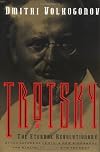
This was not a sympathetic biography, nor for that matter, am I a sympathetic reviewer, being firmly of a Western Bourgeois Liberal Democrat conviction. I had encountered Trotsky a few times while studying interwar history, but never did a deep dive into him, or for that matter, and other of the Soviet leaders. I knew that Trotsky was the Minister or War (or whatever fifteen word title they used for it) during the Polish-Soviet War of 1919-20. Beyond a skeletal outline of show more his life and later assassination I was ignorant. Early Soviet/Bolshevik/Revolutionary history fills me with dread. I enter into a completely unknown world filled with arcana and heresies between which I cannot distinguish nor understand the great difference. I’m much more at home learning about Early Church heresies, although equally unable to empathize with them, I understand them a bit better. I can split between a Bolshevik, a Menshevik, a SR, a White, a Green etc, but asking me to remember the myriad of Bolshevik factions is just that, an ask. This is a major part of the reason that this book has been languishing on my shelf for at least the last six years.
For all of you giving this book bad marks for being ‘boring’ I kindly encourage you to zip it. This is a history book. It’s also translated from Russian. What is far more important is the book’s contents. The ability of the author to weed through decades of incessant, state-sponsored propaganda to create a cohesive, and what appears to be, a largely reliable account, is what really matters. That being said, there are a lot of events that are described in a way which assumes foreknowledge on the part of the reader, knowledge that I largely didn’t posses, so I found myself referring to Wikipedia on more than one occasion. Is this perhaps because Volkogonov deals with these events in his earlier biographies on Lenin and Stalin? I don’t know, and I won’t know for a while. I am in no rush to read about a wannabe mass murder who actually succeeded.
Volkogonov is writing to several different audiences. The primary audience was the people of the former USSR. With the other groups being western academics and history people, and westerners with communist leaning tendencies. Within the latter group, there is a mythos around Trotsky. It supposes that if Trotsky, rather than Stalin, had succeeded Lenin, then the Red Terror and other monstrosities wouldn’t have taken place if St. Trotsky had been at the wheel. Volkogonov doesn’t allow these fantasies to endure. In an opening shot, Volkogonov points out that engaging in alternative history is a largely purposeless endeavor, being mostly an exercise in wishing. He continually points out how Stalin pilfered ideas that birthed the atrocities from Trotsky. While Trotsky had the good fortune to be on the right side of history in that he criticized Stalin, the fact remains that Trotsky lost a power struggle and didn’t admit defeat. Trotsky’s criticisms of Stalin never cut to the root of the problem. Both men supported the existence of a one-party state that stifled opposition and enforced top-down social change. Trotsky never cut to the quick by demanding a democratic system, he preffered to harangue on the details of Marxist theory. Being a part of the opposition, and having no power at all, Trotsky was free to criticize Stalin even if he had no better idea or would have made any fundamental changes.
Going back to the book itself, it was very interesting. Like I said, there are a lot of blank spaces for a reader like myself, but I was able to follow the outline without too much difficulty. Not an ‘easy’ read, nor am I sure that it should be. Don’t walk into this expecting cake. It was a good book. If I was to follow this subject up with another read I would look for a book from a western historian with more distance from the subject, and sacrifice the lack of archival access in favor of, hopefully, a less interested tone. That being said, again, I have no desire to read another book about this particular fanatic, there are plenty others who are calling for my attention. show less
This was not a sympathetic biography, nor for that matter, am I a sympathetic reviewer, being firmly of a Western Bourgeois Liberal Democrat conviction. I had encountered Trotsky a few times while studying interwar history, but never did a deep dive into him, or for that matter, and other of the Soviet leaders. I knew that Trotsky was the Minister or War (or whatever fifteen word title they used for it) during the Polish-Soviet War of 1919-20. Beyond a skeletal outline of show more his life and later assassination I was ignorant. Early Soviet/Bolshevik/Revolutionary history fills me with dread. I enter into a completely unknown world filled with arcana and heresies between which I cannot distinguish nor understand the great difference. I’m much more at home learning about Early Church heresies, although equally unable to empathize with them, I understand them a bit better. I can split between a Bolshevik, a Menshevik, a SR, a White, a Green etc, but asking me to remember the myriad of Bolshevik factions is just that, an ask. This is a major part of the reason that this book has been languishing on my shelf for at least the last six years.
For all of you giving this book bad marks for being ‘boring’ I kindly encourage you to zip it. This is a history book. It’s also translated from Russian. What is far more important is the book’s contents. The ability of the author to weed through decades of incessant, state-sponsored propaganda to create a cohesive, and what appears to be, a largely reliable account, is what really matters. That being said, there are a lot of events that are described in a way which assumes foreknowledge on the part of the reader, knowledge that I largely didn’t posses, so I found myself referring to Wikipedia on more than one occasion. Is this perhaps because Volkogonov deals with these events in his earlier biographies on Lenin and Stalin? I don’t know, and I won’t know for a while. I am in no rush to read about a wannabe mass murder who actually succeeded.
Volkogonov is writing to several different audiences. The primary audience was the people of the former USSR. With the other groups being western academics and history people, and westerners with communist leaning tendencies. Within the latter group, there is a mythos around Trotsky. It supposes that if Trotsky, rather than Stalin, had succeeded Lenin, then the Red Terror and other monstrosities wouldn’t have taken place if St. Trotsky had been at the wheel. Volkogonov doesn’t allow these fantasies to endure. In an opening shot, Volkogonov points out that engaging in alternative history is a largely purposeless endeavor, being mostly an exercise in wishing. He continually points out how Stalin pilfered ideas that birthed the atrocities from Trotsky. While Trotsky had the good fortune to be on the right side of history in that he criticized Stalin, the fact remains that Trotsky lost a power struggle and didn’t admit defeat. Trotsky’s criticisms of Stalin never cut to the root of the problem. Both men supported the existence of a one-party state that stifled opposition and enforced top-down social change. Trotsky never cut to the quick by demanding a democratic system, he preffered to harangue on the details of Marxist theory. Being a part of the opposition, and having no power at all, Trotsky was free to criticize Stalin even if he had no better idea or would have made any fundamental changes.
Going back to the book itself, it was very interesting. Like I said, there are a lot of blank spaces for a reader like myself, but I was able to follow the outline without too much difficulty. Not an ‘easy’ read, nor am I sure that it should be. Don’t walk into this expecting cake. It was a good book. If I was to follow this subject up with another read I would look for a book from a western historian with more distance from the subject, and sacrifice the lack of archival access in favor of, hopefully, a less interested tone. That being said, again, I have no desire to read another book about this particular fanatic, there are plenty others who are calling for my attention. show less
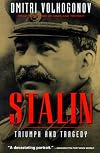
An in-depth look at how Stalin gained and kept power, one of the nastiest monsters the world has seen, who without the slightest regret instituted policies that he knew caused the needless torture and killing of tens of millions of his countrymen, who could value nothing except as it affected him personally. A paranoid whose chief attribute was an excellent memory, often used visciously, unjustly and lethally against his revolutionary comrades when they were of no further use to him. A man show more who rarely and reluctantly bothered to visit factories, farms or troops, content equally to deliver grand or detailed plans from his armchair and who for effect relied always first of all upon terror.
A good survey also of the Russian revolution of 1917 and preceding events. Good portraits of the more important Bolsheviks and their various fates at the hands of Stalin. Well-organized with information from many cited sources. Apparently an excellent translation.
The point of view is troubling. Much that happened within the USSR is not mentioned, such as anti-Jewish pogroms encouraged and ordered by Stalin. There is little or nothing about the sizable aid in food and military supplies shipped, at a high cost in western lives (U-boat sinkings) and goods, to Russia in World War II by the U.S. and Great Britain which likely saved hundreds of thousands of Soviets from starvation and additional battle losses in a prolonged war. Not mentioned is the forced building of cities and factories in Siberia at arbitrary and economically unsuitable locations resulting in continual drains on the rest of the economy.
There is discussion of the heroic work done in the Gulag (labs within prison grounds!) by wrongly imprisoned Russian scientists developing the A- and H-Bombs, but no hint that Russian spies in the U.S. and Great Britain had stolen detailed plans of both bombs several times over, so that the Russians had only to implement the discoveries made in the U.S. by the world's most brilliant scientists over a period of years and costing billions.
As the writer had access to secret Soviet files, it is remarkable that there is nothing about massive Russian spying the world over, particularly in the United States, some revealed by defecting spies and the extensive intercepts assembled by U.S. intellegence of covert coded Soviet espionage transmissions (the recently declassified Venona Project; see also Elizabeth Bentley, Whittaker Chambers and Igor Gouzenko) which eventually fingered Alger Hiss, Harry Dexter White, Julius Rosenberg and other highly placed U.S. (and British and Canadian) officials and scientists as Soviet spies who implemented and expoited numerous grave security breaches over many years. Other important subversive Soviet operations in other countries go unmentioned as well. All of this changed geopolitical balances and therefore the history of the 20th century.
In short, the author's research and book appear to have been tailored especially to satisfy a Russian view, and there was much else that I was interested in but did not find. show less
A good survey also of the Russian revolution of 1917 and preceding events. Good portraits of the more important Bolsheviks and their various fates at the hands of Stalin. Well-organized with information from many cited sources. Apparently an excellent translation.
The point of view is troubling. Much that happened within the USSR is not mentioned, such as anti-Jewish pogroms encouraged and ordered by Stalin. There is little or nothing about the sizable aid in food and military supplies shipped, at a high cost in western lives (U-boat sinkings) and goods, to Russia in World War II by the U.S. and Great Britain which likely saved hundreds of thousands of Soviets from starvation and additional battle losses in a prolonged war. Not mentioned is the forced building of cities and factories in Siberia at arbitrary and economically unsuitable locations resulting in continual drains on the rest of the economy.
There is discussion of the heroic work done in the Gulag (labs within prison grounds!) by wrongly imprisoned Russian scientists developing the A- and H-Bombs, but no hint that Russian spies in the U.S. and Great Britain had stolen detailed plans of both bombs several times over, so that the Russians had only to implement the discoveries made in the U.S. by the world's most brilliant scientists over a period of years and costing billions.
As the writer had access to secret Soviet files, it is remarkable that there is nothing about massive Russian spying the world over, particularly in the United States, some revealed by defecting spies and the extensive intercepts assembled by U.S. intellegence of covert coded Soviet espionage transmissions (the recently declassified Venona Project; see also Elizabeth Bentley, Whittaker Chambers and Igor Gouzenko) which eventually fingered Alger Hiss, Harry Dexter White, Julius Rosenberg and other highly placed U.S. (and British and Canadian) officials and scientists as Soviet spies who implemented and expoited numerous grave security breaches over many years. Other important subversive Soviet operations in other countries go unmentioned as well. All of this changed geopolitical balances and therefore the history of the 20th century.
In short, the author's research and book appear to have been tailored especially to satisfy a Russian view, and there was much else that I was interested in but did not find. show less
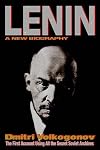
Lenin (1994) by Dmitri Volkogonov is worth reading if you’re one of the six people in North America interested in 20th century history. Some parts are long, with more details than we avid readers need about political backstabbing among the Bolsheviks. The book does not follow strictly chronological order. To make a general point about Lenin’s legacy, Volkogonov will range freely to the times of Stalin, Khrushchev, and Era of Funerals (gerontocracy). Professional historians probably hate show more this jumping around, but it makes it interesting for us non-specialist readers. show less
Amazingly detailed, this book gives the reader a morbidly fascinating account of one of history's most remarkable political careers. It is a heavy going though.
Lists
You May Also Like


Associated Authors
Statistics
- Works
- 16
- Members
- 842
- Popularity
- #30,363
- Rating
- 3.5
- Reviews
- 10
- ISBNs
- 61
- Languages
- 9
- Favorited
- 1