
Benjamin Cook (1) (1982–)
Author of Doctor Who: The Writer's Tale: The Final Chapter
For other authors named Benjamin Cook, see the disambiguation page.
Works by Benjamin Cook
Associated Works
Tagged
Common Knowledge
- Birthdate
- 1982-10-17
- Gender
- male
- Occupations
- journalist
non-fiction author
filmmaker - Nationality
- UK
- Birthplace
- Isleworth, London, England
Members
Reviews
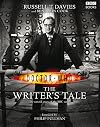
An account of once and future Doctor Who/showrunner Russell T. Davies' work on the show from the 2007 Christmas special through the end of Season 5 of the new series. It's told in the form of a long-running, casual email exchange between Davies and writer Benjamin Cook, in which Davies answers Cook's questions about his job and his writing process, sends him drafts of the scripts he's currently working on, and generally offers up thoughts and reflections, as well as more than a few emotional show more outbursts about how stressed he is trying to get things finished.
I actually picked up my copy of this book in 2008, when it was first published, but for some reason I just kept never getting around to reading it. With Davies' return to the show, though, now seemed very much like the time for it.
I'll admit, at first I wasn't at all sure just how glad I was to finally be reading the thing. It seemed like this might be a deeper dive into Russell Davies' mind than I actually wanted. It's disconcertingly horny in there, for one thing, and he's prone to be a bit... wallow-y. Although, in fairness, he was kind of asked to be, and he's at least quite self-aware about it. And it didn't help, I'm sure, that the early parts of the book are mostly about his work on the script for "Voyage of the Damned,' which... well, let's face it, that's not really anybody's favorite episode, is it?
I did come to appreciate it at lot more as things went on, though. I always find it interesting to get a glimpse into a writer's thought process, and Davies does have some interesting and occasionally even insightful things to say about that process, and about working in television, specifically. It was also very interesting to get this much of a look into the nitty-gritty details of how a television script evolves from its first conception in the writer's brain through the actual filmed product that appears on our screens. I knew sort of intellectually how vulnerable the effective telling of any TV story is to the harsh realities of run time, and actor availability, and production schedules, and FX budgets, but seeing it unfolding in front of me here honestly leaves me boggling a little at the fact that any TV episode actually works and holds together and makes sense at all after it's been through all of that. Not that that's ever going to stop me nitpicking the ones that don't, mind you.
So, anyway. I am glad I finally got to it, after all. Although, boy, has it just made all my mixed feelings about RTD's return even more mixed. The depictions of how he finishes every script at or after the very last minute (whether or not he's had any sleep or, say, contracted chicken pox) may actually explain a few things about his stories, but it doesn't inspire huge amounts of confidence. And, on the one hand, this book prompted me to remember just how much I loved "Partners in Crime" and how entertaining Davies' particular brand of silliness can be when it comes off well. On the other hand, ye gods, "The Stolen Earth" and "Journey's End" were more of a ridiculous mess than I even remembered them being, and reading about them just gives me a front row seat to what I still regard as probably the most infuriatingly bad storytelling decision in the history of television. But don't worry, I'll spare you my rant on that subject. And, hey, who knows? Maybe he'll finally fix it, leaving me blissfully free to send all my nerd rage elsewhere. I can hope, right? show less
I actually picked up my copy of this book in 2008, when it was first published, but for some reason I just kept never getting around to reading it. With Davies' return to the show, though, now seemed very much like the time for it.
I'll admit, at first I wasn't at all sure just how glad I was to finally be reading the thing. It seemed like this might be a deeper dive into Russell Davies' mind than I actually wanted. It's disconcertingly horny in there, for one thing, and he's prone to be a bit... wallow-y. Although, in fairness, he was kind of asked to be, and he's at least quite self-aware about it. And it didn't help, I'm sure, that the early parts of the book are mostly about his work on the script for "Voyage of the Damned,' which... well, let's face it, that's not really anybody's favorite episode, is it?
I did come to appreciate it at lot more as things went on, though. I always find it interesting to get a glimpse into a writer's thought process, and Davies does have some interesting and occasionally even insightful things to say about that process, and about working in television, specifically. It was also very interesting to get this much of a look into the nitty-gritty details of how a television script evolves from its first conception in the writer's brain through the actual filmed product that appears on our screens. I knew sort of intellectually how vulnerable the effective telling of any TV story is to the harsh realities of run time, and actor availability, and production schedules, and FX budgets, but seeing it unfolding in front of me here honestly leaves me boggling a little at the fact that any TV episode actually works and holds together and makes sense at all after it's been through all of that. Not that that's ever going to stop me nitpicking the ones that don't, mind you.
So, anyway. I am glad I finally got to it, after all. Although, boy, has it just made all my mixed feelings about RTD's return even more mixed. The depictions of how he finishes every script at or after the very last minute (whether or not he's had any sleep or, say, contracted chicken pox) may actually explain a few things about his stories, but it doesn't inspire huge amounts of confidence. And, on the one hand, this book prompted me to remember just how much I loved "Partners in Crime" and how entertaining Davies' particular brand of silliness can be when it comes off well. On the other hand, ye gods, "The Stolen Earth" and "Journey's End" were more of a ridiculous mess than I even remembered them being, and reading about them just gives me a front row seat to what I still regard as probably the most infuriatingly bad storytelling decision in the history of television. But don't worry, I'll spare you my rant on that subject. And, hey, who knows? Maybe he'll finally fix it, leaving me blissfully free to send all my nerd rage elsewhere. I can hope, right? show less

http://nwhyte.livejournal.com/1581275.html
Davies and Cook exchanged emails and texts for the last two years of Davies' tenure as show-runner of Doctor Who (ie 2007-2009), so the narrative is spontaneous, spur of the moment, and feels very genuine (though of course the reader cannot know what has been edited out in the process). I had already read the first half, and Cook and Davies spend some time in the second half discussing the reception of the original version. Davies is perpetually show more struggling with deadlines, with his other responsibilities as showrunner, with his role as a public figure and spokesman not only for his own show but for his industry.
The book offers insights into the process of writing, crafting and drafting, trying to get it right, over the period of weeks and months of producing Doctor Who. Occasionally one can trace particular elements to the outside world: Ben Cook, normally a passionate but detached observer, persuades Davies not to end Journey's End with a Cyberman teaser for The Next Doctor. But more often the writers are drawing on their own emotional resources and imagination, trying as it were to find the story that is trying to get out - there is a nice moment when Davies, emailing Cook, suddenly realises that Wilf Mott should be the instrument of the Tenth Doctor's demise.
Structured as a dialogue between two writers, with lots of pretty pictures and extra amaterial, it is also about a success: whether or not one is a fan of Who or of Davies' treatment of it, the fact is that he revived a faded franchise and made it a hit, and that in itself is a good story even if we are only getting the final years. I commented about the first edition that there were a lot of deaths in it; there is only one in the second half, but it is significant - the mother of the Executive Producer, Julie Gardner, of the same illness which Davies' own mother had succumbed to a few years earlier. While of course all authors draw on many life experiences, it's not too fanciful, I think, to see a direct link between this and the creation of the Claire Bloom character in The End of Time, who in Davies' mind is very explicitly the Doctor's own mother.
The Writer's Tale, however, is probably the best book about Doctor Who that will ever be written, and of immense interest to anyone who cares about television, sf, or indeed the creative process. show less
Davies and Cook exchanged emails and texts for the last two years of Davies' tenure as show-runner of Doctor Who (ie 2007-2009), so the narrative is spontaneous, spur of the moment, and feels very genuine (though of course the reader cannot know what has been edited out in the process). I had already read the first half, and Cook and Davies spend some time in the second half discussing the reception of the original version. Davies is perpetually show more struggling with deadlines, with his other responsibilities as showrunner, with his role as a public figure and spokesman not only for his own show but for his industry.
The book offers insights into the process of writing, crafting and drafting, trying to get it right, over the period of weeks and months of producing Doctor Who. Occasionally one can trace particular elements to the outside world: Ben Cook, normally a passionate but detached observer, persuades Davies not to end Journey's End with a Cyberman teaser for The Next Doctor. But more often the writers are drawing on their own emotional resources and imagination, trying as it were to find the story that is trying to get out - there is a nice moment when Davies, emailing Cook, suddenly realises that Wilf Mott should be the instrument of the Tenth Doctor's demise.
Structured as a dialogue between two writers, with lots of pretty pictures and extra amaterial, it is also about a success: whether or not one is a fan of Who or of Davies' treatment of it, the fact is that he revived a faded franchise and made it a hit, and that in itself is a good story even if we are only getting the final years. I commented about the first edition that there were a lot of deaths in it; there is only one in the second half, but it is significant - the mother of the Executive Producer, Julie Gardner, of the same illness which Davies' own mother had succumbed to a few years earlier. While of course all authors draw on many life experiences, it's not too fanciful, I think, to see a direct link between this and the creation of the Claire Bloom character in The End of Time, who in Davies' mind is very explicitly the Doctor's own mother.
The Writer's Tale, however, is probably the best book about Doctor Who that will ever be written, and of immense interest to anyone who cares about television, sf, or indeed the creative process. show less

This book comprises a series of emails exchanged between television writer Russell T Davies and magazine writer Benjamin Cook during the year that the former was working on series four of Doctor Who. That makes it sound a bit dull. Nothing could be further from the truth. I love Davies's writing-- not just in Doctor Who, but in other shows such as Casanova, The Second Coming, and Bob & Rose. He's got such a first grasp of character-- everyone in his stories always feels like real people show more caught up in these extraordinary events. This book, oddly, is just the same way. You feel Davies as a person, in all his ups and downs, in all his sad moments and funny moments, in all his triumphs and disasters. It's an extraordinary insight into the way the mind of one writer works. I don't write like this man does. I don't think I could. He's mad. But then, that's presumably the reason he's winning BAFTAs and I'm not. Like everything Davies writes, this book is funny and heartrending at the same time. And it's also supremely candid; this is certainly the best "making of" book we've gotten about the new Doctor Who so far. Filled with fun facts you can pester your friends with while watching "Partners in Crime"! Oh, and did I mention that it's also filled with Davies's own cartoons, which are extraordinarily cute? show less
The Final Chapter: The definitive story of the BBC series (Doctor Who: The Writer's Tale) by Russell T. Davies
This book is a series of e-mails between Russell T Davies, former executive producer and head writer for Doctor Who, and Benjamin Cook, journalist for Doctor Who Magazine, covering Davies's work on the series from February 2007 to July 2009, the time when the fourth series and the specials were produced. It's an expansion of an earlier work which I also enjoyed, and I think this is because it turns the production of the series itself into a story. I'm reading things I already know-- will show more they get Catherine Tate to play Donna? who will play Astrid? will the November special be canceled due to lack of funds?-- and yet I'm absolutely riveted, swept along by the story here. It's a neat trick, and a tribute to Davies's writing and Cook's e-mail selection. There a few things that stick out at me that are worth commenting on:
1. Madness. The most important thing one learns about Davies as a writer is that he grasps the fundamental madness of Doctor Who as a concept in a way few others have. Reading the early volumes of About Time, one is struck by the fact that everyone seems to think they're working on just another television series. Sure, its formula is a bit strange, but it's still just a TV show. The madness seems to almost emerge by accident rather than design. Davies understands how mad the show is, and builds it into every aspect of his design. I think the only other person to really grasp this was Robert Holmes. Time has yet to tell if Steven Moffat gets it, but I don't think you could write "The Girl in the Fireplace" if you didn't.
2. The Specials That Never Were. Davies's plans for the specials underwent endless permutations, and though I like some of what we got ("The Waters of Mars" was fantastic), you can't help wondering about that other world where an entirely different set of specials were made. I wish they'd done that Star Trek pastiche; it would've been fun. And that other finale for the tenth Doctor, featuring him by himself with a small alien family on a spaceship with a radiation leak, sounds fantastic. The man who gave us "Midnight" could have done that perfectly. As it is, "The End of Time" is a weird merger between that and the bombastic, and though Davies is generally quite good at that sort of thing, he didn't quite pull it off here. But why didn't he do it? That leads me to:
3. Visible Ben. In the first half of the book, Benjamin Cook vows to be "Invisible Ben," merely reading Davies's ideas, never judging or influencing them. Yet halfway through, he makes a (good) suggestion about the ending of "Journey's End," and he never returns to his invisibility. Except... I don't always like his ideas. He encourages Davies to bring back the Time Lords, amongst other things... Part of me wonders if he shouldn't have stayed invisible, and how that would have affected things.
4. Hooting. Davies seems to do this a lot when amused. I don't think I've ever seen the word used so much in a book that wasn't about owls. show less
1. Madness. The most important thing one learns about Davies as a writer is that he grasps the fundamental madness of Doctor Who as a concept in a way few others have. Reading the early volumes of About Time, one is struck by the fact that everyone seems to think they're working on just another television series. Sure, its formula is a bit strange, but it's still just a TV show. The madness seems to almost emerge by accident rather than design. Davies understands how mad the show is, and builds it into every aspect of his design. I think the only other person to really grasp this was Robert Holmes. Time has yet to tell if Steven Moffat gets it, but I don't think you could write "The Girl in the Fireplace" if you didn't.
2. The Specials That Never Were. Davies's plans for the specials underwent endless permutations, and though I like some of what we got ("The Waters of Mars" was fantastic), you can't help wondering about that other world where an entirely different set of specials were made. I wish they'd done that Star Trek pastiche; it would've been fun. And that other finale for the tenth Doctor, featuring him by himself with a small alien family on a spaceship with a radiation leak, sounds fantastic. The man who gave us "Midnight" could have done that perfectly. As it is, "The End of Time" is a weird merger between that and the bombastic, and though Davies is generally quite good at that sort of thing, he didn't quite pull it off here. But why didn't he do it? That leads me to:
3. Visible Ben. In the first half of the book, Benjamin Cook vows to be "Invisible Ben," merely reading Davies's ideas, never judging or influencing them. Yet halfway through, he makes a (good) suggestion about the ending of "Journey's End," and he never returns to his invisibility. Except... I don't always like his ideas. He encourages Davies to bring back the Time Lords, amongst other things... Part of me wonders if he shouldn't have stayed invisible, and how that would have affected things.
4. Hooting. Davies seems to do this a lot when amused. I don't think I've ever seen the word used so much in a book that wasn't about owls. show less
Lists
Awards

You May Also Like


Associated Authors
Statistics
- Works
- 3
- Also by
- 21
- Members
- 612
- Popularity
- #41,085
- Rating
- 4.3
- Reviews
- 18
- ISBNs
- 7