
Elizabeth Spencer (1) (1921–2019)
Author of The Light in the Piazza and Other Italian Tales (Banner Books)
For other authors named Elizabeth Spencer, see the disambiguation page.
About the Author
Elizabeth Spencer is the author of more than a dozen collections of stories & novels. Born in 1921 in Carrollton, Mississippi, she currently lives in Chapel Hill, North Carolina. (Bowker Author Biography) Elizabeth Spencer was born on July 19, 1921, in Carrollton, Miss., to James and Mary (McCain) show more Spencer. Her father was a businessman and farmer. Her mother¿s family owned a plantation where black servants abounded long after the abolition of slavery. Elizabeth grew up in a racially segregated town of 500 and in a home filled with books. She began writing stories as a child. Elizabeth graduated from Belhaven College in Jackson, Miss., in 1942 and earned a master¿s in 1943 from Vanderbilt University in Nashville. She taught junior college classes for two years and was a reporter for The Nashville Tennessean for a year. Her well-received first novel, Fire in the Morning (1948), created a Mississippi town, with a history of its citizens, conflicts and values. Her second novel, This Crooked Way (1952), was also set in the South. From 1948 to 1951, she taught at the University of Mississippi at Oxford. After a year in New York, she returned to Oxford briefly, then won a fellowship and left for Europe. She soon released several novels including Knights and Dragons (1965) and No Place for an Angel (1967) and a collection of short stories, Ship Island and Other Stories (1968). Elizabeth Spencer taught from 1976 to 1986 at Concordia University in Montreal and from 1986 to 1992 at the University of North Carolina at Chapel Hill. Elizabeth Spencer passed away ib December 22,2019 at the age of 98. (Bowker Author Biography) show less
Image credit: Photo by Derek Anderson
Works by Elizabeth Spencer
Associated Works
Growing Up in the South: An Anthology of Modern Southern Literature (1991) — Contributor — 163 copies, 1 review
More Dixie Ghosts: More Haunting, Spine-Chilling Stories from the American South (1994) — Contributor — 12 copies
Antaeus No. 73/74, Spring 1994 - Who’s Writing This: Notations on the Authorial I {magazine} (1994) — Contributor — 6 copies
32 Współczesne Opowiadania Amerykańskie - Tom II — Contributor — 1 copy
Tagged
Common Knowledge
- Birthdate
- 1921-07-19
- Date of death
- 2019-12-22
- Gender
- female
- Education
- Vanderbilt University (MA)
Belhaven College (BA) - Occupations
- novelist
short story writer
playwright
memoirist - Organizations
- Fellowship of Southern Writers (charter member)
University of Mississippi
Concordia University (Montreal)
University of North Carolina at Chapel Hill - Awards and honors
- Cleanth Brooks Medal for Lifetime Achievement (2001)
John Dos Passos Prize (1991)
PEN/Malamud Award (2007)
Sidney Lanier Prize for Southern Literature (2014)
American Academy of Arts and Letters Academy Award ( [1952]) - Relationships
- Percy, Walker (colleague)
Foote, Shelby (colleague)
Lucas, Craig (colleague) - Nationality
- USA
- Birthplace
- Carrollton, Mississippi, USA
- Places of residence
- Italy
Montréal, Québec, Canada
Nashville, Tennessee, USA
Jackson, Mississippi, USA - Place of death
- Chapel Hill, North Carolina, USA
- Associated Place (for map)
- USA
Members
Reviews
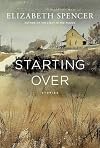
These are quiet but forceful stories that remind me of Eudora Welty's. Spencer writes from the South and from the heart of families we all know. She delves deeply into what from the surface looks like everyday household tragedies. Of the nine stories, my favorite is "Blackie", in which a remarried woman with three stepsons, a stepfather, a dog, and a loving husband, is pulled back towards her first husband and son. Her second family senses her ambiguity and tries to make sure she never show more leaves them. "You're in a cage of wild animals", says her husband. And yet in her placid bridge club, she considers herself the luckiest of the players. Spencer also writes novels, the most well known being "The Light in the Piazza", which was adapted very successfully for Broadway. That's what I'll be reading next. I love Southern writers and don't know how I came so late to Elizabeth Spencer's bountiful table. show less

I wanted to love this book, written in the early 1950s. Unanimously chosen by the Pulitzer Prize jurors as the best novel published in 1956, it wasn't awarded the prize by the Columbia University Trustees, who have the final say. They said nothing. While I know nothing of the trustees in 1956-7, it suits me to picture them as all white men, the generals of business, banking, and industry, Masters of the Universe (though Tom Wolfe was decades from coining that phrase). But still reluctant to show more endorse this indictment of Southern Culture, this roiling of...mmm…"the race issue". This...erm...exposé was not to be condoned.
Elizabeth Spencer's third novel depicts a dry Mississippi county whose voters must elect a sheriff because the office-holder has died. He departed this life in a grocery store in the town of Lacey, where he'd gone—knowing his life was expiring—to endorse its proprietor as his successor. That man, Duncan Harper, is a local, a low-key man who was, nonetheless, the greatest running back in Mississippi football history.
The sheriff expects Harper will maintain his policies, but Harper is intent on enforcing the county's ban on liquor sales and is supportive of rights for Blacks. As interim sheriff, Harper personally busts a bootlegger. The bootlegger is a life-long friend who has always loved the woman Harper is married to. With the help of a local Black, Harper is set up so his views on race will be publicized in the county and beyond. Then the bootlegger is shot, and rumor quickly spreads that the shooter was Black, that Harper knows who he is and where he is, but that he's covering for him. The victim won't say who shot him. In only a few weeks, Harper's electoral support evaporates. Still, he remains interim sheriff and he continues to investigate the shooting.
As the story unfolds, Lacey society reveals itself as implacably segregationist. The mob rules, but it's easily manipulated. Familiar ring, isn't it?
What is shocking to contemporary readers is the endless, casual use of the n-word. You have to understand that in 1953, not only in the South, but throughout the country, it was a commonly used word. To really appreciate how oppressive the racial climate was, you have to immerse yourself in the conversation of the time. I think it's an essential element of the history, the culture, the story.
Spencer grew up in Mississippi, a member of a socially elite family, living on a plantation with an army of Black servants. It was after receiving a Guggenheim grant that allowed her to retreat to Italy that she was able to confront her own upbringing and write her novel of repudiation. Thereafter, she lived and worked in Italy, London, and Montreal, returning to the South (to Durham, NC) only in 1986.
So did I love [The Voice at the Back Door]? Not really. But I do like it and I admire it. I think it deserved the Pulitzer. I view it as an accurate reflection of an unsavory culture in the 1950s. show less
Elizabeth Spencer's third novel depicts a dry Mississippi county whose voters must elect a sheriff because the office-holder has died. He departed this life in a grocery store in the town of Lacey, where he'd gone—knowing his life was expiring—to endorse its proprietor as his successor. That man, Duncan Harper, is a local, a low-key man who was, nonetheless, the greatest running back in Mississippi football history.
The sheriff expects Harper will maintain his policies, but Harper is intent on enforcing the county's ban on liquor sales and is supportive of rights for Blacks. As interim sheriff, Harper personally busts a bootlegger. The bootlegger is a life-long friend who has always loved the woman Harper is married to. With the help of a local Black, Harper is set up so his views on race will be publicized in the county and beyond. Then the bootlegger is shot, and rumor quickly spreads that the shooter was Black, that Harper knows who he is and where he is, but that he's covering for him. The victim won't say who shot him. In only a few weeks, Harper's electoral support evaporates. Still, he remains interim sheriff and he continues to investigate the shooting.
As the story unfolds, Lacey society reveals itself as implacably segregationist. The mob rules, but it's easily manipulated. Familiar ring, isn't it?
What is shocking to contemporary readers is the endless, casual use of the n-word. You have to understand that in 1953, not only in the South, but throughout the country, it was a commonly used word. To really appreciate how oppressive the racial climate was, you have to immerse yourself in the conversation of the time. I think it's an essential element of the history, the culture, the story.
Spencer grew up in Mississippi, a member of a socially elite family, living on a plantation with an army of Black servants. It was after receiving a Guggenheim grant that allowed her to retreat to Italy that she was able to confront her own upbringing and write her novel of repudiation. Thereafter, she lived and worked in Italy, London, and Montreal, returning to the South (to Durham, NC) only in 1986.
So did I love [The Voice at the Back Door]? Not really. But I do like it and I admire it. I think it deserved the Pulitzer. I view it as an accurate reflection of an unsavory culture in the 1950s. show less

The Snare is a truly fantastic novel, how it has so few ratings is bewildering. I guess one of the reasons is that it’s so difficult to categorise (and review). It’s not a love story nor is it a crime thriller, yet it’s been labelled as both. It’s intriguing, complex, and very Southern. Plus it has one of most enigmatic female characters I’ve ever come across.
Set in 1950's New Orleans, it’s the story of Julia Garrett, orphaned and adopted by her uncle and aunty. “Orphan girl show more in a Voodoo City ” is how she describes herself. She’s smart, attractive and privileged, but easily bored and self-destructive. She falls in love with a handsome drifter, who is a musician. Together they are drawn into the New Orleans underworld. They meet a preacher who claims he can see into peoples' souls and then enter a sinister world of late night jazz bars, kidnapping, voodoo, murder and heroin.
" My idea is," she said, "that people draw life from the crooked world. There's a conversation going on with the straight world, all the time. It's what makes this city and it's what makes the world. Haven't you noticed?"
Sex is never far from the surface and neither is narrative ambiguity, and this makes The Snare so fascinating. Central to that is Julia’s relationship with her Great Uncle, Henri ‘’Dev’’ Devigny. She claims to have loved him and the implication that he may have been sexually abusive is suggested, but never stated. It casts a dark shadow throughout the novel.
Author Caroline McCoy wrote an essay about The Snare and says:
“In many ways, The Snare is a feminist novel, far ahead of its time in its handling of female sexuality and desire, as well as the influence of early and unwanted experiences. Among works aimed at deepening mainstream discussions about sexual exploitation, it becomes essential reading; but one cannot claim the subject as the book’s central concern. Probably, this is why I like it so much.“
Elizabeth Spencer isn’t the first author from Mississippi that makes the reader roll up their sleeves and work, and that, for me at least, makes it a far more enjoyable experience.
The Snare is one of the most mesmerising and rewarding books I’ve read in a long time and a late contender for favourite book this year. show less
Set in 1950's New Orleans, it’s the story of Julia Garrett, orphaned and adopted by her uncle and aunty. “Orphan girl show more in a Voodoo City ” is how she describes herself. She’s smart, attractive and privileged, but easily bored and self-destructive. She falls in love with a handsome drifter, who is a musician. Together they are drawn into the New Orleans underworld. They meet a preacher who claims he can see into peoples' souls and then enter a sinister world of late night jazz bars, kidnapping, voodoo, murder and heroin.
" My idea is," she said, "that people draw life from the crooked world. There's a conversation going on with the straight world, all the time. It's what makes this city and it's what makes the world. Haven't you noticed?"
Sex is never far from the surface and neither is narrative ambiguity, and this makes The Snare so fascinating. Central to that is Julia’s relationship with her Great Uncle, Henri ‘’Dev’’ Devigny. She claims to have loved him and the implication that he may have been sexually abusive is suggested, but never stated. It casts a dark shadow throughout the novel.
Author Caroline McCoy wrote an essay about The Snare and says:
“In many ways, The Snare is a feminist novel, far ahead of its time in its handling of female sexuality and desire, as well as the influence of early and unwanted experiences. Among works aimed at deepening mainstream discussions about sexual exploitation, it becomes essential reading; but one cannot claim the subject as the book’s central concern. Probably, this is why I like it so much.“
Elizabeth Spencer isn’t the first author from Mississippi that makes the reader roll up their sleeves and work, and that, for me at least, makes it a far more enjoyable experience.
The Snare is one of the most mesmerising and rewarding books I’ve read in a long time and a late contender for favourite book this year. show less

More years ago than I care to remember, I saw the movie based on Spencer's story, The Light in the Piazza, with Olivia de Havilland, Yvette Mimieux, Rossano Brazzi and George Hamilton. A few years ago, I saw the Craig Lucas/Adam Guettel musical. I have now, finally!, read the book.
In the title story, a well-to-do American woman, Margaret Johnson, is traveling in Italy with her daughter, Clara. They make the acquaintance of a young Italian, Fabrizio Naccarelli, who falls in love with Clara. show more But Clara, due to an accident, is still mentally a child, and Mrs. Johnson had resigned herself to Clara's never being in a position to marry. Now she sees the possibility. Her struggle between her desire to see Clara settled and happy, and her concerns that her disability will prevent that, form the conflict. In Margaret Johnson, Spencer has created an interesting and strong woman, one who will do what she has to for her child's well-being. She is rational, practical, not seduced by the romanticism of Florence's light.
Spencer's women deal. In one of my favorite stories, The White Azalea, the protagonist is a southern spinster traveling in Italy following the death of her father, whom she had nursed through his final illness, as she had nursed her mother and an aunt. She had spent those years reading the classics, dreaming of Europe, and has followed that dream. But now a letter from her brother George ("the only boy, the family darling") arrives, urging her return home to live with and look after an elderly cousin. She literally buries the letter. Three cheers! show less
In the title story, a well-to-do American woman, Margaret Johnson, is traveling in Italy with her daughter, Clara. They make the acquaintance of a young Italian, Fabrizio Naccarelli, who falls in love with Clara. show more But Clara, due to an accident, is still mentally a child, and Mrs. Johnson had resigned herself to Clara's never being in a position to marry. Now she sees the possibility. Her struggle between her desire to see Clara settled and happy, and her concerns that her disability will prevent that, form the conflict. In Margaret Johnson, Spencer has created an interesting and strong woman, one who will do what she has to for her child's well-being. She is rational, practical, not seduced by the romanticism of Florence's light.
Spencer's women deal. In one of my favorite stories, The White Azalea, the protagonist is a southern spinster traveling in Italy following the death of her father, whom she had nursed through his final illness, as she had nursed her mother and an aunt. She had spent those years reading the classics, dreaming of Europe, and has followed that dream. But now a letter from her brother George ("the only boy, the family darling") arrives, urging her return home to live with and look after an elderly cousin. She literally buries the letter. Three cheers! show less
Lists
Awards


You May Also Like


Associated Authors
Statistics
- Works
- 23
- Also by
- 28
- Members
- 989
- Popularity
- #26,037
- Rating
- 3.8
- Reviews
- 22
- ISBNs
- 104
- Languages
- 1