
John Shelby Spong (1931–2021)
Author of Rescuing the Bible from Fundamentalism: A Bishop Rethinks the Meaning of Scripture
About the Author
Scholar, author and bishop, John Shelby Spong was born in 1931 in Charlotte, North Carolina. He graduated from the University of North Carolina at Chapel Hill in 1952 and received his Master of Divinity degree in 1955 from the Protestant Episcopal Theological Seminary in Virginia. That seminary and show more St. Paul's College have both conferred on him honorary Doctor of Divinity degrees. Ordained in 1955, he is now bishop of the Episcopal diocese of Newark, New Jersey. As the most-published member of the House of Bishops of the Episcopal Church in the United States, Spong is the author of 14 books and more than 90 articles, including Honest Prayer (1973), Dialogue ? In Search of Jewish-Christian Umderstanding (1975), The Living Commandments (1977), Into the Whirlwind: The Future of the Church (1983), Living in Sin? A Bishop Rethinks Human Sexuality (1988), Rescuing the Bible from Fundamentalism: A Bishop Rethinks the Meaning of Scripture (1991), and Resurrection: Myth or Reality? (1994). With an active interest in football, basketball and baseball, Bishop Spong was at one time a play-by-play announcer for radio stations in Tarboro, North Carolina, and Lynchburg, Virginia. In addition, he served as sports editor for The Daily Southerner in Tarboro. Bishop Spong resides in Morristown, New Jersey. (Bowker Author Biography) show less
Image credit: Rt. Rev. John Shelby Spong, Bishop Newark, N.J., 16 octobre 1996
Series
Works by John Shelby Spong
Rescuing the Bible from Fundamentalism: A Bishop Rethinks the Meaning of Scripture (1991) 1,320 copies, 11 reviews
Why Christianity Must Change or Die: A Bishop Speaks to Believers in Exile: A New Reformation of the Church's Faith and Practice (1998) 1,281 copies, 15 reviews
A New Christianity for a New World: Why Traditional Faith is Dying & How a New Faith is Being Born (2001) 774 copies, 6 reviews
The Sins of Scripture: Exposing the Bible's Texts of Hate to Reveal the God of Love (2005) — Author — 670 copies, 8 reviews
Born of a Woman: A Bishop Rethinks the Virgin Birth and the Treatment of Women by a Male-Dominated Church (1992) 481 copies, 2 reviews
Here I Stand: My Struggle for a Christianity of Integrity, Love, and Equality (2000) — Author — 436 copies
Resurrection: Myth or Reality? A Bishop's Search for the Origins of Christianity (1994) 432 copies, 3 reviews
Eternal Life: A New Vision: Beyond Religion, Beyond Theism, Beyond Heaven and Hell (2009) — Author — 308 copies, 4 reviews
Unbelievable: Why Neither Ancient Creeds Nor the Reformation Can Produce a Living Faith Today (2018) 160 copies, 2 reviews
Consciousness and Survival: An Interdisciplinary Inquiry into the Possibility of Life Beyond Biological Death (1987) 5 copies
Un cristianesimo nuovo per un mondo nuovo. Perché muore la fede tradizionale e come ne nasce una nuova (2010) 3 copies
Associated Works
Tagged
Common Knowledge
- Legal name
- Spong, John Shelby
- Birthdate
- 1931-06-16
- Date of death
- 2021-09-12
- Gender
- male
- Education
- University of North Carolina (BA|1952)
Virginia Theological Seminary (M.Div|1955) - Occupations
- Episcopal Bishop of Newark
priest - Organizations
- Episcopal Church
Episcopal Diocese of Newark - Awards and honors
- ACLU of New Jersey Award (1988)
- Nationality
- USA
- Birthplace
- Charlotte, North Carolina, USA
- Places of residence
- Charlotte, North Carolina, USA
Tarboro, North Carolina, USA
Richmond, Virginia, USA
Newark, New Jersey, USA - Place of death
- Richmond, Virginia, USA
- Map Location
- North Carolina, USA
Members
Reviews
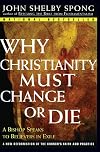
William James would say that the reason I like Bishop Spong so much is that because he reconfirms all of my already existing prejudices. But this book rang like a revelation to me. At a time when I continued to be disillusioned with the Christian church, yet was beginning to despair that I would find anything else spiritual that would be truly meaningful to me, Bishop Spong opened a door and told me that it was okay to go back inside. That the fundamentalists don't own Christianity. That I show more could believe as I did and still call myself Christian. I've said before that without reading this book, I never could have married Andrew, that my whole life would have been different. And I still believe that to be true. I can't really explain how grateful I am that I found it. show less
I wish this book was titled __How Christianity Might Change. I am turned off by the combative title and the tone of the early chapters, but perhaps this is how Spong felt he would reach his desired audience. He calls this audience "believers in exile," meaning people of faith who still identify as Christian, but whose scientific and contemporary perspective feels incompatible with the traditional Christian doctrine and practice.
I am one of those people. Once I got past the drama of the early show more chapters, I was incredibly grateful for this book. It helped me articulate the things I can't swallow about Christian practice, including the belief in a personal God, the idea that this God required the blood sacrifice of his son to "save" humankind, and the efficacy of intercessory prayer.
I loved Spong's restatement of a Christian creed in the final chapter of the book, and I loved his insistence on God being something that cannot be easily put into words, and on Jesus of Nazareth as a window into relationship with God.
I highly recommend this book, and ultimately I agree with Spong that if there is to be a new generation of Christians who embrace science, some of the core ideas of traditional Christianity will have to be rethought. show less
I am one of those people. Once I got past the drama of the early show more chapters, I was incredibly grateful for this book. It helped me articulate the things I can't swallow about Christian practice, including the belief in a personal God, the idea that this God required the blood sacrifice of his son to "save" humankind, and the efficacy of intercessory prayer.
I loved Spong's restatement of a Christian creed in the final chapter of the book, and I loved his insistence on God being something that cannot be easily put into words, and on Jesus of Nazareth as a window into relationship with God.
I highly recommend this book, and ultimately I agree with Spong that if there is to be a new generation of Christians who embrace science, some of the core ideas of traditional Christianity will have to be rethought. show less
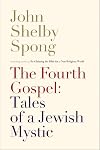
Thoroughly enjoyed this study of the Gospel according to John by a writer who has been hugely influential in how I approach the Christian and Jewish Scriptures ever since I read Rescuing the Bible from Fundamentalism many years ago. His introduction explains all of the reasons that I've shied away from studying John much, and then he proceeds to walk the reader through his speculation/interpretation of what John is really about. John's Jesus is very unlike the Jesus found in the other show more Gospels. He doesn't use parables. He speaks in long, self-referential speeches. "I am the Way, the Truth and the Life." Spong reminds me that "I" has a very different connotation in mysticism than in everyday usage.
Great stuff. I'm only sorry that this could be Spong's last book. show less
Great stuff. I'm only sorry that this could be Spong's last book. show less
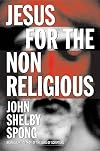
If you're a Christian considering this book, then know that if you're a deist who believes that God intervenes in human history either in the miraculous or in the form of sending a Messiah named Jesus to save us from our sins then Spong says you are, knowingly or not, engaged in "heresy" (his word). Jesus performed nothing miraculous, fulfilled no prophecies, and there was no crucifixion for the atonement of sins nor a resurrection or eternal life. To believe otherwise means you are at best show more "ignorant," at worst "irrational," and definitely have a God concept that is "primitive" due to your "insecure" (his words) standing as a result of your theism. The last 2,000 years of Christian thought has created a system which makes us dependent on a God who supposedly has to rescue us from our sinful selves-- this "dehumanizes" mankind, fuels tribalism and parochialism, and keeps us from a proper "God experience," which only Spong understands as he admits he does not have the proper words "in human language" to define or explain it. You only need to believe the parts of Scripture that Spong believes, even though he contradicts himself often on which parts he believes to be true and why. He says the point of writing this book is to show that Christians must no longer be theists, as that keeps them from "living life to the fullest" and "experiencing God."
If you're an atheist, you'll find various atheists' reviews of this book are spot on-- Spong is himself creating his own mythology. If a theistic God does not exist and does not intervene in human history, then how can Spong claim that the disciples "had a God experience" through Jesus that Spong also claims to seek? This contradiction runs throughout the whole book; you have to suspend logic to read it. Another reviewer nailed it: "In his attempt to move Christianity away from childish notions into a more adult and responsible conception of God, he has simply replaced a childish need for an all-powerful parent with an immature need to be in control by explaining away troubling mysteries." He denounces beliefs in the literal, historical Jesus as "irrational" yet proudly pretends he's rational in believing in his own selected aspects about Jesus himself. In the final chapters he lauds certain characteristics of Jesus that he spent the first half of the book saying weren't literally true in the first place. So, shouldn't he be worshiping Mark and Matthew who invented the entire Jesus narrative? He claims to be pushing Christianity to a higher level in the "Jesus experience" which transcends human thought and the ability for humans to communicate the God they are "experiencing."
Warning: If you've ever taken a course on logic, you will have a hard time finishing this book.
Spong actually begins this book with a prayer to Jesus, which would imply he believes Jesus is divine or that there is something miraculous in prayer-- he is an Episcopal bishop, after all. But this is hypocritical because he later criticizes belief in prayer as a "primitive" act done by "insecure creatures," and denounces belief in the miraculous or divine intervention of any kind-- "God doesn't answer prayer," he says flatly. The contradictions in Spong's tortured reasoning throughout the book are numerous. For example, he writes that he remains "deeply committed" to Jesus, is a "committed Christian" and "searches the Scriptures" for the truth of who Jesus is because the ancients believe they had encountered God through Jesus; and Jesus was an important part of his own childhood. Yet he doesn't believe much of anything written anywhere about Jesus-- there were no Josephs, perhaps no Mary (his mother), no miracles, perhaps no crucifixion, no crowds, Last Supper, Barabbus, and no physical resurrection. It's not apparent why he should maintain his belief that Jesus existed at all or why we should seek a "Jesus experience." At best, he makes the authors of Scripture liars telling myths that no "rational" person should ever believe in. The logical conclusion is that they intentionally set out to delude society-- and therefore Spong maintains part of this delusion by being a career clergy member.
Spong is also very disingenuous in his textual criticism. One short example, at the end of the book he lauds Jesus' handling of the adulterous woman in John 8. The problem is, there are almost no biblical scholars--evangelical or liberal--who believe this event actually happens or belongs in text. Of all the other events that Spong strips away from the Gospels, he quotes this as authoritative? That's very problematic.
He denounces theism for creating "religious anger" but, as many commenters have pointed out, the tone of this book is quite angry and condemning of millions of Christians through the ages. Spong does not want to tear down walls separating us from fellowship, he wants us to leave our "primitive delusions" behind and join him in his own definition of "the Jesus experience." It's like he never bothered to bounce his ideas off others before, read anyone else's research, or attended any churches outside of Virginia.
Spong's belief system requires enormous faith in him on the reader's part-- for example, that Spong interprets the "code" (his word) correctly in every name recorded in the Gospels, every action of Jesus recorded, and every historical landmark recorded along the way. That Spong alone holds the correct interpretations of Scripture--everyone else for the last 2,000 years has been mistaken (or thousands of years before that if you include the all the Jews who falsely believe in a God who intervenes in human life and recorded a "mythical" history of it).
If you follow his logic about the historicity of scripture, then its logical conclusion is that the Christian movement never happened, nor the centuries of Jewish faith before it-- because God never intervenes in human history, and the miraculous events around Jesus' life never happened. Therefore, Jesus could have never drawn the crowds recorded to him nor was his death of any consequence; and he was never resurrected. There was never anything remarkable about Jesus-- except the fact that some of his associates felt there was something so remarkable that they changed their whole lives and faith traditions after his death. "Something happened," says Spong, but it's "heresy" to take anything the Gospel authors wrote about about Jesus as historical, and leaves it to the reader to figure out how the early disciples convinced so many others that Jesus was someone remarkable-- because he was not the Messiah and fulfilled no prophecies.
One can imagine Spong in the first couple centuries arguing with Polycarp, who knew the Apostle John, and Josephus the Jewish historian-- or any of the disciples in Jerusalem for that matter--that there were no remarkable events surrounding Jesus' life, that there was no crowd of witnesses to Jesus' crucifixion or a claim of an empty tomb, and that everything being said about Jesus was purely symbolic code for a Jewish audience-- none of the historical events ever happened. I imagine they would have laughed at him-- arguments about Jesus in that time were quite diverse but none argued that the basic facts agreed upon about his life were fictional. Spong's account has a much lower probability than just taking the various authors at their word even on the basics. He ignores anyone's work over the last 2,000 years that might correct him errors.
Spong argues that the fictional miracles are also all "code" to be understood by the audience (just like all the names recorded in the Gospels... unless you named your child something truly original, it is suspect to Spong, and that person probably didn't exist.). None of the 37 miracles recorded by the Gospel authors are to be taken literally, and none of the Gospel authors intended his work to be historical-- not even Luke who states in Luke 1:1-4 that's exactly his intent. (Spong quotes from Acts, written together with Luke's Gospel, authoritatively but very selectively. The history recorded in Acts and Paul's conversion pose obvious problems for Spong's argument and he simply ignores them. He quotes from 1 Corinthians as authoritative, but ignores that Paul believed Jesus was betrayed and that there was a Last Supper-- which Spong contends never happened). He contends that somehow Jesus' life influenced a few fishermen and tax collectors enough that they believed they had a real-life God experience through him, they wrote metaphoric accounts of his life to state their beliefs about it, and somehow this started a world revolution that Spong continues to be part of today. Why would anyone want to be martyred on the basis of a few commoners' delusions about a man? Why would anyone want to "experience" a Jesus that the author spends most of the book saying didn't really do much of interest.
I've read a good number of works on early church history recently and checked this book out to gain some further insights into modern research. The foreword to the book makes it sound like evidence will be given for a "Jewish Jesus," but that is clearly not his aim. Part II of the book includes an argument that Mark, Matthew, and Luke were written to be preached as part of the Jewish liturgical calendar, which is plausible (though not original to Spong, as he disingenuously makes it seem). However, if none of the events recorded actually happened why would the Jewish audience pay attention to them, much less change their lives and faith traditions as Spong acknowledges they clearly did in the name of Jesus.
Many of Spong's "facts" and conclusions have been argued and refuted time and again since the earliest days of Christianity. Spong makes some basic errors both in his dealing with Hebrew thought and early Christian history, particularly Yom Kippur. He goes well beyond any New Perspective theologians. Spong seems either unaware of this, unaware of any scholars or even archaeologists who give strong evidence against his theories, or he simply refuses to address their work-- probably because they are theists, which Spong argues Christians must no longer be. In the end, he alone holds the "truth" that he hopes to convey to the reader through this book.
Spong never considers that all of the witnesses to Jesus' life-- including his own family-- had plenty of opportunity to refute the spread of the teachings about Jesus and did not-- they believed and embraced them. In the Gospels, it is repeated that crowds believed Jesus was the messiah because they saw his miracles. The Pharisees argued that his miracles were demonic, not that they didn't happen. There were, after all, hundreds of witnesses that someone who had been blind or lame since birth could now see and walk. Without any of Jesus' acts being commonly attributed to him at the time, how would he have even gained any sort of following in his life? Spong doesn't say. He would have been just another commoner.
Spong argues against the Gospel accounts, in part, because of what items Paul did not write in his letters to the early churches. Paul doesn't write a Gospel narrative of Jesus' life and death, and Spong argues that as evidence that the Gospels that were written were somehow false. This does the reader a disservice in not explaining what Paul's letters were-- mostly addresses to specific churches dealing with specific questions and problems. Paul mentions "the cross of Christ" in several of his letters, but Spong ignores them and contends that Paul either doesn't know about a crucifixion or doesn't believe it, when the letters clearly show otherwise. Spong quotes from these selectively and doesn't explain why.
He acknowledges that Paul met with Peter and other eyewitnesses early on, but doesn't seem to consider that Paul--an acclaimed expert in Jewish law and tradition--would have used those opportunities to learn about Jesus' life and lineage (as the Temple was still intact in Paul's day). Let's also remember that Paul originally killed Christians for their heresy that Jesus was a risen messiah. He gave up the power and prestige of his Pharisaic life for a life of continual hardship and death in the name of this Jesus--becoming a mortal enemy of the Pharisees who raised him. Why would Paul do that if he didn't believe Jesus was the risen messiah that everyone claimed? Spong claims Paul did not believe in Jesus' physical resurrection. But Paul wrote that "if we have hoped in Christ in this life only, we are of all men most to be pitied" (1 Cor. 15). Paul clearly believed in both a physical resurrection and an afterlife-- included in the earliest Christian creed we have, repeated by Paul. He also believed he had encountered Jesus on the road to Damascus. Jesus appeared to him on multiple occasions. If Paul does not believe in the miraculous, then why does he tell about these experiences? Why doesn't he refute others' accounts of miracles taken place during Jesus' life and after his resurrection as the Church began to grow? Everything in Christianity hinges on a literal resurrection; if Christ was not divine and not physically resurrected, then what's the point? Does that also not make Paul complicit in some kind of willful cover-up? Spong doesn't say, while taking Paul at his word, which seems quite the contradiction.
While some of Paul's letters were authored before the Gospels, Paul would have been well acquainted with the early creeds and what was being taught about Jesus and later written down. Peter, who died a year after Paul, would also have had ample opportunity to refute any falsehoods being spread about Jesus' divinity, miracles, virgin birth, etc. since he's included in such stories. Peter did not, and the early church affirmed these teachings very early on. The logical conclusion is that the Apostles who spread Christianity spread one of the greatest delusions in history, and were willing to maintain their deception even to martyrdom. Spong somehow does not draw that conclusion, which I find quite irrational given his logic. Why does he search scriptures he does not believe and pray to someone he believes doesn't hear him? Makes no sense to me.
Spong does the lay reader a great disservice by ignoring texts on church history prior to the 1800s-- it's as if real church history was done by Germans in the 1800s or by himself alone. He dismisses the various theologians, historians, Greek and Hebrew scholars, and archaeologists who actually do have rational arguments for Jesus being born in Bethlehem and John being the actual author of his Gospel (for example). No Protestant believes that Mary was "perpetually a virgin" or "born divine," yet Spong seems to ascribe these false beliefs to all Christians.
How can one believe that God does not intervene in human events, and that this world all came about by randomness, yet still be able to worship a historical Jesus? This is Spong's claim. He explains his "evolution" to a-theism in Part III. He steps out of his realm of expertise into biology and cultural anthropology, again stating as fact certain things that are debated among anthropologists. He argues that theism creates "religious anger" that fuels tribalism, racism, and violence. He has apparently never visited a church in the world that is diverse and works for social justice, as his hypothesis is that can only happen if we reject theism. Surely he must have at least heard of evangelical churches who have women pastors, but he writes as though they cannot exist because of the theistic shackles evangelicals place on themselves. I'd like to introduce him both to diverse churches worshipping a risen Christ and working for social justice. I'd also like to introduce him to some people who have seen the miraculous with their own eyes, and demon-possessed people in the dark heart of Africa who could speak to him in fluent English despite never having learned it. Has he ever even traveled outside the U.S.? Has anyone giving this book 5 stars ever done so?
C. S. Lewis made the argument that Jesus was either a liar, a lunatic, or Lord. Spong seems really unable to figure out which one he believes-- so he tries to reject all three. You can only do that if you suspend logic, which Spong is quite good at. I prefer using logic, so I'll stick to it.
0 stars out of 5. show less
If you're an atheist, you'll find various atheists' reviews of this book are spot on-- Spong is himself creating his own mythology. If a theistic God does not exist and does not intervene in human history, then how can Spong claim that the disciples "had a God experience" through Jesus that Spong also claims to seek? This contradiction runs throughout the whole book; you have to suspend logic to read it. Another reviewer nailed it: "In his attempt to move Christianity away from childish notions into a more adult and responsible conception of God, he has simply replaced a childish need for an all-powerful parent with an immature need to be in control by explaining away troubling mysteries." He denounces beliefs in the literal, historical Jesus as "irrational" yet proudly pretends he's rational in believing in his own selected aspects about Jesus himself. In the final chapters he lauds certain characteristics of Jesus that he spent the first half of the book saying weren't literally true in the first place. So, shouldn't he be worshiping Mark and Matthew who invented the entire Jesus narrative? He claims to be pushing Christianity to a higher level in the "Jesus experience" which transcends human thought and the ability for humans to communicate the God they are "experiencing."
Warning: If you've ever taken a course on logic, you will have a hard time finishing this book.
Spong actually begins this book with a prayer to Jesus, which would imply he believes Jesus is divine or that there is something miraculous in prayer-- he is an Episcopal bishop, after all. But this is hypocritical because he later criticizes belief in prayer as a "primitive" act done by "insecure creatures," and denounces belief in the miraculous or divine intervention of any kind-- "God doesn't answer prayer," he says flatly. The contradictions in Spong's tortured reasoning throughout the book are numerous. For example, he writes that he remains "deeply committed" to Jesus, is a "committed Christian" and "searches the Scriptures" for the truth of who Jesus is because the ancients believe they had encountered God through Jesus; and Jesus was an important part of his own childhood. Yet he doesn't believe much of anything written anywhere about Jesus-- there were no Josephs, perhaps no Mary (his mother), no miracles, perhaps no crucifixion, no crowds, Last Supper, Barabbus, and no physical resurrection. It's not apparent why he should maintain his belief that Jesus existed at all or why we should seek a "Jesus experience." At best, he makes the authors of Scripture liars telling myths that no "rational" person should ever believe in. The logical conclusion is that they intentionally set out to delude society-- and therefore Spong maintains part of this delusion by being a career clergy member.
Spong is also very disingenuous in his textual criticism. One short example, at the end of the book he lauds Jesus' handling of the adulterous woman in John 8. The problem is, there are almost no biblical scholars--evangelical or liberal--who believe this event actually happens or belongs in text. Of all the other events that Spong strips away from the Gospels, he quotes this as authoritative? That's very problematic.
He denounces theism for creating "religious anger" but, as many commenters have pointed out, the tone of this book is quite angry and condemning of millions of Christians through the ages. Spong does not want to tear down walls separating us from fellowship, he wants us to leave our "primitive delusions" behind and join him in his own definition of "the Jesus experience." It's like he never bothered to bounce his ideas off others before, read anyone else's research, or attended any churches outside of Virginia.
Spong's belief system requires enormous faith in him on the reader's part-- for example, that Spong interprets the "code" (his word) correctly in every name recorded in the Gospels, every action of Jesus recorded, and every historical landmark recorded along the way. That Spong alone holds the correct interpretations of Scripture--everyone else for the last 2,000 years has been mistaken (or thousands of years before that if you include the all the Jews who falsely believe in a God who intervenes in human life and recorded a "mythical" history of it).
If you follow his logic about the historicity of scripture, then its logical conclusion is that the Christian movement never happened, nor the centuries of Jewish faith before it-- because God never intervenes in human history, and the miraculous events around Jesus' life never happened. Therefore, Jesus could have never drawn the crowds recorded to him nor was his death of any consequence; and he was never resurrected. There was never anything remarkable about Jesus-- except the fact that some of his associates felt there was something so remarkable that they changed their whole lives and faith traditions after his death. "Something happened," says Spong, but it's "heresy" to take anything the Gospel authors wrote about about Jesus as historical, and leaves it to the reader to figure out how the early disciples convinced so many others that Jesus was someone remarkable-- because he was not the Messiah and fulfilled no prophecies.
One can imagine Spong in the first couple centuries arguing with Polycarp, who knew the Apostle John, and Josephus the Jewish historian-- or any of the disciples in Jerusalem for that matter--that there were no remarkable events surrounding Jesus' life, that there was no crowd of witnesses to Jesus' crucifixion or a claim of an empty tomb, and that everything being said about Jesus was purely symbolic code for a Jewish audience-- none of the historical events ever happened. I imagine they would have laughed at him-- arguments about Jesus in that time were quite diverse but none argued that the basic facts agreed upon about his life were fictional. Spong's account has a much lower probability than just taking the various authors at their word even on the basics. He ignores anyone's work over the last 2,000 years that might correct him errors.
Spong argues that the fictional miracles are also all "code" to be understood by the audience (just like all the names recorded in the Gospels... unless you named your child something truly original, it is suspect to Spong, and that person probably didn't exist.). None of the 37 miracles recorded by the Gospel authors are to be taken literally, and none of the Gospel authors intended his work to be historical-- not even Luke who states in Luke 1:1-4 that's exactly his intent. (Spong quotes from Acts, written together with Luke's Gospel, authoritatively but very selectively. The history recorded in Acts and Paul's conversion pose obvious problems for Spong's argument and he simply ignores them. He quotes from 1 Corinthians as authoritative, but ignores that Paul believed Jesus was betrayed and that there was a Last Supper-- which Spong contends never happened). He contends that somehow Jesus' life influenced a few fishermen and tax collectors enough that they believed they had a real-life God experience through him, they wrote metaphoric accounts of his life to state their beliefs about it, and somehow this started a world revolution that Spong continues to be part of today. Why would anyone want to be martyred on the basis of a few commoners' delusions about a man? Why would anyone want to "experience" a Jesus that the author spends most of the book saying didn't really do much of interest.
I've read a good number of works on early church history recently and checked this book out to gain some further insights into modern research. The foreword to the book makes it sound like evidence will be given for a "Jewish Jesus," but that is clearly not his aim. Part II of the book includes an argument that Mark, Matthew, and Luke were written to be preached as part of the Jewish liturgical calendar, which is plausible (though not original to Spong, as he disingenuously makes it seem). However, if none of the events recorded actually happened why would the Jewish audience pay attention to them, much less change their lives and faith traditions as Spong acknowledges they clearly did in the name of Jesus.
Many of Spong's "facts" and conclusions have been argued and refuted time and again since the earliest days of Christianity. Spong makes some basic errors both in his dealing with Hebrew thought and early Christian history, particularly Yom Kippur. He goes well beyond any New Perspective theologians. Spong seems either unaware of this, unaware of any scholars or even archaeologists who give strong evidence against his theories, or he simply refuses to address their work-- probably because they are theists, which Spong argues Christians must no longer be. In the end, he alone holds the "truth" that he hopes to convey to the reader through this book.
Spong never considers that all of the witnesses to Jesus' life-- including his own family-- had plenty of opportunity to refute the spread of the teachings about Jesus and did not-- they believed and embraced them. In the Gospels, it is repeated that crowds believed Jesus was the messiah because they saw his miracles. The Pharisees argued that his miracles were demonic, not that they didn't happen. There were, after all, hundreds of witnesses that someone who had been blind or lame since birth could now see and walk. Without any of Jesus' acts being commonly attributed to him at the time, how would he have even gained any sort of following in his life? Spong doesn't say. He would have been just another commoner.
Spong argues against the Gospel accounts, in part, because of what items Paul did not write in his letters to the early churches. Paul doesn't write a Gospel narrative of Jesus' life and death, and Spong argues that as evidence that the Gospels that were written were somehow false. This does the reader a disservice in not explaining what Paul's letters were-- mostly addresses to specific churches dealing with specific questions and problems. Paul mentions "the cross of Christ" in several of his letters, but Spong ignores them and contends that Paul either doesn't know about a crucifixion or doesn't believe it, when the letters clearly show otherwise. Spong quotes from these selectively and doesn't explain why.
He acknowledges that Paul met with Peter and other eyewitnesses early on, but doesn't seem to consider that Paul--an acclaimed expert in Jewish law and tradition--would have used those opportunities to learn about Jesus' life and lineage (as the Temple was still intact in Paul's day). Let's also remember that Paul originally killed Christians for their heresy that Jesus was a risen messiah. He gave up the power and prestige of his Pharisaic life for a life of continual hardship and death in the name of this Jesus--becoming a mortal enemy of the Pharisees who raised him. Why would Paul do that if he didn't believe Jesus was the risen messiah that everyone claimed? Spong claims Paul did not believe in Jesus' physical resurrection. But Paul wrote that "if we have hoped in Christ in this life only, we are of all men most to be pitied" (1 Cor. 15). Paul clearly believed in both a physical resurrection and an afterlife-- included in the earliest Christian creed we have, repeated by Paul. He also believed he had encountered Jesus on the road to Damascus. Jesus appeared to him on multiple occasions. If Paul does not believe in the miraculous, then why does he tell about these experiences? Why doesn't he refute others' accounts of miracles taken place during Jesus' life and after his resurrection as the Church began to grow? Everything in Christianity hinges on a literal resurrection; if Christ was not divine and not physically resurrected, then what's the point? Does that also not make Paul complicit in some kind of willful cover-up? Spong doesn't say, while taking Paul at his word, which seems quite the contradiction.
While some of Paul's letters were authored before the Gospels, Paul would have been well acquainted with the early creeds and what was being taught about Jesus and later written down. Peter, who died a year after Paul, would also have had ample opportunity to refute any falsehoods being spread about Jesus' divinity, miracles, virgin birth, etc. since he's included in such stories. Peter did not, and the early church affirmed these teachings very early on. The logical conclusion is that the Apostles who spread Christianity spread one of the greatest delusions in history, and were willing to maintain their deception even to martyrdom. Spong somehow does not draw that conclusion, which I find quite irrational given his logic. Why does he search scriptures he does not believe and pray to someone he believes doesn't hear him? Makes no sense to me.
Spong does the lay reader a great disservice by ignoring texts on church history prior to the 1800s-- it's as if real church history was done by Germans in the 1800s or by himself alone. He dismisses the various theologians, historians, Greek and Hebrew scholars, and archaeologists who actually do have rational arguments for Jesus being born in Bethlehem and John being the actual author of his Gospel (for example). No Protestant believes that Mary was "perpetually a virgin" or "born divine," yet Spong seems to ascribe these false beliefs to all Christians.
How can one believe that God does not intervene in human events, and that this world all came about by randomness, yet still be able to worship a historical Jesus? This is Spong's claim. He explains his "evolution" to a-theism in Part III. He steps out of his realm of expertise into biology and cultural anthropology, again stating as fact certain things that are debated among anthropologists. He argues that theism creates "religious anger" that fuels tribalism, racism, and violence. He has apparently never visited a church in the world that is diverse and works for social justice, as his hypothesis is that can only happen if we reject theism. Surely he must have at least heard of evangelical churches who have women pastors, but he writes as though they cannot exist because of the theistic shackles evangelicals place on themselves. I'd like to introduce him both to diverse churches worshipping a risen Christ and working for social justice. I'd also like to introduce him to some people who have seen the miraculous with their own eyes, and demon-possessed people in the dark heart of Africa who could speak to him in fluent English despite never having learned it. Has he ever even traveled outside the U.S.? Has anyone giving this book 5 stars ever done so?
C. S. Lewis made the argument that Jesus was either a liar, a lunatic, or Lord. Spong seems really unable to figure out which one he believes-- so he tries to reject all three. You can only do that if you suspend logic, which Spong is quite good at. I prefer using logic, so I'll stick to it.
0 stars out of 5. show less
Lists
Awards

You May Also Like


Associated Authors
Statistics
- Works
- 47
- Also by
- 3
- Members
- 8,805
- Popularity
- #2,718
- Rating
- 3.9
- Reviews
- 79
- ISBNs
- 145
- Languages
- 7
- Favorited
- 16
