
Diana Butler Bass
Author of Christianity for the Rest of Us: How the Neighborhood Church Is Transforming the Faith
About the Author
Diana Butler Bass, PhD, is an award-winning author of many books, including Grateful and Grounded, a popular speaker, inspiring preacher, and one of America's most trusted commentators on religion and contemporary spirituality, especially where faith intersects with politics and culture. Her show more bylines include the New York Times, The Washington Post, CNN.com, Atlantic.com, USA Today, HuffPost, The Christian Century, and Sojourners. show less
Image credit: www.dianabutlerbass.com/
Works by Diana Butler Bass
Christianity for the Rest of Us: How the Neighborhood Church Is Transforming the Faith (2006) 762 copies, 8 reviews
Christianity After Religion: The End of Church and the Birth of a New Spiritual Awakening (2012) 503 copies, 2 reviews
Freeing Jesus: Rediscovering Jesus as Friend, Teacher, Savior, Lord, Way, and Presence (2021) 182 copies, 6 reviews
Associated Works
The Life of Meaning: Reflections on Faith, Doubt, and Repairing the World (2007) — Contributor — 132 copies, 5 reviews
Tagged
Common Knowledge
- Birthdate
- 1959
- Gender
- female
- Education
- Westmont College
Gordon-Conwell Theological Seminary (MA)
Duke University - Occupations
- historian
independent scholar - Organizations
- United Methodist Church (youth)
Episcopal Church
Lilly Endowment, Inc. - Agent
- Freet, Roger
- Relationships
- Bass, Richard (husband)
Bass, Dorothy C. (sister-in-law) - Nationality
- USA
- Birthplace
- Baltimore, Maryland, USA
- Places of residence
- Alexandria, Virginia, USA
Scottsdale, Arizona, USA
Pasadena, California, USA
Santa Barbara, California, USA - Associated Place (for map)
- USA
Members
Reviews
Freeing Jesus: Rediscovering Jesus as Friend, Teacher, Savior, Lord, Way, and Presence by Diana Butler Bass

Theological memoirs (or memoirs in theology) have been “a thing” since St. Augustine of Hippo wrote his autobiographical and masterful Confessions in the fourth century. Butler Bass adds her voice to the mix with her story. In so doing, she hopes to encourage us to rediscover the Christian God and the Christian faith. While acknowledging the limitations of any experience-based, somewhat arbitrary categories, she organizes her work according to six personality traits of Jesus. None of show more these understandings are particularly revolutionary by themselves, but together in her narrative, they provide a wide picture of modern American Christianity – particularly evangelical Christianity. She challenges and chides this evangelical tradition while consistently and persuasively arguing that Jesus transcends Christian practice.
Because she explicitly contends that this work is primarily a work of theology, I must bring in some analysis. She succeeds in bringing a holistic view about the Second Person of the Trinity. By describing several chapters of her life, she confesses her mistakes and points us to what she learned about God from those years. Sometimes, this message comes as a reaction to who God is not (i.e., God is not limited to this version of the Christian church). But this is how contemporary life in pluralistic Christendom is for many of us who “try out” different faith traditions, no?
Unlike Augustine, her audience is primarily Christians and not society at large. She lamentably does not wrestle with secularism in depth. Augustine framed his Confessions as an argument for Roman intellectuals to embrace the Christian faith as a means for world harmony. Her argument seems more defensive: Christians, don’t leave the church just because so much of it is limited. That said, she succeeds in making this argument because the God she presents is very much welcoming and in line with New Testament norms. She invites us to leave the excesses to the sectarianism which attempts to control and limit Jesus’ message.
I started reading this book with a group of others in a faith discussion. Butler Bass’ first section – Jesus as Friend – immediately turned off many adults in the group. As she acknowledges later, much of Reformed Protestantism has emphasized the transcendence of God at the expense of God’s immanence. Both John Calvin and Karl Barth – the key theologians in my tradition’s history – spoke of God as if God were ruling the universe from on high. However, in contrast, my family (a wife and a ten-year-old girl) liked this section and wanted to continue reading.
This work certainly gives a woman’s voice – dare I say, feminist voice or human voice – to theological and literary Christianity. Such a voice is beyond needed in today’s world of gender fluidity. Butler Bass easily navigates these waters by intermixing her life story with detailed observations from historical theology. Contemplative and reflective Christians in particular will like her voice. I am concerned that those who seek authority in Christianity may not. Overall, she presents a compelling story with God as the center. I’m not sure she’s going to win a ton of “secular” converts, but she might bring in a few more who have grown fed up with the church’s antics. show less
Because she explicitly contends that this work is primarily a work of theology, I must bring in some analysis. She succeeds in bringing a holistic view about the Second Person of the Trinity. By describing several chapters of her life, she confesses her mistakes and points us to what she learned about God from those years. Sometimes, this message comes as a reaction to who God is not (i.e., God is not limited to this version of the Christian church). But this is how contemporary life in pluralistic Christendom is for many of us who “try out” different faith traditions, no?
Unlike Augustine, her audience is primarily Christians and not society at large. She lamentably does not wrestle with secularism in depth. Augustine framed his Confessions as an argument for Roman intellectuals to embrace the Christian faith as a means for world harmony. Her argument seems more defensive: Christians, don’t leave the church just because so much of it is limited. That said, she succeeds in making this argument because the God she presents is very much welcoming and in line with New Testament norms. She invites us to leave the excesses to the sectarianism which attempts to control and limit Jesus’ message.
I started reading this book with a group of others in a faith discussion. Butler Bass’ first section – Jesus as Friend – immediately turned off many adults in the group. As she acknowledges later, much of Reformed Protestantism has emphasized the transcendence of God at the expense of God’s immanence. Both John Calvin and Karl Barth – the key theologians in my tradition’s history – spoke of God as if God were ruling the universe from on high. However, in contrast, my family (a wife and a ten-year-old girl) liked this section and wanted to continue reading.
This work certainly gives a woman’s voice – dare I say, feminist voice or human voice – to theological and literary Christianity. Such a voice is beyond needed in today’s world of gender fluidity. Butler Bass easily navigates these waters by intermixing her life story with detailed observations from historical theology. Contemplative and reflective Christians in particular will like her voice. I am concerned that those who seek authority in Christianity may not. Overall, she presents a compelling story with God as the center. I’m not sure she’s going to win a ton of “secular” converts, but she might bring in a few more who have grown fed up with the church’s antics. show less
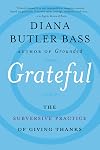
Diana Butler Bass confesses that, at one time, she was a "gratitude klutz." Her mother urged her to write thank you cards for birthday and holiday gifts. The author admits, "I was not good at it. I did not want to do it, and I did not know what to say." Although, she insists, "The concept of gratitude captivated me," Butler Bass did not initially succeed in implementing such initiatives as keeping a gratitude journal, creating a family ritual of giving thanks at bedtime, and conducting the show more "Thanksgiving dinner exercise in which no one eats until everyone at the table says something they are thankful for." This turned out to be more of "a turkey hostage situation than a spiritual exercise in grace."
Now that she has a broader perspective on the subject, Ms. Butler Bass shares her thoughts in "Grateful: the Transformative Power of Giving Thanks." In this inspiring work of non-fiction, the author explores the philosophical, spiritual, emotional, and social aspects of thankfulness. Obviously, we cannot compel anyone to appreciate his or her blessings, but we can encourage people to recognize that gratitude confers benefits on the individual, community, society, and nation as a whole. "Gratitude strengthens our character and moral resolve, giving each of us the possibility of living peaceably and justly,” Butler Bass believes.
Although the author is a practicing Christian, this book is not geared to those who adhere to a particular belief system. Anyone can benefit from learning more about the meaning of gratitude, its history, types of gratitude, and how we express thanks. Using pertinent and poignant anecdotes, Butler Bass shows the ways in which gratitude can enhance our existence. Why should we take the time to tell a neighbor how much we appreciate their kindness? Give thanks for the gifts of life, health, and family? Or express gratitude for a lovely tree blossoming in the spring, a multi-colored sunset, or a star-studded sky? Gratitude moves us to see the big picture instead of becoming bogged down in the minutiae of everyday life. When practiced collectively, gratitude connects people in a positive manner. Especially during today's turbulent times, it is useful to be reminded that being grateful--not just for material possessions, but also for the intangible blessings that enrich our lives immeasurably--can make our world a much more nurturing and hospitable place. show less
Now that she has a broader perspective on the subject, Ms. Butler Bass shares her thoughts in "Grateful: the Transformative Power of Giving Thanks." In this inspiring work of non-fiction, the author explores the philosophical, spiritual, emotional, and social aspects of thankfulness. Obviously, we cannot compel anyone to appreciate his or her blessings, but we can encourage people to recognize that gratitude confers benefits on the individual, community, society, and nation as a whole. "Gratitude strengthens our character and moral resolve, giving each of us the possibility of living peaceably and justly,” Butler Bass believes.
Although the author is a practicing Christian, this book is not geared to those who adhere to a particular belief system. Anyone can benefit from learning more about the meaning of gratitude, its history, types of gratitude, and how we express thanks. Using pertinent and poignant anecdotes, Butler Bass shows the ways in which gratitude can enhance our existence. Why should we take the time to tell a neighbor how much we appreciate their kindness? Give thanks for the gifts of life, health, and family? Or express gratitude for a lovely tree blossoming in the spring, a multi-colored sunset, or a star-studded sky? Gratitude moves us to see the big picture instead of becoming bogged down in the minutiae of everyday life. When practiced collectively, gratitude connects people in a positive manner. Especially during today's turbulent times, it is useful to be reminded that being grateful--not just for material possessions, but also for the intangible blessings that enrich our lives immeasurably--can make our world a much more nurturing and hospitable place. show less

Having just finished Diarmaid MacCulloch's Christianity: The First Three Thousand Years, I can attest to the frustration Diana Bulter Bass expresses. The history of Christianity can feel like a tale of arguments, violence, crusades, inquisitions, and capitulation to power. It looks diametrically opposed to the actual life and teaching of Jesus Christ.
In A People's History of Christianity, Diana Bulter Bass attempts to tell (as the subtitle suggests), the other side of the story. In her show more words:
[quote]I sidestep issues of orthodoxy and instead focus on the moments when Christian people really acted like Christians, when they took seriously the call of Jesus to love God and love their neighbors as themselves. (15)[/quote]
The author accomplishes this by surveying (in wildly broad strokes) all eras of church history with special attention to how Christians exercised their devotion to God, their ethics to others.
Sounds good, right?
The truth is, despite the promise of the thesis, this book frustrated me. In the selection and interpretation of the stories, Diana Bulter Bass selectively expounded a version of Christianity that looks like her. Now, this is not a bad picture—I think it's fair to call her a progressive, inclusive, emergent-minded Christ-follower. That said, mining the history of Christianity for anecdotes and lives that confirm your view, only to call it a "People's History" implies that those who don't conform to your image are somehow in a category other than "people". Ironically, this is precisely what this history attempts to correct.
What the Jesus Seminar did with Jesus, Diana Bulter Bass has done with his followers. The great cloud of witnesses deserves to be taken on their own terms—warts and all. show less
In A People's History of Christianity, Diana Bulter Bass attempts to tell (as the subtitle suggests), the other side of the story. In her show more words:
[quote]I sidestep issues of orthodoxy and instead focus on the moments when Christian people really acted like Christians, when they took seriously the call of Jesus to love God and love their neighbors as themselves. (15)[/quote]
The author accomplishes this by surveying (in wildly broad strokes) all eras of church history with special attention to how Christians exercised their devotion to God, their ethics to others.
Sounds good, right?
The truth is, despite the promise of the thesis, this book frustrated me. In the selection and interpretation of the stories, Diana Bulter Bass selectively expounded a version of Christianity that looks like her. Now, this is not a bad picture—I think it's fair to call her a progressive, inclusive, emergent-minded Christ-follower. That said, mining the history of Christianity for anecdotes and lives that confirm your view, only to call it a "People's History" implies that those who don't conform to your image are somehow in a category other than "people". Ironically, this is precisely what this history attempts to correct.
What the Jesus Seminar did with Jesus, Diana Bulter Bass has done with his followers. The great cloud of witnesses deserves to be taken on their own terms—warts and all. show less
Diana Butler Bass confesses that, at one time, she was a "gratitude klutz." Her mother urged her to write thank you cards for birthday and holiday gifts. The author admits, "I was not good at it. I did not want to do it, and I did not know what to say." Although, she insists, "The concept of gratitude captivated me," Butler Bass did not initially succeed in implementing such initiatives as keeping a gratitude journal, creating a family ritual of giving thanks at bedtime, and conducting the show more "Thanksgiving dinner exercise in which no one eats until everyone at the table says something they are thankful for." This turned out to be more of "a turkey hostage situation than a spiritual exercise in grace."
Now that she has a broader perspective on the subject, Ms. Butler Bass shares her thoughts in "Grateful: the Transformative Power of Giving Thanks." In this inspiring work of non-fiction, the author explores the philosophical, spiritual, emotional, and social aspects of thankfulness. Obviously, we cannot compel anyone to appreciate his or her blessings, but we can encourage people to recognize that gratitude confers benefits on the individual, community, society, and nation as a whole. "Gratitude strengthens our character and moral resolve, giving each of us the possibility of living peaceably and justly,” Butler Bass believes.
Although the author is a practicing Christian, this book is not geared to those who adhere to a particular belief system. Anyone can benefit from learning more about the meaning of gratitude, its history, types of gratitude, and how we express thanks. Using pertinent and poignant anecdotes, Butler Bass shows the ways in which gratitude can enhance our existence. Why should we take the time to tell a neighbor how much we appreciate their kindness? Give thanks for the gifts of life, health, and family? Or express gratitude for a lovely tree blossoming in the spring, a multi-colored sunset, or a star-studded sky? Gratitude moves us to see the big picture instead of becoming bogged down in the minutiae of everyday life. When practiced collectively, gratitude connects people in a positive manner. Especially during today's turbulent times, it is useful to be reminded that being grateful--not just for material possessions, but also for the intangible blessings that enrich our lives immeasurably--can make our world a much more nurturing and hospitable place. show less
Now that she has a broader perspective on the subject, Ms. Butler Bass shares her thoughts in "Grateful: the Transformative Power of Giving Thanks." In this inspiring work of non-fiction, the author explores the philosophical, spiritual, emotional, and social aspects of thankfulness. Obviously, we cannot compel anyone to appreciate his or her blessings, but we can encourage people to recognize that gratitude confers benefits on the individual, community, society, and nation as a whole. "Gratitude strengthens our character and moral resolve, giving each of us the possibility of living peaceably and justly,” Butler Bass believes.
Although the author is a practicing Christian, this book is not geared to those who adhere to a particular belief system. Anyone can benefit from learning more about the meaning of gratitude, its history, types of gratitude, and how we express thanks. Using pertinent and poignant anecdotes, Butler Bass shows the ways in which gratitude can enhance our existence. Why should we take the time to tell a neighbor how much we appreciate their kindness? Give thanks for the gifts of life, health, and family? Or express gratitude for a lovely tree blossoming in the spring, a multi-colored sunset, or a star-studded sky? Gratitude moves us to see the big picture instead of becoming bogged down in the minutiae of everyday life. When practiced collectively, gratitude connects people in a positive manner. Especially during today's turbulent times, it is useful to be reminded that being grateful--not just for material possessions, but also for the intangible blessings that enrich our lives immeasurably--can make our world a much more nurturing and hospitable place. show less
Lists
Awards


You May Also Like


Associated Authors
Statistics
- Works
- 13
- Also by
- 2
- Members
- 3,200
- Popularity
- #7,992
- Rating
- 3.8
- Reviews
- 35
- ISBNs
- 53
- Favorited
- 1