
Niklas Natt och Dag
Author of 1793: The Wolf and the Watchman
About the Author
Image credit: Foto: Thron Ullberg
Series
Works by Niklas Natt och Dag
Tagged
Common Knowledge
- Legal name
- Natt och Dag, Niklas Carl Bosson
- Birthdate
- 1979-10-03
- Gender
- male
- Occupations
- Journalist
- Nationality
- Sweden
- Birthplace
- Stockholm, Sweden
- Map Location
- Sweden
Members
Reviews
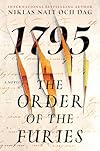
The Publisher Says: The spellbinding and eerie finale to the #1 internationally bestselling “cerebral, immersive” (The Washington Post) historical trilogy follows two unlikely allies as they struggle to end the reign of a powerful cabal of depraved hedonists in 18th-century Stockholm.
For more than a year, brilliant lawyer Emil Winge has dedicated himself to capturing the diabolical Tycho Ceton, with the invaluable assistance of one-armed army veteran and watchman Jean Michael Cardell. show more Their mission is made more difficult by the ever-increasing paranoia gripping Sweden’s royal family, who fear that a bloody revolution is brewing. A letter with the names of the revolutionary conspirators is said to be in the possession of Anna Stina Knapp, a good friend to Cardell. Now, Anna is missing and Cardell is determined to find her before the secret police take her into custody.
While Winge and Cardell fight for justice and for life, they find themselves caught between powerful enemies—those who will do anything to maintain the status quo, and those who will only be satisfied with its total destruction. Niklas Natt och Dag brilliantly concludes his immersion into the dark and turbulent waters of 18th-century Stockholm.
I RECEIVED A DRC FROM THE PUBLISHER VIA NETGALLEY. THANK YOU.
My Review: Dark, turbulent story finishes the arc of this series with the finality of an amputation saw. We met Cecil Winge and Mickel Cardell in 1793 as a truly appalling series of crimes come to light. These men, one in the terminal stages of the Great White Plague (tuberculosis) that ravaged the cities of the time, refuse to just accept that human beings can be treated in the vile ways they've seen without any consequences. Solid Enlightenment values on display, then. A human being has innate worth and dignity, and the kind of killing being perpetrated by someone(s) is an affront to that dignity.
It is hard for us to get into that mindset today. The privilege baked into the world we live in is now centered on money as worth and virtue; then it was god-given by birth. Whose vagina you were shoved out of was, forver and ever, the Place you occupied in this world and the next. Is it, I often wonder, better to base stuff on money? I mean, just look at the scum who hoard huge piles of money and get immense privilege! Unlike the old aristocracy, no one prepared them in any way for the responsibility of "high" social position so they waddle about, dribbling crudeness and outgassing idiocy like this wasn't a disgusting display of vulgarity.
Ahem.
Back to the book: The "high-born" people committing the crimes Mickel and the Winge brothers (Emil takes Cecil's place in the last two books of the series) are sufficiently enraged by to pursue them clearly don't have any noblesse oblige in them either. They behave disgustingly, but in private. The results of their disgusting behavior are simply dumped and there's no absolutely clear-cut way to pin it on the perpetrator(s) or to hold them accountable.
It's in the book! That's not me being political!
What happens in this last volume is the culmination of honest, honorable men pursuing justice across a corrupt landscape of privilege and abuse of power. It's a landscape that is absolute in its wins and losses. That is what suits the PTB, after all, since it's their thumbs on the scales of justice. The disgusting crimes, ones that repulse all honorable people of every station, in this book are less...meaty...but just as awful. The essential crime in the entire series, the one thing that unites the books and makes the reader invest in the characters and stories, is the abuse of power by the powerful. The lives of ordinary people are ruined at a whim, are altered for the worse by someone who has no consequences for that alteration. The team who set out to change that are doing so, bit by bit, in the teeth of a gale blown directly at them by men who do not want any precedents to be set that challenge their control.
The fierceness and appalling cruelty of the fight shows that they know the stakes are existential. Lose this one battle against two little nobodies and lose, once and for all, the Absolute Rights they presently enjoy. The force applied to Mickel and the Winges only makes sense when you look at it from the position of those whose power is at stake. The power that the little guys are fighting to take, the justice that they seek for victims cruelly used, is not out of proportion, that is overtly revolutionary, so why is it being resisted so fiercely?
Because once limited, absolute power dissolves. If held accountable for *this* crime, there is no longer immunity, no longer a usable reason to quash future and further reckonings. Why do you think there's something called a "consent decree"? The entire apparatus of Sweden's absolute monarchy topples if these two little men win Justice for the victims they're fighting for!
Do they, in the end, win? Read the book(s), dark and violent as they are, because I'm scared of the Spoiler Stasi. Those women take no prisoners. show less
For more than a year, brilliant lawyer Emil Winge has dedicated himself to capturing the diabolical Tycho Ceton, with the invaluable assistance of one-armed army veteran and watchman Jean Michael Cardell. show more Their mission is made more difficult by the ever-increasing paranoia gripping Sweden’s royal family, who fear that a bloody revolution is brewing. A letter with the names of the revolutionary conspirators is said to be in the possession of Anna Stina Knapp, a good friend to Cardell. Now, Anna is missing and Cardell is determined to find her before the secret police take her into custody.
While Winge and Cardell fight for justice and for life, they find themselves caught between powerful enemies—those who will do anything to maintain the status quo, and those who will only be satisfied with its total destruction. Niklas Natt och Dag brilliantly concludes his immersion into the dark and turbulent waters of 18th-century Stockholm.
I RECEIVED A DRC FROM THE PUBLISHER VIA NETGALLEY. THANK YOU.
My Review: Dark, turbulent story finishes the arc of this series with the finality of an amputation saw. We met Cecil Winge and Mickel Cardell in 1793 as a truly appalling series of crimes come to light. These men, one in the terminal stages of the Great White Plague (tuberculosis) that ravaged the cities of the time, refuse to just accept that human beings can be treated in the vile ways they've seen without any consequences. Solid Enlightenment values on display, then. A human being has innate worth and dignity, and the kind of killing being perpetrated by someone(s) is an affront to that dignity.
It is hard for us to get into that mindset today. The privilege baked into the world we live in is now centered on money as worth and virtue; then it was god-given by birth. Whose vagina you were shoved out of was, forver and ever, the Place you occupied in this world and the next. Is it, I often wonder, better to base stuff on money? I mean, just look at the scum who hoard huge piles of money and get immense privilege! Unlike the old aristocracy, no one prepared them in any way for the responsibility of "high" social position so they waddle about, dribbling crudeness and outgassing idiocy like this wasn't a disgusting display of vulgarity.
Ahem.
Back to the book: The "high-born" people committing the crimes Mickel and the Winge brothers (Emil takes Cecil's place in the last two books of the series) are sufficiently enraged by to pursue them clearly don't have any noblesse oblige in them either. They behave disgustingly, but in private. The results of their disgusting behavior are simply dumped and there's no absolutely clear-cut way to pin it on the perpetrator(s) or to hold them accountable.
It's in the book! That's not me being political!
What happens in this last volume is the culmination of honest, honorable men pursuing justice across a corrupt landscape of privilege and abuse of power. It's a landscape that is absolute in its wins and losses. That is what suits the PTB, after all, since it's their thumbs on the scales of justice. The disgusting crimes, ones that repulse all honorable people of every station, in this book are less...meaty...but just as awful. The essential crime in the entire series, the one thing that unites the books and makes the reader invest in the characters and stories, is the abuse of power by the powerful. The lives of ordinary people are ruined at a whim, are altered for the worse by someone who has no consequences for that alteration. The team who set out to change that are doing so, bit by bit, in the teeth of a gale blown directly at them by men who do not want any precedents to be set that challenge their control.
The fierceness and appalling cruelty of the fight shows that they know the stakes are existential. Lose this one battle against two little nobodies and lose, once and for all, the Absolute Rights they presently enjoy. The force applied to Mickel and the Winges only makes sense when you look at it from the position of those whose power is at stake. The power that the little guys are fighting to take, the justice that they seek for victims cruelly used, is not out of proportion, that is overtly revolutionary, so why is it being resisted so fiercely?
Because once limited, absolute power dissolves. If held accountable for *this* crime, there is no longer immunity, no longer a usable reason to quash future and further reckonings. Why do you think there's something called a "consent decree"? The entire apparatus of Sweden's absolute monarchy topples if these two little men win Justice for the victims they're fighting for!
Do they, in the end, win? Read the book(s), dark and violent as they are, because I'm scared of the Spoiler Stasi. Those women take no prisoners. show less
I had to wait for my blood pressure and heart rate to calm down before writing a review on this Novel.
A vividly written, unusual, intriguing and atmospheric Scandinavian crime thriller / horror / historical fiction story that made for difficult reading in places due to its very graphic content and yet apparently an accurate portrayal of 1780 Stockholm and I came away from this one with a feeling of gratitude for not having lived in the late 1700s as I don't think I would have lasted 5 show more minutes in that barbaric squalor, depraved and diseased city. extremely well written and translated and a compelling read, this one kept me up well into the night and haunted my thoughts for a long time after. A real page turner for those who can stomach it. What an intriguing debut novel.
First a warning................This is not an easy read. It is not for readers who find graphic descriptions of injuries, Despicable characters, war or torture upsetting and Niklas Natt Och Dag doesn't shy away from graphic detail.
Stockholm 1793, King Gustav of Sweden has been assassinated, When night watchman Mickel Cardell pulls the remains of a man from a lake, the ex soldier is confronted with a corpse that has been subjected to prolonged torture , his arms and legs cut away, his tongue and eyes removed. What or Who is capable of such depraved torture and why?
Superb writing and vivid descriptions of a city and its inhabitants in the late 1700s. I read this one with my husband and we were completely engrossed in the story and the characters and while it is a little out of my comfort zone, I loved the historical element and mystery to this one, it has a strange eerie feel to it which I loved and the sense of time and place is excellent. The crime element of the story is very well crafted and executed.
I had a hard copy of this novel and the audio version as well and was lucky to be able to switch between the two, the audio was narrated by 3 narrators and their narration of this story was excellent. It was haunting and atmospheric and so much so that while out forest walking and I had to switch off as it was way too scary to listen to in a deserted forest.
This is a book you choose to read and not a book that should be chosen for you.
show less
A vividly written, unusual, intriguing and atmospheric Scandinavian crime thriller / horror / historical fiction story that made for difficult reading in places due to its very graphic content and yet apparently an accurate portrayal of 1780 Stockholm and I came away from this one with a feeling of gratitude for not having lived in the late 1700s as I don't think I would have lasted 5 show more minutes in that barbaric squalor, depraved and diseased city. extremely well written and translated and a compelling read, this one kept me up well into the night and haunted my thoughts for a long time after. A real page turner for those who can stomach it. What an intriguing debut novel.
First a warning................This is not an easy read. It is not for readers who find graphic descriptions of injuries, Despicable characters, war or torture upsetting and Niklas Natt Och Dag doesn't shy away from graphic detail.
Stockholm 1793, King Gustav of Sweden has been assassinated, When night watchman Mickel Cardell pulls the remains of a man from a lake, the ex soldier is confronted with a corpse that has been subjected to prolonged torture , his arms and legs cut away, his tongue and eyes removed. What or Who is capable of such depraved torture and why?
Superb writing and vivid descriptions of a city and its inhabitants in the late 1700s. I read this one with my husband and we were completely engrossed in the story and the characters and while it is a little out of my comfort zone, I loved the historical element and mystery to this one, it has a strange eerie feel to it which I loved and the sense of time and place is excellent. The crime element of the story is very well crafted and executed.
I had a hard copy of this novel and the audio version as well and was lucky to be able to switch between the two, the audio was narrated by 3 narrators and their narration of this story was excellent. It was haunting and atmospheric and so much so that while out forest walking and I had to switch off as it was way too scary to listen to in a deserted forest.
This is a book you choose to read and not a book that should be chosen for you.
show less
Originally published in Swedish as “1793”, Niklas Natt och Dag’s debut novel will soon be available in English in an idiomatic translation by Ebba Segerberg. And it has all the makings of a literary bestseller. The story is set in Stockholm in the late 18th Century. Europe is still in awe of the revolutionary goings-on in France and, following the assassination of Gustav III, revolutionary fervour in the Swedish city is tempered by a sense of fear and dread as to what might happen if show more matters get out of hand. In this incendiary environment, Mickell Cardell, a one-armed ex-soldier and night watchman, makes a grisly find. Somebody has disposed of a body in the city’s lake – and it is a body with excised limbs and gouged eyes, testifying to a slow and painful death. This is the type of crime whose investigation the Head of the Stockholm Police can only assign to a trusted person – and that’s Cecil Winge, a lawyer with progressive ideals who is battling the last stages of consumption. Winge teams up with Cardell and together they attempt to crack the case. Their fraught journey will take them through all layers of Stockholm society, from the lowest classes to the supposed elite of the city, who also have their dark and base secrets.
In a virtuoso feat of storytelling, Niklas Natt och Dag introduces two further strands in his tale, which are presented to the reader in reverse chronological order. First there is the epistolary account of Kristofer Blix, a handsome young man who moves to Stockholm with the dream of becoming a doctor. Then there is the story of Anna-Stina, sent to a dreary workhouse after being wrongly accused of working as a prostitute. In the final chapters, these three threads combine to create a satisfying finale. Some plot twists are rather too convenient, but the momentum is such that one gladly suspends disbelief.
So why is The Wolf and the Watchman good “historical fiction”? First of all, the setting is no mere “appendage” to the story – the beliefs, ideals and way of life of the period fuel both the plot and the characters’ motivations and thought processes. Secondly, the historical context is authentic, not simply in the sense of being well-researched (though it seems to be that as well), but more importantly in that the novel places us soundly in the period it is describing. Indeed, the descriptions do not shy away from the revolting – whether stench, disease or bodily fluids. In this respect, a warning to the fainthearted is in order – the novel can be very graphic and I must admit to skipping a couple of paragraphs and reading some others whilst peeping between my fingers. It can be dark, it can be bleak, but it certainly cannot be accused of presenting the past with nostalgic, rose-tinted hues.
At the same time, I liked the fact that the author plays around with the genre. The Wolf and the Watchman presents elements of the “police procedural” and, in its use of an investigating duo combining brain and brawn, it pays tribute to classic detective fiction. There is also a strong noir element – the customers of smokey nightclubs and striptease joints replaced by the tobacco-chewing patrons of Stockholm pubs and coffee-houses. And, to the great pleasure of yours truly, there is more than a whiff of Gothic in some of the darker pages of the text.
1793 was voted best debut novel of 2017 by the Swedish Academy of Crime Writers. It’s a deserved win and, hopefully, its English translation will bring it to the attention of a wider audience.
A longer version of this review, with tips for accompanying music, can be found at Ends of the Word.
https://endsoftheword.blogspot.com/2019/01/stockholm-1793.html
4.5* show less
In a virtuoso feat of storytelling, Niklas Natt och Dag introduces two further strands in his tale, which are presented to the reader in reverse chronological order. First there is the epistolary account of Kristofer Blix, a handsome young man who moves to Stockholm with the dream of becoming a doctor. Then there is the story of Anna-Stina, sent to a dreary workhouse after being wrongly accused of working as a prostitute. In the final chapters, these three threads combine to create a satisfying finale. Some plot twists are rather too convenient, but the momentum is such that one gladly suspends disbelief.
So why is The Wolf and the Watchman good “historical fiction”? First of all, the setting is no mere “appendage” to the story – the beliefs, ideals and way of life of the period fuel both the plot and the characters’ motivations and thought processes. Secondly, the historical context is authentic, not simply in the sense of being well-researched (though it seems to be that as well), but more importantly in that the novel places us soundly in the period it is describing. Indeed, the descriptions do not shy away from the revolting – whether stench, disease or bodily fluids. In this respect, a warning to the fainthearted is in order – the novel can be very graphic and I must admit to skipping a couple of paragraphs and reading some others whilst peeping between my fingers. It can be dark, it can be bleak, but it certainly cannot be accused of presenting the past with nostalgic, rose-tinted hues.
At the same time, I liked the fact that the author plays around with the genre. The Wolf and the Watchman presents elements of the “police procedural” and, in its use of an investigating duo combining brain and brawn, it pays tribute to classic detective fiction. There is also a strong noir element – the customers of smokey nightclubs and striptease joints replaced by the tobacco-chewing patrons of Stockholm pubs and coffee-houses. And, to the great pleasure of yours truly, there is more than a whiff of Gothic in some of the darker pages of the text.
1793 was voted best debut novel of 2017 by the Swedish Academy of Crime Writers. It’s a deserved win and, hopefully, its English translation will bring it to the attention of a wider audience.
A longer version of this review, with tips for accompanying music, can be found at Ends of the Word.
https://endsoftheword.blogspot.com/2019/01/stockholm-1793.html
4.5* show less
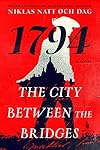
The Publisher Says: A #1 international bestseller, this atmospheric and breathtaking sequel to the “cerebral, immersive page-turner” (The Washington Post) [The Wolf and the Watchman] explores the darkness hidden beneath the splendor of 18th-century Stockholm.
Stockholm, 1794: A young nobleman, Eric Three Roses, languishes in a hospital as the rest of the city claims that he belongs in a madhouse. Riddled with guilt, he writes down the memories of his lost love—his beautiful wife who show more died on their wedding night.
The young woman’s mother also mourns her death and, desperate for justice, begs for help from the only person who will listen to her: Jean Mickel Cardell, the one-armed watchman. But she isn’t the only person seeking him out.
Emil, younger brother to the brilliant lawyer and detective Cecil Winge, finds the watchman to demand his late brother’s pocket watch back. Instead, Cardell enlists Emil’s help to discover what really happened at the Three Roses estate that dreaded wedding night.
The City Between the Bridges: 1794 is a suspenseful race for the truth before it’s too late from an author with a “thrilling, unnerving, clever, and beautiful” (Fredrik Backman, #1 New York Times bestselling author) voice.
I RECEIVED A DRC FROM THE PUBLISHER VIA NETGALLEY. THANK YOU.
My Review: Splendidly grim; staggeringly brutal.
Really, I could stop typing right there. What you need to know is: The first book isn't a necessity to read before this one, but I recommend it. If that book's truly dreadful crimes don't cause you to blench, this one's won't either plus you'll already know Mickel Cardell...he's central to the point of view of Enlightenment-era Stockholm from below our usual ten-thousand-foot aerie of aristocracy of the mind or the law. History glosses over so much.
The author and the translator must have worked closely together on this series to maintain such a clear sense of the language being used with great exactness and concision. The way the imagery unfolds is gripping, especially in the more awful parts...and there are plenty of them!...so I'm not going to spend a lot of keystrokes specifying the CWs. Trust me, if you need a content warning, you might shouldn't pick this series up. Bodies and minds are abused, ground down, commodified. No one in this book has a shred of a chance at happiness.
If that matters to you, shop elsewhere.
What you'll get in this shop is a very trenchant take on the role of power in corrupting the powerful's souls. What happens when no one can say no to you is never pretty. What happens to others is downright horrifying. It behooves the reader willing to come down the fetid alleys and swim across the reeking canals to realize what dehumanizing and Othering costs the Othered, but also those passively complicit in it.
The manner in which the story is constructed, multiple apparently disconnected viewpoints, isn't at first obviously going to lead us to Stockholm and Mickel. Be patient...it will. But that polyphony that feels so alienating early on is, in the end, an effective tool for conveying the reality of the story to the observing eye of the reader.
I don't for a second think too many will see the ending coming. That is praise, coming from me. I can't honestly say I felt ma'at upheld in the resolution. Because nothing on this wide green Earth can redress the balance of horror and misery unleashed on the people in it. But it doesn't stop being worth the trip.
So no happy happy, joy joy. But a lot of seriously good points being made in prose more than up to the task of delivering the burden of the tale in unforgettable ways. show less
Stockholm, 1794: A young nobleman, Eric Three Roses, languishes in a hospital as the rest of the city claims that he belongs in a madhouse. Riddled with guilt, he writes down the memories of his lost love—his beautiful wife who show more died on their wedding night.
The young woman’s mother also mourns her death and, desperate for justice, begs for help from the only person who will listen to her: Jean Mickel Cardell, the one-armed watchman. But she isn’t the only person seeking him out.
Emil, younger brother to the brilliant lawyer and detective Cecil Winge, finds the watchman to demand his late brother’s pocket watch back. Instead, Cardell enlists Emil’s help to discover what really happened at the Three Roses estate that dreaded wedding night.
The City Between the Bridges: 1794 is a suspenseful race for the truth before it’s too late from an author with a “thrilling, unnerving, clever, and beautiful” (Fredrik Backman, #1 New York Times bestselling author) voice.
I RECEIVED A DRC FROM THE PUBLISHER VIA NETGALLEY. THANK YOU.
My Review: Splendidly grim; staggeringly brutal.
Really, I could stop typing right there. What you need to know is: The first book isn't a necessity to read before this one, but I recommend it. If that book's truly dreadful crimes don't cause you to blench, this one's won't either plus you'll already know Mickel Cardell...he's central to the point of view of Enlightenment-era Stockholm from below our usual ten-thousand-foot aerie of aristocracy of the mind or the law. History glosses over so much.
The author and the translator must have worked closely together on this series to maintain such a clear sense of the language being used with great exactness and concision. The way the imagery unfolds is gripping, especially in the more awful parts...and there are plenty of them!...so I'm not going to spend a lot of keystrokes specifying the CWs. Trust me, if you need a content warning, you might shouldn't pick this series up. Bodies and minds are abused, ground down, commodified. No one in this book has a shred of a chance at happiness.
If that matters to you, shop elsewhere.
What you'll get in this shop is a very trenchant take on the role of power in corrupting the powerful's souls. What happens when no one can say no to you is never pretty. What happens to others is downright horrifying. It behooves the reader willing to come down the fetid alleys and swim across the reeking canals to realize what dehumanizing and Othering costs the Othered, but also those passively complicit in it.
The manner in which the story is constructed, multiple apparently disconnected viewpoints, isn't at first obviously going to lead us to Stockholm and Mickel. Be patient...it will. But that polyphony that feels so alienating early on is, in the end, an effective tool for conveying the reality of the story to the observing eye of the reader.
I don't for a second think too many will see the ending coming. That is praise, coming from me. I can't honestly say I felt ma'at upheld in the resolution. Because nothing on this wide green Earth can redress the balance of horror and misery unleashed on the people in it. But it doesn't stop being worth the trip.
So no happy happy, joy joy. But a lot of seriously good points being made in prose more than up to the task of delivering the burden of the tale in unforgettable ways. show less
Lists
Awards


You May Also Like


Associated Authors
Statistics
- Works
- 7
- Members
- 1,589
- Popularity
- #16,232
- Rating
- 3.8
- Reviews
- 108
- ISBNs
- 154
- Languages
- 19