
Sesyle Joslin
Author of What Do You Say, Dear?
About the Author
Image credit: Sesyle Joslin
Series
Works by Sesyle Joslin
Dear Dragon . . . and Other Useful Letter Forms for Young Ladies and Gentlemen Engaged in Everyday Correspondence (1962) 23 copies, 1 review
The spy lady and the muffin man, 2 copies
Que dites-vous, cher ami? 1 copy
Baby elephant's baby book 1 copy
Piccolo Elefante va in Cina 1 copy
What Do You Do Dear? 1 copy
Tagged
Common Knowledge
- Legal name
- Hine, Sesyle Joslin
- Other names
- Gibson, Josephine
Kirtland, G. B.
Hine, Sesyle Joslin - Birthdate
- 1929-08-30
- Gender
- female
- Occupations
- children's author
- Nationality
- USA
- Places of residence
- Providence, Rhode Island, USA
New Milford, Connecticut, USA - Associated Place (for map)
- USA
Members
Reviews

What do you do if you're a fearsome pirate making your fine lady captive walk the plank, and she drops her handkerchief? Why pick it up for her, of course! What about if you're being kidnapped from the library by a villain named Bad-Nose Bill? Walk quietly out of the building - obviously! These and other pieces of helpful advise about the proper etiquette are offered here, in this charming, tongue-in-cheek guide to good manners.
Originally published in 1961, What Do You Do, Dear? is the show more second manners guide created by author Sesyle Joslin and illustrator Maurice Sendak, following upon their earlier What Do You Say, Dear? (1958), which was chosen as a Caldecott Honor Book in 1959. It is a droll exploration of good manners, emphasizing through extraordinary and unusual story-lines, the proper course of conduct, in more mundane times. One presumes, after all, that it isn't bad manners to object, when being kidnapped! Otherwise, of course, quiet in the library is advisable. Recommended to Sendak fans, people who enjoy vintage picture-books (there is some socially outdated material here), or anyone looking for entertaining examinations of etiquette for young children. show less
Originally published in 1961, What Do You Do, Dear? is the show more second manners guide created by author Sesyle Joslin and illustrator Maurice Sendak, following upon their earlier What Do You Say, Dear? (1958), which was chosen as a Caldecott Honor Book in 1959. It is a droll exploration of good manners, emphasizing through extraordinary and unusual story-lines, the proper course of conduct, in more mundane times. One presumes, after all, that it isn't bad manners to object, when being kidnapped! Otherwise, of course, quiet in the library is advisable. Recommended to Sendak fans, people who enjoy vintage picture-books (there is some socially outdated material here), or anyone looking for entertaining examinations of etiquette for young children. show less
Dear Dragon . . . and Other Useful Letter Forms for Young Ladies and Gentlemen Engaged in Everyday Correspondence by Sesyle Joslin

Oh my! How funny! Never mind that no one writes and mails letters any more, the stories and comical illustrations should tickle the heart of any child.
My favorite was
"Your friend the balloonist has invited you up for the weekend. You spend your time bird-watching and having high tea, and it is all very pleasant. When the weekend is over, the balloonist drops you off. Unfortunately, you land on a desert island full of rather strange beasts.
Whereupon you pick up your pen, and this is what show more you write:
Dear Balloonist:
Thank you for the delightful weekend. I had a very lovely time.
Affectionately yours,"
LOL. Ah, the 60s, back when we still were striving to save a polite civilization even if stranded on a desert island. This book was an imaginative and humorous effort to teach children how to actually compose all kinds of letters.
I picked this up from a Free Little Library today; it came from our own local library. (Wouldn't I just love to have all their old 60s kids books, to inundate myself with the joy in them!!) I'm sending this one off to a friend in Idaho, for one of her granddaughters who actually looks a little like the girl on the cover. If the granddaughter doesn't enjoy it, my friend certainly will. show less
My favorite was
"Your friend the balloonist has invited you up for the weekend. You spend your time bird-watching and having high tea, and it is all very pleasant. When the weekend is over, the balloonist drops you off. Unfortunately, you land on a desert island full of rather strange beasts.
Whereupon you pick up your pen, and this is what show more you write:
Dear Balloonist:
Thank you for the delightful weekend. I had a very lovely time.
Affectionately yours,"
LOL. Ah, the 60s, back when we still were striving to save a polite civilization even if stranded on a desert island. This book was an imaginative and humorous effort to teach children how to actually compose all kinds of letters.
I picked this up from a Free Little Library today; it came from our own local library. (Wouldn't I just love to have all their old 60s kids books, to inundate myself with the joy in them!!) I'm sending this one off to a friend in Idaho, for one of her granddaughters who actually looks a little like the girl on the cover. If the granddaughter doesn't enjoy it, my friend certainly will. show less
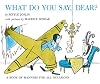
This book tries to teach manners (no idea if it's successful), and avoids being totally condescending and didactic by putting them all in the case of bizarre, childish make-believe scenarios. What do you say when you're walking backwards to town (because you like to do that) and bump into an alligator? What do you say when you're flying your plane and remember the Duchess asked you to drop in, so you do and break her roof?
It's silliness incarnate, and you have to love it!
There are three show more scenarios in particular that reviewers have commented on, so let's tackle those.
The first is the "decapitation". In this case you're asked what you say when you're out picking flowers in front of your castle, a dragon appears and breathes smoke at you, and then a knight saves you by chopping off its head. (You say thank you.)
There's no blood or anything gory shown, and as far as I'm concerned the princess being saved from the dragon by the knight is a common fairy tale set-up. I don't have a problem with this. There are more violent scenes in both classic and recent Disney animated films, nobody is claiming the dragon was talking and friendly and just violently attacked - I have no problem with this scene for this age group. Let's move on.
The next one is where you are a cowboy. Suddenly the bad guy shows up and holds a gun to your head and asks "Would you like me to shoot a hole in your head?" (You say "no thank you", which strikes me as perfectly sensible.)
This one is a bit trickier. I'll be honest and skip ahead a bit by saying I, personally have no problem with ANY of this book - but in this case I can really see why some people do. The scene is a bit explicit, and the Western is no longer a popular form of drama anyway so it's not like this situation is likely to have come up in your child's play.
However, as nobody actually gets hurt, I'd say most kids won't even notice to be upset. There's more violent scenes on cartoons in the morning.
And the last one that people have complained about is the one where you're a pirate and have captured a lady and tied her up. Every morning when you untie her to eat breakfast she says "Good morning, how are you?" and you are supposed to say the same.
As far as this goes... meh. Clearly nobody is being particularly ill-treated.
Now, overall, I don't mind any of these scenes because I know quite a few children. This sort of thing and more is exactly what they come up with when they're playing pretend. If you think children do not play-act violence you are very much mistaken. They do. They do it because it's exciting. They do it because it's fun to practice being really bad in a safe way that doesn't actually harm anyone, when in real life they work so hard to be GOOD. They do it because these things scare them and playing them makes them less scary. They do because the stories they are exposed to have violence there, explicit or implied, and they want to understand that. They do because you can't have a good story without a villain.
And children have been doing this for as long as there have been children to play pretend at all. I do not believe that this is in any way linked to actual violence when these children grow up.
Obviously if your child is bothered by this sort of pretend violence, don't read them this book. Or if you are. However, truthfully, I don't think it's that big a deal in this context. show less
It's silliness incarnate, and you have to love it!
There are three show more scenarios in particular that reviewers have commented on, so let's tackle those.
The first is the "decapitation". In this case you're asked what you say when you're out picking flowers in front of your castle, a dragon appears and breathes smoke at you, and then a knight saves you by chopping off its head. (You say thank you.)
There's no blood or anything gory shown, and as far as I'm concerned the princess being saved from the dragon by the knight is a common fairy tale set-up. I don't have a problem with this. There are more violent scenes in both classic and recent Disney animated films, nobody is claiming the dragon was talking and friendly and just violently attacked - I have no problem with this scene for this age group. Let's move on.
The next one is where you are a cowboy. Suddenly the bad guy shows up and holds a gun to your head and asks "Would you like me to shoot a hole in your head?" (You say "no thank you", which strikes me as perfectly sensible.)
This one is a bit trickier. I'll be honest and skip ahead a bit by saying I, personally have no problem with ANY of this book - but in this case I can really see why some people do. The scene is a bit explicit, and the Western is no longer a popular form of drama anyway so it's not like this situation is likely to have come up in your child's play.
However, as nobody actually gets hurt, I'd say most kids won't even notice to be upset. There's more violent scenes on cartoons in the morning.
And the last one that people have complained about is the one where you're a pirate and have captured a lady and tied her up. Every morning when you untie her to eat breakfast she says "Good morning, how are you?" and you are supposed to say the same.
As far as this goes... meh. Clearly nobody is being particularly ill-treated.
Now, overall, I don't mind any of these scenes because I know quite a few children. This sort of thing and more is exactly what they come up with when they're playing pretend. If you think children do not play-act violence you are very much mistaken. They do. They do it because it's exciting. They do it because it's fun to practice being really bad in a safe way that doesn't actually harm anyone, when in real life they work so hard to be GOOD. They do it because these things scare them and playing them makes them less scary. They do because the stories they are exposed to have violence there, explicit or implied, and they want to understand that. They do because you can't have a good story without a villain.
And children have been doing this for as long as there have been children to play pretend at all. I do not believe that this is in any way linked to actual violence when these children grow up.
Obviously if your child is bothered by this sort of pretend violence, don't read them this book. Or if you are. However, truthfully, I don't think it's that big a deal in this context. show less
What Do You Say, Dear? A Book of Manners for all Occasions, is a funny and lighthearted way to discuss the importance of being polite with children. I think this book is more appropriate in a home library than the classroom. The wonderful illustrations by Maurice Sendak demonstrate action scenes ranging from one bumping into a crocodile on a city street, being saved by a knight from a fierce dragon and piloting a plane into a duchess’s house for tea.
In each over the top situation, the show more author asks, “what do you say dear?” The simple but polite answers such as “thank you very much” are hilarious in light of these extreme situations. The absurdity of this book will make a read aloud full of laughter while reiterating the importance of manners to children. The pictures, however, are what make the book funny enough to sustain a topic that might otherwise seem heavy handed. show less
In each over the top situation, the show more author asks, “what do you say dear?” The simple but polite answers such as “thank you very much” are hilarious in light of these extreme situations. The absurdity of this book will make a read aloud full of laughter while reiterating the importance of manners to children. The pictures, however, are what make the book funny enough to sustain a topic that might otherwise seem heavy handed. show less
Lists
Awards


You May Also Like


Associated Authors
Statistics
- Works
- 33
- Members
- 1,642
- Popularity
- #15,642
- Rating
- 4.2
- Reviews
- 23
- ISBNs
- 49
- Languages
- 7
- Favorited
- 1
