

Adrienne Mayor
Author of The Poison King: The Life and Legend of Mithradates, Rome's Deadliest Enemy
About the Author
Adrienne Mayor is a research scholar in classics and history of science at Stanford University, and the author of The Poison King: The Life and Legend of Mithradates, Rome's Deadliest Enemy (Princeton), which was a finalist for the National Book Award.
Works by Adrienne Mayor
The Poison King: The Life and Legend of Mithradates, Rome's Deadliest Enemy (2009) 605 copies, 17 reviews
Greek Fire, Poison Arrows, and Scorpion Bombs: Biological and Chemical Warfare in the Ancient World (2008) 494 copies, 12 reviews
The Amazons: Lives and Legends of Warrior Women Across the Ancient World (2014) 401 copies, 7 reviews
Associated Works
Women in Antiquity: Real Women across the Ancient World (Rewriting Antiquity) (2016) — Contributor — 17 copies
MHQ: The Quarterly Journal of Military History — Summer 1991 (1991) — Co-Author "Amazons" — 16 copies
MHQ: The Quarterly Journal of Military History — Autumn 1997 (1997) — Author "Dirty Tricks in Ancient Warfare" — 13 copies
MHQ: The Quarterly Journal of Military History — Winter 1999 (1998) — Author "Giants in Ancient Warfare" — 11 copies
Tagged
Common Knowledge
- Canonical name
- Mayor, Adrienne
- Other names
- MAYOR, Adrienne
- Birthdate
- 1946-04-22
- Gender
- female
- Education
- University of Minnesota
- Occupations
- independent scholar
author - Organizations
- Society of Vertebrate Paleontology
History of Science Society
American Folklore Society
International Society for Contemporary Legend Research
Stanford University - Awards and honors
- Honorary Doctorate (Montana State University)
- Agent
- Sandra Dijkstra Literary Agency
- Nationality
- USA
- Birthplace
- Bento, Illionis, USA
- Places of residence
- Palo Alto, California, USA
Bozeman, Montana, USA
Princeton, New Jersey, USA - Associated Place (for map)
- USA
Members
Reviews
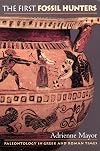
The First Fossil Hunters presents a fascinating exploration of how ancient Greeks and Romans interpreted the fossil remains they discovered. The author hypothesizes that many mythological creatures, including griffins and giants, may have originated from attempts to make sense of prehistoric bones. Though Mayor is not a trained scientist, she has done extensive research combining archaeology, folklore, paleontology, and classical texts. She has discussed her findings with a number of show more scientists, who have assisted her in analyzing her theories. Mayor demonstrates how ancient peoples found, documented, and interpreted enormous bones of dinosaurs and other extinct animals.
I particularly enjoyed Mayor's discussion of the relationship between griffins and dinosaur fossils in Central Asia. She presents evidence that Scythian gold miners in the Gobi Desert regularly encountered the fossilized remains of Protoceratops and other dinosaurs, leading to tales of fierce creatures guarding gold deposits. I also enjoyed her analysis of the myths of giants and heroes, and how they might relate to discoveries of mammoth and other Pleistocene remains in the Mediterranean region. She cites passages from classic texts that reveal surprisingly accurate descriptions of fossil beds and prehistoric remains from well-known existing sites.
Mayor's interdisciplinary approach helps us understand how ancient civilizations made sense of their world. One of the book's greatest strengths lies in its demonstration that rational observation and mythological thinking were not mutually exclusive in antiquity but were complementary ways of explaining natural phenomena. I found it interesting to contemplate how scientific curiosity would have been expressed in ancient times. Recommended to those interested in mythology, archeology, and paleontology. show less
I particularly enjoyed Mayor's discussion of the relationship between griffins and dinosaur fossils in Central Asia. She presents evidence that Scythian gold miners in the Gobi Desert regularly encountered the fossilized remains of Protoceratops and other dinosaurs, leading to tales of fierce creatures guarding gold deposits. I also enjoyed her analysis of the myths of giants and heroes, and how they might relate to discoveries of mammoth and other Pleistocene remains in the Mediterranean region. She cites passages from classic texts that reveal surprisingly accurate descriptions of fossil beds and prehistoric remains from well-known existing sites.
Mayor's interdisciplinary approach helps us understand how ancient civilizations made sense of their world. One of the book's greatest strengths lies in its demonstration that rational observation and mythological thinking were not mutually exclusive in antiquity but were complementary ways of explaining natural phenomena. I found it interesting to contemplate how scientific curiosity would have been expressed in ancient times. Recommended to those interested in mythology, archeology, and paleontology. show less

An entertaining look at Mithradates that is as much speculation as history. So much of what was written by and about Mithradates VI has been lost that once again, we're left with an incomplete account of just why Rome feared and hated him. Overall his life reads like a traditional tale of a Greek hero. It is speculated in this book that Mithradates was aware of the hero checklist and went out of his way to make sure that he hit as many as possible. Part Greek democrat, part Persian autocrat, show more he was a character and despite his reputation as a martial winner, not much of a military man. That much I think he got from his Persian side; that participating in battle personally was just not done and beneath the dignity of a ruler.
The thing that really sticks out about Mithradates is how much studying and reading he seemed to do. Not only Greek histories, tragedies and poetry, but the lives of people he admired like Cyrus the Great and Alexander (also Great). But unlike some rulers who might only know the facts presented, Mithradates seems to have actually learned from them and put some contrary schemes into practice. One that Tigranes (oh, he's Great, too) should have listened to was to NOT engage directly with Roman legions who time after time, wiped the floor with the often cobbled-together eastern armies, but to engage them with guerrilla type actions. In addition to his ideas about military tactics, he was a master of toxicology, probably pioneering that field and inventing what would go on to be a famous concoction for inuring oneself against poison. I wouldn't have wanted to be his enemy during his experimentation phase. And if that wasn't enough it was determined through his writings and various treaties and spy networks that he spoke and read at least a dozen languages with so much fluency that he almost never needed translators. What an intellect.
At the end after his defeat by Pompey (another Great!), the author speculates that Mithradates's death may have been a hoax and that he may have lived with his last remaining "wife", Hypsicratea, in her native lands. I say remaining wife because through his direct action, most of his previous queens were put to death because of suspected plots against him and just plain getting tired of them. Sucks to be on the receiving end of Mithradates's favors. His family didn't escape either with most of his siblings and children either exiled, imprisoned or executed. It ran in the family though, with is own mother trying to bump him off when he was a child so that is far more pliable brother (also called Mithradates) could be put into power instead. Ah, poor mom. She should have known better. show less
The thing that really sticks out about Mithradates is how much studying and reading he seemed to do. Not only Greek histories, tragedies and poetry, but the lives of people he admired like Cyrus the Great and Alexander (also Great). But unlike some rulers who might only know the facts presented, Mithradates seems to have actually learned from them and put some contrary schemes into practice. One that Tigranes (oh, he's Great, too) should have listened to was to NOT engage directly with Roman legions who time after time, wiped the floor with the often cobbled-together eastern armies, but to engage them with guerrilla type actions. In addition to his ideas about military tactics, he was a master of toxicology, probably pioneering that field and inventing what would go on to be a famous concoction for inuring oneself against poison. I wouldn't have wanted to be his enemy during his experimentation phase. And if that wasn't enough it was determined through his writings and various treaties and spy networks that he spoke and read at least a dozen languages with so much fluency that he almost never needed translators. What an intellect.
At the end after his defeat by Pompey (another Great!), the author speculates that Mithradates's death may have been a hoax and that he may have lived with his last remaining "wife", Hypsicratea, in her native lands. I say remaining wife because through his direct action, most of his previous queens were put to death because of suspected plots against him and just plain getting tired of them. Sucks to be on the receiving end of Mithradates's favors. His family didn't escape either with most of his siblings and children either exiled, imprisoned or executed. It ran in the family though, with is own mother trying to bump him off when he was a child so that is far more pliable brother (also called Mithradates) could be put into power instead. Ah, poor mom. She should have known better. show less
The first chapter explores how the origins of Greek and Roman stories of griffins might lie in common exposed fossils in Central Asian deserts, interpreted as remains of still extant animals. After a brief survey of the geological and palaeontological history of the Mediterranean and its surroundings, Mayor then goes on to discuss more generally how the Greeks and Romans made sense of fossil bones they found, and why given the popular interest in fossils the big names such as Aristotle show more didn't say much about them. She concludes with a brief discussion of the impulse to fake remains and what the faked remains can tell us about what people were hoping to find.
A fascinating book, full of insights which seem so obvious once you've read it and yet which nobody thought of or at least nobody said loud and clear. show less
A fascinating book, full of insights which seem so obvious once you've read it and yet which nobody thought of or at least nobody said loud and clear. show less
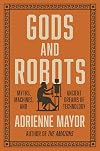
Adrienne Mayor traces the appearance of biotechne or automata in the stories, poetry, plays, pottery and statues of the Ancient World, particularly in Ancient Greece, but also with reference to Rome, India and China. From the bronze automaton Talos, protecting Crete by running its borders 3 times a day, throwing boulders at unknown shipping, to Pandora, the artificial woman with her jar of woes that was Zeus' vengeance on the world for the theft of fire, from the inventions of the immortal show more Hephaestus to the very mortal Daedalus, this is a fascinating history of how the ancients imagined and embraced the idea of automation, how they created statues with moving parts and developed their engineering ingenuity to create the illusion of artificial life
The ancients were in doubt as to what artificial beings could be used for; labour saving, sexual substitutes and warfare. Mayor cites numerous examples of the sexual allure of graceful statues, some of whom were assaulted by night. And Mayor also reveals that the Ancients would have had little truck with Asimov's First Law - that a robot may not injure a human; The automata of the Ancient World were often created with vengeance, torture and punishment in mind
Its a fascinating book, and one that reminds us that concerns about the ethics and control of artificial beings is hardly a new concern; the Ancients were struggling with this three millenia ago show less
The ancients were in doubt as to what artificial beings could be used for; labour saving, sexual substitutes and warfare. Mayor cites numerous examples of the sexual allure of graceful statues, some of whom were assaulted by night. And Mayor also reveals that the Ancients would have had little truck with Asimov's First Law - that a robot may not injure a human; The automata of the Ancient World were often created with vengeance, torture and punishment in mind
Its a fascinating book, and one that reminds us that concerns about the ethics and control of artificial beings is hardly a new concern; the Ancients were struggling with this three millenia ago show less
Lists
Awards


You May Also Like


Associated Authors
Statistics
- Works
- 8
- Also by
- 6
- Members
- 2,335
- Popularity
- #10,987
- Rating
- 3.8
- Reviews
- 56
- ISBNs
- 68
- Languages
- 7
- Favorited
- 6


