
Ha-Joon Chang
Author of 23 Things They Don't Tell You About Capitalism
About the Author
Dr Ha-Joon Chang is Assistant Director of Development Studies at the University of Cambridge
Image credit: Ha-Joon Chang
Works by Ha-Joon Chang
Bad Samaritans: The Myth of Free Trade and the Secret History of Capitalism (2007) 816 copies, 14 reviews
Joseph Stiglitz and the World Bank: The Rebel Within (Anthem Studies in Development and Globalization) (2001) 10 copies, 1 review
Ekonomi Rehberi: Ekonomi Hakkında Size Söylenenler ve Söylenmeyenler (Economics: The User's Guide) (2017) 1 copy
Capítulo 1 e 2. In: Chutando a escada: a estratégia do desenvolvimento em perspectiva histórica 1 copy
Tagged
Common Knowledge
- Canonical name
- Chang, Ha-Joon
- Other names
- 장하준
- Birthdate
- 1963-10-7
- Gender
- male
- Education
- Seoul National University (BA Economics, 1986)
University of Cambridge (MPhil, Economics and Politics, 1987)
University of Cambridge (PhD, Economics and Politics, 1992) - Occupations
- economist
- Organizations
- University of Cambridge
- Awards and honors
- Gunnar Myrdal Prize (2003)
Wassily Leontief Prize (2005) - Nationality
- South Korea
- Birthplace
- Seoul, South Korea
- Places of residence
- Cambridge, Cambridgeshire, England, UK
- Associated Place (for map)
- South Korea
Members
Reviews
Joseph Stiglitz and the World Bank: The Rebel Within (Anthem Studies in Development and Globalization) by Ha-Joon Chang
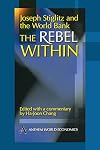
Having just finished the magnum Economics (4th Ed.) by Stiglitz and Walsh, and half-way into various others of Stiglitz's books, I just couldn't wait to dig into this compilation of Stiglitz's landmark speeches at the World Bank over the period 1998-2000. The selected pieces go into detail on the author's favorite topics.More than any other scholar and practitioner, Stiglitz seems to have a deep understanding of the role of government , and the need to balance the public sector with the show more private. The chapters also analyse the shortcomings of the "Washington Consensus", the recipe served by the IMF-World Bank agents to countries undergoing deep economic problems, which thrust a free-market fundamentalism on them with disastrous consequences for not just those countries, but for the whole world. Countries that did not fall in totally with the IMF, like China and India, were better able to weather the storms with their core economic capabilities relatively unscathed. With Trump back for another term, this book, and Stiglitz's writings in general, have regained an eerily anachronistic and immediate relevance again. show less
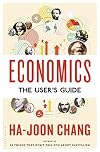
In Economics: The User's Guide, Ha-Joon Chang wants us to know enough background to be able to understand economic news, what it means, and when it might be trying to fool us. So he provides nearly 400 pages of history, theory and real world numbers. Some of the numbers might be out of date by now, but Chang gives advice on where to find newer information. I say information, because there is more to econ than numbers.
After a short prologue explaining why we should be interested, there is a show more half page guide to reading the book, depending on whether we want to spend ten minutes, maybe two hours, half a day, or are willing to go through the whole thing.
That's the kind of author Chang is, wanting to tell us what he knows and believes, but aware that we won't all be willing to follow through completely. What he does, works for me. I've tried to read about economics before, but have always bogged down and lost interest. This time it was different. I learned how econ is much more than markets and businesses, more than capitalism. Chang gives a quick history of how we, the whole world, developed the field of economics and how different countries got the kind of changing economies they have now, and how much of economics is really politics.
He writes about nine different "schools" of economics, explaining their points of view, how they grew, what they can explain well, and how they all have failings but also strengths. Maybe the best part of the book is a four page table in chapter four summarizing each school.
Of course, I can't remember it all, but the structure of the book makes sense, and the index is helpful. A kindle edition, which I also own, is searchable and in some ways even more useful. This is a keeper, a good reference book. show less
After a short prologue explaining why we should be interested, there is a show more half page guide to reading the book, depending on whether we want to spend ten minutes, maybe two hours, half a day, or are willing to go through the whole thing.
That's the kind of author Chang is, wanting to tell us what he knows and believes, but aware that we won't all be willing to follow through completely. What he does, works for me. I've tried to read about economics before, but have always bogged down and lost interest. This time it was different. I learned how econ is much more than markets and businesses, more than capitalism. Chang gives a quick history of how we, the whole world, developed the field of economics and how different countries got the kind of changing economies they have now, and how much of economics is really politics.
He writes about nine different "schools" of economics, explaining their points of view, how they grew, what they can explain well, and how they all have failings but also strengths. Maybe the best part of the book is a four page table in chapter four summarizing each school.
Of course, I can't remember it all, but the structure of the book makes sense, and the index is helpful. A kindle edition, which I also own, is searchable and in some ways even more useful. This is a keeper, a good reference book. show less
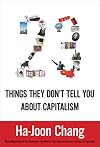
A good take-down of many of the orthodoxies of current politics, and something I'd recommend to someone who's starting out learning about this stuff. Doesn't really go far enough in its challenges though. I don't expect him to be a revolutionary or anything, but he takes a lot of stuff as given when there's no reason to think so. At one point he says that Finland had "previously had [a] very low level of [income] inequality - perhaps too low"! What does it mean to have "too low" levels of show more income inequality? Why does he consider this (possibly) a problem? It's not at all obvious and this seems like a somewhat important point in the wider context of the book. Similarly, he quotes Milton Friedman about "markets driving out racism" - despite attacking him elsewhere. There's no real evidence of this. In fact, the example he gives - South Africa considering Japan "honourary whites" - doesn't show this at all and is just a (very typical) example of the flexibility of racist doctrine in the face of various realities. Finally, he says "excessive equalization of outcomes is harmful" - I guess a given from his capitalist beliefs, but again no explanation. Only some orthodoxies can be challenged
That's the main problem with the book. It works within a discourse that puts clear limits on what's acceptable to talk about and doesn't go past them. The closest the book comes to talking about the effect of policies on actual human lives is when it says "working for longer to get more pay isn't always so great". Nothing about the many deaths caused by economic liberalisation in developing countries, even as he attacks said policies. He says he opposes "free-market capitalism" and pins the main problems of such to the last 30 years but - although at the end he lists his principles for some sort of new capitalist society - he doesn't really say what he believes instead. The first essay of the book is about how markets aren't really free and is probably the weakest one in the book - it goes something like "some market restrictions are popular and not taken away. This shows that the market isn't free. Therefore people who want to make the market freer are wrong" or something like that. It's very unpersuasive which is a shame as it seems like it should be a cornerstone of the book. Ultimately it's good but has too many limitations to be of interest as more than an introduction. show less
That's the main problem with the book. It works within a discourse that puts clear limits on what's acceptable to talk about and doesn't go past them. The closest the book comes to talking about the effect of policies on actual human lives is when it says "working for longer to get more pay isn't always so great". Nothing about the many deaths caused by economic liberalisation in developing countries, even as he attacks said policies. He says he opposes "free-market capitalism" and pins the main problems of such to the last 30 years but - although at the end he lists his principles for some sort of new capitalist society - he doesn't really say what he believes instead. The first essay of the book is about how markets aren't really free and is probably the weakest one in the book - it goes something like "some market restrictions are popular and not taken away. This shows that the market isn't free. Therefore people who want to make the market freer are wrong" or something like that. It's very unpersuasive which is a shame as it seems like it should be a cornerstone of the book. Ultimately it's good but has too many limitations to be of interest as more than an introduction. show less

Un análisis histórico de casos que termina demostrando como las fórmulas neoliberales que los países desarrollados proponen (o imponen) a los países en vías de desarrollo son definitivamente una trampa que contradice por completo las vías y estrategias usadas por los primeros para llegar a donde están ahora.
El libro es mucho más que esta (para algunos) obviedad de perogrullo. Hace un recorrido por los distintos elementos que vinculan el desarrollo institucional, la ampliación de show more derechos laborales, la transición hacia los regímenes democráticos, la eliminación gradual del trabajo infantil y los distintos matices, contradicciones y datos incómodos que pueden surgir en el camino. show less
El libro es mucho más que esta (para algunos) obviedad de perogrullo. Hace un recorrido por los distintos elementos que vinculan el desarrollo institucional, la ampliación de show more derechos laborales, la transición hacia los regímenes democráticos, la eliminación gradual del trabajo infantil y los distintos matices, contradicciones y datos incómodos que pueden surgir en el camino. show less
Lists
Awards


You May Also Like


Associated Authors
Statistics
- Works
- 26
- Members
- 3,556
- Popularity
- #7,133
- Rating
- 4.0
- Reviews
- 77
- ISBNs
- 152
- Languages
- 18
- Favorited
- 5
