
Nick Pyenson
Author of Spying on Whales: The Past, Present, and Future of Earth's Most Awesome Creatures
About the Author
Image credit: Nicholas Pyenson in Congreso Futuro, Chile in 2025
Works by Nick Pyenson
Spying on Whales: The Past, Present, and Future of Earth's Most Awesome Creatures (2018) 381 copies, 19 reviews
The Whale Who Swam Through Time: A Two-Hundred-Year Journey in the Arctic (2022) 42 copies, 3 reviews
Tagged
Common Knowledge
- Birthdate
- 1980
- Gender
- male
- Nationality
- USA
- Places of residence
- Maryland, USA
- Associated Place (for map)
- Maryland, USA
Members
Reviews

Canadian scientific illustrator Alex Boersma and American paleontologist Nick Pyenson, who is the Curator of Fossil Marine Mammals at the Smithsonian's National Museum of Natural History, join forces in this gorgeous picture book examination of the bowhead whale. Beginning two hundred years ago, the poetic narrative and beautiful illustrations follow one bowhead whale as she makes her journey through life, watching the world around her change. From the days of sailing ships to those of show more high-powered submarines, the whale grows, has children and watches the Arctic slowly transformed, becoming progressively noisier and warmer. Despite these developments, the narrative assures us that the bowhead is a survivor, swimming through uncertain waters...
The Whale Who Swam Through Time: A Two-Hundred-Year Journey in the Arctic is the first picture book from both Boersma, who is co-author and illustrator, and Pyenson, but I certainly hope it will not be the last! Informative and engaging, it profiles a very long-lived species, something that is in and of itself quite fascinating, providing an emotionally resonant narrative and a more fully factual section of back matter, about bowhead whales as well as some of the other Arctic animals around them. As Boersma observes in her author's note, the long-lived bowhead provides a unique entry into the idea of ecological change in the Arctic, over two centuries. I loved the idea of this book, its striking title, its engaging narrative, and its beautiful artwork, created using watercolor, gouache and colored inks. I also appreciated the fact that while the book gives an honest look at some of the damage done by human activity to the Arctic, it doesn't close on a despairing note. In sum: highly recommended to picture book readers and audiences who love whales, ocean life, and books about changing ecosystems and the changing world (sometimes not for the better) around us. show less
The Whale Who Swam Through Time: A Two-Hundred-Year Journey in the Arctic is the first picture book from both Boersma, who is co-author and illustrator, and Pyenson, but I certainly hope it will not be the last! Informative and engaging, it profiles a very long-lived species, something that is in and of itself quite fascinating, providing an emotionally resonant narrative and a more fully factual section of back matter, about bowhead whales as well as some of the other Arctic animals around them. As Boersma observes in her author's note, the long-lived bowhead provides a unique entry into the idea of ecological change in the Arctic, over two centuries. I loved the idea of this book, its striking title, its engaging narrative, and its beautiful artwork, created using watercolor, gouache and colored inks. I also appreciated the fact that while the book gives an honest look at some of the damage done by human activity to the Arctic, it doesn't close on a despairing note. In sum: highly recommended to picture book readers and audiences who love whales, ocean life, and books about changing ecosystems and the changing world (sometimes not for the better) around us. show less
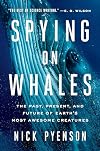
I grew up very close to Mystic, Connecticut, a historic 19th century whaling port. It’s a sad association, though I was fascinated with its history, and the whaling ship Charles W. Morgan moored at the museum. As I grew more aware in my teen years (do note, long before an internet), the horror of what humans did in decimating whale populations scarred my intellect forever. This book speaks to my heart. And at times, tears it. Especially when Pyenson shared how old whales can live and the show more age at death of two that were killed (spoiler that I'll save for the end...)
Pyenson is a paleontologist and breaks his book into three obvious parts: Past, Present and Future. I've read a bit on paleontology and fossils over the past 48 or so years, but not much on whale fossils and whale evolution. I think better than other authors I've read, Pyenson explains the forensics and deduction in piecing together fossils, identifying common species characteristics and new species. He talks about some fascinating techniques in scanning and 3D printing of fossils so that paleontologists can manipulate and study skeletons without damaging the real fossils. As with much of the fossil record, there are large gaps, but that there are whale fossils at all is fascinating. Pyenson talks a bit on different extinct families of whale ancestors.
Modern telemetric tagging with special suction cups yields tremendous data on movements, feeding, and so much more. Scientists learned that Cuvier's beaked whales can dive to an astonishing 2,992 meters while holding breaths for more than 137 minutes while foraging for squid and fish. While whaling is abhorrent to any rational human, it is still a fact in places like Iceland, though with severe restrictions compared to early twentieth century butchery. And as it is a fact, scientists use the opportunity to access anatomical data they otherwise would not be able to have. and the data reveal some answers to the evolution of echolocation, baleen, gigantism and more. And as for intelligence,
Whale depletion forced killer whales to change their feeding from larger whales to walruses and seals, and then down to sea otters. As Pyenson notes "[l]iving at the top of the food web for decades alson means continual exposure to and concentration of any persistent poisons in your diet." Kile whales have "some of the most contaminated tissue of any mammal on the planet, carrying high loads of chemicals such as flame retardants and complex organic molecules, which resist rapid decomposition." We did that. And few people know of it.
On the future, with the limits on whale hunting, many species populations have increased, and some, while no longer on an endangered list, have only stabilized. One rare positive effect of anthropogenic global warming might be that, barring human predation, some whales might thrive more as the food columns of the Arctic might bloom do to the increased heat of the ocean. The slaughter of millions of whales in the early twentieth century had devastating effects not only on whale populations but huge oceanic ecosystems. "Whale poop" feeds the lowest tiers of phyto- and zooplankton, which are significant for Of course, the carbon dioxide levels in the oceans will increase its acidity, which will have far more far-reaching detrimental effects, but for a brief period, maybe some whale species might rebound further. The toxins in those orcas would probably increase to deadly levels, so the positives are few.
On the book itself, the notes section is nearly as long as the main text - and in that form I really dislike: no reference in the text; a leading sentence fragment of the paragraph supported. I guess I am too old school; I want to know when a cite is made so I can choose to follow it. I so much dislike stumbling across them at the end, with only a tacit connection to what I read. I do not want to go back after I’m done. Even for books as good as this. I understand the purpose of not interrupting a flow, but it does a grave disservice to anyone actually thinking about what the author is writing. End notes, at least. Please.
Something about huge mammals, I guess - I also love elephants. I’ve been on whale watching tours, but have only seen their smaller cousins (which are still whales). Someday. Sigh.
Now ...SPOILER ... in 1992 a fifty-one-foot-long female bowhead whale was killed off Barrow. Once the blubber was stripped, scientists discovered an old injury in the shoulder and investigating further, discovered a stone harpoon lodged deep in the bowhead's body. Stone harpoons were last used in the 1880s.
show less
Pyenson is a paleontologist and breaks his book into three obvious parts: Past, Present and Future. I've read a bit on paleontology and fossils over the past 48 or so years, but not much on whale fossils and whale evolution. I think better than other authors I've read, Pyenson explains the forensics and deduction in piecing together fossils, identifying common species characteristics and new species. He talks about some fascinating techniques in scanning and 3D printing of fossils so that paleontologists can manipulate and study skeletons without damaging the real fossils. As with much of the fossil record, there are large gaps, but that there are whale fossils at all is fascinating. Pyenson talks a bit on different extinct families of whale ancestors.
Modern telemetric tagging with special suction cups yields tremendous data on movements, feeding, and so much more. Scientists learned that Cuvier's beaked whales can dive to an astonishing 2,992 meters while holding breaths for more than 137 minutes while foraging for squid and fish. While whaling is abhorrent to any rational human, it is still a fact in places like Iceland, though with severe restrictions compared to early twentieth century butchery. And as it is a fact, scientists use the opportunity to access anatomical data they otherwise would not be able to have. and the data reveal some answers to the evolution of echolocation, baleen, gigantism and more. And as for intelligence,
When we chart the ration of brain size to body size - a metric called the encephalization quotient, or EQ— we have a way of quantifying the fact that dolphins are indeed very brainy. While baleen whales and river dolphins plot closer to primates, oceanic dolphins— including killer whales— plot higher than every other mammal except us, slotting in second behind humans, but ahead of chimpanzees.Hunting methods and social behavior emphasize a degree of intelligence, and many species have exhibited deliberate culture passed on not through genetics, but (and Pyenson doesn't use this term) through memetics.
Whale depletion forced killer whales to change their feeding from larger whales to walruses and seals, and then down to sea otters. As Pyenson notes "[l]iving at the top of the food web for decades alson means continual exposure to and concentration of any persistent poisons in your diet." Kile whales have "some of the most contaminated tissue of any mammal on the planet, carrying high loads of chemicals such as flame retardants and complex organic molecules, which resist rapid decomposition." We did that. And few people know of it.
On the future, with the limits on whale hunting, many species populations have increased, and some, while no longer on an endangered list, have only stabilized. One rare positive effect of anthropogenic global warming might be that, barring human predation, some whales might thrive more as the food columns of the Arctic might bloom do to the increased heat of the ocean. The slaughter of millions of whales in the early twentieth century had devastating effects not only on whale populations but huge oceanic ecosystems. "Whale poop" feeds the lowest tiers of phyto- and zooplankton, which are significant for Of course, the carbon dioxide levels in the oceans will increase its acidity, which will have far more far-reaching detrimental effects, but for a brief period, maybe some whale species might rebound further. The toxins in those orcas would probably increase to deadly levels, so the positives are few.
On the book itself, the notes section is nearly as long as the main text - and in that form I really dislike: no reference in the text; a leading sentence fragment of the paragraph supported. I guess I am too old school; I want to know when a cite is made so I can choose to follow it. I so much dislike stumbling across them at the end, with only a tacit connection to what I read. I do not want to go back after I’m done. Even for books as good as this. I understand the purpose of not interrupting a flow, but it does a grave disservice to anyone actually thinking about what the author is writing. End notes, at least. Please.
Something about huge mammals, I guess - I also love elephants. I’ve been on whale watching tours, but have only seen their smaller cousins (which are still whales). Someday. Sigh.
Now ...SPOILER ... in 1992 a fifty-one-foot-long female bowhead whale was killed off Barrow. Once the blubber was stripped, scientists discovered an old injury in the shoulder and investigating further, discovered a stone harpoon lodged deep in the bowhead's body. Stone harpoons were last used in the 1880s.
Considering that the whale must have been relatively mature at the time to survive such a strike, Craig [George] and his colleagues surmised that the whale, labeled 92B2, was at a minimum about 130 years old. When they later counted the pregnancy scars on her ovaries, the age that they calculated was completely consistent with a healed wound from the nineteenth century: 133.Here was a whale that had survived more than 130 years! But wait! There's more! Analyzing eye lenses for certain proteins that change over time at a consistent and known rate, but unlike other cells in the body, are not replaced over time, that same Craig George dated a 48 foot male killed in 1995 to be...211 years old. Here was a whale, older than the Constitution, tragically killed. A majestic creature, the longest lived mammal know, killed for I presume food. I am still stunned to learn how old they can live.
show less
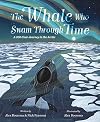
gorgeous and poignant. capturing the rapid and wide-scale changes humans have brought on long-lived creatures is always a challenge, but this book does a wonderful job. gently informative and educational with both the story's content and the informational notes at the end of the book, but the stunning art of the main story is really where this book shines
i have a lot of feelings regarding artic/antarctic life and humanity's effects on such delicate ecosystems, and wow does this book just hit show more me right where all those feelings live show less
i have a lot of feelings regarding artic/antarctic life and humanity's effects on such delicate ecosystems, and wow does this book just hit show more me right where all those feelings live show less
Pyenson is the Smithsonian Curator of their whale collection, and one of the foremost authorities on whales. This book is tour through the recent science of whales, structured around his personal discoveries. The love of science comes through, but Pyenson is a paleontologist, and in his own words he’s not a whale hugger, so there’s an intellectual distance here.
Whales as a clade are roughly 50 million years old, descending from a creature that looked more like a modern dear than their show more current ocean adapted form. They evolved detailed aquatic specializations: blowholes, blubber, echolocation, as well as an atrophied legs, become the specialized sea creatures we know today. A major part of the narrative describes a dig in Chile, where hundreds of well-preserved whale skeletons have fossilized in four distinct events. Another section describes the gory business of anatomy at an Icelandic whaling station, where Pyenson and a collaborate discover specialized sensory organs in the jaw while help baleen whales gulp as much water and krill as they can.
The modern life of whales is inescapable from their near extinction at the hands of industrialized whaling, carried out not by the romantic sailors of Moby Dick but by in the 20th century by the brutal machinery of industrialized fisheries. Since their protection, some whales have bounced back. Humpback whales are nearly at their pre-extinction population levels. Other species are not doing so well, gigantic Blue Whales are still rare, and river dolphins at great risk everywhere. Pollution and climate change are key threats, and we do not (and possibly never will) understand the strange intelligence of these animals that we share the oceans with.
Spying on Whales does a fantastic job conveying the excitement of science, and a weaker job with the whales. Still an interesting book in the popular science genre. show less
Whales as a clade are roughly 50 million years old, descending from a creature that looked more like a modern dear than their show more current ocean adapted form. They evolved detailed aquatic specializations: blowholes, blubber, echolocation, as well as an atrophied legs, become the specialized sea creatures we know today. A major part of the narrative describes a dig in Chile, where hundreds of well-preserved whale skeletons have fossilized in four distinct events. Another section describes the gory business of anatomy at an Icelandic whaling station, where Pyenson and a collaborate discover specialized sensory organs in the jaw while help baleen whales gulp as much water and krill as they can.
The modern life of whales is inescapable from their near extinction at the hands of industrialized whaling, carried out not by the romantic sailors of Moby Dick but by in the 20th century by the brutal machinery of industrialized fisheries. Since their protection, some whales have bounced back. Humpback whales are nearly at their pre-extinction population levels. Other species are not doing so well, gigantic Blue Whales are still rare, and river dolphins at great risk everywhere. Pollution and climate change are key threats, and we do not (and possibly never will) understand the strange intelligence of these animals that we share the oceans with.
Spying on Whales does a fantastic job conveying the excitement of science, and a weaker job with the whales. Still an interesting book in the popular science genre. show less
Lists
Awards


You May Also Like


Statistics
- Works
- 2
- Members
- 423
- Popularity
- #57,687
- Rating
- 3.8
- Reviews
- 22
- ISBNs
- 12
- Languages
- 1