
Ronald L. Numbers (1942–2023)
Author of The Creationists: From Scientific Creationism to Intelligent Design, Expanded Edition
About the Author
Ronald L. Numbers is Hilldale and William Coleman Professor of the History of Science and Medicine at the University of Wisconsin-Madison
Image credit: Ronald L. Numbers [credit: Ragesoss at Wikimedia]
Works by Ronald L. Numbers
The Creationists: From Scientific Creationism to Intelligent Design, Expanded Edition (1993) 358 copies, 1 review
Galileo Goes to Jail and Other Myths about Science and Religion (2009) — Editor — 244 copies, 1 review
God and Nature: Historical Essays on the Encounter between Christianity and Science (1986) — Editor — 200 copies
The Cambridge History of Science, Volume 5: The Modern Physical and Mathematical Sciences (2003) — Editor — 74 copies
Prophetess of Health: Ellen G. White and the Origins of Seventh-Day Adventist Health Reform (1976) 65 copies
Sickness and Health in America: Readings in the History of Medicine and Public Health (1978) 62 copies, 1 review
The Antievolution Works of Arthur I. Brown (Creationism in Twentieth-Century America, Vol 3) (1995) 3 copies
Selected Works of George McCready Price (Creationism in Twentieth-Century America, Vol 7) (1995) 3 copies
ISIS: An International Review Devoted to the History of Science and Its Cultural Influences Volume 84 Numbers 1, 1993 (1993) 1 copy
By Ronald L. Numbers The Disappointed: Millerism Millerarianism (1st Frist Edition) [Paperback] (1993) 1 copy
Isis 1991 1 copy
Isis 1990 1 copy
Isis 1989 1 copy
Associated Works
Man and Creation: Perspectives on Science and Theology (A Christian Vision Book) (1993) — Contributor — 16 copies
Tagged
Common Knowledge
- Canonical name
- Numbers, Ronald L.
- Legal name
- Numbers, Ronald Leslie
- Birthdate
- 1942-06-03
- Date of death
- 2023-07-24
- Gender
- male
- Education
- University of California, Berkeley (Ph.D|1969)
Florida State University (MA|1965)
Southern Missionary College (BA|1963) - Occupations
- historian
professor - Organizations
- University of Wisconsin-Madison
Loma Linda University
American Society of Church History
International Union of History and Philosophy of Science
History of Science Society - Awards and honors
- George Sarton Medal (2008)
American Academy of Arts & Sciences (1995)
American Association for the Advancement of Science (Fellow, 2005)
Friend of Darwin Award (2015)
Albert C. Outler Prize (1991) - Nationality
- USA
- Birthplace
- Boulder, Colorado, USA
- Places of residence
- Loma Linda, California, USA
Madison, Wisconsin, USA - Place of death
- Madison, Wisconsin, USA
- Associated Place (for map)
- USA
Members
Reviews
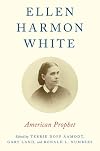
As a lifelong Seventh-day Adventist, I grew up hearing "Mrs. White says..." but not really understanding the theological, historical, and cultural impacts Ellen White held over the Seventh-day Adventist Church until I got to college. And now, I believe this volume provides an interesting and multi-faceted examination of her writings, life, theological impact, and cultural impact upon a denomination that is simultaneously known and unknown in the world.
For me, as an academic and literary show more scholar, the chapter on culture proved the most fascinating. To this day, I have encountered people in the SDA church reluctant to read "fiction," simply because White wrote extensively against it. And I think the author brought up an interesting point--here, her own lack of formal education probably did not assist her in coming to literary fiction that rose above the sensationalist stories and pulp romances that were more easily accessible than more enduring works. show less
For me, as an academic and literary show more scholar, the chapter on culture proved the most fascinating. To this day, I have encountered people in the SDA church reluctant to read "fiction," simply because White wrote extensively against it. And I think the author brought up an interesting point--here, her own lack of formal education probably did not assist her in coming to literary fiction that rose above the sensationalist stories and pulp romances that were more easily accessible than more enduring works. show less
I strongly suspect that this book is a waste of paper. I expected it to be more organized, but it is just a bunch of disconnected essays by various people "debunking" some straw man myth about science. These very short essays set up some myth that people who actually are interested in the topic do not really subscribe to and then try to attack that myth, often in a vapid and ineffective way. Better to go to some sort of real work on any of these subjects than to waste your time on these show more mini-essays with their cheap shots and footnotes.
The first essay "That there was no scientific activity between Greek Antiquity and the Scientific Revolution" is just a terrible start, in part because it lacks a definition of scientific activity. It also uses the fact that Caesar sent for a Greek scholar from Alexandria when he decided he needed to reform the calendar to demonstrate that there was no scientific activity in the Roman Empire This strikes me as too ludicrous an argument to argue with. Read Neal Stephenson's "Mother Earth, Mother Board" for a better treatment of the importance of the library of Alexandria in antiquity. show less
The first essay "That there was no scientific activity between Greek Antiquity and the Scientific Revolution" is just a terrible start, in part because it lacks a definition of scientific activity. It also uses the fact that Caesar sent for a Greek scholar from Alexandria when he decided he needed to reform the calendar to demonstrate that there was no scientific activity in the Roman Empire This strikes me as too ludicrous an argument to argue with. Read Neal Stephenson's "Mother Earth, Mother Board" for a better treatment of the importance of the library of Alexandria in antiquity. show less
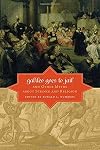
Like many anthologies, this book was a mixed bag. The debunking of certain myths was very helpful, particularly "Medieval Christians taught that the Earth was flat," "Copernicanism demoted humans from the center of the cosmos," and "Descartes originated the mind-body distinction." The book may be worth a gander for those chapters alone. The more the writers got into twentieth- and twenty-first century live wire issues, though, the less helpful I found it. The Intelligent Design chapter, for show more instance, I found rather gratuitous and out of line with the rest of the book. Throwing around terms like "fundamentalist," "traditionalist," "freethinking," and even "creationist" is so often a recipe for disaster, sadly even when one is a historian...
Still, even the chapters on Scopes and global creationism had a few helpful points, and it's a useful book in a "troubling the waters" sense. show less
Still, even the chapters on Scopes and global creationism had a few helpful points, and it's a useful book in a "troubling the waters" sense. show less
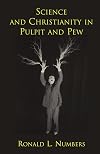
This book has one of the absolute best cover pictures of all times. Things go rapidly downhill from there. I was merely pages into the book before I felt the urge to look up the author to see if he's ever won the Templeton Prize - he had. It is possible that there is a way to reconcile science and Christianity, but if there is, this book certainly didn't point the way. It was a feeble attempt, relying mostly on the argument that there are scientists who are Christians, which proves nothing, show more and frequently doing a bait-and-switch where the author uses the terms "science" and "evolution" synonymously, which is not even close to correct. Don't waste your time. Buy it and look at the picture, but don't both to go further. show less
Lists
Awards


You May Also Like


Associated Authors
Statistics
- Works
- 36
- Also by
- 5
- Members
- 1,543
- Popularity
- #16,693
- Rating
- 3.9
- Reviews
- 6
- ISBNs
- 90
- Languages
- 6
