
Edward J. Larson
Author of Summer for the Gods: The Scopes Trial and America's Continuing Debate over Science and Religion
About the Author
Edward John Larson (born in 1953) is an American historian and legal scholar. He is University Professor of history and holds the Hugh & Hazel Darling Chair in Law at Pepperdine University. He received the 1998 Pulitzer Prize for History for his book Summer for the Gods: The Scopes Trial and show more America's Continuing Debate Over Science and Religion. The book argues that Inherit the Wind (both the play and the movie) misrepresented the actual Scopes Trial. Larson was born in Mansfield, Ohio, and attended Mansfield public schools. He graduated from Williams College and received his law degree from Harvard University and his Ph.D. in the history of science from the University of Wisconsin--Madison. In 2004, Larson received an honorary Doctorate in Humane Letters from The Ohio State University. He held the Fulbright Program's John Adams Chair in American Studies in 2000-2001. In 2015 his biography The Return of George Washington: 1783-1789, became listed on the New York Times bestseller list. (Bowker Author Biography) show less
Series
Works by Edward J. Larson
Summer for the Gods: The Scopes Trial and America's Continuing Debate over Science and Religion (1997) 1,151 copies, 21 reviews
To the Edges of the Earth: 1909, the Race for the Three Poles, and the Climax of the Age of Exploration (2018) 169 copies, 6 reviews
An Empire of Ice: Scott, Shackleton, and the Heroic Age of Antarctic Science (2011) 166 copies, 2 reviews
American Inheritance: Liberty and Slavery in the Birth of a Nation, 1765-1795 (2023) 93 copies, 2 reviews
Associated Works
Tagged
Common Knowledge
- Canonical name
- Larson, Edward J.
- Other names
- Larson, Edward John
- Birthdate
- 1953-09-21
- Gender
- male
- Education
- Williams College (AB|1974)
University of Wisconsin (MA|History|1976)
Harvard University (JD|1979)
University of Wisconsin (PhD|History|1984) - Occupations
- historian
university professor
legal scholar
law school professor - Organizations
- Pepperdine University
- Nationality
- USA
- Birthplace
- Mansfield, Ohio, USA
- Places of residence
- Athens, Georgia, USA
Malibu, California, USA
Amherst, Massachusetts, USA
Madison, Wisconsin, USA
Cambridge, Massachusetts, USA - Associated Place (for map)
- USA
Members
Reviews
To the Edges of the Earth: 1909, the Race for the Three Poles, and the Climax of the Age of Exploration by Edward J. Larson
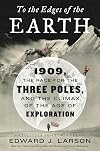
One hundred years ago the world was reeling from WWI. Every value and belief once the foundation of civilization was called into question by the war.
But before the 'War to End All Wars' didn't end war, men were going on quests to conquer the unknown regions of ice. They faced gruesome suffering--loss of body parts that had frozen, physical exertion in extreme conditions, starvation, threats of crevasses that appeared out of nowhere and thin ice over frigid water.
For what? For glory.
The show more polar regions offered no gold or marketable flora or fauna, no open land for civilization to claim, no sunny beaches for tourism.
The men who raced to the poles or up the tallest mountains did it for fame and pride and for God and Country. They had something to prove and overwhelming ambition.
To The Edges of the Earth 1909, The Race for the Three Poles, and the Climax of the Age of Exploration recounts the explorers of 1909: Peary's expedition to reach the North Pole, Shackleton's expedition to reach the South Magnetic Pole, and the Duke of Abruzzo's reach for the 'Third Pole' in the Himalayas-- the dangerous K2.
I have loved exciting, thrilling, and horrifying adventure narratives since girlhood. One of my first heroes was Robert Falcon Scott after I read The Great White South about his failed expedition to the South Pole. I have also read books about mountain climbing and K2. I haven't a thread of adventure myself, preferring a comfy chair and a cup of tea while reading about someone else risking their life.
Edward J. Larson's account strips away myths about these men. Peary especially, who may have falsely claimed to have reached the North Pole and whose treatment of Inuit, including his teenage concubine, was by our standards appalling and predatory. And the poor Inuit dogs that Peary 'borrowed,' worked to death, then fed to the other dogs (or his men, as needed.)
Shackleton was better, but there was grumbling over his leadership skills, and he did decide to take ponies to the South Pole as well as an early gasoline engine car, both quite useless.
The rich, handsome Italian Duke seems to come off the best, with few negative stories about him, and his later siding with the Allied forces during WWII.
The explorers needed to raise money to fund the trips. Money was given by rich Gilded Age barons and in exchange, they could have landmarks named after them. Their stories were sold to newspapers and magazines and printed in books. They went on the Lyceum lecture circuit with magic lantern photographs.
Peary brought back Inuit for scientific study; when they died their bones were put on display! And he stole three, huge meteorites which the natives used for iron making.
Oh, the frozen toes! The shards of frozen snow that sliced through good English Gabardine! The suffering described is horrifying. (And to think, I don't read horror stories, or at least that is what I had thought. Turns out--I do!)
Shackleton failed to reach the pole, but he was knighted anyway. Scott was already planning his expedition to the South Pole, as was Admunson, and in 1911 Scott perished while Amundsen reached the pole. Shackleton was old news but still returned in 1914-16 on the Endurance. By then WWI had consumed the world and no one had interest in men fooling around in icy realms. Shackleton died of a heart attack on his way to try one more time to reach the pole.
No one really knows if it was Cook or Peary, or Peary's companion Henson, who reached the North Pole. Or if either reached it. With no solid land, the ice over open water offered huge challenges. There were ongoing battles over their claims and bad feelings which sullied Peary's reputation.
"The time was when the search for the North Pole stood for the very acme of uncommercialized heroism," wrote Dean Shailer Mathews of the University of Chicago divinity school. Those were the days, indeed. Today, the opening of the Arctic waters brings dreams of drilling for oil and dollar signs.
The 19th c saw the rise of the romanticizing of the Arctic-- the barren, uncharted expanses of ice captivating the imagination. Mary Shelley's Frankenstein retreats to the North Pole, Charles Dickens and Wilkie Collins wrote the play The Frozen Deep, Frederick Church painted icebergs and Albert Bierstadt glaciers.
Could anyone then have imagined the aqua lung enabling men to view the ocean's bottom or an Endeavor that went into space? Or that the Arctic glaciers would be melting, the Arctic Ocean open and iceless?
I received a free ebook from the publisher through Edelweiss in exchange for a fair and unbiased review. show less
But before the 'War to End All Wars' didn't end war, men were going on quests to conquer the unknown regions of ice. They faced gruesome suffering--loss of body parts that had frozen, physical exertion in extreme conditions, starvation, threats of crevasses that appeared out of nowhere and thin ice over frigid water.
For what? For glory.
The show more polar regions offered no gold or marketable flora or fauna, no open land for civilization to claim, no sunny beaches for tourism.
The men who raced to the poles or up the tallest mountains did it for fame and pride and for God and Country. They had something to prove and overwhelming ambition.
To The Edges of the Earth 1909, The Race for the Three Poles, and the Climax of the Age of Exploration recounts the explorers of 1909: Peary's expedition to reach the North Pole, Shackleton's expedition to reach the South Magnetic Pole, and the Duke of Abruzzo's reach for the 'Third Pole' in the Himalayas-- the dangerous K2.
I have loved exciting, thrilling, and horrifying adventure narratives since girlhood. One of my first heroes was Robert Falcon Scott after I read The Great White South about his failed expedition to the South Pole. I have also read books about mountain climbing and K2. I haven't a thread of adventure myself, preferring a comfy chair and a cup of tea while reading about someone else risking their life.
Edward J. Larson's account strips away myths about these men. Peary especially, who may have falsely claimed to have reached the North Pole and whose treatment of Inuit, including his teenage concubine, was by our standards appalling and predatory. And the poor Inuit dogs that Peary 'borrowed,' worked to death, then fed to the other dogs (or his men, as needed.)
Shackleton was better, but there was grumbling over his leadership skills, and he did decide to take ponies to the South Pole as well as an early gasoline engine car, both quite useless.
The rich, handsome Italian Duke seems to come off the best, with few negative stories about him, and his later siding with the Allied forces during WWII.
The explorers needed to raise money to fund the trips. Money was given by rich Gilded Age barons and in exchange, they could have landmarks named after them. Their stories were sold to newspapers and magazines and printed in books. They went on the Lyceum lecture circuit with magic lantern photographs.
Peary brought back Inuit for scientific study; when they died their bones were put on display! And he stole three, huge meteorites which the natives used for iron making.
Oh, the frozen toes! The shards of frozen snow that sliced through good English Gabardine! The suffering described is horrifying. (And to think, I don't read horror stories, or at least that is what I had thought. Turns out--I do!)
Shackleton failed to reach the pole, but he was knighted anyway. Scott was already planning his expedition to the South Pole, as was Admunson, and in 1911 Scott perished while Amundsen reached the pole. Shackleton was old news but still returned in 1914-16 on the Endurance. By then WWI had consumed the world and no one had interest in men fooling around in icy realms. Shackleton died of a heart attack on his way to try one more time to reach the pole.
No one really knows if it was Cook or Peary, or Peary's companion Henson, who reached the North Pole. Or if either reached it. With no solid land, the ice over open water offered huge challenges. There were ongoing battles over their claims and bad feelings which sullied Peary's reputation.
"The time was when the search for the North Pole stood for the very acme of uncommercialized heroism," wrote Dean Shailer Mathews of the University of Chicago divinity school. Those were the days, indeed. Today, the opening of the Arctic waters brings dreams of drilling for oil and dollar signs.
The 19th c saw the rise of the romanticizing of the Arctic-- the barren, uncharted expanses of ice captivating the imagination. Mary Shelley's Frankenstein retreats to the North Pole, Charles Dickens and Wilkie Collins wrote the play The Frozen Deep, Frederick Church painted icebergs and Albert Bierstadt glaciers.
Could anyone then have imagined the aqua lung enabling men to view the ocean's bottom or an Endeavor that went into space? Or that the Arctic glaciers would be melting, the Arctic Ocean open and iceless?
I received a free ebook from the publisher through Edelweiss in exchange for a fair and unbiased review. show less
A Magnificent Catastrophe: The Tumultuous Election of 1800, America's First Presidential Campaign by Edward J. Larson
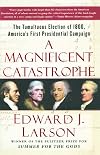
This book is fascinating but...
1) It is repetitive, probably since the author believes that the reader will have to be reminded of events and people which have already been described. Probably this is true in many cases, but I found the repetition a bit boring.
2) It makes excessive use of cliches.
3) It is depressing because it suggests very strongly that presidential elections then were like presidential elections now, driven more by perception than by actuality.
However, it is also funny and show more teaches us that the political parties were just as hostile and likely to engage in personal attacks as they are today. The various churches were always eager to get into the political fray, just as they are today. And the way they went about it was just as ludicrous as it is today. show less
1) It is repetitive, probably since the author believes that the reader will have to be reminded of events and people which have already been described. Probably this is true in many cases, but I found the repetition a bit boring.
2) It makes excessive use of cliches.
3) It is depressing because it suggests very strongly that presidential elections then were like presidential elections now, driven more by perception than by actuality.
However, it is also funny and show more teaches us that the political parties were just as hostile and likely to engage in personal attacks as they are today. The various churches were always eager to get into the political fray, just as they are today. And the way they went about it was just as ludicrous as it is today. show less
Summer for the gods : the Scopes trial and America's continuing debate over science and religion by Edward J. Larson
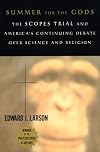
If you happened to have read the play Inherit the Wind, and let it create your impression of the Scopes Monkey Trial, you particularly need to read this book. This is the story of how the Scopes Monkey trial REALLY happened. There are key details that the play doesn't even try to tell you.
I'll just mention the two biggest revelations:
-The events leading to the Scopes trial were a farce. The town of Dayton, Tennessee was struggling, and the town leaders, gathering in a downtown drugstore, show more convinced a substitute teacher named John Scopes to deliberately challenge Tennessee's law against teaching evolution so that the resulting trial would bring Dayton some publicity, boosting its economy.
-The famous part of the trial, Darrow v. Bryan, didn't have to happen. The American Civil Liberties Union wanted to defend Scopes mainly on freedom-of-speech grounds. But once the fundamentalist William Jennings Bryan joined the prosecution, Clarence Darrow--who was militantly anti-religion--immediately wanted to face down Bryan as a stand against Christianity. He came to Dayton and insinuated himself into the defense team and its strategy, despite that some members of the defense were much more interested in promoting civil liberties than in bashing religion. Essentially, Darrow probably would never have participated in the Scopes trial if Bryan hadn't. show less
I'll just mention the two biggest revelations:
-The events leading to the Scopes trial were a farce. The town of Dayton, Tennessee was struggling, and the town leaders, gathering in a downtown drugstore, show more convinced a substitute teacher named John Scopes to deliberately challenge Tennessee's law against teaching evolution so that the resulting trial would bring Dayton some publicity, boosting its economy.
-The famous part of the trial, Darrow v. Bryan, didn't have to happen. The American Civil Liberties Union wanted to defend Scopes mainly on freedom-of-speech grounds. But once the fundamentalist William Jennings Bryan joined the prosecution, Clarence Darrow--who was militantly anti-religion--immediately wanted to face down Bryan as a stand against Christianity. He came to Dayton and insinuated himself into the defense team and its strategy, despite that some members of the defense were much more interested in promoting civil liberties than in bashing religion. Essentially, Darrow probably would never have participated in the Scopes trial if Bryan hadn't. show less
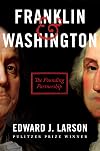
This book explores the relationship between Benjamin Franklin and George Washington, the two founding fathers who loom over the rest. This book can be read as two brief, intertwining biographies, but where it really shines is in its comparison between these two figures. Each Franklin and Washington are the subjects of their own biographies (hundreds of them), but looking at the two men together brings something new to each. They certainly both worked, together and separately, to create the show more United States, and played pivotal, but different, roles. In the end, however, Franklin appears to be the wiser man, recognizing his place in history and evolving his in own thoughts, especially on slavery. Washington, though, remains an enigma, but with possibly less noble intentions behind his silence than some have supposed. Excellent reading and a thoughtful work of history. show less
Lists
Awards


You May Also Like


Associated Authors
Statistics
- Works
- 18
- Also by
- 2
- Members
- 3,504
- Popularity
- #7,258
- Rating
- 4.1
- Reviews
- 63
- ISBNs
- 111
- Languages
- 4
- Favorited
- 2


