
Harry S. Stout
Author of Upon the Altar of the Nation: A Moral History of the Civil War
About the Author
Harry S. Stout is Jonathan Edwards Professor of American Religious History, Yale University
Works by Harry S. Stout
The Divine Dramatist: George Whitefield and the Rise of Modern Evangelicalism (1991) 239 copies, 1 review
The works of Jonathan Edwards 2 copies
Enemy Amoung Them, An 1 copy
Associated Works
By the Vision of Another World: Worship in American History (The Calvin Institute of Christian Worship Liturgical Studies) (2012) — Contributor — 8 copies
Dialogue: A Journal of Mormon Thought - Volume 44, Number 3 (Fall 2011) (2011) — Contributor — 1 copy
Tagged
Common Knowledge
- Birthdate
- 20th Century
- Gender
- male
- Education
- Kent University (PhD)
- Occupations
- Yale professor
- Nationality
- USA
- Associated Place (for map)
- USA
Members
Reviews
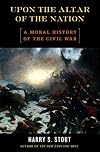
This is a book whose subject will frustrate, disappoint, and anger you not because of the book itself but due to the subject. Here you will not only see a very ugly side of the American people and have the shine of honor placed on Lincoln and the "cause" of the Civil terribly tarnished, but you will be horrified to learn to what extent the war was taken and what was the basis for it's justification.
I can only say that there is the shadow of what happened then happening today.
This is a must - show more must! - read for anyone not only interested in the American Civil War but, also, in getting some light on why and how we handle controversial issues, especially of racism, today. show less
I can only say that there is the shadow of what happened then happening today.
This is a must - show more must! - read for anyone not only interested in the American Civil War but, also, in getting some light on why and how we handle controversial issues, especially of racism, today. show less
The Divine Dramatist: George Whitefield and the Rise of Modern Evangelicalism (Library of Religious Biography) by Harry S. Stout
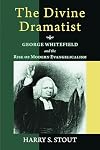
Summary: A biography of George Whitefield focusing on the drama of his preaching and his impact on American religious life.
The Library of Religious Biography is a series of scholarly but accessible biographies published by Wm. B. Eerdmans since 1991. This volume was one of the first of the series and helped set the standard for combining careful scholarship and readable prose that has marked this series. Harry S. Stout is an American religious historian at Yale Divinity School.
George show more Whitefield was born in Gloucester, England to parents who were innkeepers. His youth reflected a conflict between love of the theatre and a call to preach. For a long time, it looked like theatre would win, but in the end ministry did. A central theme of the biography was that the dramatist was always present in his preaching. In fact, this was so much so that Whitefield struggled to separate his private self from the public persona.
Whitefield, while ordained within the Anglican Church, was not cut out for parish ministry. Stout traces the development of his itinerant ministry, and the distinctive aspect of open air preaching, when pulpits were closed to him. While modeling his work on Howell Harris, a Welsh preacher, the combination of his preaching gifts and skills at self-promotion enabled him to exercise a far more extensive ministry on both sides of the Atlantic.
His skill at promotion was another distinctive. He leveraged clerical refusals to let him preach to draw larger crowds. In America, he partnered with a young printer, Ben Franklin to promote his revivals through both newspapers and printed sermons. This led to a lifelong friendship between these two men, very unalike. However, each commanded the deep respect and affection of the other.
He came to America, sent to establish a mission in Georgia. This led to an orphanage and school that became a lifelong cause for which he raised money. On most of his speaking engagements, offerings were designated for the orphanage and he raised huge sums. He was a model of integrity, living modestly and conveying the funds for their intended purpose.
Stout also notes Whitefield’s profound Calvinism. Although at points he associated with lowercase methodism, he disagreed with and eventually distanced himself from John Wesley. They only reconciled toward the end of his life.
Finally. Stout traces how Whitefield’s itinerant preaching gave rise to evangelicalism, from his preaching of the new birth, to open air work, to the means of promotion. Sadly, he destroyed his own health in the process and died while itinerating.
Stout thus portrays both Whitefield’s life and larger significance, particularly for American religious history. This is an important book for American evangelicals, for better or worse, to understand their roots. show less
The Library of Religious Biography is a series of scholarly but accessible biographies published by Wm. B. Eerdmans since 1991. This volume was one of the first of the series and helped set the standard for combining careful scholarship and readable prose that has marked this series. Harry S. Stout is an American religious historian at Yale Divinity School.
George show more Whitefield was born in Gloucester, England to parents who were innkeepers. His youth reflected a conflict between love of the theatre and a call to preach. For a long time, it looked like theatre would win, but in the end ministry did. A central theme of the biography was that the dramatist was always present in his preaching. In fact, this was so much so that Whitefield struggled to separate his private self from the public persona.
Whitefield, while ordained within the Anglican Church, was not cut out for parish ministry. Stout traces the development of his itinerant ministry, and the distinctive aspect of open air preaching, when pulpits were closed to him. While modeling his work on Howell Harris, a Welsh preacher, the combination of his preaching gifts and skills at self-promotion enabled him to exercise a far more extensive ministry on both sides of the Atlantic.
His skill at promotion was another distinctive. He leveraged clerical refusals to let him preach to draw larger crowds. In America, he partnered with a young printer, Ben Franklin to promote his revivals through both newspapers and printed sermons. This led to a lifelong friendship between these two men, very unalike. However, each commanded the deep respect and affection of the other.
He came to America, sent to establish a mission in Georgia. This led to an orphanage and school that became a lifelong cause for which he raised money. On most of his speaking engagements, offerings were designated for the orphanage and he raised huge sums. He was a model of integrity, living modestly and conveying the funds for their intended purpose.
Stout also notes Whitefield’s profound Calvinism. Although at points he associated with lowercase methodism, he disagreed with and eventually distanced himself from John Wesley. They only reconciled toward the end of his life.
Finally. Stout traces how Whitefield’s itinerant preaching gave rise to evangelicalism, from his preaching of the new birth, to open air work, to the means of promotion. Sadly, he destroyed his own health in the process and died while itinerating.
Stout thus portrays both Whitefield’s life and larger significance, particularly for American religious history. This is an important book for American evangelicals, for better or worse, to understand their roots. show less

The stakes are simple. If there is no room for the Christian to write social and cultural history as promiate history . . . then there is no room for Christians in the secular academy. If, as Christian Historians, we write only . . . providentially based history, we are consigning ourselves to separatist Ghettos.
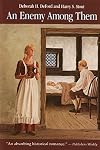
Although a young adult novel, I actually enjoyed this book. It was an easy read, but enjoyable nonetheless.
Awards


You May Also Like


Associated Authors
Statistics
- Works
- 17
- Also by
- 5
- Members
- 1,331
- Popularity
- #19,337
- Rating
- 3.7
- Reviews
- 7
- ISBNs
- 31