
Peter Turchi
Author of Maps of the Imagination: The Writer as Cartographer
About the Author
Peter Turchi is author of the novel "The Girls Next Door", a collection of stories, "Magician", & a book of non-fiction, "The Pirate Prince". He is Director of the MFA Program for Writers, Warren Wilson College. (Bowker Author Biography)
Image credit: City Lights
Works by Peter Turchi
The Pirate Prince: Discovering the Priceless Treasures of the Sunken Ship Whydah : An Adventure (1993) — Author — 30 copies
Associated Works
Tagged
Common Knowledge
- Canonical name
- Turchi, Peter
- Birthdate
- 1966
- Gender
- male
- Education
- University of Arizona (MFA|1985)
Washington College (BA) - Occupations
- writer
professor - Organizations
- University of Houston
Arizona State University - Relationships
- Turchi, Laura (spouse)
Turchi, Reed (son) - Nationality
- USA
- Birthplace
- Baltimore, Maryland, USA
- Associated Place (for map)
- Maryland, USA
Members
Reviews
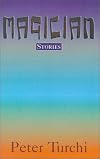
It has been years since I've revisited Turchi's short stories. My memory of the collection is one of people caught in between: caring for dying relatives, caught in loveless marriages, laying over in seedy motels. None can improve their lives, and none can escape them. For me, that means for as strong as each of the stories is individually, when read in sequence, they reveal a special and monotonous form of hell.

Books about writing fall into two camps. There are the instructional ones, with writing prompts and exercises, and there are the inspirational ones, that instead of telling you how to write, make the reader want to jump up and grab a pen. Maps of the Imagination: The Writer as Cartographer by Peter Turchi is neither of these things, but rather a look at how writing a book is like making a map. The comparison sometimes gets lost in Turchi's giant enthusiasm for maps and the history of show more mapmaking and I have to admit that I was with him all the way. If you like maps a lot and write a bit, then this book is for you, and by that I mean that this book was for me. It also helps that the physical book is such a pleasing object, with heavy, creamy paper and plentiful maps of many kinds.
Given that our capacity for abstraction is great, greater than we may realize, it isn't necessary for a map user to know the first thing about projection formulas. A map maker, however, is obliged to understand exactly what he is doing.
This isn't an instruction book, but it does present a different angle with which to look at a writing project. Whether it will prove useful is unknown, but the maps were lovely, as was the author's discussions around them. show less
Given that our capacity for abstraction is great, greater than we may realize, it isn't necessary for a map user to know the first thing about projection formulas. A map maker, however, is obliged to understand exactly what he is doing.
This isn't an instruction book, but it does present a different angle with which to look at a writing project. Whether it will prove useful is unknown, but the maps were lovely, as was the author's discussions around them. show less
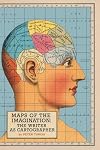
This is one of the most imaginative books on writing that I have read. Readers who look for very clear, concise prompts and descriptions of the writing process will likely be frustrated by Turchi's approach. However, if you are adventurous and willing to follow where Turchi leads, you will have new inspiration and ideas about how to write and read fiction.
Turchi's innovation is his drawing parallels between cartography and writing. He provides scores of full-color reproductions of many kinds show more of maps, from beautifully illuminated medieval manuscripts to early modern maps of the New World to utilitarian schemas showing metro stops in Washington DC. His examples from the history of cartography serve as a jumping off point for his explorations of the writing process as well as of ways that writers guide readers through their works. His specific examples are not simply drawn from maps, but also from a wide-ranging group of writers, including Anne Carson, Italo Calvino, Ernest Hemingway, and even Chuck Jones' Road Runner cartoons. In the end, this thought-provoking book also serves as an interdisciplinary examination of how humans think -- our need for guides, our approach to organizing a dizzying array of stimuli, and our joy in sometimes forging a new path. Highly recommended for adventurous GRers, both writers and readers. show less
Turchi's innovation is his drawing parallels between cartography and writing. He provides scores of full-color reproductions of many kinds show more of maps, from beautifully illuminated medieval manuscripts to early modern maps of the New World to utilitarian schemas showing metro stops in Washington DC. His examples from the history of cartography serve as a jumping off point for his explorations of the writing process as well as of ways that writers guide readers through their works. His specific examples are not simply drawn from maps, but also from a wide-ranging group of writers, including Anne Carson, Italo Calvino, Ernest Hemingway, and even Chuck Jones' Road Runner cartoons. In the end, this thought-provoking book also serves as an interdisciplinary examination of how humans think -- our need for guides, our approach to organizing a dizzying array of stimuli, and our joy in sometimes forging a new path. Highly recommended for adventurous GRers, both writers and readers. show less
first i will say, this book is gorgeous, and full of good ideas.
but, ultimately, turchi gives us the tools to recognize the failures of his own "map." the book is full of blank spaces that he himself wasn't aware of: why are most of his literary examples white, male, and european? why does his reference to the blues form (and this is one of his only references to the writing of POC) end up in a brief footnote, while countless other writers get pages of close-reading?
for a book that otherwise show more seems so aware of the politics/biases of maps, this strikes me as a pretty unforgivable mistake. show less
but, ultimately, turchi gives us the tools to recognize the failures of his own "map." the book is full of blank spaces that he himself wasn't aware of: why are most of his literary examples white, male, and european? why does his reference to the blues form (and this is one of his only references to the writing of POC) end up in a brief footnote, while countless other writers get pages of close-reading?
for a book that otherwise show more seems so aware of the politics/biases of maps, this strikes me as a pretty unforgivable mistake. show less
Lists
Metaphors, etc. (1)
Awards

You May Also Like


Associated Authors
Statistics
- Works
- 8
- Also by
- 1
- Members
- 751
- Popularity
- #33,865
- Rating
- 3.7
- Reviews
- 11
- ISBNs
- 14