
Julia Barrett (1)
Author of Presumption
For other authors named Julia Barrett, see the disambiguation page.
Works by Julia Barrett
Jane Austen's Charlotte: Her Fragment of a Last Novel, Completed by Julia Barrett (2000) 116 copies, 6 reviews
Tagged
Common Knowledge
- Gender
- n/a
- Short biography
- Julia Barrett was the pseudonym adopted by Julia Braun Kessler and British-born novelist Gabrielle Donnelly in the writing of Presumption, An Entertainment, a sequel to Jane Austen's Pride and Prejudice.
Members
Discussions
Charlotte: The Unfinished Novel in I Love Jane Austen (September 2007)
Reviews
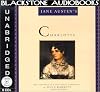
An unfortunate carriage accident introduces the Parkers to the large Heywood family. Mr. Parker, who has speculated on the success of Sanditon becoming a prominent seaside resort, invites Charlotte Heywood to accompany himself and his wife back to Sanditon for a stay. Here, Charlotte meets an array of interesting characters, including Mr. Parker’s younger brother, the intriguing Sidney Parker.
Near her death, Jane Austen began a final book about a seaside resort town begin to blossom. show more Original named The Brothers, it was never completed past chapter 11. The Brothers was later dubbed Sanditon by her family, and several authors have attempted to finish this fragment of a book. In Charlotte, Julia Barrett attempts to tackle the same feat, with very limited success.
The Austen-written parts of the book are great; she shines with her usual witty style and a great cast of characters (a family of hypochondriacs, a zealous sea resort speculator, the "romantic hero" who models himself on stories and quotes poetry with great feeling but little understanding, etc.). However, the transition from Austen to Barrett is palpable. Unfortunately the longer of the two, Barrett’s part drags in large sections, is wordy with obtuse sentences, and in general is nowhere near as good as Austen’s. There’s great potential with these wonderful characters but under Barrett’s direction, these characters are turned into rather dull beings who don’t quite follow in the path set out for them. (Barrett seems to not only change them from their original characterizations but also can’t seem to stay put with one characterization for each after that. They each in turn seem to do something out of character at various points in the book.) The book suffers from the author “telling” rather than “showing” – she chooses to use long-winded descriptions to talk about the characters and their motivations instead of letting their actions and dialogue speak for them, as Austen would do. However, I did get the occasional chuckle here and there with the characterizations after Barrett took over, and the last chapter actually felt a bit Austenesque.
A couple of pet peeves I had with this book were:
- If Barrett chose to rename the novel Charlotte, I would have thought we would see more this character but we really don’t. I didn’t feel like I got to know – or for that matter, care – about her much.
- The book is by and large about the sea town of Sanditon, so why the love song for London? I understand that often Austen would often re-locate her characters throughout her novels so this is not without precedence, but having so much set in London seemed odd, especially with the lengthy descriptions of all the hubbub about London.
For the most part, I found this book rather dull. The rambling plot doesn’t really seem to go anywhere and the ending just ties things up with a neat bow for the sake of doing so, not because the plot seemed to thrust that way. I give the book only two stars, and in large part that's only for Austen’s introduction to Sanditon and its inhabitants. show less
Near her death, Jane Austen began a final book about a seaside resort town begin to blossom. show more Original named The Brothers, it was never completed past chapter 11. The Brothers was later dubbed Sanditon by her family, and several authors have attempted to finish this fragment of a book. In Charlotte, Julia Barrett attempts to tackle the same feat, with very limited success.
The Austen-written parts of the book are great; she shines with her usual witty style and a great cast of characters (a family of hypochondriacs, a zealous sea resort speculator, the "romantic hero" who models himself on stories and quotes poetry with great feeling but little understanding, etc.). However, the transition from Austen to Barrett is palpable. Unfortunately the longer of the two, Barrett’s part drags in large sections, is wordy with obtuse sentences, and in general is nowhere near as good as Austen’s. There’s great potential with these wonderful characters but under Barrett’s direction, these characters are turned into rather dull beings who don’t quite follow in the path set out for them. (Barrett seems to not only change them from their original characterizations but also can’t seem to stay put with one characterization for each after that. They each in turn seem to do something out of character at various points in the book.) The book suffers from the author “telling” rather than “showing” – she chooses to use long-winded descriptions to talk about the characters and their motivations instead of letting their actions and dialogue speak for them, as Austen would do. However, I did get the occasional chuckle here and there with the characterizations after Barrett took over, and the last chapter actually felt a bit Austenesque.
A couple of pet peeves I had with this book were:
- If Barrett chose to rename the novel Charlotte, I would have thought we would see more this character but we really don’t. I didn’t feel like I got to know – or for that matter, care – about her much.
- The book is by and large about the sea town of Sanditon, so why the love song for London? I understand that often Austen would often re-locate her characters throughout her novels so this is not without precedence, but having so much set in London seemed odd, especially with the lengthy descriptions of all the hubbub about London.
For the most part, I found this book rather dull. The rambling plot doesn’t really seem to go anywhere and the ending just ties things up with a neat bow for the sake of doing so, not because the plot seemed to thrust that way. I give the book only two stars, and in large part that's only for Austen’s introduction to Sanditon and its inhabitants. show less
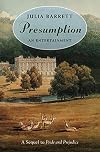
know I've harped on my adoration of all things Jane Austen and my inability to leave well-enough alone, eschewing all but the originals on here before and this is another instance of me happily reaching for an Austen sequel. This time the obsession paid off nicely though as the writing team who comprise author Julia Barrett have crafted a novel similar in scope and tone to the original Pride and Prejudice, if somewhat lacking in plot originality.
Many of the characters from P&P make show more appearances here although they re-enact the original with different characters in the leading roles. Georgiana Darcy is faced with two very different suitors and she must determine which is the honorable man and which the charlatan. Having repented of her youthful folly with Wickham, she is determined not to offer her heart to the wrong man, only occasionally confiding in sister-in-law Elizabeth as she navigates the potential pitfalls of courtship. The plot unfolds in ways that keep it true to Austen's own future vision of her characters as laid out at the end of Pride and Prejudice but getting to that ending parallels, extremely closely, the plot of Pride and Prejudice.
I didn't go into this expecting Austen. No thinking reader would. And the authors who write as Barrett are neither of them Austen. But they have done a creditable job in setting the stage and evoking the language of the time. They have not strayed too far from the comedy of manners that defined Austen and while I would have liked to have seen more of Elizabeth and Darcy's life together, it is perhaps more fitting that they turned their authorial lights on Georgiana instead. There are moments where it seems that beloved characters act out of character from the original and that can be disconcerting indeed but for the most part, they've created an entertaining sequel to one of the most beloved books in the English language. show less
Many of the characters from P&P make show more appearances here although they re-enact the original with different characters in the leading roles. Georgiana Darcy is faced with two very different suitors and she must determine which is the honorable man and which the charlatan. Having repented of her youthful folly with Wickham, she is determined not to offer her heart to the wrong man, only occasionally confiding in sister-in-law Elizabeth as she navigates the potential pitfalls of courtship. The plot unfolds in ways that keep it true to Austen's own future vision of her characters as laid out at the end of Pride and Prejudice but getting to that ending parallels, extremely closely, the plot of Pride and Prejudice.
I didn't go into this expecting Austen. No thinking reader would. And the authors who write as Barrett are neither of them Austen. But they have done a creditable job in setting the stage and evoking the language of the time. They have not strayed too far from the comedy of manners that defined Austen and while I would have liked to have seen more of Elizabeth and Darcy's life together, it is perhaps more fitting that they turned their authorial lights on Georgiana instead. There are moments where it seems that beloved characters act out of character from the original and that can be disconcerting indeed but for the most part, they've created an entertaining sequel to one of the most beloved books in the English language. show less
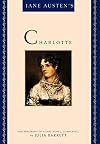
Barrett does research, and has some interesting ideas as to where the book was heading. Personally, I don't agree with her. I feel that Barrett changed some of the characters too drastically too fast, and while certain parts of her storyline seem accurate, many of them do not, to me.
The manner in which this book is packaged, however, led me to believe that Julia Barrett's writing is supposed to resemble that of Ms. Austen's. The transition from Austen's writing to Barrett's is not at all show more seamless, but is instead rather abrupt. Furthermore, Austen's writing is a lot more compact. Barrett's writing seems to wander a lot, in a kind of stream of consciousness manner that is much too modern.
While I congratulate Barrett on her thorough research, and for the mere fact that she attempted to complete a novel by such a famous author, I do not think that this book does justice to the story that Ms. Austen's fragment begins. show less
The manner in which this book is packaged, however, led me to believe that Julia Barrett's writing is supposed to resemble that of Ms. Austen's. The transition from Austen's writing to Barrett's is not at all show more seamless, but is instead rather abrupt. Furthermore, Austen's writing is a lot more compact. Barrett's writing seems to wander a lot, in a kind of stream of consciousness manner that is much too modern.
While I congratulate Barrett on her thorough research, and for the mere fact that she attempted to complete a novel by such a famous author, I do not think that this book does justice to the story that Ms. Austen's fragment begins. show less

A creditable imagination of the next stage in the lives of the Bennetts after Pride and Prejudice, focusing mainly on a false imprisonment and Georgiana Darcy's love life. Mostly satisfying (to this Jane Austen fan): Mr & Mrs Darcy enjoy wedded bliss (as do their neighbors the Bingleys), another Bennett sister marries, the wicked Wickham sinks even lower, and Miss Caroline Bingley gets the husband she deserves. (Spoiler?)
Lists
You May Also Like


Associated Authors
Statistics
- Works
- 4
- Members
- 606
- Popularity
- #41,483
- Rating
- 2.9
- Reviews
- 21
- ISBNs
- 39
- Languages
- 3