
Diane Cook (1)
Author of The New Wilderness
For other authors named Diane Cook, see the disambiguation page.
Works by Diane Cook
Meteorologist Dave Santana 1 copy
Associated Works
Tagged
Common Knowledge
- Birthdate
- 20th century
- Gender
- female
- Education
- Salt Institute for Documentary Studies, Portland, Maine, 2000 (Radio)
Columbia University (MFA) - Occupations
- novelist
short story writer
producer - Nationality
- USA
- Places of residence
- Brooklyn, New York, USA
- Map Location
- USA
Members
Reviews
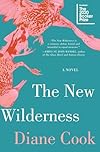
An epic, heartbreaking, tale of motherhood and belonging by way of a future climate crisis made worse by bureaucracy and flawed government planning. Set in a far-ish future scenario cities are collapsing into chaos amid worsening climate change / collapse and a wilderness area is set up with a study in progress to see if people can go back to nomadic living and how that will affect the land. Flawed from its inception the government plan is a stop-gap at best, a patch to keep business as show more usual going forward. It is within this confusion that we find Bea and Agnes. Bea is Agnes Mother and the novel centers on the dynamic between the two women. The cast of characters comes into and out of focus by way of these two women. It is an at time dry-novel its prose is paired down and then expands and blossoms where it needs to and so the pacing feels right and appropriate to the moody tone of the story.
Reading closely, Diane Cook has written a deeply complex story about motherhood, longing, coming of age, government failures & flawed 'best intentions', and the climate. It reinforces the feeling of detachment and confusion created by governmental oversight that at the end of things does not seem to really care about anything but keeping government itself running. It really is a story about trust and abandonment. What it means to trust to loose it and what it means to walk away and sometimes come back, rebound, and then leave again. Like the seasons themselves that are warping and changing in response to climate change the story central themes are this ebb and flow of power and trust.
The story is beautifully told and the characters reinforce the climate change angle. Which is to say all fiction is now science fiction but the other way around: all fiction is now climate fiction. It just is the backdrop of life and so it plays a central role in the story but Diane Cook writes about it in a natural way that puts the characters up front. Highly recommend. show less
Reading closely, Diane Cook has written a deeply complex story about motherhood, longing, coming of age, government failures & flawed 'best intentions', and the climate. It reinforces the feeling of detachment and confusion created by governmental oversight that at the end of things does not seem to really care about anything but keeping government itself running. It really is a story about trust and abandonment. What it means to trust to loose it and what it means to walk away and sometimes come back, rebound, and then leave again. Like the seasons themselves that are warping and changing in response to climate change the story central themes are this ebb and flow of power and trust.
The story is beautifully told and the characters reinforce the climate change angle. Which is to say all fiction is now science fiction but the other way around: all fiction is now climate fiction. It just is the backdrop of life and so it plays a central role in the story but Diane Cook writes about it in a natural way that puts the characters up front. Highly recommend. show less
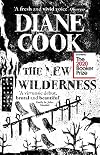
Shortlisted for the Booker Prize 2020 (God only knows why - this one isn't even a political choice)
I do not normally seek out dystopian fiction, and have seen some negative reviews of this book from friends I trust, but I found it surprisingly gripping and for the most part credible.
In the future world of this book, most of the (American?) population lives in a single large City, which is becoming too polluted for children to thrive in. The Wilderness State is a state that has been set show more aside and allowed to revert to nature, patrolled and defended by the Rangers.
The main protagonists are female members of a group of 20 people that has been permitted to settle in the Wilderness as long as they abide by a strict Manual which attempts to minimise their "footprint" and follow the instructions of the Rangers.
Bea(trice) agrees to join her academic partner Glen (the architect of the settlement project) and her sick young daughter Agnes in the group, hoping that the cleaner environment will prove beneficial to Agnes's health. The story of the group's period in this wilderness is mostly told chronologically apart from one move backwards near the start.
I was impressed by how well Cook described the environment of the wilderness, the hazards the group faced and the problems they faced adapting to a primitive nomadic lifestyle. Mother/daughter relationships, the dysfunctional dynamics of the group and how they start to adopt elements of pack animal behaviour are key themes. The story of how Agnes develops an intuitive understanding of the new environment rather better than the adults around her is convincing and moving.
The framing narrative seemed rather less plausible, and a few of the group's choices seemed a little far-fetched, but that seems secondary to the main story. For me, this is another book that deserves the recognition its longlisting should bring it. show less
I do not normally seek out dystopian fiction, and have seen some negative reviews of this book from friends I trust, but I found it surprisingly gripping and for the most part credible.
In the future world of this book, most of the (American?) population lives in a single large City, which is becoming too polluted for children to thrive in. The Wilderness State is a state that has been set show more aside and allowed to revert to nature, patrolled and defended by the Rangers.
The main protagonists are female members of a group of 20 people that has been permitted to settle in the Wilderness as long as they abide by a strict Manual which attempts to minimise their "footprint" and follow the instructions of the Rangers.
Bea(trice) agrees to join her academic partner Glen (the architect of the settlement project) and her sick young daughter Agnes in the group, hoping that the cleaner environment will prove beneficial to Agnes's health. The story of the group's period in this wilderness is mostly told chronologically apart from one move backwards near the start.
I was impressed by how well Cook described the environment of the wilderness, the hazards the group faced and the problems they faced adapting to a primitive nomadic lifestyle. Mother/daughter relationships, the dysfunctional dynamics of the group and how they start to adopt elements of pack animal behaviour are key themes. The story of how Agnes develops an intuitive understanding of the new environment rather better than the adults around her is convincing and moving.
The framing narrative seemed rather less plausible, and a few of the group's choices seemed a little far-fetched, but that seems secondary to the main story. For me, this is another book that deserves the recognition its longlisting should bring it. show less
Cook, Diane. The New Wilderness. Harper, 2020.
Diane Cook, known best for her pieces on NPR’s This American Life, has written a debut science fiction novel that is getting a lot of buzz in literary circles. It has been longlisted for the Booker prize and has been reviewed in major newspapers and magazines. The novel is set in a near-future America in which a city and its support structures dominate the nation, except for one Wilderness State in the American West. I was much reminded of show more William Gibson’s Sprawl. The city is crowded, dangerous, and the air is toxic. A group of 20 urbanites, led by Glenn, an anthropologist, sign up for an academic experiment in nomadic hunting and gathering society. They are left alone in the wilderness with only what they can carry and are loosely supervised by morally ambiguous government rangers. It is something like the 2002 PBS show, Frontier House, in which some urbanites were asked to live like northern plains homesteaders for a year. After several years, Glenn’s group has lost several members to wilderness accidents and has devolved almost to the level of an episode of Naked and Afraid. Glen’s wife Bea and her daughter Agnes are the central characters of the story. The novel begins with Bea alone in the forest giving birth to a stillborn and burying the afterbirth. When Bea leaves the group, the point of view switches to Agnes, and we discover that the story is not so much about wilderness survival as about an abandoned daughter coming of age in a dangerous world. It is that mother-daughter story that I am sure got the attention on the Booker prize readers. It is intense, nuanced, and inciteful. Agnes is one of the most fully alive characters I have found in any novel in quite a while. Science fiction world building, however, is more problematic. Life in the city is never fully described. Nor are the goals of the wilderness experiment. Several reviewers have pointed out how illogical inconsistent, and stupid the whole enterprise seems to be. But I think that is part of the point. It is a Trump-era story, and government on all levels is revealed to be venal and incompetent to a Kafkaesque extent. One example: every time a government administration changes, the rangers wear uniforms of different colors and adopt different unexplained policies and rules for the survivalist group to follow. In the end, all we care about is the human drama. I wonder if the novel stands a better chance of winning the Booker or a Hugo. It may fall between the stools, and that would be a shame. show less
Diane Cook, known best for her pieces on NPR’s This American Life, has written a debut science fiction novel that is getting a lot of buzz in literary circles. It has been longlisted for the Booker prize and has been reviewed in major newspapers and magazines. The novel is set in a near-future America in which a city and its support structures dominate the nation, except for one Wilderness State in the American West. I was much reminded of show more William Gibson’s Sprawl. The city is crowded, dangerous, and the air is toxic. A group of 20 urbanites, led by Glenn, an anthropologist, sign up for an academic experiment in nomadic hunting and gathering society. They are left alone in the wilderness with only what they can carry and are loosely supervised by morally ambiguous government rangers. It is something like the 2002 PBS show, Frontier House, in which some urbanites were asked to live like northern plains homesteaders for a year. After several years, Glenn’s group has lost several members to wilderness accidents and has devolved almost to the level of an episode of Naked and Afraid. Glen’s wife Bea and her daughter Agnes are the central characters of the story. The novel begins with Bea alone in the forest giving birth to a stillborn and burying the afterbirth. When Bea leaves the group, the point of view switches to Agnes, and we discover that the story is not so much about wilderness survival as about an abandoned daughter coming of age in a dangerous world. It is that mother-daughter story that I am sure got the attention on the Booker prize readers. It is intense, nuanced, and inciteful. Agnes is one of the most fully alive characters I have found in any novel in quite a while. Science fiction world building, however, is more problematic. Life in the city is never fully described. Nor are the goals of the wilderness experiment. Several reviewers have pointed out how illogical inconsistent, and stupid the whole enterprise seems to be. But I think that is part of the point. It is a Trump-era story, and government on all levels is revealed to be venal and incompetent to a Kafkaesque extent. One example: every time a government administration changes, the rangers wear uniforms of different colors and adopt different unexplained policies and rules for the survivalist group to follow. In the end, all we care about is the human drama. I wonder if the novel stands a better chance of winning the Booker or a Hugo. It may fall between the stools, and that would be a shame. show less
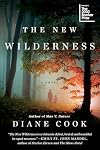
In The New Wilderness Diane Cook explores the sometimes fraught relationship between a mother Bea, and her daughter, Agnes. She plays this relationship out on a dystopian landscape, stripped of all modernity’s distractions. She warns us about mismanaging our home planet and simultaneously lays human nature and human interaction open to review and judgment. The author celebrates and grieves over the eternal give and take between mother and daughter; Cook tackles this essential chore show more brilliantly, showing all its depth and tenderness, and not sparing us the painful moments. In fact, she handles this volatile relationship so perfectly that the novel was shortlisted for the 2020 Booker Prize.
Bea gives birth to Agnes in the City, and like so many children in that toxic, dangerous pit, she becomes critically ill, to the level of coughing up blood. Desperate, Bea and her husband Glen win passes to join a group of like-minded pilgrims and leave the City permanently behind, and make their collective way in the Wilderness State. The Wilderness State is a vast tract of natural environment—free of the devastation that has left the City uninhabitable. This group, called the Community, generally succeeds at living off the land. Yes, they run afoul a few times of the Rangers, the formal authority over the Wilderness State, but things don’t really spiral out of control until other groups violate the borders of this reserve, after which daily subsistence becomes too much of a challenge.
Cook’s kernel remains Bea and Agnes. Other plot directions orbit this way and that, but Bea and Agnes continually return front and center. The author always portrays these two women with such logic, such love, and, after Agnes grows to approximate independence, at high stakes loggerheads—it simply isn’t possible that it could have been handled any more fairly, or with any more love or mercy.
The author crafts her love story in admirable and direct prose. Speech and reasoning within the group progresses in blunt terms, because decisions have direct consequences when you’re a migrant group living off the land. There’s no higher power, no magisterial narrator to describe beautiful scenes, or give hints about advisable survival strategies, which is exactly how it should be.
The book contains at length a subtle hint at a higher symbolism, but I won’t speculate about it, because I think it would remain a minor feature, and not a very influential one. But if you sit down to this book, it will take you on a journey through human nature in the face of the natural world, and plot out for you the parabola of love’s trajectory of two willful women, tied together by love. Memorable and merciful, true to life and thought-provoking, the Booker committee was right to honor this one. A true winner.
https://bassoprofundo1.blogspot.com/2025/11/the-new-wilderness-by-diane-cook.htm... show less
Bea gives birth to Agnes in the City, and like so many children in that toxic, dangerous pit, she becomes critically ill, to the level of coughing up blood. Desperate, Bea and her husband Glen win passes to join a group of like-minded pilgrims and leave the City permanently behind, and make their collective way in the Wilderness State. The Wilderness State is a vast tract of natural environment—free of the devastation that has left the City uninhabitable. This group, called the Community, generally succeeds at living off the land. Yes, they run afoul a few times of the Rangers, the formal authority over the Wilderness State, but things don’t really spiral out of control until other groups violate the borders of this reserve, after which daily subsistence becomes too much of a challenge.
Cook’s kernel remains Bea and Agnes. Other plot directions orbit this way and that, but Bea and Agnes continually return front and center. The author always portrays these two women with such logic, such love, and, after Agnes grows to approximate independence, at high stakes loggerheads—it simply isn’t possible that it could have been handled any more fairly, or with any more love or mercy.
The author crafts her love story in admirable and direct prose. Speech and reasoning within the group progresses in blunt terms, because decisions have direct consequences when you’re a migrant group living off the land. There’s no higher power, no magisterial narrator to describe beautiful scenes, or give hints about advisable survival strategies, which is exactly how it should be.
The book contains at length a subtle hint at a higher symbolism, but I won’t speculate about it, because I think it would remain a minor feature, and not a very influential one. But if you sit down to this book, it will take you on a journey through human nature in the face of the natural world, and plot out for you the parabola of love’s trajectory of two willful women, tied together by love. Memorable and merciful, true to life and thought-provoking, the Booker committee was right to honor this one. A true winner.
https://bassoprofundo1.blogspot.com/2025/11/the-new-wilderness-by-diane-cook.htm... show less
Lists
Awards


You May Also Like


Associated Authors
Statistics
- Works
- 3
- Also by
- 4
- Members
- 893
- Popularity
- #28,688
- Rating
- 3.7
- Reviews
- 33
- ISBNs
- 68
- Languages
- 5