
Gene Fowler (1) (1890–1960)
Author of Good Night, Sweet Prince: The Life and Times of John Barrymore
For other authors named Gene Fowler, see the disambiguation page.
Works by Gene Fowler
Salute to yesterday 5 copies
Associated Works
Tagged
Common Knowledge
- Birthdate
- 1890-03-08
- Date of death
- 1960-07-02
- Gender
- male
- Occupations
- journalist
screenwriter - Organizations
- The Denver Post
New York Daily Mirror
King Features Syndicate
New York American
New York Morning Telegraph - Relationships
- Fowler, Gene, Jr. (son)
- Nationality
- USA
- Places of residence
- Denver, Colorado, USA
New York, New York, USA
Los Angeles, California, USA - Associated Place (for map)
- USA
Members
Reviews

Fowler, Gene. Timber Line: A Story of Bonfils and Tammen. 1933. Comstock, 1974.
Gene Fowler (1890-1960) grew up in the high country of Colorado, was a reporter at the Denver Post from 1914-1918, moved to New York where he became a familiar figure in the New York newspaper world. In New York, he met the famous people in the entertainment industry of the time. Encouraged by friends in the movie industry, he moved to Hollywood and finished his career as a script writer. His son, who shares his show more name, became a successful film editor. He was not of the school of journalism that says stick to facts, no matter how dry. He is supposed to have said that he never let facts get in the way of a good story. Timber Line is a nostalgic look at the early history of the Denver Post and the late-frontier culture that produced it. The protagonist of the story is Frederick Bonfils, a promoter who came to Denver with a nest-egg derived from a dodgy lottery he ran in Kansas. Together with Harry Tammen, a curio shop operator from Denver, he bought the Post in 1894 and turned it into the most successful and most sensationalistic newspaper in the West. They ran large headlines in red ink and used an endless array of promotional gimmicks, pranks, and games to sell papers. For example, when a rival paper put on an opera, they hired a newsboy to stand outside the hall and disrupt the performance by whistling louder than the aria. At one point they bought a circus that competed ruthlessly with the Ringling Brothers. Libel suits and claims of fraud were a way of life. Fowler tells stories illustrating the post-frontier world in which the paper developed—how he made an enemy of Buffalo Bill by running a story about the women in his life. He tells sensational stories about shootouts and cannibalism in the winter Rockies. Timber Line is a lively read, but I wish I knew how much of it I could trust. There is an excellent 2012 review of it in the Columbia Journalism Review (Rocky Mountain fever - Columbia Journalism Review (cjr.org)). As far as I know, there is no commercial ebook edition, but the book is worth a trip to the library. If you are visually impaired, there is an audio edition on Bard. 4 stars. show less
Gene Fowler (1890-1960) grew up in the high country of Colorado, was a reporter at the Denver Post from 1914-1918, moved to New York where he became a familiar figure in the New York newspaper world. In New York, he met the famous people in the entertainment industry of the time. Encouraged by friends in the movie industry, he moved to Hollywood and finished his career as a script writer. His son, who shares his show more name, became a successful film editor. He was not of the school of journalism that says stick to facts, no matter how dry. He is supposed to have said that he never let facts get in the way of a good story. Timber Line is a nostalgic look at the early history of the Denver Post and the late-frontier culture that produced it. The protagonist of the story is Frederick Bonfils, a promoter who came to Denver with a nest-egg derived from a dodgy lottery he ran in Kansas. Together with Harry Tammen, a curio shop operator from Denver, he bought the Post in 1894 and turned it into the most successful and most sensationalistic newspaper in the West. They ran large headlines in red ink and used an endless array of promotional gimmicks, pranks, and games to sell papers. For example, when a rival paper put on an opera, they hired a newsboy to stand outside the hall and disrupt the performance by whistling louder than the aria. At one point they bought a circus that competed ruthlessly with the Ringling Brothers. Libel suits and claims of fraud were a way of life. Fowler tells stories illustrating the post-frontier world in which the paper developed—how he made an enemy of Buffalo Bill by running a story about the women in his life. He tells sensational stories about shootouts and cannibalism in the winter Rockies. Timber Line is a lively read, but I wish I knew how much of it I could trust. There is an excellent 2012 review of it in the Columbia Journalism Review (Rocky Mountain fever - Columbia Journalism Review (cjr.org)). As far as I know, there is no commercial ebook edition, but the book is worth a trip to the library. If you are visually impaired, there is an audio edition on Bard. 4 stars. show less

An interesting, readable fable about life in Java in the 1880s. We read about Ajoks, a musician, resourceful and strong, yet largely innocent, who is called on a journey to sell is prize ox and so comes to learn about the world outside his village. It is a mix of travelogue and mythology, a picture of the culture of Java, yet, it must be remembered, written by a European. Although Fowler spent quite a long time in Java, learning the cultures and customs, before writing this book, his is, show more after all, the perspective of the outsider. Nevertheless, this book draws you along, and seems to capture the rhythms and flavors of the time and place quiet well, within the metaphoric framework of the fable. show less
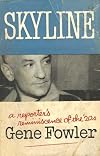
There are a number of highly entertaining stories in this book, which is a memoir of Fowler’s days on the post World War I-era New York American, but the book can be a bit discursive at times. There’s a long setup for a meeting with a former, down on his luck colleague that gets disposed of in a paragraph, and many promises are made to tell certain stories, not all of which are kept. Also, there is nothing about Fowler’s editorial tenure. He died while the book was being written, and show more it does show. Heavy emphasis on Damon Runyon throughout. show less

Alternately the darling of Bohemians and reviled for his creations, it seems right that this biography is alternately praised and hated by those who knew him, or were descended from him. Worth doing further research on Hartmann.
Lists
Awards


You May Also Like


Associated Authors
Statistics
- Works
- 18
- Also by
- 2
- Members
- 522
- Popularity
- #47,609
- Rating
- 4.0
- Reviews
- 10
- ISBNs
- 49