
Qiu Miaojin (1969–1995)
Author of Notes of a Crocodile
About the Author
Works by Qiu Miaojin
I taccuini del coccodrillo 1 copy
Associated Works
Queer: A Collection of LGBTQ Writing from Ancient Times to Yesterday (2021) — Contributor, some editions — 65 copies
Vzpomínky a sny na obratníku Raka : výbor moderní tchajwanské prózy : sbírka doplněná odbornými komentáři (2021) — some editions — 1 copy
Tagged
Common Knowledge
- Canonical name
- Qiu Miaojin
- Legal name
- 邱妙津
- Other names
- Chiu Miao-Chin
- Birthdate
- 1969-05-29
- Date of death
- 1995-06-25
- Gender
- female
- Education
- National Taiwan University
University of Paris VIII - Occupations
- writer
journalist - Nationality
- Taiwan
- Birthplace
- Changhua County, Taiwan
- Places of residence
- Taiwan
Paris, France - Place of death
- Paris, France
- Associated Place (for map)
- Paris, France
Members
Reviews
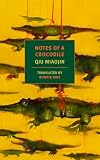
I picked this novel up at random in the library, knowing nothing about it beyond the blurb. Having read it, I wish there had been an afterword to tell me more about the author and cultural context in which it was written. Without that, I found it atmospheric yet oblique. The format is of a diary or set of reflections written by Lazi, a emotionally turbulent and self-destructive undergraduate student. She’s attracted to women and troubled by it, as her social milieu is implied to be very show more homophobic. Her friendships and romantic entanglements are all terribly overwrought, which reminded me of the emotional dramas I observed during my own undergraduate years. The chaotic nature of all this drama can become a bit wearing, though. I wanted more context for it, as I have no idea about what late 1980s Taiwan was like. My favourite element of the book was the interjection of allegorical chapters about a crocodile, clearly a metaphor for being queer. These were slyly witty, implying a voyeuristic fascination with and fear of LGBTQ people in popular culture:
Such deadpan chapters provide a striking contrast the very messy reality of Lazi’s life and those of her friends. The three stars I’m giving ‘Notes of a Crocodile’ reflect a lack of contextual knowledge on the part of the reader, rather than the book as such. A translator’s note, or similar, would have been very helpful. show less
From the standpoint of developmental psychologists, crocodiles were an aberrant species. In accordance with their discipline’s understanding of crocodile families, their research indicated distinct differences from humans at every stage of development from birth to puberty as well as in maturity, though details had yet to be ascertained. There was a general consensus, however, that up the age of fourteen, crocodiles a homemade ‘human suit’ before running away from home. While exact causes remained unknown, scholars cited societal attitudes as a factor in crocodile mutation, suggesting that there was no means of preventing an increase in the number of emergent crocodiles, which would ultimately contribute to a broader societal trend toward a full-fledged crocodile ecology and genetic mutation.
Such deadpan chapters provide a striking contrast the very messy reality of Lazi’s life and those of her friends. The three stars I’m giving ‘Notes of a Crocodile’ reflect a lack of contextual knowledge on the part of the reader, rather than the book as such. A translator’s note, or similar, would have been very helpful. show less
I stumbled on this at the library, and because I liked Notes of a Crocodile so much, I had to check it out. (Especially because it was #witmonth.)
As in Crocodile, Miaojin writes with a kind of heavy mistiness, where you can feel the full weight of all the emotion happening -- even if you can't always make out exactly who is feeling it or about whom. The book claims that the letters can be read in any order, and though I read them in the order in which they were presented, there remained a show more kind of shiftiness where it wasn't always clear which events happened in what order. These aren't necessarily criticisms, because the feeling is, as always, what seems important here.
I don't know how anyone who remembers what it was like to be young and heartbroken, rationalizing and overthinking, making grandiose statements in their diary, can fail to be moved by this book. It's beautiful and tragic, always so heartfelt. As a Westerner, I can't help wondering what Miaojin would have done/written/become, had she not committed suicide -- the knowledge of which permeates this book -- even as it is complicated by the different cultural meanings of suicide -- both in terms of East/West and the sometimes romanticization of depression and suicide among the creative class -- artists, writers, filmmakers, some of whom are referenced in this book.
Haunting, intimate, amazing. show less
As in Crocodile, Miaojin writes with a kind of heavy mistiness, where you can feel the full weight of all the emotion happening -- even if you can't always make out exactly who is feeling it or about whom. The book claims that the letters can be read in any order, and though I read them in the order in which they were presented, there remained a show more kind of shiftiness where it wasn't always clear which events happened in what order. These aren't necessarily criticisms, because the feeling is, as always, what seems important here.
I don't know how anyone who remembers what it was like to be young and heartbroken, rationalizing and overthinking, making grandiose statements in their diary, can fail to be moved by this book. It's beautiful and tragic, always so heartfelt. As a Westerner, I can't help wondering what Miaojin would have done/written/become, had she not committed suicide -- the knowledge of which permeates this book -- even as it is complicated by the different cultural meanings of suicide -- both in terms of East/West and the sometimes romanticization of depression and suicide among the creative class -- artists, writers, filmmakers, some of whom are referenced in this book.
Haunting, intimate, amazing. show less
An astoundingly odd book, and not necessarily in a good way. The translator (and publisher) makes great claims for Qiu's text, and in some ways they're completely justified. This is a novel in a great tradition stretching back at least to Goethe's Werther: an utterly sincere discussion, in epistolary form, of love and one's authentic self. As well as the literary tradition, Qiu's letter-writer is deeply invested in high art film and late twentieth century French theory, and productively show more brings them both into her story.
On the other hand, Qiu was only 26 when she killed herself. Gentle reader, consider yourself at 26, and now imagine yourself roughly twice as smart as you were. Do you want to read a book written by that ultra-smart version of yourself? How much stomach do you have for naked emotion disguised as intellectual depth? In order to get to the interesting discussion-with-a-tradition stuff, through how much Hallmark greeting card meets self-help malarkey about true souls and fate and ineradicable connections are you willing to wade?
Well, fear not, because if nothing else this is pretty short, and you can roll your eyes past the truly atrocious bits--or, as I found myself doing, appreciating just how unpleasant it is to be in one's early twenties, intellectual, and have a well-honed sense of the world's injustice (against yourself). Because Qiu captures this exceedingly well. Now my stern aesthetic philosophy voice kicks in with "well yes, but if the author is just *doing* something, rather than *reproducing it ironically*, how much praise can you give?" I have no answer for this. I did not enjoy the "this is how it feels to be 26, single, and aggrieved." I did not enjoy the sensation that, if our letter writer had been male, reviewers would all have pointed out that he was an incredibly creepy, borderline stalker, psychopath. I did not enjoy the boredom and pain induced by a book that harps constantly on some injustice, but never tells us what it is, and leaves me suspecting that there was no more injustice involved here than there is in the life of most young lovers.
And yet I was very happy to read the book. Qiu is exceptionally talented, which becomes obvious in one scene--a scene other reviewers have pointed to. An older woman picks up our letter writer, and they go to the Seine; the description of this scene, plus the eerie calm at the book's conclusion, make it well worth reading. And if nothing else, it's a great book to argue about: how much praise, after all, does someone deserve for doing what everyone does, and writing it down? And would this even be in print if Qiu were still alive? show less
On the other hand, Qiu was only 26 when she killed herself. Gentle reader, consider yourself at 26, and now imagine yourself roughly twice as smart as you were. Do you want to read a book written by that ultra-smart version of yourself? How much stomach do you have for naked emotion disguised as intellectual depth? In order to get to the interesting discussion-with-a-tradition stuff, through how much Hallmark greeting card meets self-help malarkey about true souls and fate and ineradicable connections are you willing to wade?
Well, fear not, because if nothing else this is pretty short, and you can roll your eyes past the truly atrocious bits--or, as I found myself doing, appreciating just how unpleasant it is to be in one's early twenties, intellectual, and have a well-honed sense of the world's injustice (against yourself). Because Qiu captures this exceedingly well. Now my stern aesthetic philosophy voice kicks in with "well yes, but if the author is just *doing* something, rather than *reproducing it ironically*, how much praise can you give?" I have no answer for this. I did not enjoy the "this is how it feels to be 26, single, and aggrieved." I did not enjoy the sensation that, if our letter writer had been male, reviewers would all have pointed out that he was an incredibly creepy, borderline stalker, psychopath. I did not enjoy the boredom and pain induced by a book that harps constantly on some injustice, but never tells us what it is, and leaves me suspecting that there was no more injustice involved here than there is in the life of most young lovers.
And yet I was very happy to read the book. Qiu is exceptionally talented, which becomes obvious in one scene--a scene other reviewers have pointed to. An older woman picks up our letter writer, and they go to the Seine; the description of this scene, plus the eerie calm at the book's conclusion, make it well worth reading. And if nothing else, it's a great book to argue about: how much praise, after all, does someone deserve for doing what everyone does, and writing it down? And would this even be in print if Qiu were still alive? show less
I'd never heard of this book before, but bought it based on NYRB classics, translated fiction, queer misfits, and I don't think I've read any authors from Taiwan before. Plus this cover is just fantastic. Still, I had very little in the way of expectations going in.
Now I am struggling to find a way to talk about it. Central to the story is the narrator, known to us only by the nickname Lazi, and her on-again off-again love with Shui Ling. Told from excerpts from ten notebooks Lazi wrote over show more a period encompassing what seems to be the last few years of high school (except she is no longer living at home?) through what seems to be a prestigious college -- as she struggles to figure out life and love (mostly love) with the help of a few other queer kids who all seem to be cut off from any larger, established LGBTQIA+ community and so are figuring things out in a vacuum with mostly only their self-doubts, fleeting obsessions, and the judgements of society at large to guid them. The fragmented run-on sentence above is somewhat indicative of the fragmented nature of the text, which sometimes shifts backwards and forwards in time and also sideways to a crocodile analogy in a way that is sometimes bewildering but no more so than it would be to live that way. Most of the characters involved seem to be academically gifted, analytical, obscure-reference making types instantly familiar to anyone who's ever been on a college campus. I couldn't help but love them all and fiercely wish for them to be scooped up by queer elders to share with them joy and radical acceptance.
Have already acquired her other novel. show less
Now I am struggling to find a way to talk about it. Central to the story is the narrator, known to us only by the nickname Lazi, and her on-again off-again love with Shui Ling. Told from excerpts from ten notebooks Lazi wrote over show more a period encompassing what seems to be the last few years of high school (except she is no longer living at home?) through what seems to be a prestigious college -- as she struggles to figure out life and love (mostly love) with the help of a few other queer kids who all seem to be cut off from any larger, established LGBTQIA+ community and so are figuring things out in a vacuum with mostly only their self-doubts, fleeting obsessions, and the judgements of society at large to guid them. The fragmented run-on sentence above is somewhat indicative of the fragmented nature of the text, which sometimes shifts backwards and forwards in time and also sideways to a crocodile analogy in a way that is sometimes bewildering but no more so than it would be to live that way. Most of the characters involved seem to be academically gifted, analytical, obscure-reference making types instantly familiar to anyone who's ever been on a college campus. I couldn't help but love them all and fiercely wish for them to be scooped up by queer elders to share with them joy and radical acceptance.
Have already acquired her other novel. show less
Lists
Awards


You May Also Like


Associated Authors
Statistics
- Works
- 8
- Also by
- 6
- Members
- 949
- Popularity
- #27,106
- Rating
- 3.6
- Reviews
- 25
- ISBNs
- 26
- Languages
- 5
- Favorited
- 3