

Silvina Ocampo (1903–1993)
Author of The Book of Fantasy
About the Author
Works by Silvina Ocampo
Porfiria 2 copies
Poemas de amor desesperado 1 copy
El caballo alado 1 copy
Όποιος αγαπά μισεί 1 copy
El viajero sobre la tierra 1 copy
Nueve perros : en Los días de la noche (1970) / Silvina Ocampo ; ilustrado por Daniel García 1 copy, 1 review
El pecado mortal 1 copy
Lo amargo por dulce 1 copy
Pequeña antología 1 copy
Cuaderno San Martín 1 copy
The Atonement [short story] 1 copy
Gostje 1 copy
Associated Works
The Big Book of Science Fiction: The Ultimate Collection (2016) — Contributor — 522 copies, 8 reviews
Secret Weavers: Stories of the Fantastic by Women Writers of Argentina and Chile (1991) — Contributor — 25 copies
La Otredad: Antología de cuentos latinoamericanos del siglo XX (2015) — Contributor — 3 copies, 1 review
Tagged
Common Knowledge
- Canonical name
- Ocampo, Silvina
- Legal name
- Ocampo Aguirre, Silvina
- Other names
- OCAMPO AGUIRRE, Silvina
OCAMPO, Silvina - Birthdate
- 1903-07-28
- Date of death
- 1993-12-14
- Gender
- female
- Occupations
- poet
short story writer
translator
artist - Awards and honors
- Premio Municipal de Poesía (1945)
Segundo Premio Nacional de Poesía (1953)
Premio Municipal de Literatura (1954)
Premio Nacional de Poesía (1962)
Premio del Club de los 13 (1988)
Gran Premio de Honor de la SADE (1992) - Relationships
- Ocampo, Victoria (sister)
Borges, Jorge Luís (friend and collaborator
Bioy Casares, Adolfo (spouse) - Nationality
- Argentina
- Birthplace
- Buenos Aires, Argentina
- Places of residence
- Buenos Aires, Argentina
- Place of death
- Buenos Aires, Argentina
- Burial location
- La Recoleta Cemetery, Buenos Aires, Argentina
- Associated Place (for map)
- Buenos Aires, Argentina
Members
Reviews
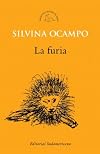
Un libro macabro como Silvina misma, como muchos escritores en esta tradición. Tiene algo muy local, ni siquiera es una Poe acriollado, sino la herencia directa de un linaje artístico que se desenvuelve con una espontaneidad para lo siniestro como le he visto a poca gente. En "La Furia" Silvina Ocampo prueba una y otra vez las mismas fórmulas, aplicándolas a varias anécdotas diferentes. Si bien muy seguido los finales son predecibles y el mismo cuento vuelve como una obsesión íntima, show more tenés acá un libro de cuentos obligado para cualquiera que tenga ganas de familiarizarse con la literatura argentina, en un tono que, casi en secreto, siguen reinventando sus autoras femeninas. show less

A young man visits Swans Ranch, he's never been before and expects to meet there someone near his age but also never before met. "I had forgotten something, something very important. I looked at my wrist to make sure that I was wearing my watch, looked at the handkerchief in my lapel pocket, the Scottish wool scarf wrapped around the straps of the suitcase." [11] Over the course of one brief conversation with a fellow train passenger he describes in quick succession his own demeanor as show more unsure of himself, then as unenthusiastic, then abruptly as filled with hatred.
So opens Ocampo's novella, narrated in first-person present, with a dream quality to many but certainly not all passages. Modern readers are accustomed to questioning what ambiguity or suspicion comes from such a narrator, and what inherently arises from the circumstances in which the narrator is found. Here the influence of translation adds another layer for many native English speakers, both cultural and linguistic. There's a bit of the thriller aspect to the story, and a coda delivers a twist in the tale (if that's what the reader is looking for). The bigger question for me: it's there if I want it, that twist, but why?, why take that development as especially significant or remarkable? I'm left with a strong impression Ocampo wasn't looking to deliver thrills or a satisfying surprise, that the twist (of plot, of narration) is just another part of her story, no more or less significant than the repeated intrusions of bourgeoise lifeways or the remote ranch setting.
Upon a second reading, at least, that twist won't loom over the story as much as in this first reading, coming at the end as it did, and against expectation.
//
Read from NYRB edition of Thus Were Their Faces: cover design inspired by artwork of Remedios Varo; Introduction by Helen Oyeyemi, preface by Jorge Luis Borges. All of these build up a certain expectation, unspecified but influential to my reading and which I hope to shed upon re-read. show less
So opens Ocampo's novella, narrated in first-person present, with a dream quality to many but certainly not all passages. Modern readers are accustomed to questioning what ambiguity or suspicion comes from such a narrator, and what inherently arises from the circumstances in which the narrator is found. Here the influence of translation adds another layer for many native English speakers, both cultural and linguistic. There's a bit of the thriller aspect to the story, and a coda delivers a twist in the tale (if that's what the reader is looking for). The bigger question for me: it's there if I want it, that twist, but why?, why take that development as especially significant or remarkable? I'm left with a strong impression Ocampo wasn't looking to deliver thrills or a satisfying surprise, that the twist (of plot, of narration) is just another part of her story, no more or less significant than the repeated intrusions of bourgeoise lifeways or the remote ranch setting.
Upon a second reading, at least, that twist won't loom over the story as much as in this first reading, coming at the end as it did, and against expectation.
//
Read from NYRB edition of Thus Were Their Faces: cover design inspired by artwork of Remedios Varo; Introduction by Helen Oyeyemi, preface by Jorge Luis Borges. All of these build up a certain expectation, unspecified but influential to my reading and which I hope to shed upon re-read. show less

This is a collection of strange stories. The best word I can think of to describe them is unmoored -- Ocampo seems uninterested in tethering her stories to reality. Dream and reality blend into each other; past memories and future desires are interchangeable; and characterization is nonexistent -- characters are so empty and alike that anything that impacts them seems more the result of a choice rather than characterization. And then a desultory choice at best.
These stories refuse to adhere show more to the conventions of written prose: Aristotle’s three unities are roundly rejected, as are unity of theme, plot linearity, plot coherence, and whatever other expectation you may bring to them. Dipping into these felt like descending in a barely-coherent dreamworld in which anything out of the ordinary might happen, on the condition that it’s barely sensible. show less
These stories refuse to adhere show more to the conventions of written prose: Aristotle’s three unities are roundly rejected, as are unity of theme, plot linearity, plot coherence, and whatever other expectation you may bring to them. Dipping into these felt like descending in a barely-coherent dreamworld in which anything out of the ordinary might happen, on the condition that it’s barely sensible. show less

Fantasy as it became widely known and commercialized during the second half of the 20th Century, on the derivative heels of Tolkien -- with its abundant swords and sorcerers, redundant quests and ubiquitous good v. evil schlock — does not exist among the refined stories of The Book of Fantasy. Rather, fantasies of a more ancient order in fiction, focused on the uncanny, macabre, or sometimes just plain weird, haunt the peculiar pages of this supernaturally redolent anthology
Like "The Man show more Who Collected the First of September, 1973," by Tor Åge Bringsværd, a bizarre tale about an ultra-obsessed man — a veritable hoarder of facts — who filled his home for years with stacks of news clippings to the rafters, all of them published on September 1st, 1973. For the remainder of his life, as the man considered only that day and nothing but that day, his future and his past, beyond that day, ceased to exist.
The anthology was edited by three of Argentina's luminaries, Jorge Luis Borges, and the lesser known Silvina Ocampo and Adolfo Bioy Cesares (the latter's novels, The Invention of Morel and Asleep in the Sun, have been reissued by NYRB Classics). They were three good friends who'd meet and discuss good literature, in particular stories that were strange, and from their conversations published their collaboration, The Book of Fantasy, in 1940 (and then revised it in 1965 and again in 1976), at which times they added more contemporary stories -- yet stories that still retained the editors' "old school" conceptions of "fantasy" or "fantastic literature" — to their collection, and it has remained in print ever since.
Several of the stories are so short that today they could be classified as flash fiction: a couple sentences, a paragraph or two, less than a single page at most, like this gem below, "Eternal Life," by James George Frazer:
A fourth story, taken down near Oldenburg in Holstein, tells of a jolly dame that ate and drank and lived right merrily and had all that heart could desire, and she wished to live always. For the first hundred years all went well, but after that she began to shrink and shrivel up, till at last she could neither walk nor stand nor eat nor drink. But die she could not. At first they fed her as if she were a little child, but when she grew smaller and smaller they put her in a glass bottle and hung her up in the church. And there she still hangs, in the church of St Mary, at Lübeck. She is as small as a mouse, but once a year she stirs.
My favorite story from The Book of Fantasy is "Being Dust" by Santiago Dabove, an account of an unfortunate man who maintains consciousness long after a paralyzing fall from a horse on a remote road; his mind — and especially his perceptual acuity in creative problem solving — remains intact: "What a strange plant my head is ... I wanted to be a tobacco plant so that I wouldn't need to smoke!" And even though his eye sockets are now cave-like hollows, he can still see, and he feels a "tingling sensation" inside what's left of the husk of his rotted torso, and accurately assesses that he "must have an ants' nest somewhere near my heart," still so attuned as he is to his own flesh even as it disintegrates into molecules in the mud over many months.
In the introduction to the 1988 edition, Ursula K. Leguin rightly calls the selections made by the editors "idiosyncratic" and "eclectic". For every Poe or Hawthorne that was included, there's a Macedonio Fernandez ("Tantalia") or Manuel Peyrou ("The Bust"); or for every Kipling or Tolstoy, an Arturo Cancela and Pilar de Lusarreta (co-authors of the outstanding "Fate is a Fool"), as well as many more lesser known writers, to satisfy even the most hardcore connoisseurs of the arcane. It's an exceptional anthology, full of surprising and delightful discoveries, and an intriguing glimpse at the stories that, once upon a time, wowed Jorge Luis Borges and two of his good fellow author friends. show less
Like "The Man show more Who Collected the First of September, 1973," by Tor Åge Bringsværd, a bizarre tale about an ultra-obsessed man — a veritable hoarder of facts — who filled his home for years with stacks of news clippings to the rafters, all of them published on September 1st, 1973. For the remainder of his life, as the man considered only that day and nothing but that day, his future and his past, beyond that day, ceased to exist.
The anthology was edited by three of Argentina's luminaries, Jorge Luis Borges, and the lesser known Silvina Ocampo and Adolfo Bioy Cesares (the latter's novels, The Invention of Morel and Asleep in the Sun, have been reissued by NYRB Classics). They were three good friends who'd meet and discuss good literature, in particular stories that were strange, and from their conversations published their collaboration, The Book of Fantasy, in 1940 (and then revised it in 1965 and again in 1976), at which times they added more contemporary stories -- yet stories that still retained the editors' "old school" conceptions of "fantasy" or "fantastic literature" — to their collection, and it has remained in print ever since.
Several of the stories are so short that today they could be classified as flash fiction: a couple sentences, a paragraph or two, less than a single page at most, like this gem below, "Eternal Life," by James George Frazer:
A fourth story, taken down near Oldenburg in Holstein, tells of a jolly dame that ate and drank and lived right merrily and had all that heart could desire, and she wished to live always. For the first hundred years all went well, but after that she began to shrink and shrivel up, till at last she could neither walk nor stand nor eat nor drink. But die she could not. At first they fed her as if she were a little child, but when she grew smaller and smaller they put her in a glass bottle and hung her up in the church. And there she still hangs, in the church of St Mary, at Lübeck. She is as small as a mouse, but once a year she stirs.
My favorite story from The Book of Fantasy is "Being Dust" by Santiago Dabove, an account of an unfortunate man who maintains consciousness long after a paralyzing fall from a horse on a remote road; his mind — and especially his perceptual acuity in creative problem solving — remains intact: "What a strange plant my head is ... I wanted to be a tobacco plant so that I wouldn't need to smoke!" And even though his eye sockets are now cave-like hollows, he can still see, and he feels a "tingling sensation" inside what's left of the husk of his rotted torso, and accurately assesses that he "must have an ants' nest somewhere near my heart," still so attuned as he is to his own flesh even as it disintegrates into molecules in the mud over many months.
In the introduction to the 1988 edition, Ursula K. Leguin rightly calls the selections made by the editors "idiosyncratic" and "eclectic". For every Poe or Hawthorne that was included, there's a Macedonio Fernandez ("Tantalia") or Manuel Peyrou ("The Bust"); or for every Kipling or Tolstoy, an Arturo Cancela and Pilar de Lusarreta (co-authors of the outstanding "Fate is a Fool"), as well as many more lesser known writers, to satisfy even the most hardcore connoisseurs of the arcane. It's an exceptional anthology, full of surprising and delightful discoveries, and an intriguing glimpse at the stories that, once upon a time, wowed Jorge Luis Borges and two of his good fellow author friends. show less
Lists
Awards


You May Also Like


Associated Authors
Statistics
- Works
- 67
- Also by
- 15
- Members
- 2,164
- Popularity
- #11,870
- Rating
- 3.9
- Reviews
- 61
- ISBNs
- 156
- Languages
- 12
- Favorited
- 7
