
Christopher Perkins (1) (1968–)
Author of Player's Handbook
For other authors named Christopher Perkins, see the disambiguation page.
About the Author
Image credit: via Acquisitions Incorporated Wiki
Series
Works by Christopher Perkins
Sons of Gruumsh (Dungeons & Dragons d20 3.5 Fantasy Roleplaying, Forgotten Realms 4th-Level Adventure (2005) 62 copies
Deluxe Eberron Dungeon Master's Screen (Dungeons & Dragons d20 3.5 Fantasy Roleplaying, Eberron Accessories) (2005) 27 copies
Associated Works
Tagged
Common Knowledge
- Birthdate
- 1968-02-29
- Gender
- male
- Occupations
- game designer
dungeon master - Organizations
- Wizards of the Coast
- Nationality
- USA
- Birthplace
- Canada
Members
Reviews
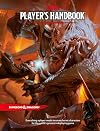
As an avid table-top RPG player, I found this latest edition of DnD to be the best yet to come out of Wizards of the Coast. Granted I have only dabbled in 1st and 2nd edition, but playing 3rd, 3.5, and 4th for the past 11 years or so, this 5th edition book seems to take all the good things in the last few tries and compiles them all together into this version. It was an enjoyable read especially if you read it out loud as I did to my newborn daughter.
Now for a little uber-nerdom fan talk - show more If you follow RPG politics you may know that a lot of 4th edition DnD game designers jumped ship over the past couple years to make their own kickstarter games like Numenera and 13th Age. It's rumored that they did this because they wanted to get back to basics but Wizards of the Coast wasn't having it because it's hard to make a "back to basics" RPG profitable. Having played these recent offshoots for the past couple years now, you can tell that Wizards of the Coast took the hint and decided to get back to their roots a bit and incorporate more "theater of the mind" and storytelling elements into their game mechanics. This is a good thing in my opinion, but some of it seems a bit borrowed. Numenera for instance, has a random roll list of bizarre items that you might come across as a player. The items tend to be weird and quirky, like a two headed cat fetus in a jar for instance. These items are called oddities and add a bit of strangeness to the world but rarely do they serve any real tactical advantage. That's ok because Numenera isn't really about combat, it's about discovery. DnD is however about combat a majority of the time This new version of DnD happens to included a random roll list called "trinkets" which appears to be very similar to the Numenera concept. When I came across the trinkets page in the new edition of this player's handbook it seems a little out of place. Wizards of the Coast also added the idea of "bonds" which seems to be directly drawn from 13th Age. I find this funny because these are probably the kind of concepts that Monte Cook and Rob Heinsoo wanted to incorporate into DnD before they left. Regardless of these interesting asides, the book is well put together, well edited, and contains decent art that isn't too cartoony. I look forward to checking out the new Monster Manual and Dungeon Master's Guide soon. I have also been given a reprieve from DMing by my players since we have a new edition to the family and I don't have a lot time to plan out adventures. So another brave soul is DMing for now and I'm really looking forward to playing through this new system over the next year or so. show less
Now for a little uber-nerdom fan talk - show more If you follow RPG politics you may know that a lot of 4th edition DnD game designers jumped ship over the past couple years to make their own kickstarter games like Numenera and 13th Age. It's rumored that they did this because they wanted to get back to basics but Wizards of the Coast wasn't having it because it's hard to make a "back to basics" RPG profitable. Having played these recent offshoots for the past couple years now, you can tell that Wizards of the Coast took the hint and decided to get back to their roots a bit and incorporate more "theater of the mind" and storytelling elements into their game mechanics. This is a good thing in my opinion, but some of it seems a bit borrowed. Numenera for instance, has a random roll list of bizarre items that you might come across as a player. The items tend to be weird and quirky, like a two headed cat fetus in a jar for instance. These items are called oddities and add a bit of strangeness to the world but rarely do they serve any real tactical advantage. That's ok because Numenera isn't really about combat, it's about discovery. DnD is however about combat a majority of the time This new version of DnD happens to included a random roll list called "trinkets" which appears to be very similar to the Numenera concept. When I came across the trinkets page in the new edition of this player's handbook it seems a little out of place. Wizards of the Coast also added the idea of "bonds" which seems to be directly drawn from 13th Age. I find this funny because these are probably the kind of concepts that Monte Cook and Rob Heinsoo wanted to incorporate into DnD before they left. Regardless of these interesting asides, the book is well put together, well edited, and contains decent art that isn't too cartoony. I look forward to checking out the new Monster Manual and Dungeon Master's Guide soon. I have also been given a reprieve from DMing by my players since we have a new edition to the family and I don't have a lot time to plan out adventures. So another brave soul is DMing for now and I'm really looking forward to playing through this new system over the next year or so. show less
I was a die-hard fan of 3.5e for a long time but 5e seems to be a worthy successor! I really enjoyed this handbook and look forward to giving it a spin.
I started playing in times of AD&D 2e and this system was unnecessarily complex even then and the worldbuilding was absolutely minimal. So when 3.5e came around it was very refreshing, books looked inviting, it felt epic, and it gave a sense of the world that adventures happen. 5e takes it to the next level - mechanics are simplified, but it show more doesn't limit player's options; the book is full of story hooks and many are baked into character creation (read: mandatory); it provides glimpses of different settings and sets basic themes of each (multiverse in the 1st core book!).
5e seems to be fast and intuitive mechanic-wise and gives a lot of inspiration for both DM and PCs to build an epic story. It gives a variety of options to chose from and basically everything you need to start playing (even without other core books). A lot of OP combos, powers, and spells seem to be nerfed or eliminated, so I hope for a balanced play where every choice (race/class/etc.) gives a player an awesome experience.
My only issue with this book is the lack of a short core mechanics summary. The index is very poor and frustrating, there is no glossary (like in 3.5e), and the book is full of "You will learn more about it in Chapter X". So when you want a summary of what the Proficiency Bonus is for, you need to skip through 4 different chapters of the handbook to get a full picture. show less
I started playing in times of AD&D 2e and this system was unnecessarily complex even then and the worldbuilding was absolutely minimal. So when 3.5e came around it was very refreshing, books looked inviting, it felt epic, and it gave a sense of the world that adventures happen. 5e takes it to the next level - mechanics are simplified, but it show more doesn't limit player's options; the book is full of story hooks and many are baked into character creation (read: mandatory); it provides glimpses of different settings and sets basic themes of each (multiverse in the 1st core book!).
5e seems to be fast and intuitive mechanic-wise and gives a lot of inspiration for both DM and PCs to build an epic story. It gives a variety of options to chose from and basically everything you need to start playing (even without other core books). A lot of OP combos, powers, and spells seem to be nerfed or eliminated, so I hope for a balanced play where every choice (race/class/etc.) gives a player an awesome experience.
My only issue with this book is the lack of a short core mechanics summary. The index is very poor and frustrating, there is no glossary (like in 3.5e), and the book is full of "You will learn more about it in Chapter X". So when you want a summary of what the Proficiency Bonus is for, you need to skip through 4 different chapters of the handbook to get a full picture. show less
This is my 3rd D&D player's handbook and I really like how they've gone back to a more traditional feel to the game while still allowing for (and giving support to) DMs and Players who are used to the miniatures and tiles based play of 4th edition. I'm excited to start DMing under 5e in the coming weeks.

I'm having mixed reactions to this version of the game. On the one hand, they've added some useful mechanics to make character development more flexible and gotten rid of the plethora of Force skills (replacing them with a single Use the Force skill). The combat section is clear, marred only by the transparency with which it's shilling for the Star Wars miniatures products. (The fault for this may lie with Lucasfilm rather than WotC, though; the Lucasfilm lawyers are formidable.)
On the other show more hand, there are now Force powers, Force talents, Force techniques, and Force secrets that can interact with each other. There are some very artificial and bizarre mechanics, such as having to rotate among different Force powers as if they're a deck of cards rather than abilities a character possesses, and linking Force points (a mechanism for heroic effort) to level progression (so the frequency with which one can perform heroic feats is related to the frequency of XP rewards). There's also a new notion of Destiny, which gives yet another mechanism for fudging events in the service of a long-term goal; I'm rather dubious of a system that gives advantages to characters who have picked a Destiny, while those who aren't as heavily immersed in the setting have nothing to match it. And the gamemastering section isn't as richly detailed as that in the previous edition.
This is still worth keeping around to raid for ideas while I build a Star Wars game using the FATE rules. show less
On the other show more hand, there are now Force powers, Force talents, Force techniques, and Force secrets that can interact with each other. There are some very artificial and bizarre mechanics, such as having to rotate among different Force powers as if they're a deck of cards rather than abilities a character possesses, and linking Force points (a mechanism for heroic effort) to level progression (so the frequency with which one can perform heroic feats is related to the frequency of XP rewards). There's also a new notion of Destiny, which gives yet another mechanism for fudging events in the service of a long-term goal; I'm rather dubious of a system that gives advantages to characters who have picked a Destiny, while those who aren't as heavily immersed in the setting have nothing to match it. And the gamemastering section isn't as richly detailed as that in the previous edition.
This is still worth keeping around to raid for ideas while I build a Star Wars game using the FATE rules. show less
Lists
Awards


You May Also Like


Associated Authors
Statistics
- Works
- 55
- Also by
- 16
- Members
- 6,949
- Popularity
- #3,520
- Rating
- 4.1
- Reviews
- 21
- ISBNs
- 47
- Languages
- 6