

Viktor Suvorov
Author of Inside the Aquarium: The Making of a Top Soviet Spy
About the Author
Disambiguation Notice:
Real name Vladimir Rezun
Image credit: Sławek
Series
Works by Viktor Suvorov
Îmi retrag cuvintele 1 copy
Spiegošanas pamati : kā strādāja visvarenākā un visnoslēgtākā 20. gadsimta izlūkošanas organizācija (2017) 1 copy
Sebevražda 1 copy
Poslední republika II. 1 copy
Poslední republika I. 1 copy
Tagged
Common Knowledge
- Legal name
- Rezun, Vladimir Bogdanovich
- Other names
- Suvorov, Viktor
Suvorov, Victor
Suworow, Wiktor - Birthdate
- 1947-04-20
- Gender
- male
- Occupations
- intelligence analyst
- Organizations
- GRU
- Nationality
- Russia
- Birthplace
- Primorsky Krai, Russland
- Places of residence
- Primorsky Krai, Russia (birth)
Geneva, Switzerland
UK - Disambiguation notice
- Real name Vladimir Rezun
Members
Reviews

Induction into the GRU, the elite Soviet military-intelligence agency, begins with a film strip of a traitorous agent being burned alive. They know how to hook someone's attention, and so does Suvorov, as he describes his journey from armor officer, to Spetsnaz operative, to GRU agent.
The earlier parts of the book, as tanker and special forces soldier, carry with them a lot of joy. As Suvorov enters The Aquarium, the story becomes much more bleak, in the vein of a Red John Le Carre. GRU show more agents, even if there are the elite of the elite, are divided into Vikings who run foreign agents, gathering intelligence and the accolades, and Borzois, who do the necessary leg work of arranging cars, checking dead drops, and smuggling items and people across borders. The life of a spy is one of constants tests of loyalty to the Soviet Union, and betrayals of friends and countrymen of less than impeccable secrecy. Suvorov defects because he fails to become a Viking, because the ladder of prestige he was climbing for his entire career runs out, and because he couldn't face failure back home. Better to face an uncertain future in the West than the crematorium.
It seems that Suvorov shaded some personal details, for example he defected with an unmentioned wife and child, but this is a stark and stunning depiction of the paranoia that spies live under, and the balance of terror of the Soviet system, with hidden knives pointing from the Party to the KGB to the GRU. One of my favorite moments was Suvorov realizing the revolution is always served by criminals and incompetents, who's treason is revealed the moment they're dead. Lenin, Stalin, Khrushchev, and their lackeys, all were traitors to the impossible ideal of absolute power. show less
The earlier parts of the book, as tanker and special forces soldier, carry with them a lot of joy. As Suvorov enters The Aquarium, the story becomes much more bleak, in the vein of a Red John Le Carre. GRU show more agents, even if there are the elite of the elite, are divided into Vikings who run foreign agents, gathering intelligence and the accolades, and Borzois, who do the necessary leg work of arranging cars, checking dead drops, and smuggling items and people across borders. The life of a spy is one of constants tests of loyalty to the Soviet Union, and betrayals of friends and countrymen of less than impeccable secrecy. Suvorov defects because he fails to become a Viking, because the ladder of prestige he was climbing for his entire career runs out, and because he couldn't face failure back home. Better to face an uncertain future in the West than the crematorium.
It seems that Suvorov shaded some personal details, for example he defected with an unmentioned wife and child, but this is a stark and stunning depiction of the paranoia that spies live under, and the balance of terror of the Soviet system, with hidden knives pointing from the Party to the KGB to the GRU. One of my favorite moments was Suvorov realizing the revolution is always served by criminals and incompetents, who's treason is revealed the moment they're dead. Lenin, Stalin, Khrushchev, and their lackeys, all were traitors to the impossible ideal of absolute power. show less
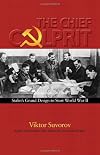
Viktor Suvorov's book "The Chief Culprit" profoundly challenges the standard textbook narrative of the Second World War. This book has forever altered my interpretation of how WWII truly unfolded.
The central thesis of the book can be divided into three arguments:
1. Stalin's grand aim, even years before the war ever began, was to conquer all of Europe.
2. Stalin manipulated Hitler into invading Poland knowing that it would drag France and Britain into a major war against Germany, weakening show more them all.
3. In the summer of 1941, Stalin had initiated the most massive military mobilization in history, and was within weeks or even days of launching a sudden strike against Germany (and a seizure of the Romanian oil fields, Germany's only source of oil). However, Hitler had deduced Stalin's aim by the end of 1940 and decided to preemptively strike.
The translation isn't great, and I suspect that even in Russian elegant prose is not Suvorov's strength. The first quarter of the book was a bit of a slog, as I remained skeptical of Suvorov's central thesis and did not feel that he was presenting any "smoking gun" evidence to support his argument.
By the mid-point of the book however, the gravity of Suvorov's documentary evidence reaches a critical mass and the book becomes a page turner. This book shatters the Western consensus narrative of the Second World War, and when the evidence presented for Suvorov's thesis reaches the point of being simply overwhelming, the value and relevance of this book is clarified.
One of the most important history books I've ever read. A must read for anyone who values truth over consensus narrative. "The Chief Culprit" will reorient your entire perspective on the war. show less
The central thesis of the book can be divided into three arguments:
1. Stalin's grand aim, even years before the war ever began, was to conquer all of Europe.
2. Stalin manipulated Hitler into invading Poland knowing that it would drag France and Britain into a major war against Germany, weakening show more them all.
3. In the summer of 1941, Stalin had initiated the most massive military mobilization in history, and was within weeks or even days of launching a sudden strike against Germany (and a seizure of the Romanian oil fields, Germany's only source of oil). However, Hitler had deduced Stalin's aim by the end of 1940 and decided to preemptively strike.
The translation isn't great, and I suspect that even in Russian elegant prose is not Suvorov's strength. The first quarter of the book was a bit of a slog, as I remained skeptical of Suvorov's central thesis and did not feel that he was presenting any "smoking gun" evidence to support his argument.
By the mid-point of the book however, the gravity of Suvorov's documentary evidence reaches a critical mass and the book becomes a page turner. This book shatters the Western consensus narrative of the Second World War, and when the evidence presented for Suvorov's thesis reaches the point of being simply overwhelming, the value and relevance of this book is clarified.
One of the most important history books I've ever read. A must read for anyone who values truth over consensus narrative. "The Chief Culprit" will reorient your entire perspective on the war. show less
Suvorov makes a very persuasive case that the Red Army, far from being the bungling, ill-equipped force overrun by the Germans in their surprise attack on the Soviet Union, was in fact in possession of weapons that surpassed those of the Germans (indeed anyone in the world) in both quality and quantity. It also had large numbers of highly trained, specialized troops. The problem was that all of their weapons and training were offensive rather than defensive.
They had vast numbers of dive show more bombers very similar to those used by the Japanese at Pearl Harbor. These planes are attack planes, with little armor or defense capability. They are designed for surprise attack when they can catch their enemies unprepared and on the ground.
They had huge numbers of very high quality tanks, more than Hitler had at his disposal at the time. They even had amphibious tanks at at time when no one else had any. If you are fighting a defensive war, you have no use whatsoever for amphibious tanks. You simply fortify yourself on one side of the river and repel all comers.
They had artillery which was unexcelled in the world, including the Katyusha rocket launcher. These were mobile artillery units designed for offensive mobility.
They had a million highly trained paratroopers. Paratroopers are assault troops; you don't have a use for them in a defensive war.
Why then did the Germans overrun the Red Army so easily in the early weeks of the war? Suvorov's argument, well documented, is that Stalin planned a surprise attack on the Germans and indeed the order for mobilization for attack had already been given. Troops were converging, or had already arrived, at the border. Those which had arrived prepared no defensive positions; their mission would be to attack and fight on the enemy's soil not their own. Planes were lined up wingtip to wingtip awaiting the order to scramble for attack. These resources were coming from all over the Soviet Union, but the largest numbers were coming from the East beyond the Caucausus. These are huge distances. The effort failed because Hitler had only to move his troops relatively short distances to put them in attack position on the Eastern Front. He attacked first and the rest is history.
I expect this book will be savaged by professional historians as acceptance of its basic arguments would require a complete rethinking and rewriting of much of the history of World War II in which many of them have a vested interest; indeed, for some of them a life's work. The theses are too important and too persuasively put forth to be quietly set aside. They should be aired and debated. show less
They had vast numbers of dive show more bombers very similar to those used by the Japanese at Pearl Harbor. These planes are attack planes, with little armor or defense capability. They are designed for surprise attack when they can catch their enemies unprepared and on the ground.
They had huge numbers of very high quality tanks, more than Hitler had at his disposal at the time. They even had amphibious tanks at at time when no one else had any. If you are fighting a defensive war, you have no use whatsoever for amphibious tanks. You simply fortify yourself on one side of the river and repel all comers.
They had artillery which was unexcelled in the world, including the Katyusha rocket launcher. These were mobile artillery units designed for offensive mobility.
They had a million highly trained paratroopers. Paratroopers are assault troops; you don't have a use for them in a defensive war.
Why then did the Germans overrun the Red Army so easily in the early weeks of the war? Suvorov's argument, well documented, is that Stalin planned a surprise attack on the Germans and indeed the order for mobilization for attack had already been given. Troops were converging, or had already arrived, at the border. Those which had arrived prepared no defensive positions; their mission would be to attack and fight on the enemy's soil not their own. Planes were lined up wingtip to wingtip awaiting the order to scramble for attack. These resources were coming from all over the Soviet Union, but the largest numbers were coming from the East beyond the Caucausus. These are huge distances. The effort failed because Hitler had only to move his troops relatively short distances to put them in attack position on the Eastern Front. He attacked first and the rest is history.
I expect this book will be savaged by professional historians as acceptance of its basic arguments would require a complete rethinking and rewriting of much of the history of World War II in which many of them have a vested interest; indeed, for some of them a life's work. The theses are too important and too persuasively put forth to be quietly set aside. They should be aired and debated. show less

I really enjoyed Suvorov's The Aquarium, about his career and defection as a GRU officer, but Spetsnaz is simply not as compelling.
Suvorov provides an overview of the doctrine and training of Soviet special forces, the Spetsnaz. The overall objective of the Spetsnaz is strategic reconnaissance and chaos. Some categories of objectives are clearly military, to locate and destroy NATO nuclear weapons, aircraft, radar, and other key facilities on the eve of a general attack to clear the way for show more the Red Army. But Spetsnaz also has objectives of political terror and sabotage, using the weeks leading up to war to dislocate NATO infrastructure and political systems.
Spetsnaz training is self-consciously extreme, combining snake-eating machismo with the omerta of Russian prison gangs. Spetsnaz soldiers are desensitized to violence, hardship, and danger, and trained to use deception and torture to achieve their ends. Training includes frequent beatings, harsh survival exercises against the Siberian wilderness and Soviet internal security, and obstacle courses that include a literal maze of blood.
Suvorov reveals several secrets. The Soviet athletic complex is intimately bound up with Spetsnaz, with the top ranks of the organization consisting of Olympic quality athletes, especially those focusing on militarily useful sports like parachuting, scuba diving, and mountaineering. Western Europe is also riddle with Spetsnaz agents and safehouses, locations operated by non-political local pensioners stocked with supplies and vehicles. In the event of war, Spetsnaz soldiers will infiltrate to these prepared safehouses, stock up, kill their owners to ensure silence, and then carry out their attacks.
It's all very thrilling, very hardcore, but also somewhat abstract and graceless, especially compared to the sharp specificity of The Aquarium show less
Suvorov provides an overview of the doctrine and training of Soviet special forces, the Spetsnaz. The overall objective of the Spetsnaz is strategic reconnaissance and chaos. Some categories of objectives are clearly military, to locate and destroy NATO nuclear weapons, aircraft, radar, and other key facilities on the eve of a general attack to clear the way for show more the Red Army. But Spetsnaz also has objectives of political terror and sabotage, using the weeks leading up to war to dislocate NATO infrastructure and political systems.
Spetsnaz training is self-consciously extreme, combining snake-eating machismo with the omerta of Russian prison gangs. Spetsnaz soldiers are desensitized to violence, hardship, and danger, and trained to use deception and torture to achieve their ends. Training includes frequent beatings, harsh survival exercises against the Siberian wilderness and Soviet internal security, and obstacle courses that include a literal maze of blood.
Suvorov reveals several secrets. The Soviet athletic complex is intimately bound up with Spetsnaz, with the top ranks of the organization consisting of Olympic quality athletes, especially those focusing on militarily useful sports like parachuting, scuba diving, and mountaineering. Western Europe is also riddle with Spetsnaz agents and safehouses, locations operated by non-political local pensioners stocked with supplies and vehicles. In the event of war, Spetsnaz soldiers will infiltrate to these prepared safehouses, stock up, kill their owners to ensure silence, and then carry out their attacks.
It's all very thrilling, very hardcore, but also somewhat abstract and graceless, especially compared to the sharp specificity of The Aquarium show less
Lists
You May Also Like


Associated Authors
Statistics
- Works
- 47
- Members
- 1,121
- Popularity
- #22,921
- Rating
- 3.8
- Reviews
- 8
- ISBNs
- 166
- Languages
- 13